Professional oboist and chamber musician- member of Hevreh Ensemble and Winds in the Wilderness, Professor of Oboe Hofstra University; observer of people, art and nature; passionate food and travel explorer.
What a week this has been; awaiting election news, hoping for the best and dreading possible outcomes!
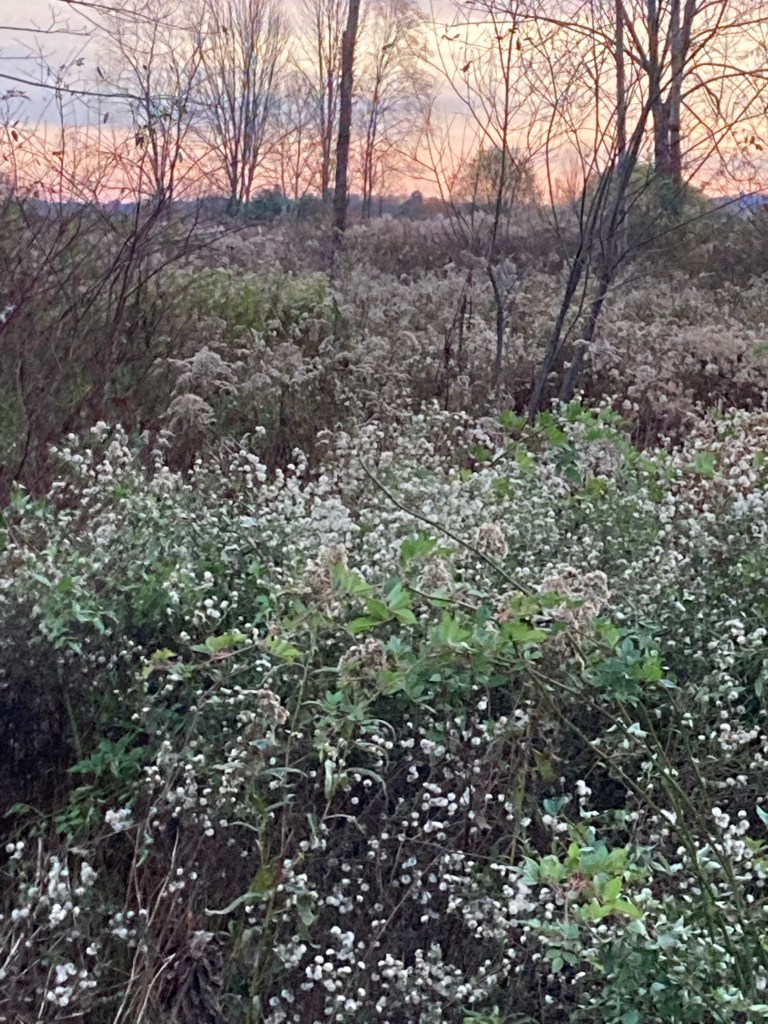
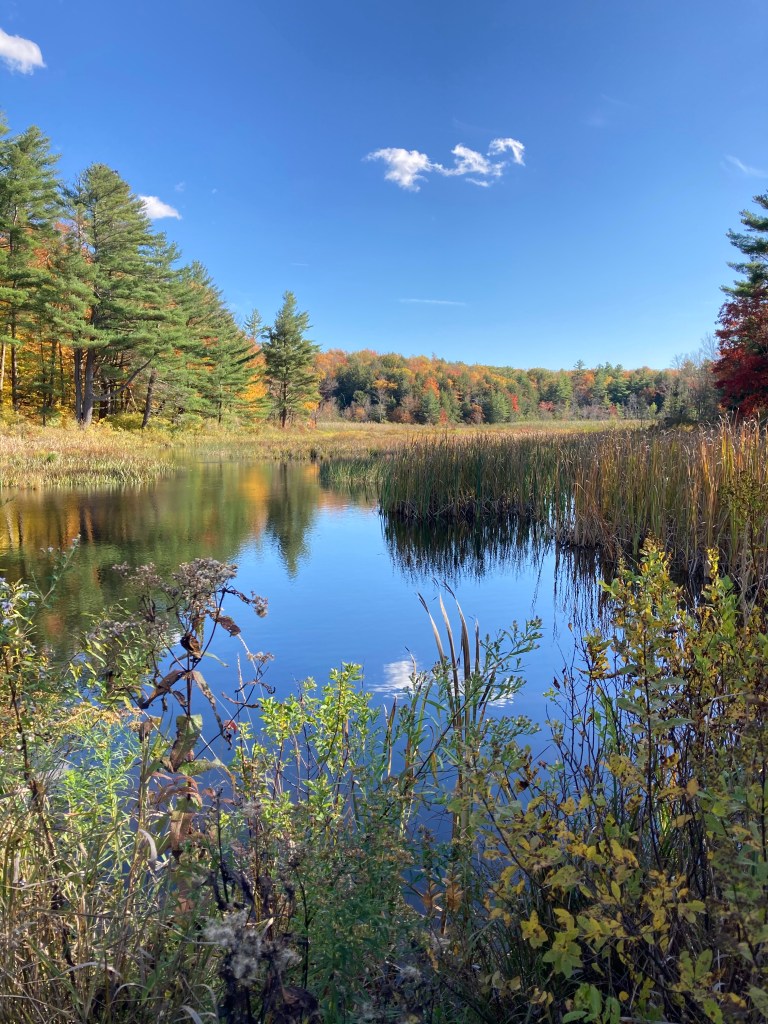
My best coping strategy was to take long solo walks on Kelsey Road in Sheffield, Massachusetts. It is surrounded by mountains on one side and a protected nature preserve with wetlands on the other. On Election day, I tried to create a “news blackout” policy and after teaching my online students, headed out to Kelsey Road in the late afternoon. I found myself drawn into closely into the idyllic beauty encompassing me. It was deeply calming.
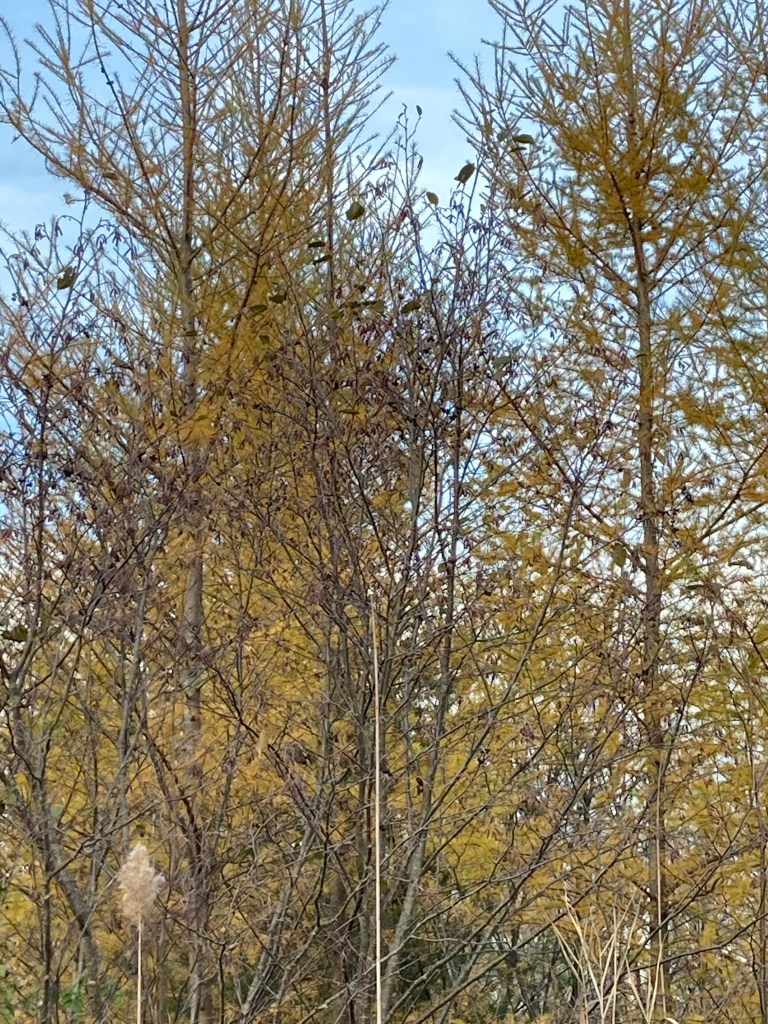
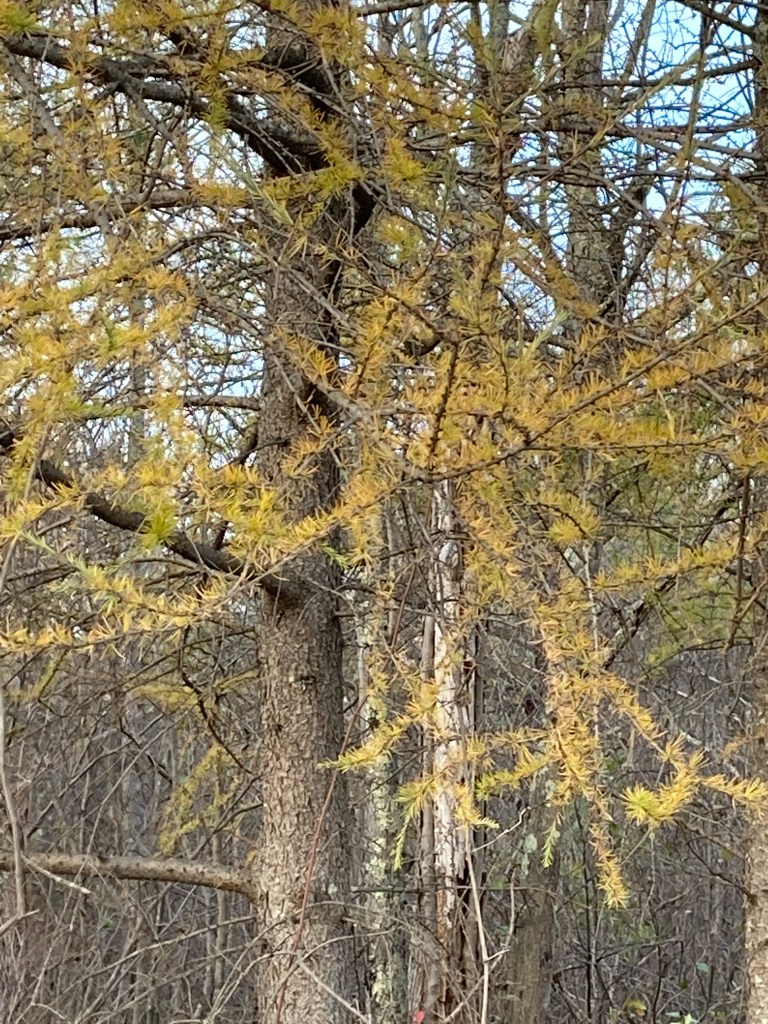
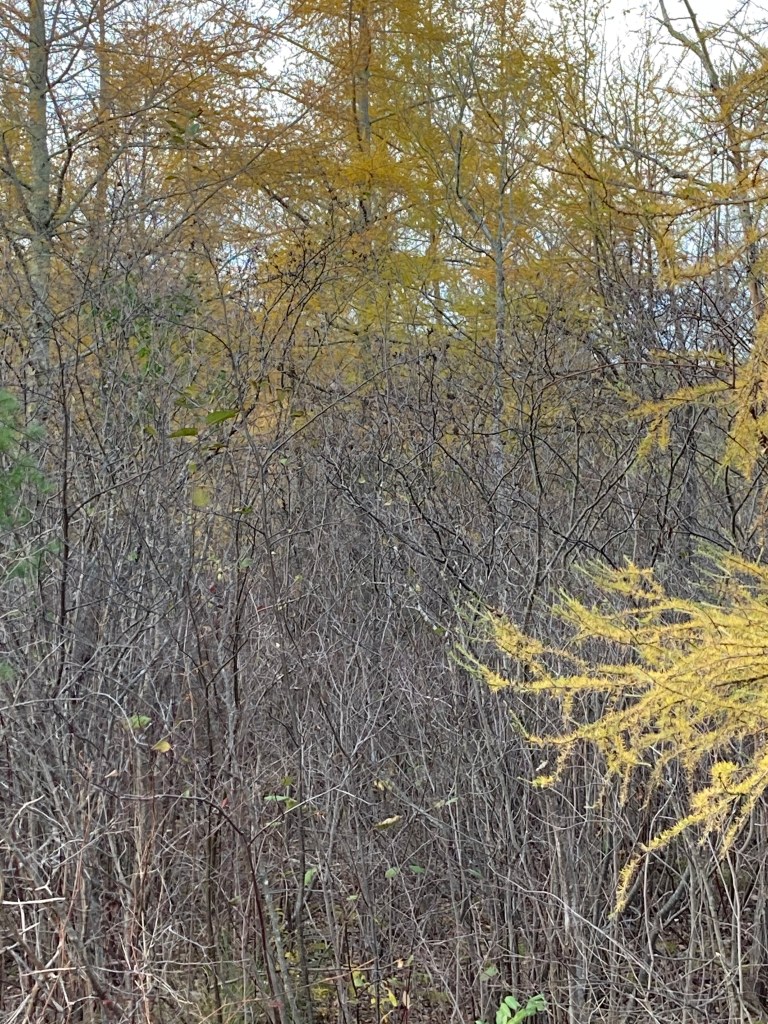
After a mostly sleepless night, the day after the election was a challenge. I was thankful to have the distraction of my online students and in the late afternoon headed out to Kelsey Road again. I noticed that the tamarack trees were just changing color and in the late afternoon light, they seemed to take on a golden glow.
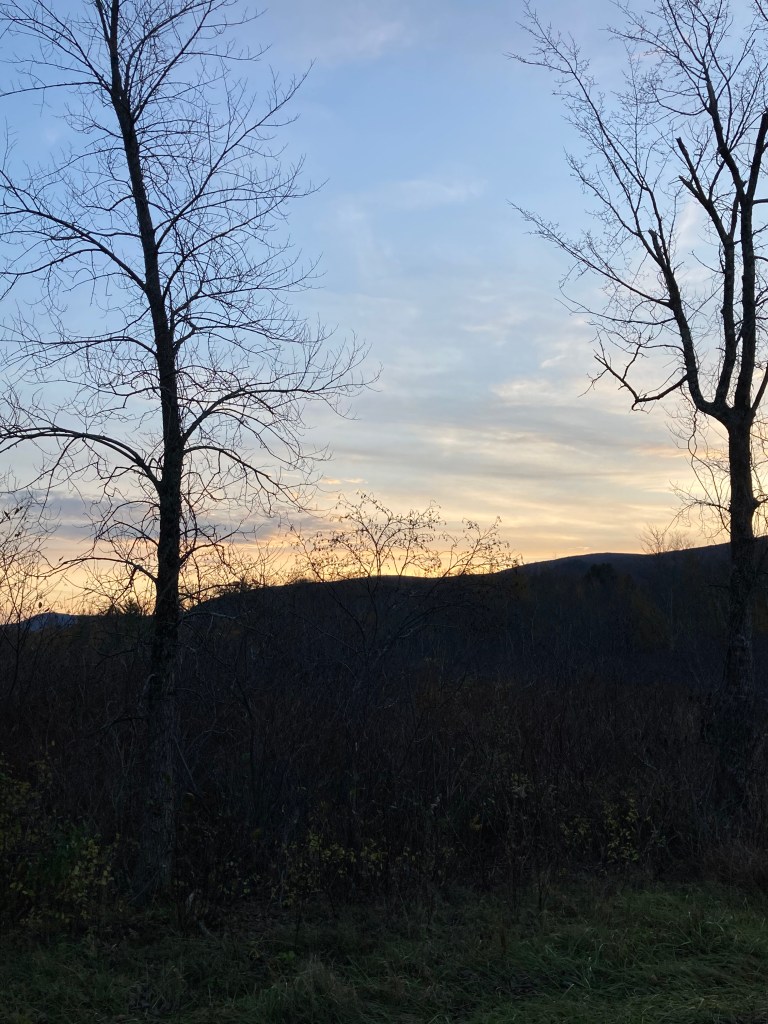
I walked briskly for about three miles; forgetting the shorter amount of daylight, and on my return, was treated to a beautiful sunset.
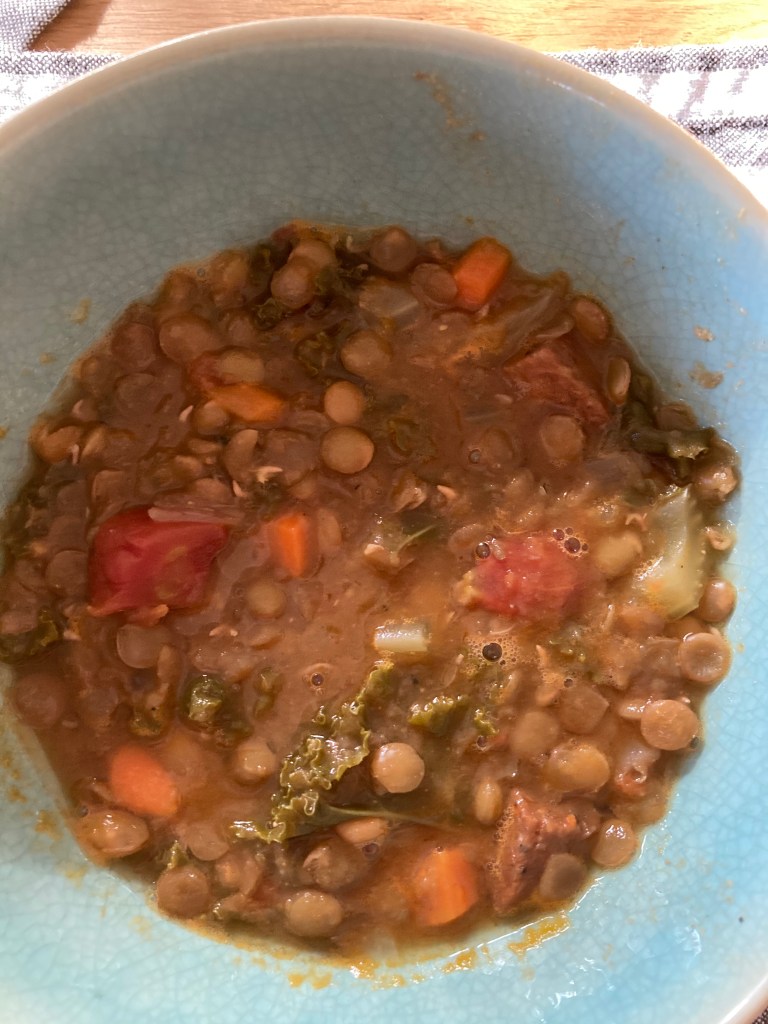
After this, it was time for some serious comfort food! Earlier in the day, between students, I started a big pot of Lentil Soup; with carrots, onions, celery, diced tomatoes, kale, bay leaf, coriander, cayenne, cumin and chicken chorizo sausage. When I arrived back home, I heated up the soup, removed the bay leaf and with an immersion blender pureed a bit of the soup to make a creamy texture. Served with toasts made from an old loaf of multi-grain bread rubbed with garlic and drizzled with olive oil, it was the perfect antidote! I hope you enjoy this recipe!
“Election Day Lentil Soup”
Ingredients:
2 cups dried lentils-rinsed and picked over
1 medium onion finely chopped
1 large carrot finely chopped
1 stalk celery finely chopped
6 large pieces kale, stems removed and torn into small pieces
1 small can diced tomatoes
2 chicken chorizo sausages, cut into small pieces
1 bay leaf
1 teaspoon dried coriander
1 teaspoon paprika
1 teaspoon cumin
1/4 teaspoon cayenne pepper- more if desired
salt and pepper to taste
To Make Soup:
Heat 2 tablespoons olive oil in a large pot.
Saute onions until they soften slightly.
Add spices and cook a few minutes more.
Add vegetables and lentils
Cover with water, about 2 inches over the vegetables and lentils.
Bring to a boil, then lower to a simmer.
Cover pot and cook about 1 1/2 hours until vegetables and lentils are very soft.
If you would like soup to be thicker uncover pot and cook a bit more until soup thickens.
At this point you can let the soup sit on the stove for a few hours to let the flavors meld- this is where the walk comes in!
To serve: bring soup back to a simmer, remove bay leaf and using an immersion blender, puree a part of the soup. This will give the soup a nice creamy texture.
Adjust seasoning, adding more salt and pepper.
Take a big breath and ENJOY!!
BUT, it was Saturday November 7th, that was historic and remarkable. Paul and I were about to enter the Mass Pike, heading out for a hike, when an announcer from NPR interrupted Wait Wait Don’t Tell Me and said there was a special message. I was driving and looked over at Paul with hope and as the announcer said that Biden had just flipped Pennsylvania, I started to sob with joy, squeezed Paul’s hand way too hard and made the wise decision to pull the car off to the side of the road!! I took a few deep breaths of relief and I think the whole world has also done so!
My Hevreh Ensemble colleague and dear friend Laurie Friedman says it all in this video! The joyful sounds of the Shofar rang loud and clear from Laurie’s Brooklyn rooftop!!
My Recorder was safely stowed away in my husband Paul’s backpack along with snacks, water, a tree book and a new railroad cap prop. I had several melodies ready for improvisation, circa 1830’s Early Americana style and was eagerly looking forward to our visit to the Keystone Arch Bridges Rail Trail in Chester, Massachusetts. Nestled in the woods are several architectural wonders-stone railroad bridges perched on steep hillsides that were constructed in the 1830’s. The day was cloudy, misty, a bit humid and I thought that the trail would not be too busy.
SADLY, when we arrived after an hour and twenty minute drive, the parking lot was full and there was no place to park along the steep roadside. Besides, a state trooper was right behind us…. so, no KAB Rail Trail for that day! I complained a bit and swallowed my disappointment and luckily Paul, who has become something of a map and hiking genius, found a trail with a small waterfall in Cummington, MA about twenty minutes away! We went with the flow and took a circuitous route to find the trail. At the top of a steep road, we saw that we had come to Jameson’s high Meadow Farm, where we pick blueberries in the summer; a bit of serendipity to find ourselves at this beautiful spot. The farm was established in 1955 by Craig and Brenda Jameson and it luckily has been passed on to the next generation.
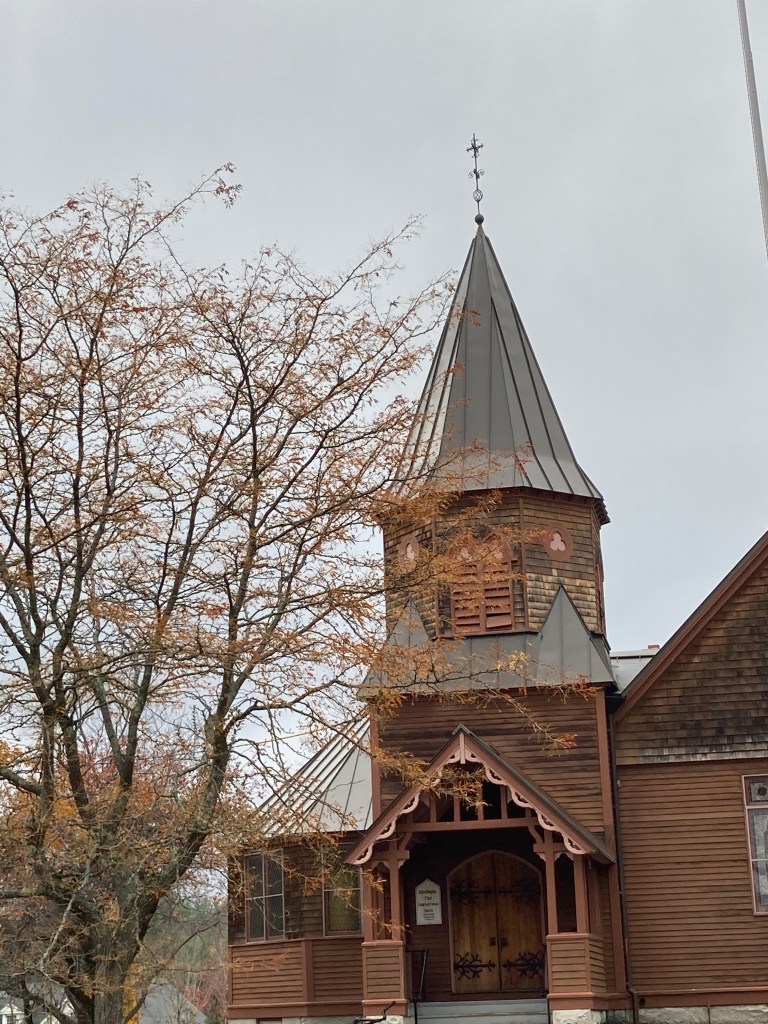
We drove through the quaint village of Worthington, MA and were heartened to see early voting taking place in the Town Hall. Across the street was a beautiful old church; maybe a good spot for a concert after the pandemic is over!
Taproot Commons Farm (formally Warner Farm) is a 131-acre privately-owned property in Cummington, Massachusetts, with an active maple sugaring farm.
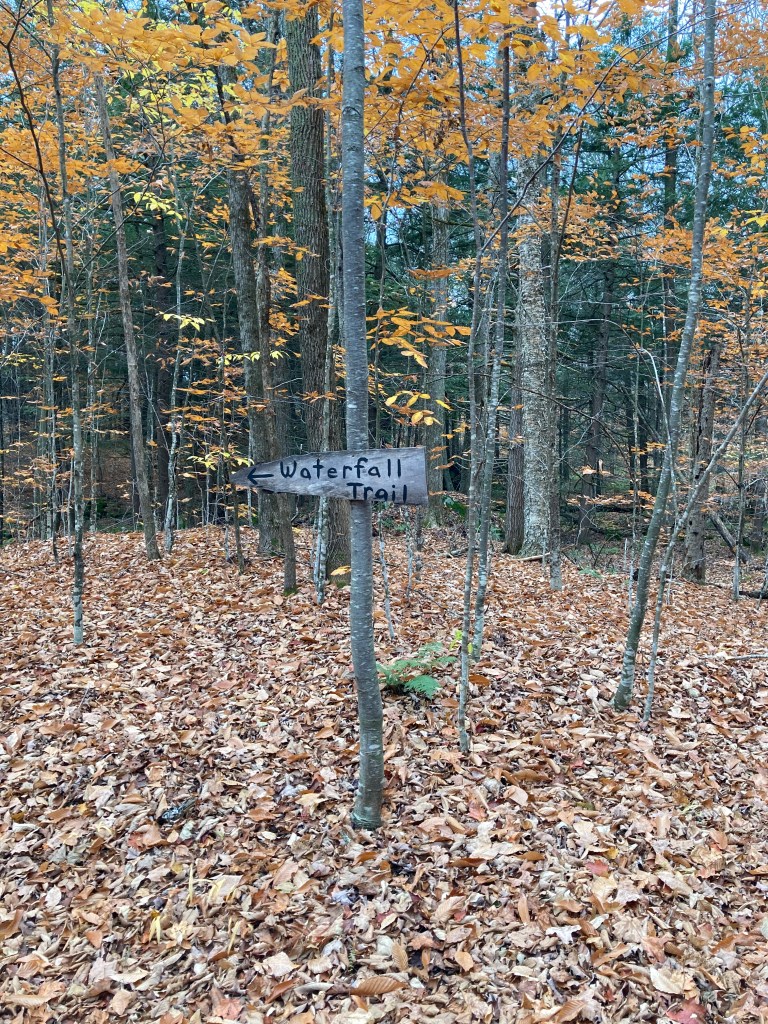
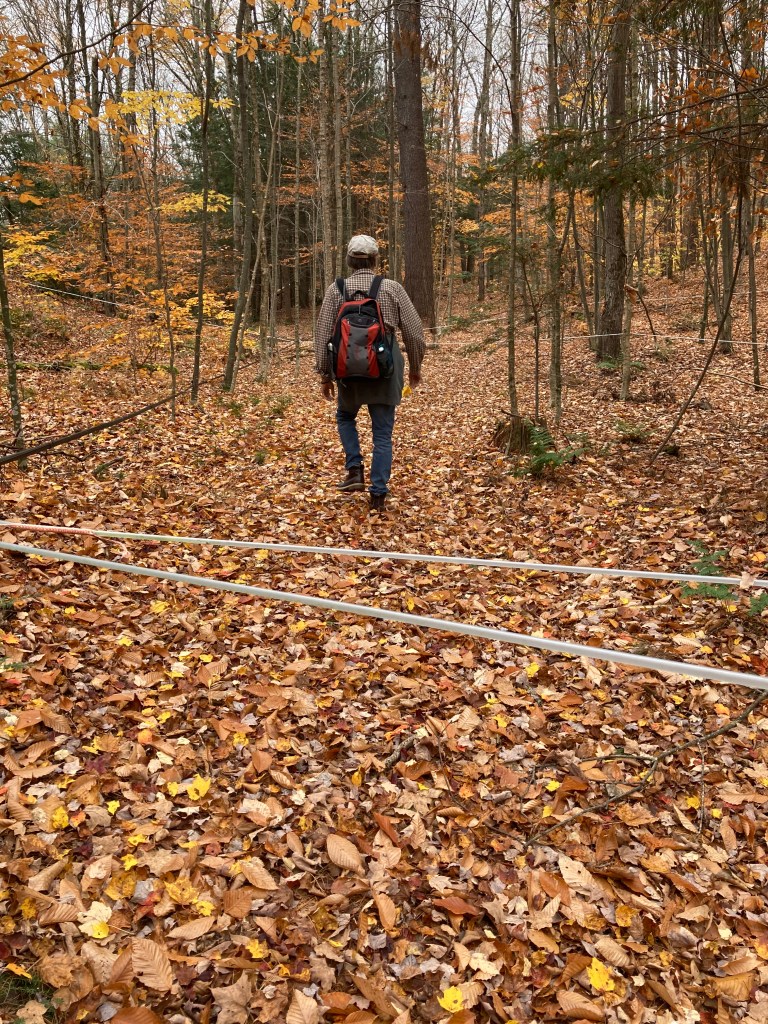
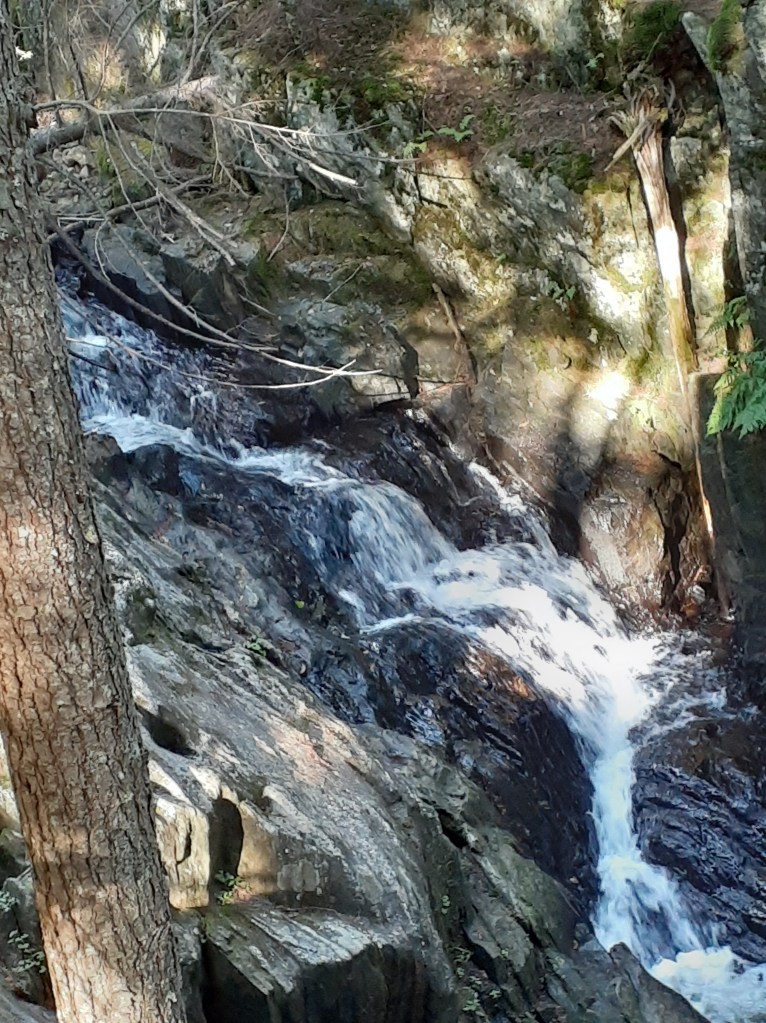
The Taproot Commons Farm Waterfall Trail leads to a small waterfall on Tower Brook. Although the land remains in private ownership, the landowners allow hikers to use the trail. It was great fun to duck under and cross over a maze of maple sugaring lines!
It has been a dry season; the waterfall was a gentle stream, a lovely spot to make a video using my circa 1830’s aforementioned Early Americana theme!
Part of the day’s plan was to go one of our favorite cafe and lunch spots; The Woodstar Cafe in Northampton, and here, everything went as planned. Our pre-ordered curbside pick up was ready at 2:00 and we eagerly devoured our custom made sandwiches on crusty homemade multi grain bread with turkey, horse radish cheddar, pesto, red onion, tomato and sliced pickles. No pics, the sandwiches disappeared too quickly! I treated myself to spicy iced chai tea with oat milk and a vegan peanut butter cookie made with maple syrup, ground flax seed, peanut butter and almond flour. They are delicious and addicting with a soft chewy interior and crispy on the outside. I am going to try to duplicate these cookies, but our oven recently gave up the ghost! Results and a recipe will follow in a future blog!
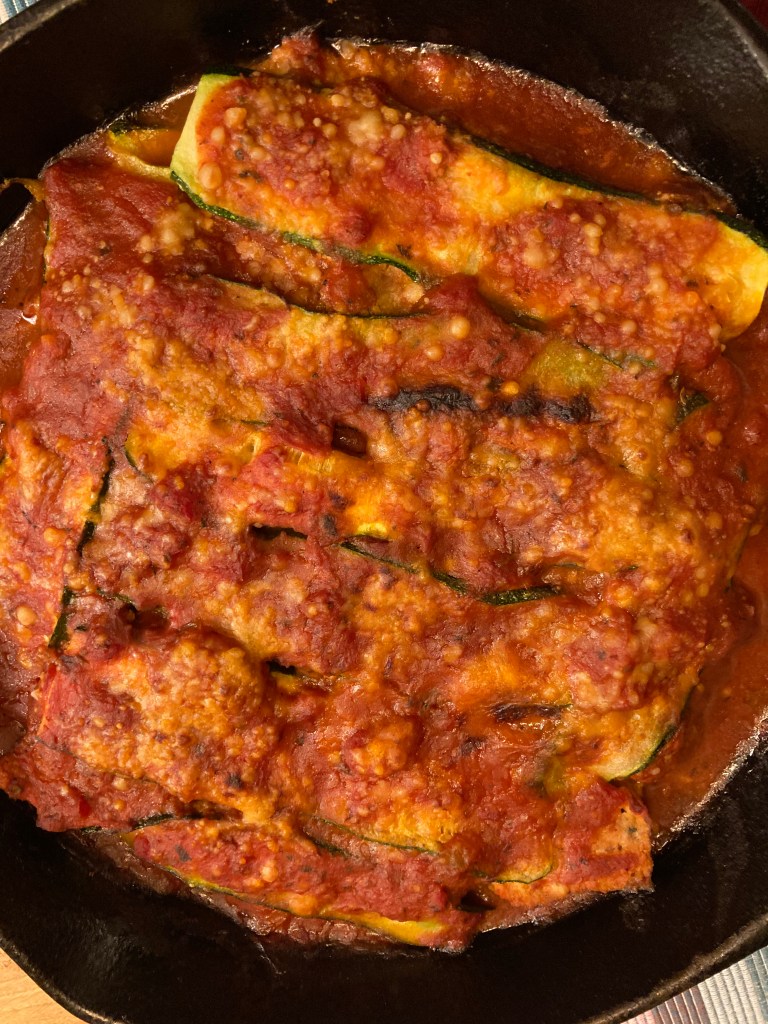
Our oven may be broken but the stove top and broiler still work. I wanted to make a zucchini lasagna and the theme of adapting and “going with the flow” worked well. SO, here is “Broken Oven Zucchini Lasagna“!
Ingredients:
2 or 3 large zucchini thinly sliced lengthwise
5 or 6 turkey meatballs (recipe below)
1/4 cup finely grated pecorino cheese
2 cups tomato sauce (that the meatballs were simmered in- recipe below)
1/4 cup grated pecorino cheese
Equipment: medium cast iron pan
Turkey Meatballs
I learned to make meatballs from my Italian American mother in-law. When we first met many years ago, I encountered a proud strong woman. As she sized me up with sharp judgement on her face, she surprisingly said, “you have beautiful eyes”! Over the years, in what was sometimes a difficult relationship, what brought us closest together was our mutual love of food and family culture- this did the trick! I loved to listen as she described her family when they lived in Brooklyn and the dishes that her mother and grandmother made. I had the opportunity to peer over my mother in-law’s shoulder as she made her famous meatballs and sauce and I carefully observed the many things she did to bring out the best flavor. In her later years, as her eye sight started to fail, she would come to our house for holiday meals and I would describe the food that I had made to her. She would smile appreciatively and her face would light up with joy to be surrounded by her family. The “food” mantle was almost passed to me!
Turkey Meatball Ingredients:
1 pound ground turkey (use freshly ground turkey from dark meat) *see note
2 large garlic cloves finely chopped
1 egg
1/2 cup breadcrumbs (you may need to add more if mixture is too soft- I like to use whole wheat breadcrumbs)
1/4 cup finely chopped kale
1/4 cup finely grated parmesan or pecorino cheese
salt and freshly ground pepper
1/2 teaspoon each of dried basil, thyme and oregano
Tomato Sauce:
1 large can pureed tomatoes
2 cloves garlic
1 small onion finely chopped
1 teaspoon each of dried basil, thyme and oregano
1 large bay leaf
a good glug of red wine!
To make tomato sauce:
Heat 2 tablespoons extra virgin olive oil in a large heavy pot
Add chopped onions and saute over medium heat until onions soften slightly.
Add pureed tomatoes and aprox. 1 can full of water- you can always add more later.
Peel and lightly smash the garlic cloves and add to pot.
Add rest of ingredients and bring to a boil- lower heat to a simmer.
To make meatballs:
Place ground turkey in a large bowl.
Add rest of ingerdients and mix thoroughly with a fork.
Heat 2 tablespoons extra virgin olive oil in a large non-stick pan and turn heat to high.
Wet hands with cold water and very loosely form into balls, dropping into pan as each ball is formed.
Let brown completely on all sides- turning with a spatula.
Place in tomato sauce
Put a bit of water in pan the meatballs were sauteed in and scrape up browned bits. Add this to the tomato sauce.
Add red wine and bring to a boil- reduce to a simmer and cover.
Cook over low heat for about 2 hours, checking a few times to see if sauce has become too thick, or if it seems to thin, move cover over halfway to reduce sauce a bit.
Check seasoning and add more salt and pepper if desired.
The meatballs can be used immediately, but the flavor will continue to develop overnight!
Enjoy!!
* My mother in-law used ground beef. I like the texture of ground turkey more and I add chopped kale. I also add red wine to my sauce.
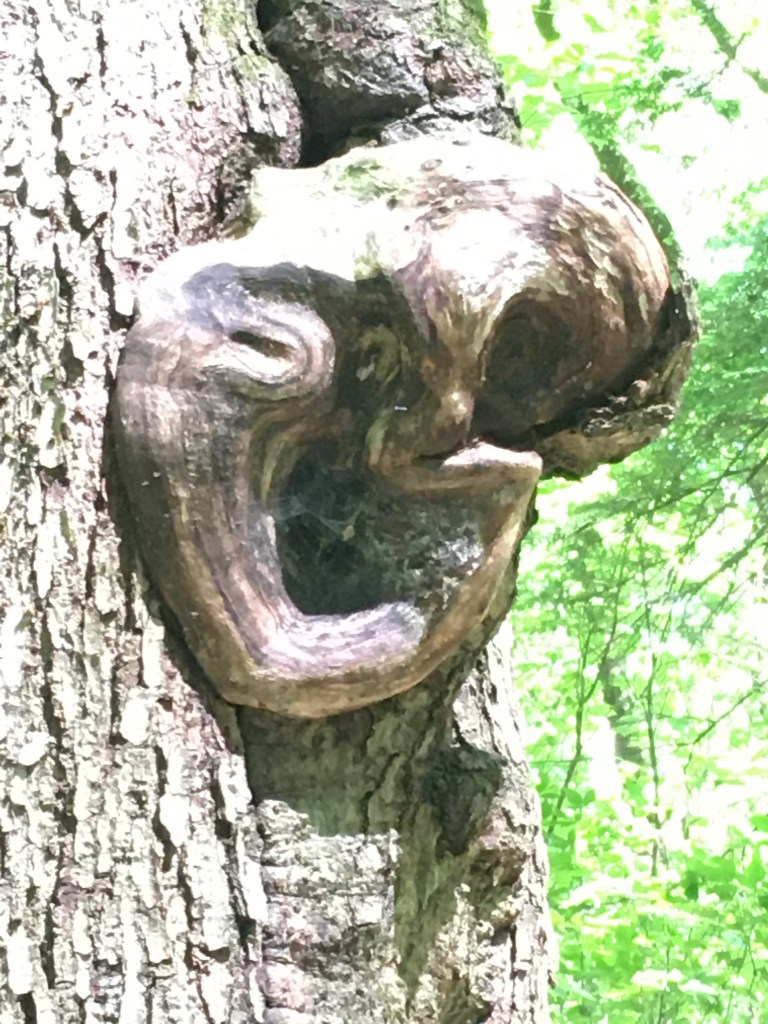
I end with hopes for the election results and peace for our divided country. I am finishing this blog on Election Eve to distract myself; one tree that I encountered in the woods the other day expressed my emotions very well!
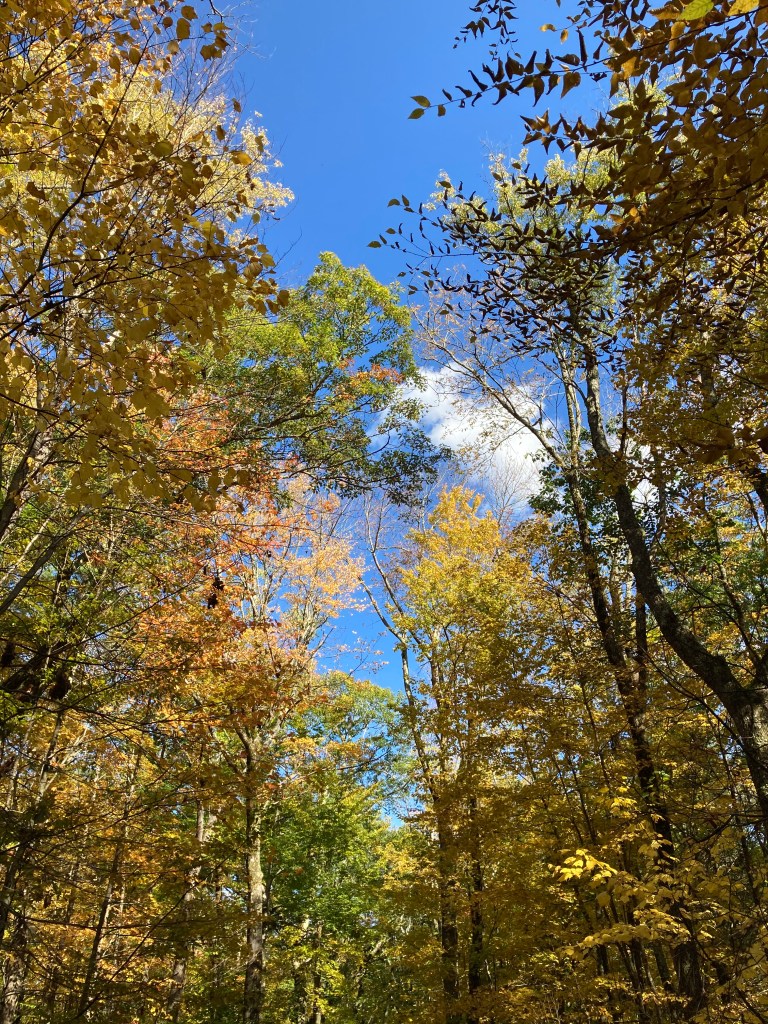
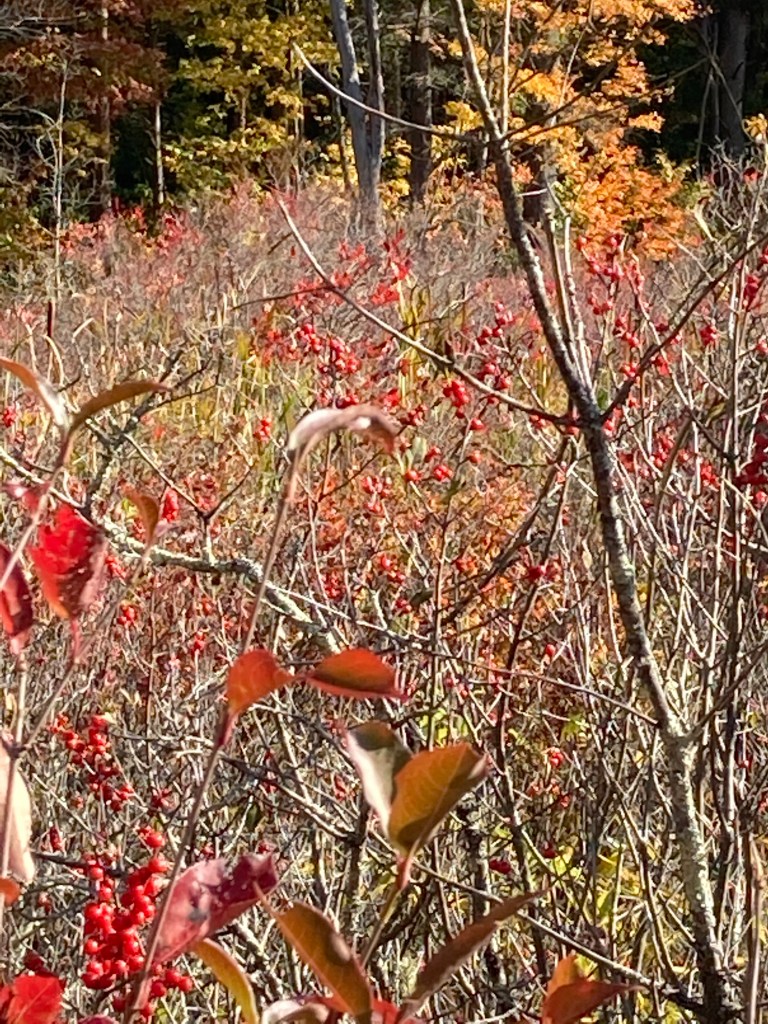
Brilliant blue skies, vivid oranges, yellows and reds; this year the change of season seems especially beautiful!
Steepletop Reserve- New Marlborough, MA
With so much negative news in our daily lives and anxiety about the coming election, my hope is that this Halloween blog will bring a bit of humor, enjoyment and some delicious food to you!
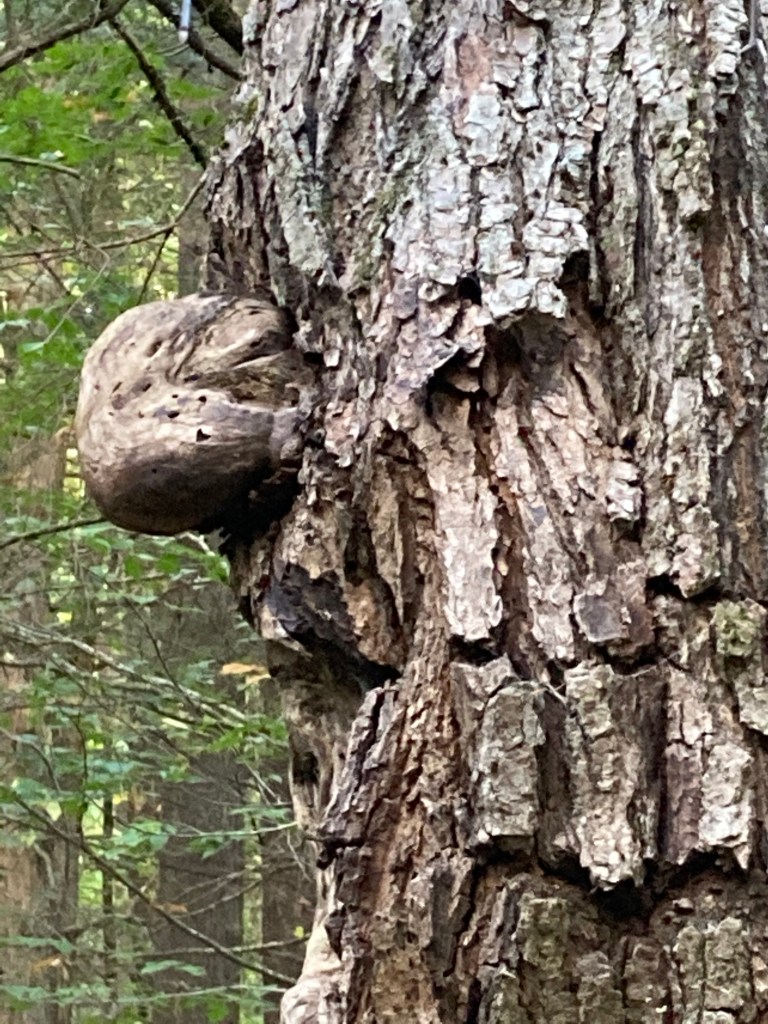
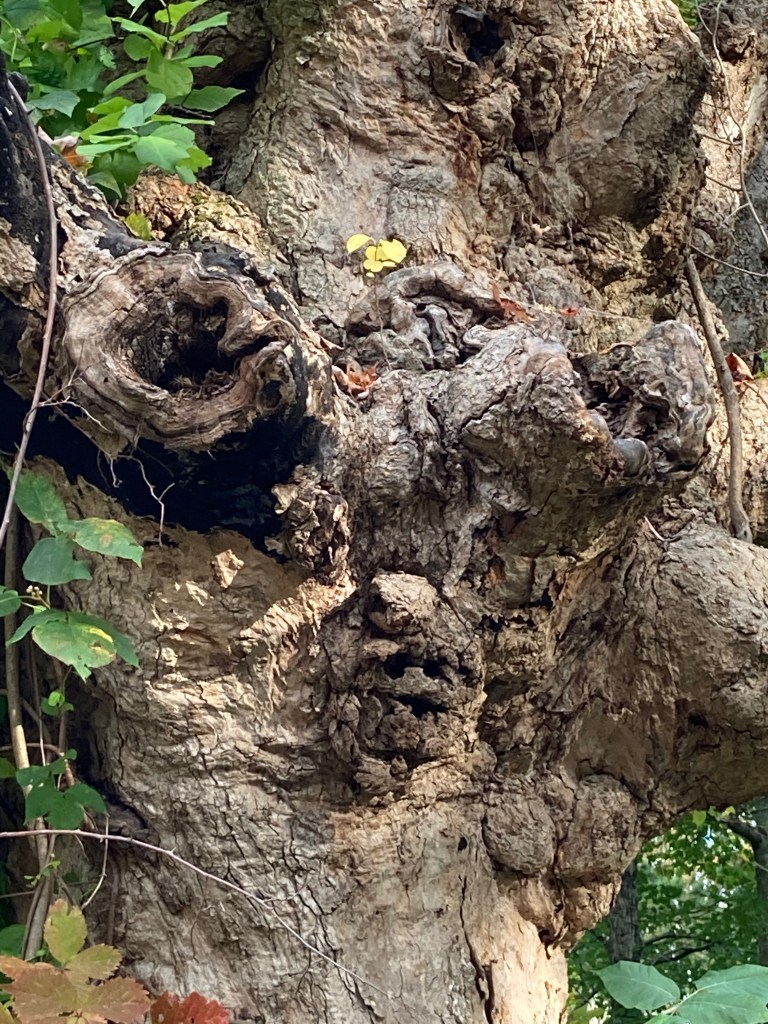
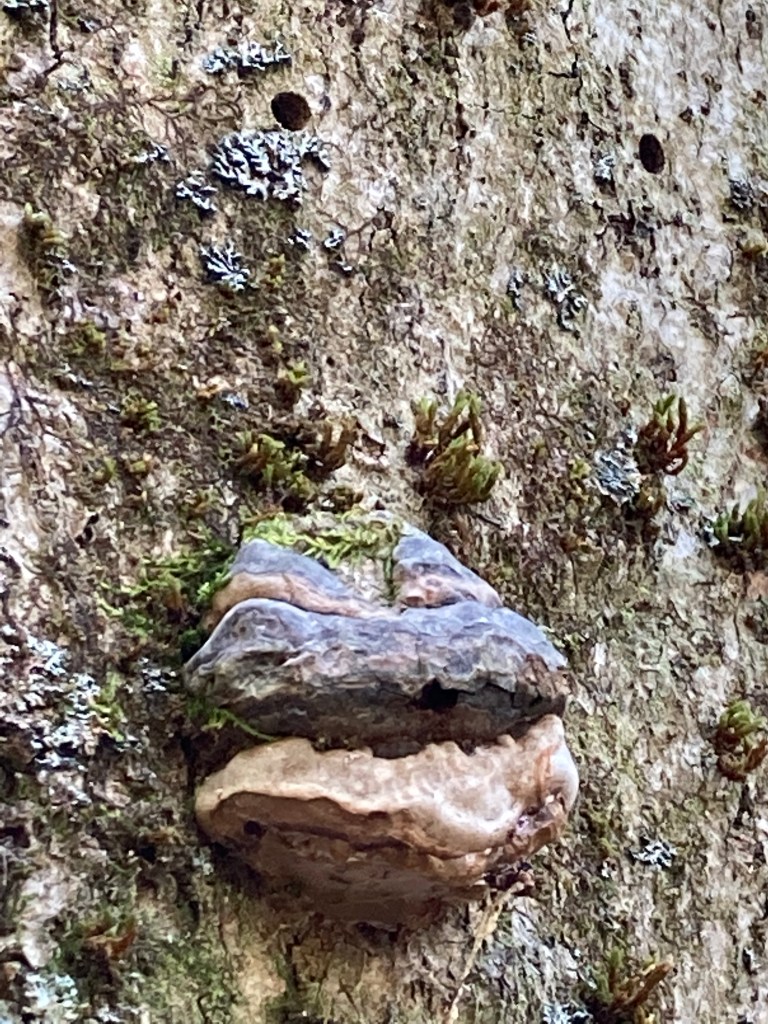
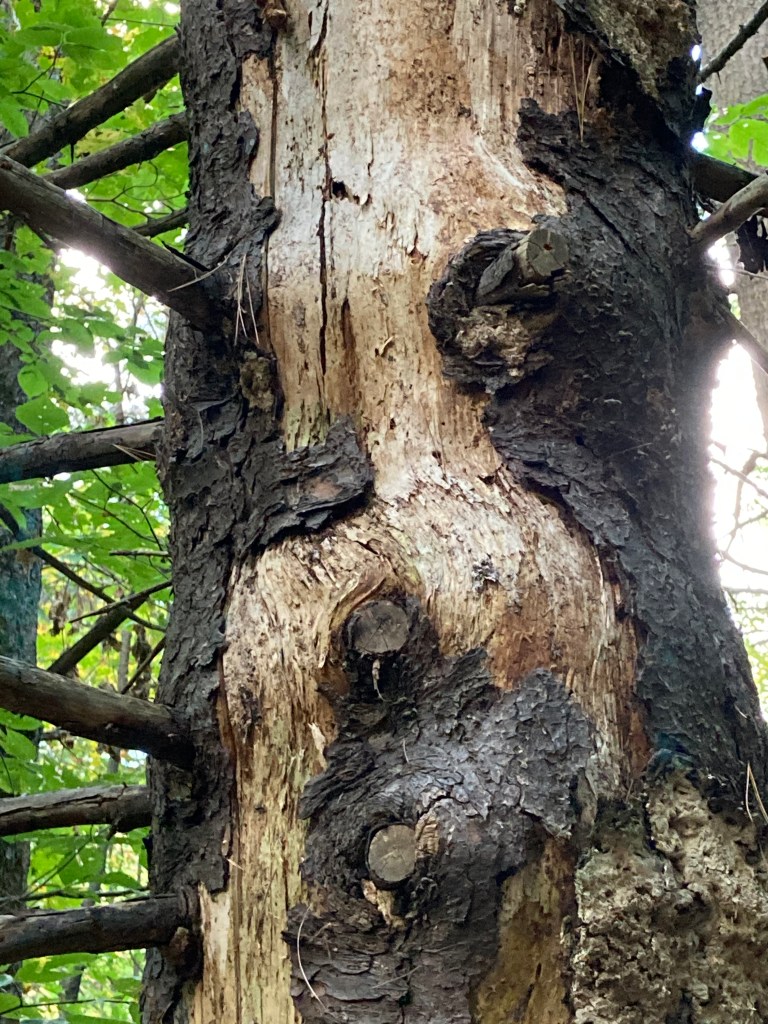
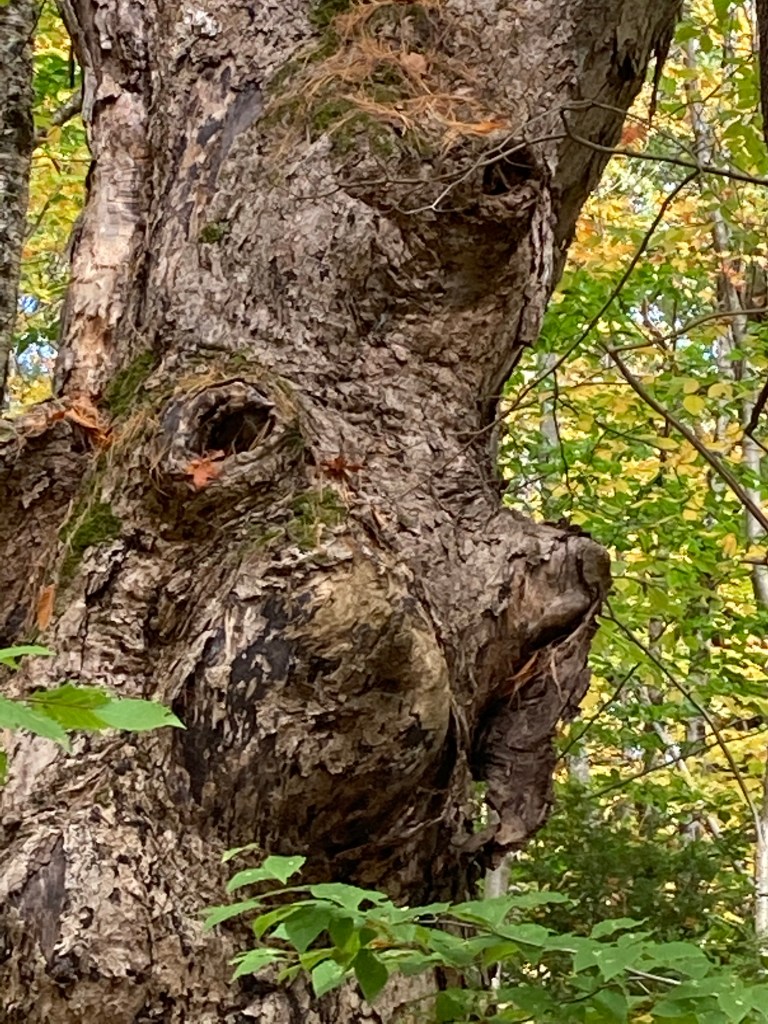
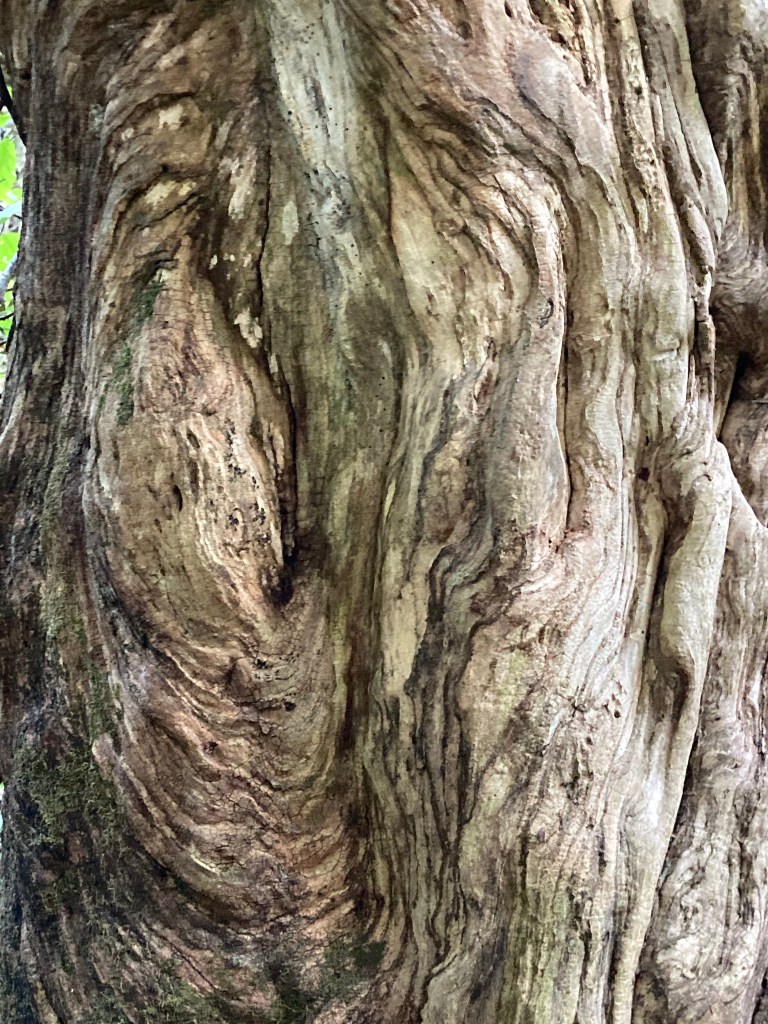
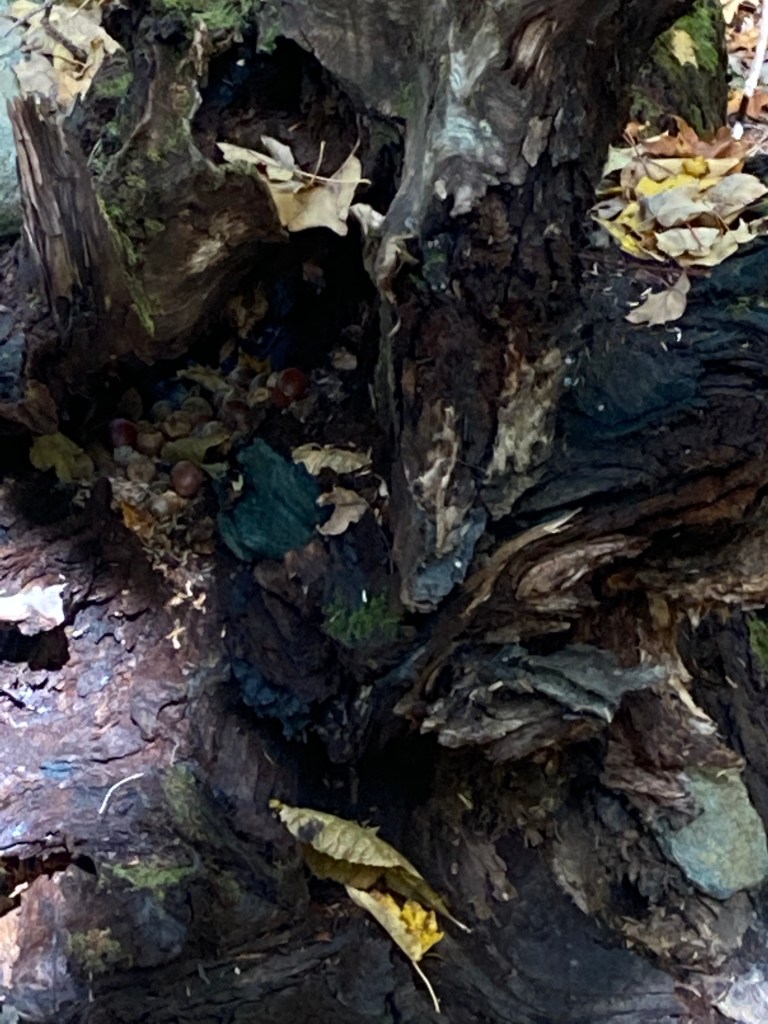
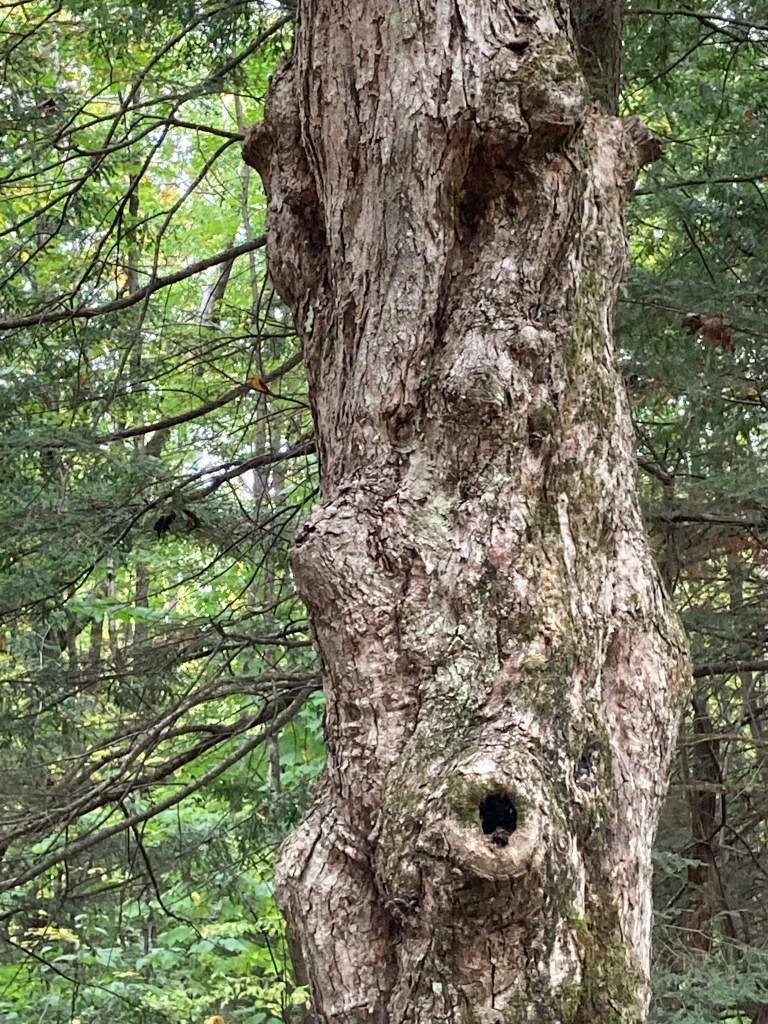
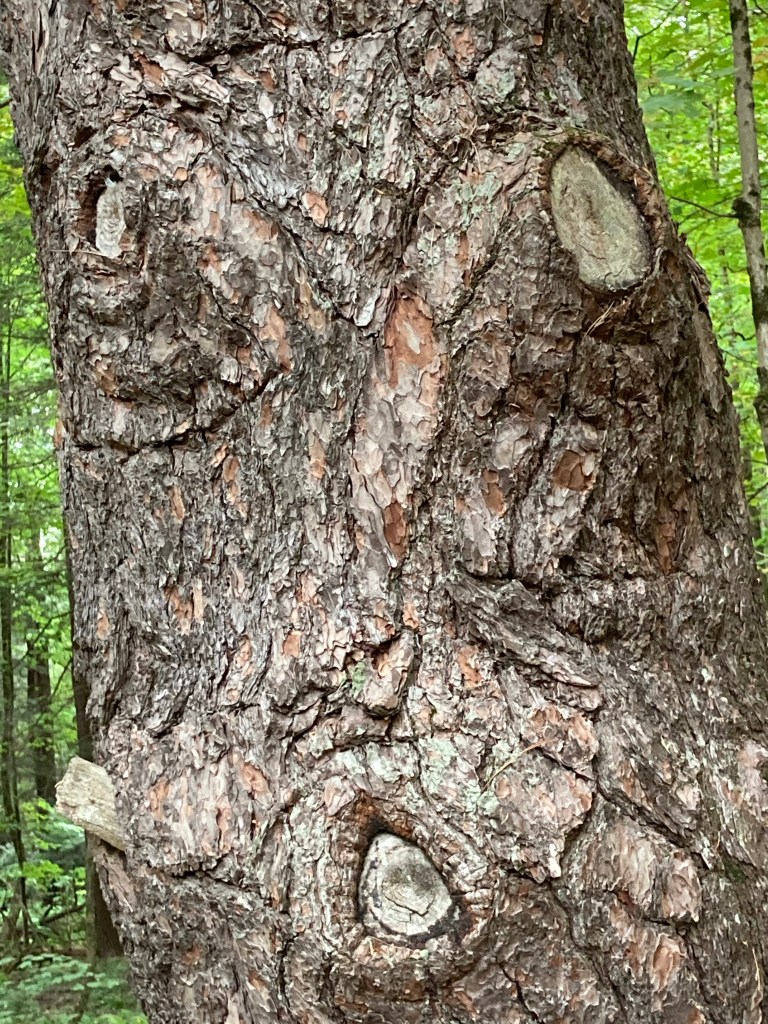
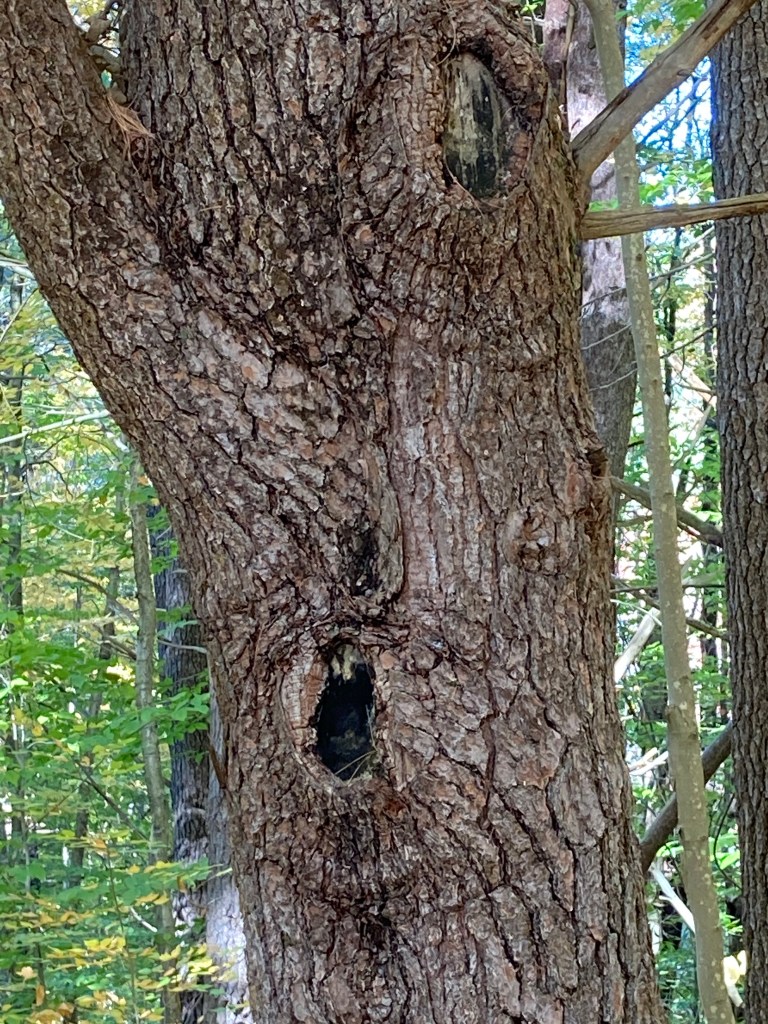
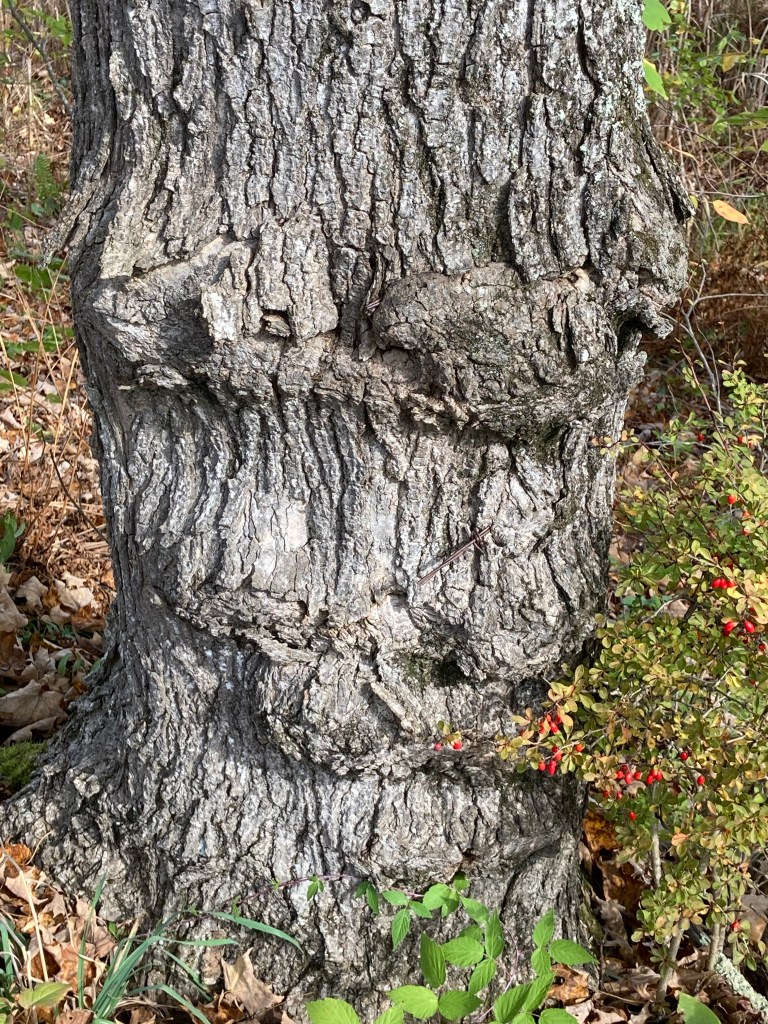
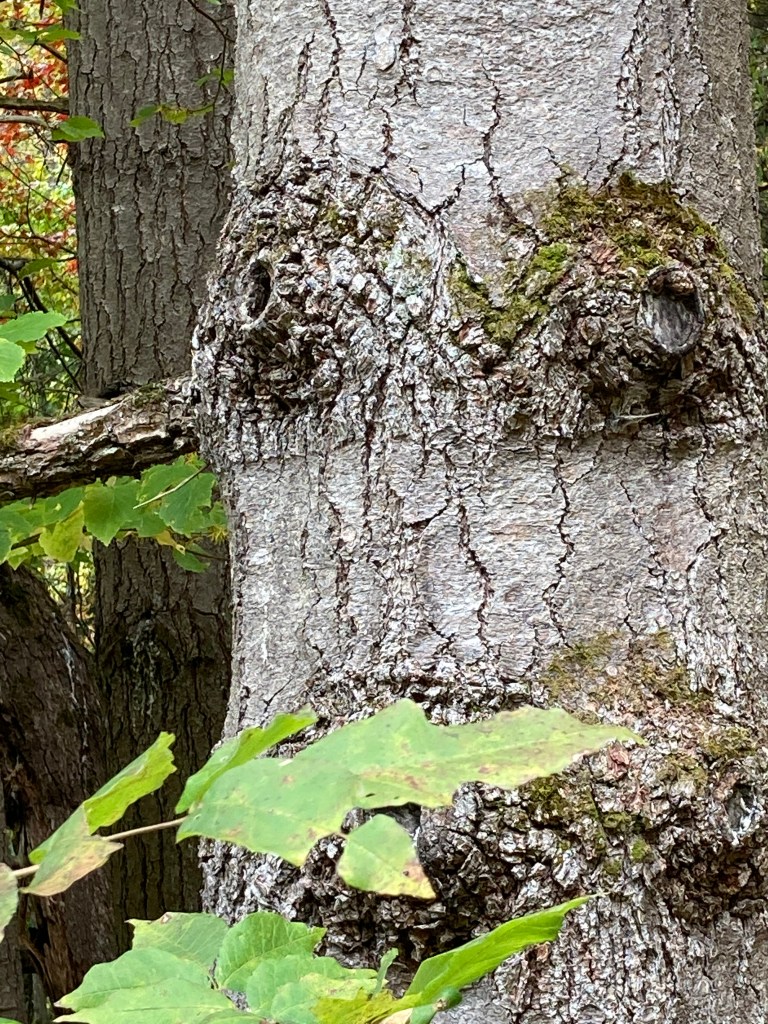
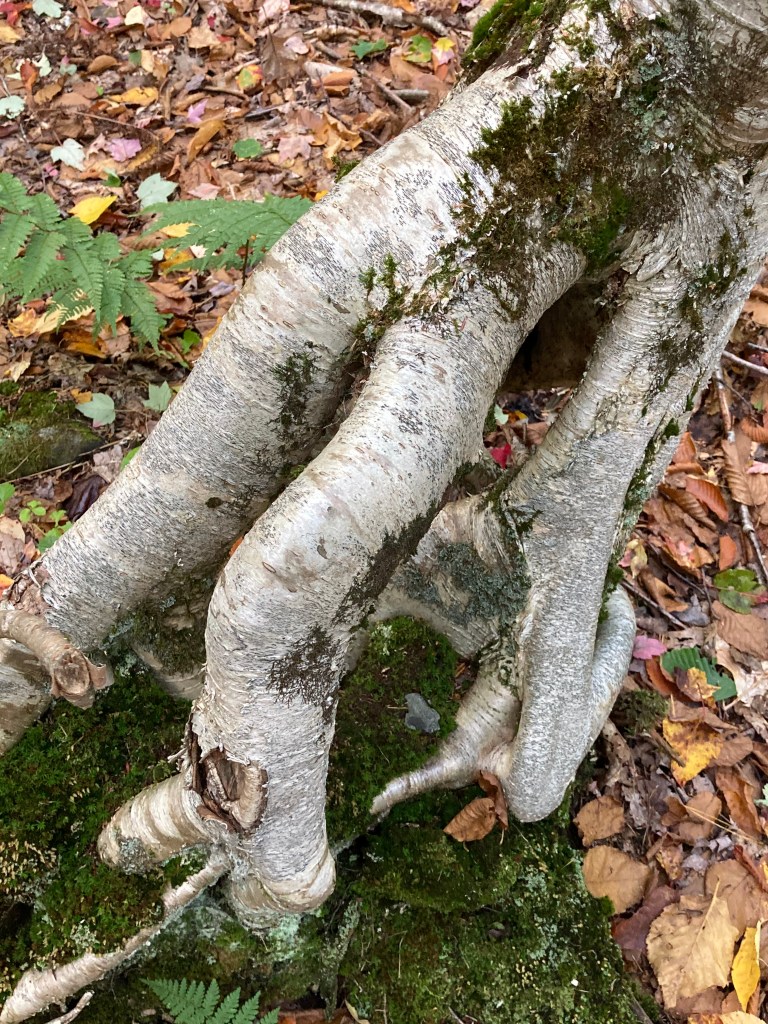
On our recent walks through the woods, I have closely observed the burled and gnarly bark of the trees and with a slightly overactive imagination, I happily anthropomorphized their unique personalities; some scary or with attitude, others shy, wise, scared and surprised or just plain silly!
My first prize goes to to a tree with a big “schnozs”!
Other categories:
MONSTERS:
HUMOROUS:
WISE:
EVIL:
ATTITUDE:
SCARED AND SURPRISED:
SHY:
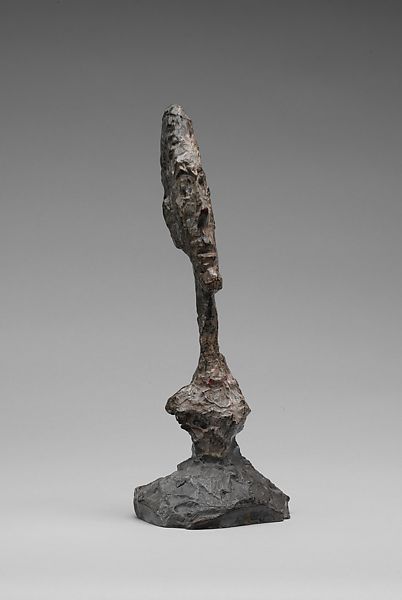
This little fellow reminds me of a Giocometti sculpture
Alberto Giacometti
CREEPY TOES:
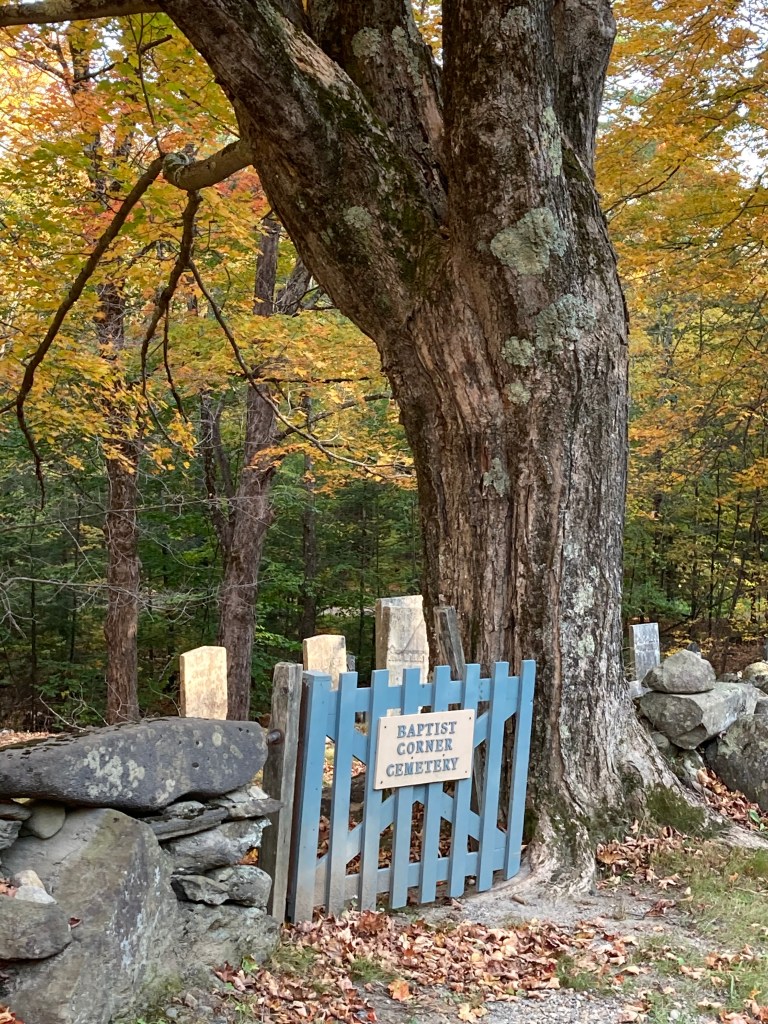
Last weekend after walking at the Bullitt Reservation in Ashfield, Massachusetts, we drove around doing some leaf peeping and discovered a steep and dark dirt road with an old cemetery; an excellent spot for this slightly creepy, spooky and eccentric improvisation!
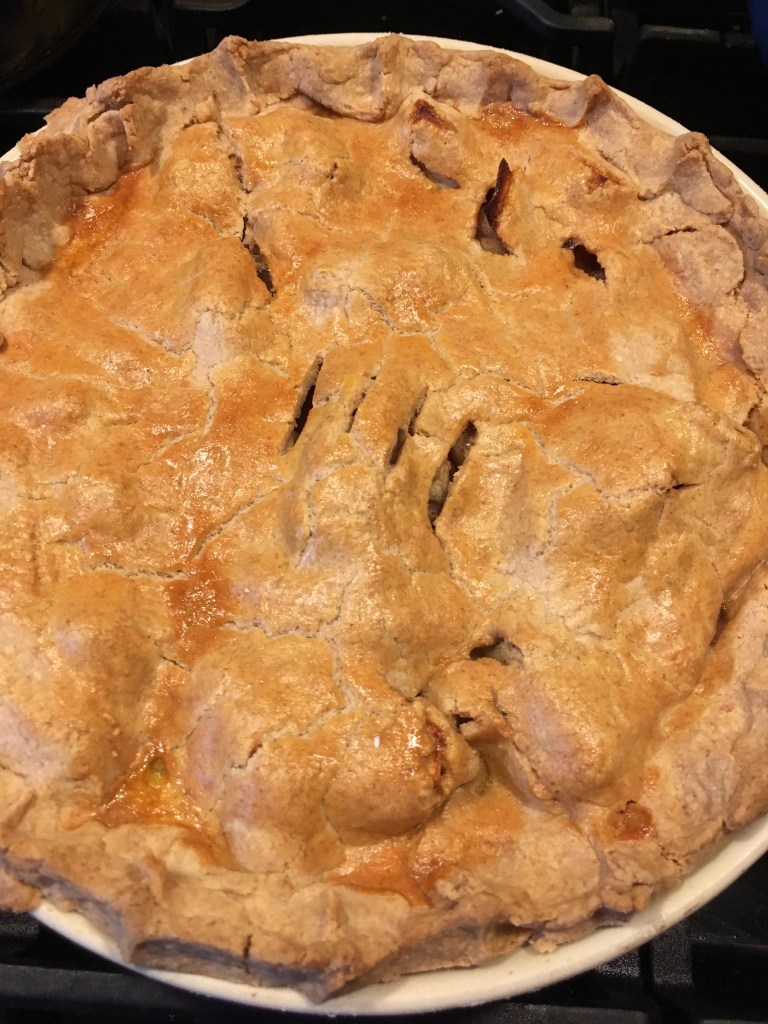
This week with excellent local apples, I made a spiced sugar free apple pie- I like to mix a few different varieties of apples; I particularly like the Honey Crisp variety. I use plenty of cinnamon, allspice, nutmeg, cloves and cardamom and I make the pastry crust using a recipe from Julia Child’s, Mastering The Art of French Cooking. The recipe calls for a combination of butter and shortening and it makes an easy to work with crust that is both tender and with a buttery flavor. For my version, I use whole wheat pastry flour and whole grain spelt flour which gives it a wonderful nutty taste. The apples are so full of flavor, that no sugar is necessary, although this would taste great with a big scoop of vanilla ice cream!
Sugar Free Spiced Apple Pie
Ingredients for filling:
5-6 apples- peeled, cored and sliced into thin pieces.
1 teaspoon of cinnamon
1/4 teaspoon each of ground nutmeg, allspice, cloves and cardamom.
Mix all ingredients together in a large bowl.
Pastry Crust:
1 cup whole wheat pastry flour
1 cup whole grain spelt four
1 teaspoon salt
1 stick unsalted butter
3 tablespoons non-hydrogenated shortening (I like the organic Spectrum brand)
3 or more tablespoons ice water
Make the pastry crust:
In the bowl of a food processor combine flours, salt, butter and shortening until just combined.
Add the ice water and process until a ball shape forms. You may need to add more water a tablespoon at a time.
Take the ball of dough and cut into 2 pieces and refrigerate at least one hour. When you want to make the pie, bring the dough back to room temperature.
Preheat oven to 350 Degrees
Bring pastry dough to room temperature.
Roll out one of the balls of dough to fit a deep pie dish.
Place filling in pie dish.
Roll out next ball of dough to fit over top of filling.
Trim and crimp edges together.
Make an egg wash with one lightly beaten egg and brush over top of pie. This will make the top of the pie bake with a golden color.
Bake aprox. 40- 45 minutes until filling is bubbly and the top is golden brown.
I leave you with a vintage Halloween treat- a clip from the “talking trees” scene from the Wizard of Oz!
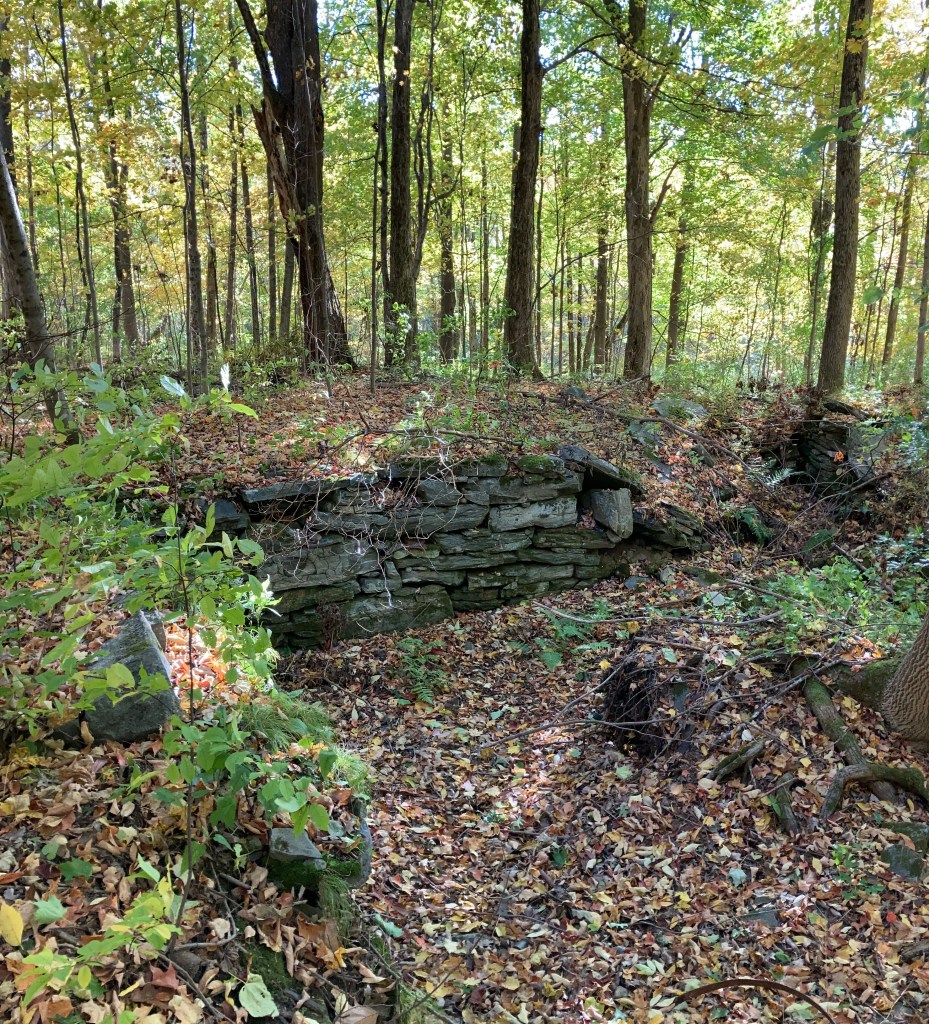
The woods of New England are filled with old stone walls & foundations of long deserted homes and farms. I often feel that I am on a treasure hunt or an archeological exploration and I wonder what the houses, fields and farms looked like a few hundred years ago. All of the trees would have been cut down and instead of quiet woods, there would be bustling activity all around.
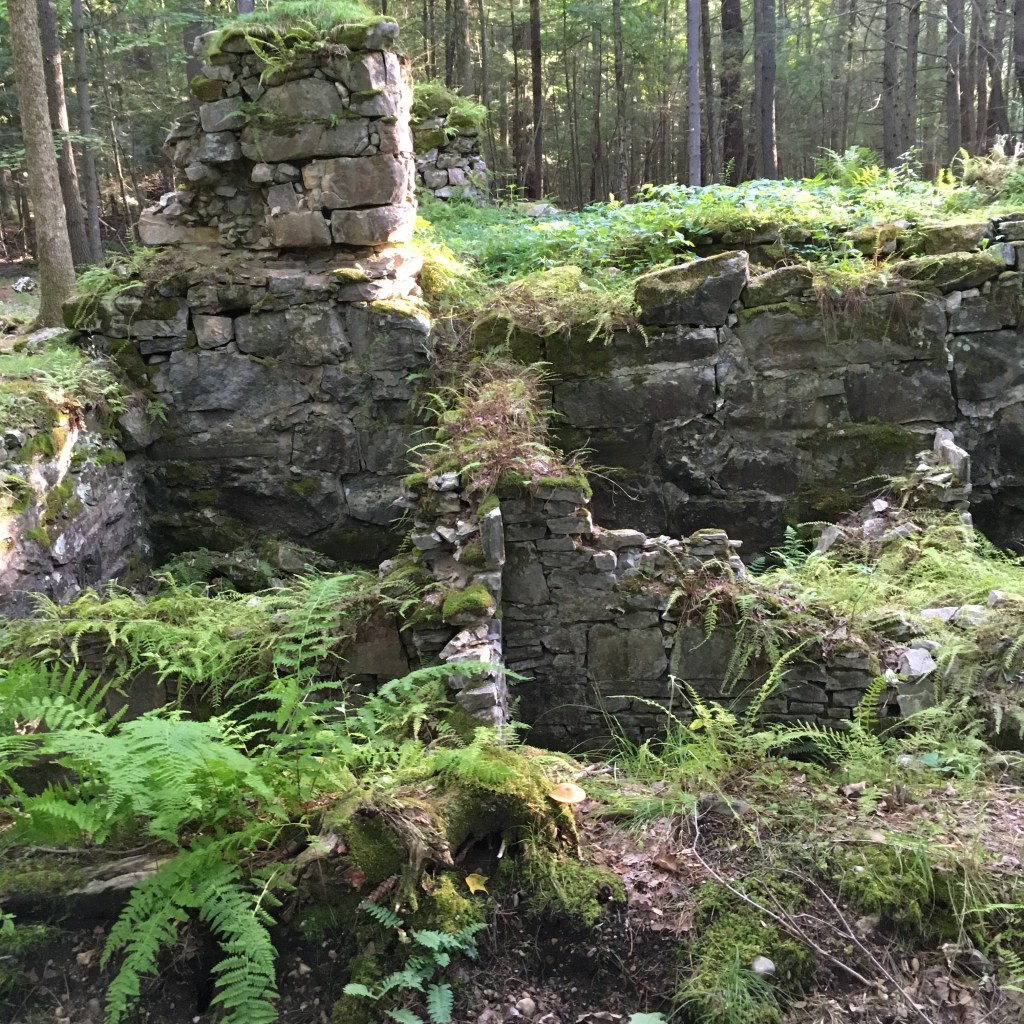
Recently on a walk at the Goodnow Preservation, part of the New Marlborough Land Trust, we discovered the site of an old paper mill; The Lower Carrol Mill. According to the New Marlborough Land Trust; using local wood pulp, the mill made newsprint and manila paper for the New York City market from 1855-1887. As we walked down a path towards the Konkapot River, the late afternoon sun filtered through the trees.
Through a light mist we could see remnants of the old paper mill; moss covered stones were stacked haphazardly on top of each other-time stood still. On a small knoll a lone piece of rusty machinery stood by itself. I imagined how the mill would have looked and sounded in the 1860’s with the tremendous noise of the machinery and sawdust flying as local wood was turned into pulp. The Carrol Mill, operated by water power, was one of nearly a dozen small industries on the Konkapot River.
Just a mile down the road from The Goodnow Preserve is another treasure; the Joffe Nature Sanctuary, also run by the New Marlborough Land Trust. It includes a lovely short walk that loops around a peaceful marsh.
There are several wooden benches throughout the trail- a perfect place to bring a book!
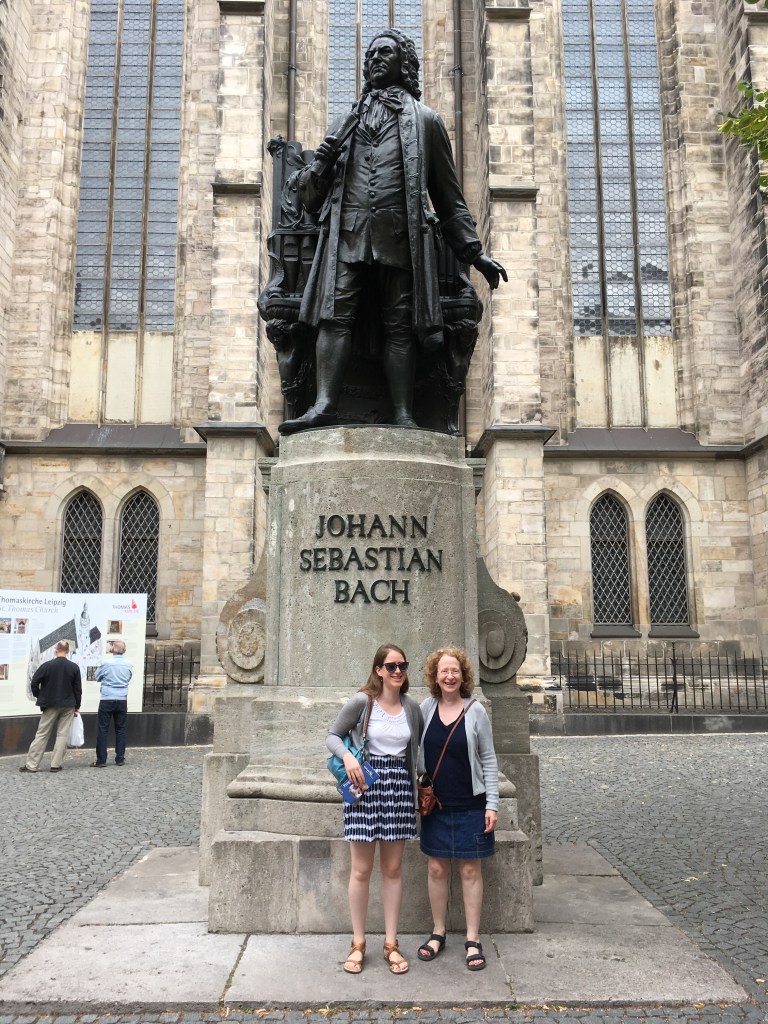
On one of our walks, I brought along my oboe. The previous day I had listened to a virtual online concert of Bach Cantata BWV 199 that our daughter, the singer Alicia DePaolo had just presented. It was a beautiful performance; the cantata is emotionally stirring and deeply satisfying on so many levels. It gave me the inspiration for this improvisation:
Joffe Nature Sanctuary
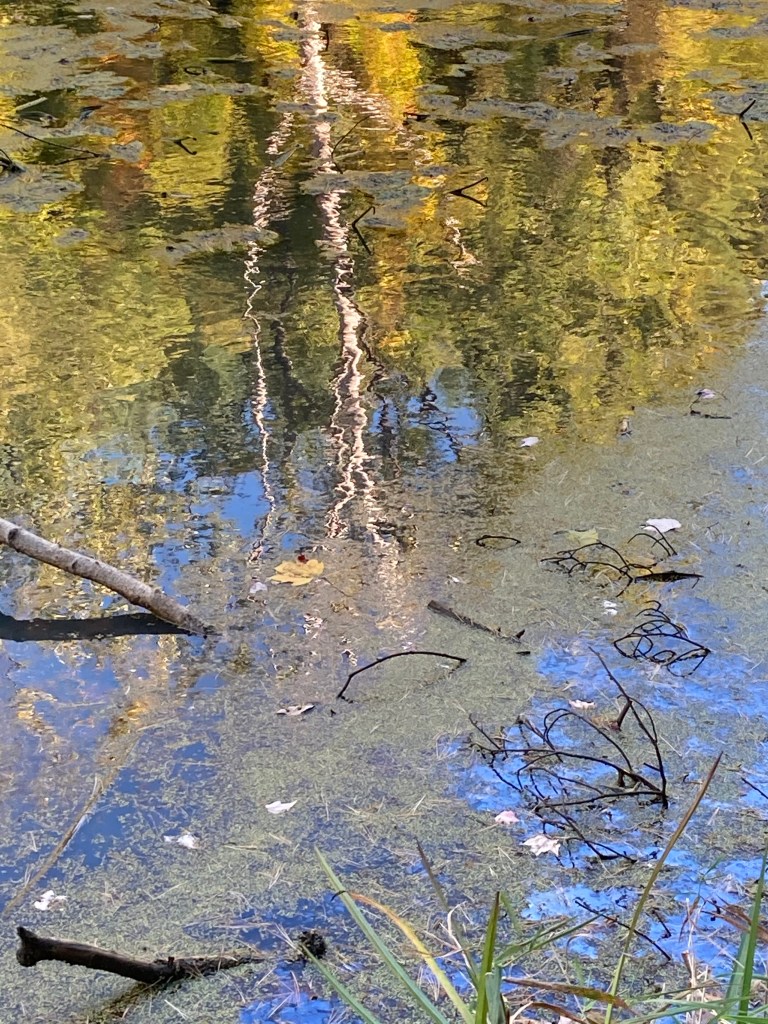
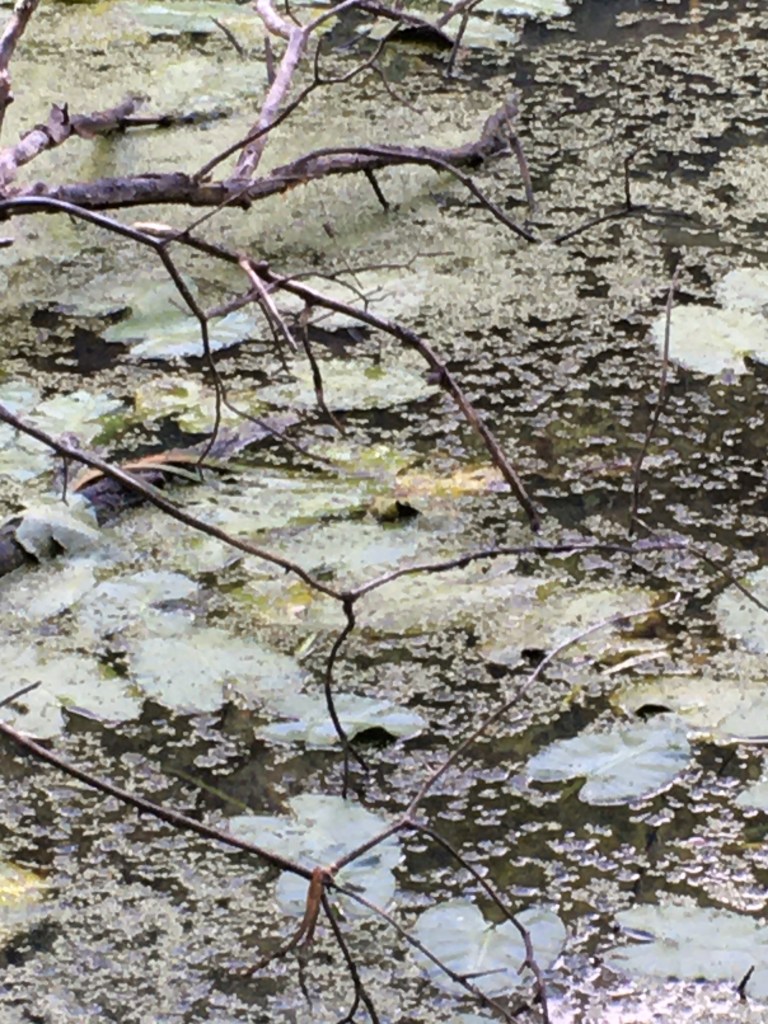
Since the pandemic started and we have been fortunate to spend more time in nature, I have felt myself becoming more attuned to the surroundings. I have come to appreciate the intricate patterns and designs in the trees, plants, roots, water and sky.
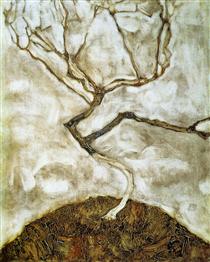
I see abstract images that often remind me of the Austrian painter, Egon Schiele.
“A Tree in Late Autumn”-Egon Schiele
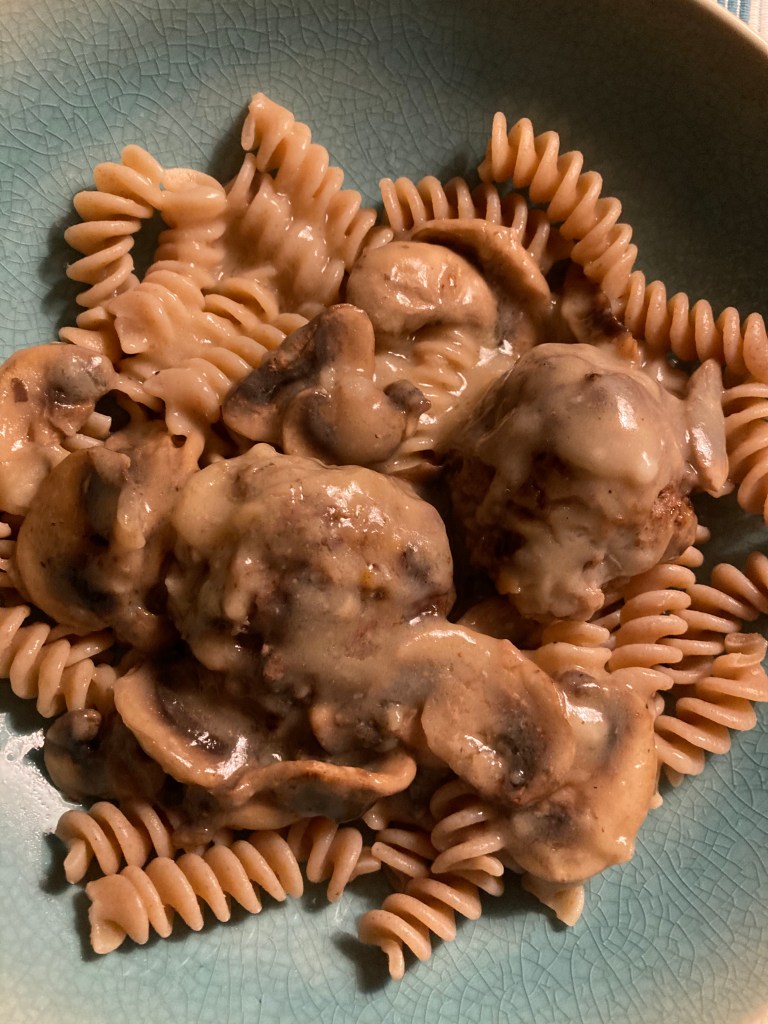
This is the week of “Salmon Three Ways” from a mistakenly large order of salmon. So far, we have had Asian Soba Noodles with Crispy Salmon, Salmon Cakes and we are supposed to have Tandoori Salmon tonight. But, truth be told, both Paul and I are more than a bit tired of salmon! The Tandoori Salmon will be frozen and we are going to have Swedish Meatballs! Yes, there is a Swedish Meatball story, but it will be saved for another blog!
Asian Soba Noodles with Crispy SalmonSalmon CakesTandoori Salmon
Salmon Cakes
Ingredients:
1/2 to 3/4 pound salmon fillet
1 egg
1/4 cup whole wheat breadcrumbs
1 teaspoon sesame oil
few drops of hot chili oil
1 teaspoon finely chopped ginger root
1 large garlic clove finely chopped
salt and pepper to taste
Prepare Salmon Cakes:
Remove skin from salmon and cut fish into a few pieces.
Add all other ingredients into the bowl of a food processor.
Blend until mixed, don’t over process.
Form mixture into four salmon cakes. The mixture is quite sticky. I line a large plate with wax paper and drop spoonfuls onto the plate. Form the patties with a small spatula.
Chill until firm.
Heat medium size cast iron pan or non-stick skillet.
Add a tablespoon of olive oil.
Brown on one side and flip over. Cook a few minutes more.
This weekend my husband and I decided to visit one of our favorite places, The William Cullen Bryant Preserve in Cummington, Massachusetts. I wrote a recent blog about our visits this past summer: https://wordpress.com/block-editor/post/musicianstravels.com/146
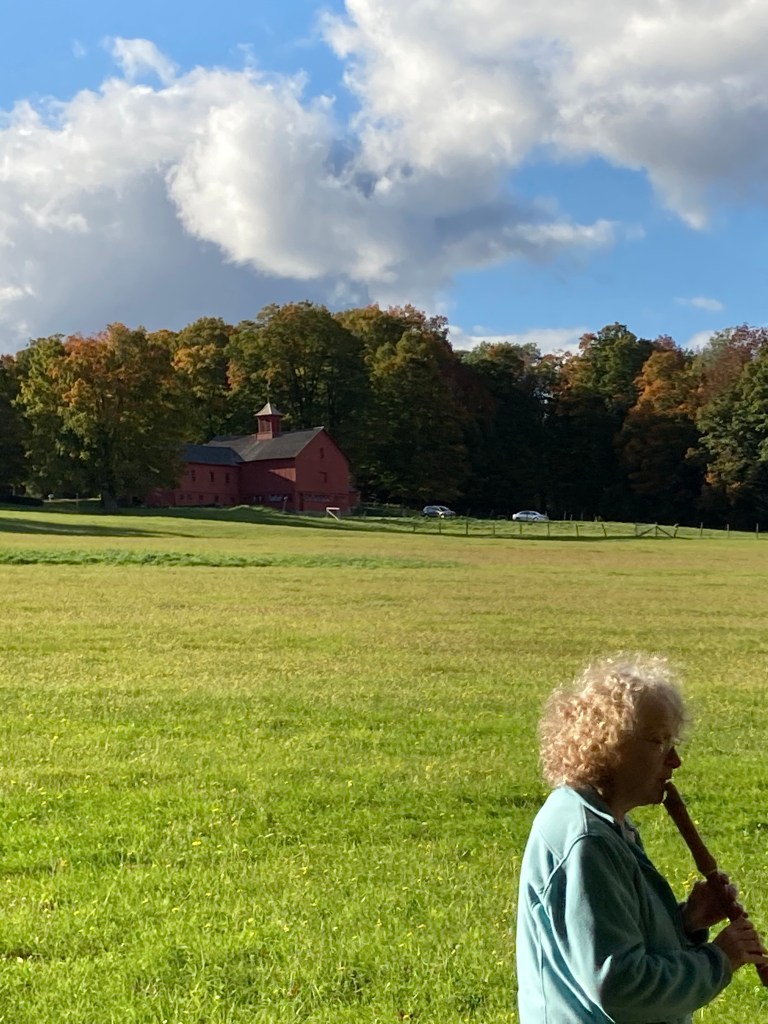
It was a perfect fall day with a chill in the air. As we drove up to the homestead, the sun was shining on a field near the old barn on the estate- a lovely spot to play my recorder!
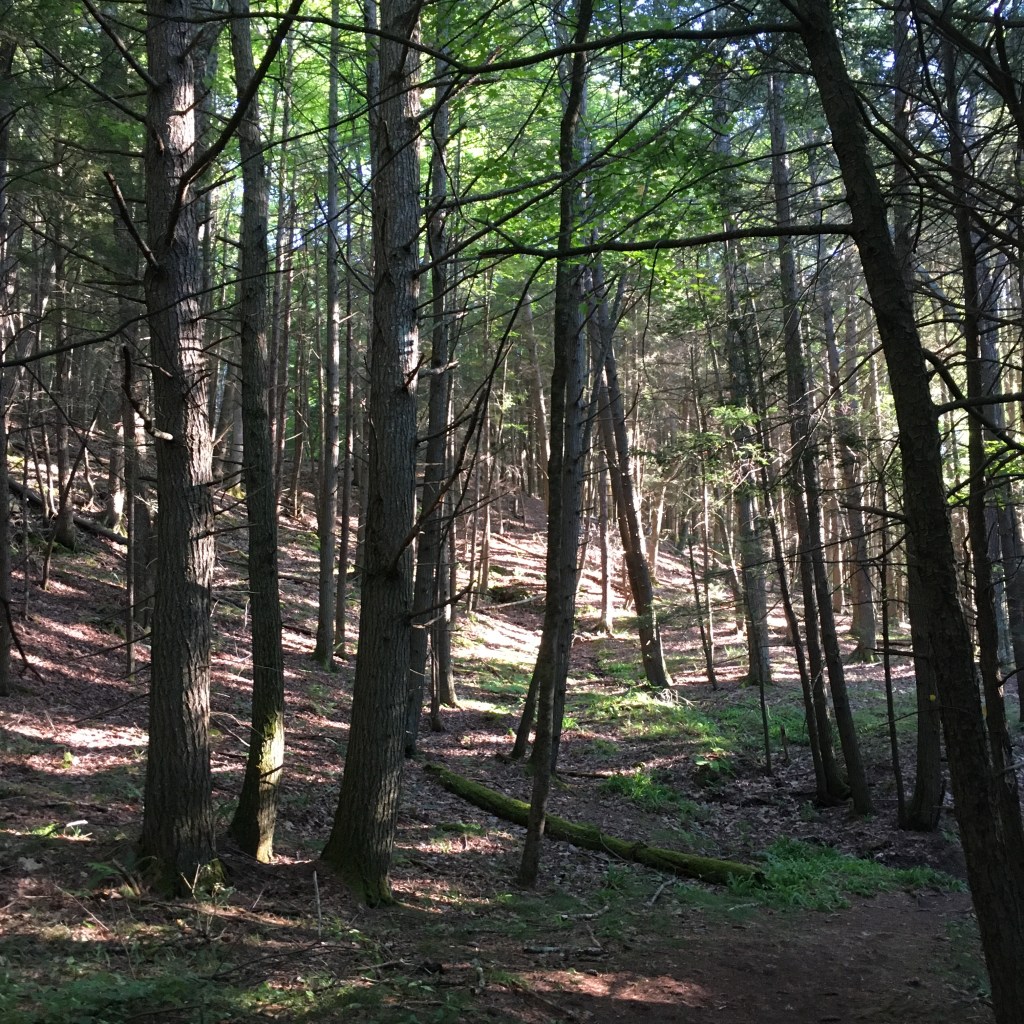
From the meadow, we stepped onto the trail that winds through the woods. As we looked up, the late afternoon sun filtered through a canopy of leaves and we both felt a familiar sense of comfort and tranquility.
The woods were noticeably quiet-no chirping of birds; only the small gurgle of the rivulet stream; a few chipmunks and squirrels scurried across the path carrying nuts in their mouths.
I looked down on the forest floor and saw a perfectly composed still life; a pine cone perched on a mushroom next to to tiny red leaf.
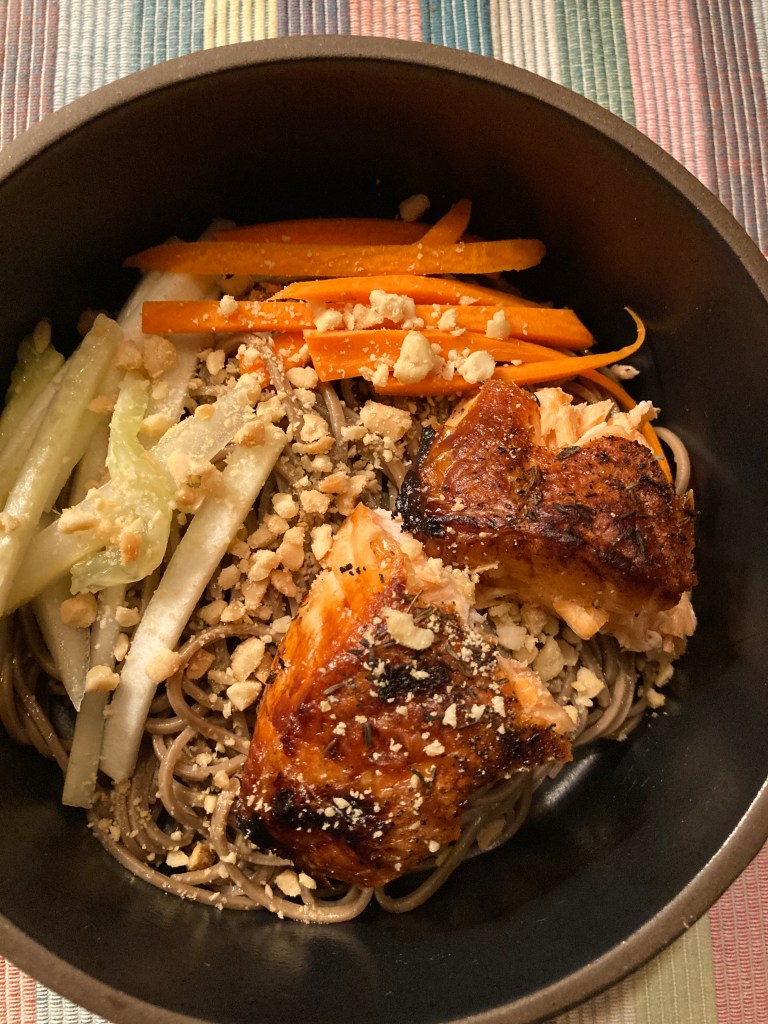
On the way back home, we stopped at a store in Great Barrington to pick up a food order. When we got back to our house, I saw that we were mistakenly given a very large piece of salmon. SO, this week there will be “Salmon Three Ways”. Tonight, it’s Asian Soba Noodles topped with chunks of crispy broiled salmon, ginger, sliced cucumber, julienned carrots and chopped peanuts. More recipes to follow for Tandoori Salmon and Salmon Cakes!
Asian Soba Noodles with Crispy Salmon
Serves: 2
Ingredients:
1/2 to 3/4 pound salmon fillet seasoned with salt, pepper and sprinkled with dried thyme
1 package buckwheat soba noodles
1 teaspoon finely chopped fresh ginger root
1 small cucumber peeled and julienned
1 small carrot peeled and julienned
Ingredients for Sauce:
2 tablespoons tamari
1 tablespoon plus 1 teaspoon sesame oil
1 tablespoon brown rice vinegar
few drops of hot sesame oil to taste
1/3 cup finely chopped salted peanuts
Instructions:
Preheat broiler
Broil salmon until crispy on top and it is just done- do not overcook.
Let cool slightly and cut into small pieces- discard skin.
Bring a medium pot of water to boil and cook soba noodles until done.
Drain and rinse thoroughly with cold water.
Place in medium bowl and stir in 1 teaspoon of the sesame oil, so the noodles do not stick together.
Stir in chopped ginger- you can also add chopped scallions if desired.
Make sauce:
Mix together tamari, brown rice vinegar, remaining sesame oil and hot sesame oil.
After hearing about Ruth Bader Ginsburg’s passing and her quick and ruthless replacement, thoughts and emotions flowed through me faster than I could process them: grief, anger, frustration, helplessness, more fury, fear, trepidation for what is to come; my surge capacity was almost ready to spill over! I learned about the term for the first time as I listened to a beautiful online Erev Yom Kippur service from Shir Tikvah Synagogue in Winchester, MA. The wonderful and insightful Rabbi Cari Bricklin-Small talked about how all of us have surge capacity, a set of adaptations that we draw on in stressful situations and that at times this can be depleted. But then, I remembered RBG’s tenacity, her strength of character, her passion for the arts, her love of country and her family and her willingness to really listen and respect other’s opinions. As an email popped up on my computer screen reminding me to keep making phone calls in Battleground States, I realized clearly that it is now our turn to carry her torch forward to continue the fight for equality for all people- then I felt gratitude and thanks for what she accomplished.
Bear Swamp-Ashfield, MA
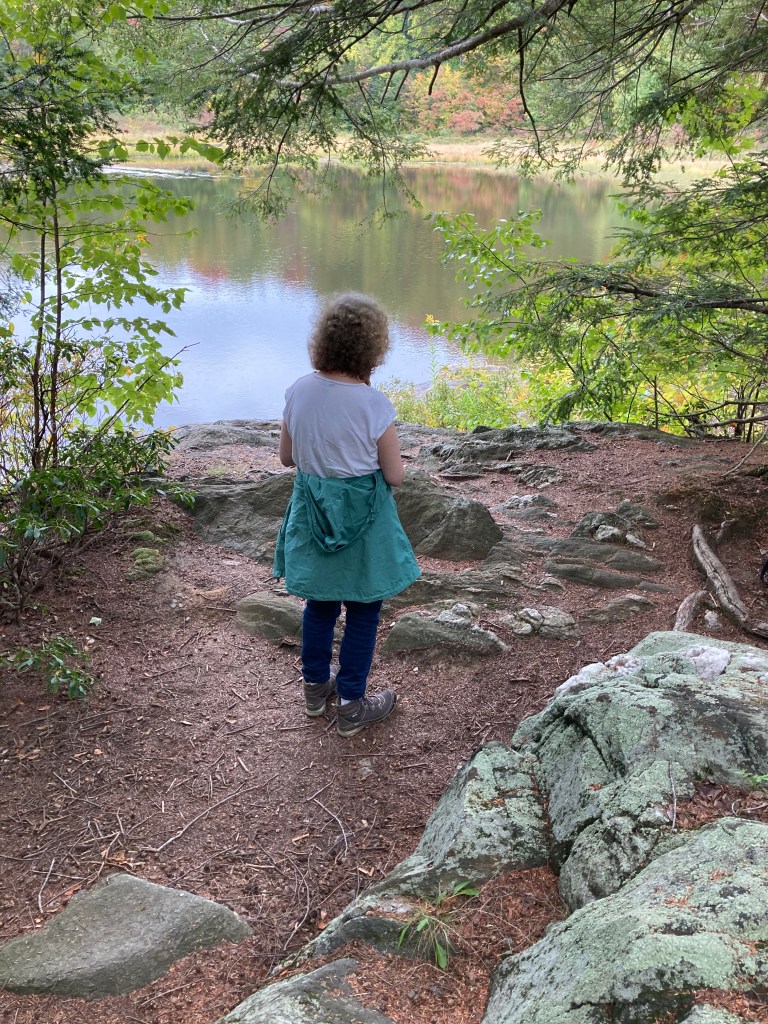
Yesterday we took a hike to a bucolic and peaceful pond; Bear Swamp in Ashfield, Massachusetts. Luckily my Native American Flute was stowed safely in my husband Paul’s backpack. As I walked through the pine woods and saw a pond, the perfect melody came to me. Yom Kippur started the next day; the melody is partly to commemorate the observance of Kol Nidre and it also a piece of music to honor Ruth Bader Ginsburg. As I started to play, I poured all of my turbulent emotions from the last few days into the short intervals of the piece.
After I played, I felt peace, resolve and determination. I hope that this music will help to honor her memory and for the moment my surge capacity was renewed!
* Threnody-a wailing ode, song, hymn or poem of mourning composed or performed as a memorial.
We almost missed this little known gem. We were on our way back home from a hike in Western Massachusetts. I had a jingle formulating in my head that I wanted to try out- for those new to my blog, I have been playing short improvisations on my recorder, Native American flute and oboe on woodland trails, mountain tops and other inspiring locations. We did a quick search for interesting sites in the area and found Windsor Jambs; a beautiful waterfall with a strange name and unusual rock formations.
The rocks were stacked sideways and as the local folklore goes, the original settlers in Windsor, Massachusetts named the spot Windsor Jambs because the rock formation in the falls reminded them of the jambs of a fireplace or a doorway. We followed a path along the falls and I was able to find a lovely spot to play the tune that was percolating in my head! As I started to play, I heard a group of people chattering through the woods-my first thought was one of trepidation -“I hope they don’t get too close to me” and “should I stop playing”? As the group rounded the bend in the path, I saw that this was an extended African American family that included grandparents, parents and a few children; one young girl was carrying a guitar case. They were all wearing masks and as they saw me, they stopped at a respectful distance and as they heard me play, a look of surprise and happiness came over their faces. It was almost as if they had come across a magical wood sprite, albeit a very mature one! I heard the group make a collective sigh of delight. It felt wonderful to play for my small but appreciative audience, and in these times of the pandemic, this was all I needed- I was performing! As I watched the family continue on their walk, I imagined that the young girl carrying the guitar case was also going to find a beautiful spot to take out her guitar and play a piece of celebration for a family member’s birthday or milestone achievement!
The last few days have been quite chilly and the leaves are starting to turn. I love this time of year when I can once again make soups and stews that simmer on the stove for hours in my trusty and well worn cast iron pot!
Our talented gardener friend Jerry, brought us the surplus from his garden: onion, leeks, carrots, cabbage, parsnip and kale; so I was inspired to make “End of Summer Friend’s Vegetable Garden Soup“! From my fridge, I added celery, chicken chorizo sausage, a can each of white cannellini beans, diced fire roasted tomatoes, and some Italian farro- a delicious grain that is a nice substitute for barley.
“End of Summer Friend’s Vegetable Garden Soup”
Ingredients:
1 onion finely chopped
1 large leek rinsed well and finely chopped
1/2 small cabbage sliced
1 parsnip chopped
1 carrot chopped
a few pieces of kale- tough stems removed and chopped
1 stalk celery chopped
2 or 3 chicken chorizo sausages diced
1- 8 ounce can cannellini beans
1/2 cup Italian farro
1- 8 ounce can fire-roasted diced tomatoes
1 teaspoon thyme
1 bay leaf
salt and pepper to taste
Prepare Soup:
Heat a tablespoon of olive oil in heavy large pot
Saute onion and leeks until softened
Add vegetables and rest of other ingredients
Cover with water and bring to a boil
Reduce to a simmer, cover and cook about 1 1/2 hours.
I served this with sour dough bread slices that I rubbed with garlic, poured on a bit of extra virgin olive oil and sprinkled the bread with grated parmesan cheese.
I broiled them until the bread was crisp and toasty!
Enjoy! And we will get through this time- VOTE!!!!!
AND, we made our first fire in our woodstove the other night!
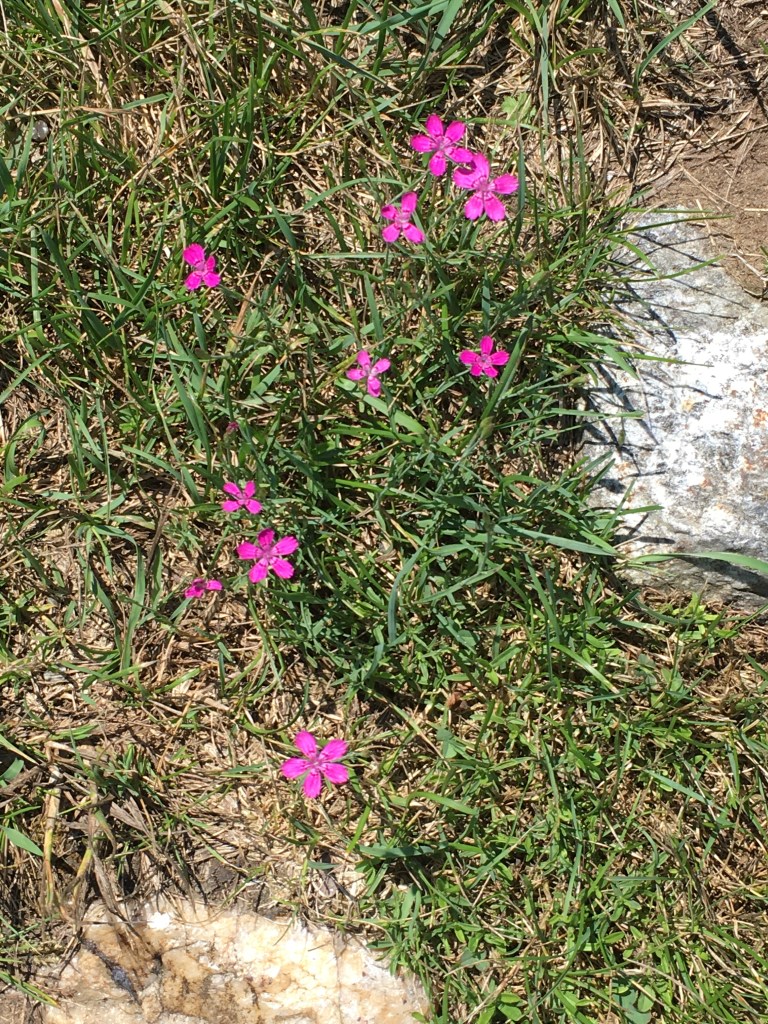
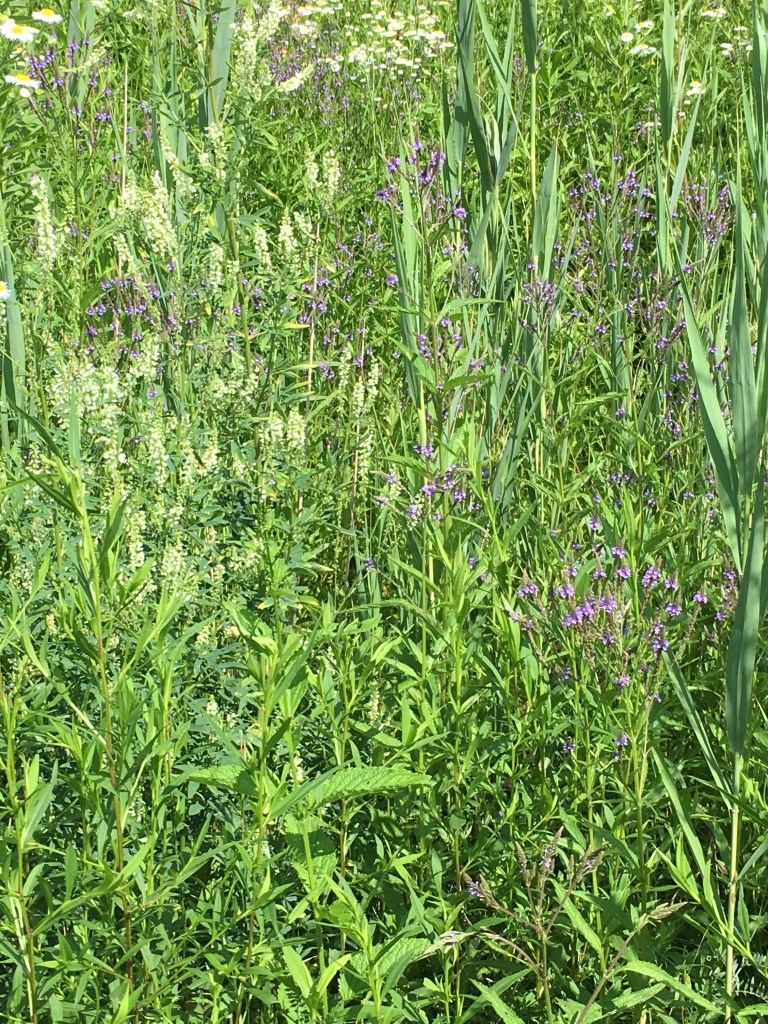
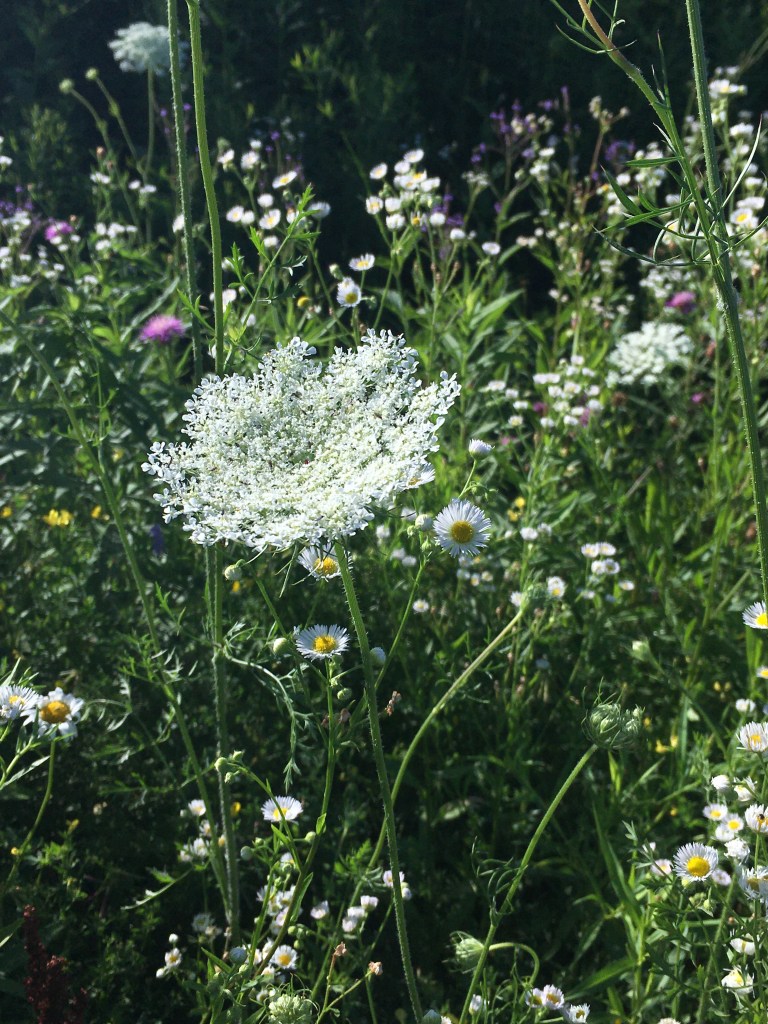
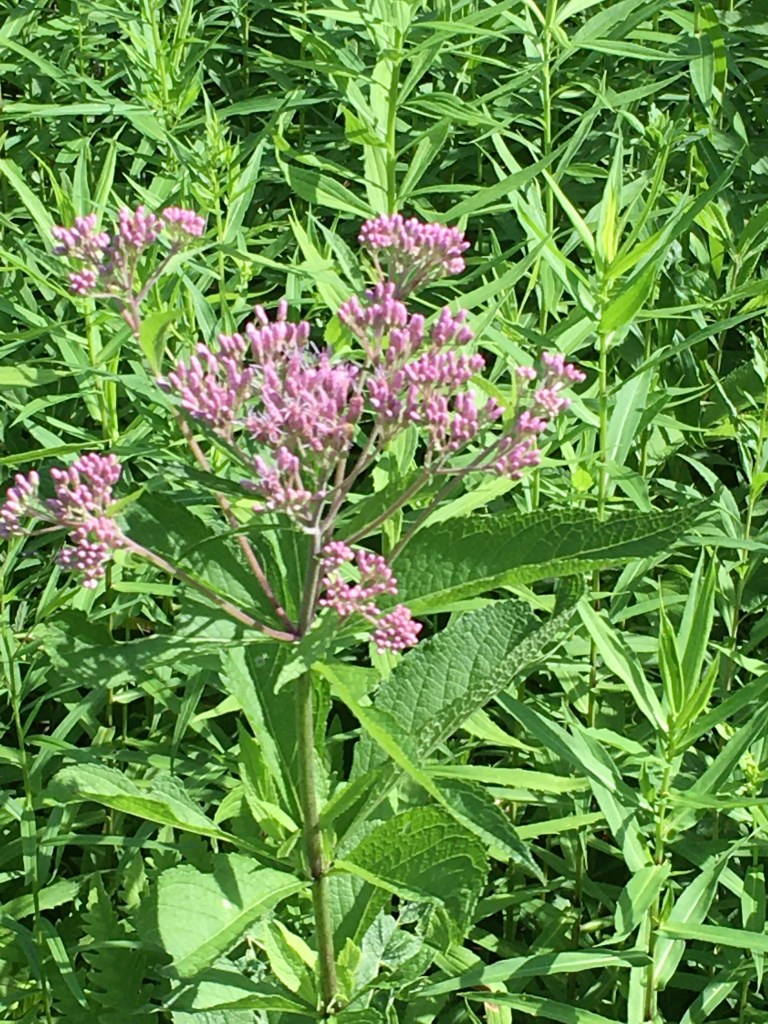
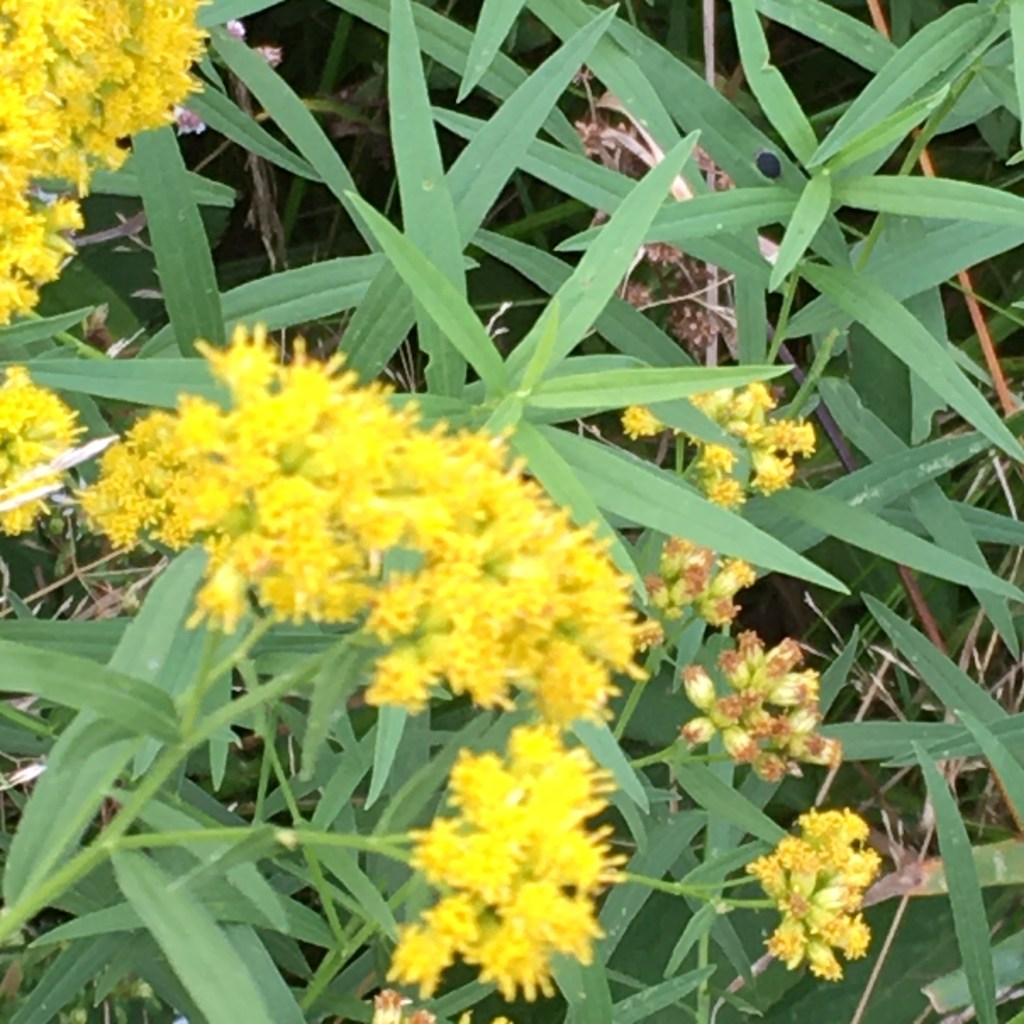
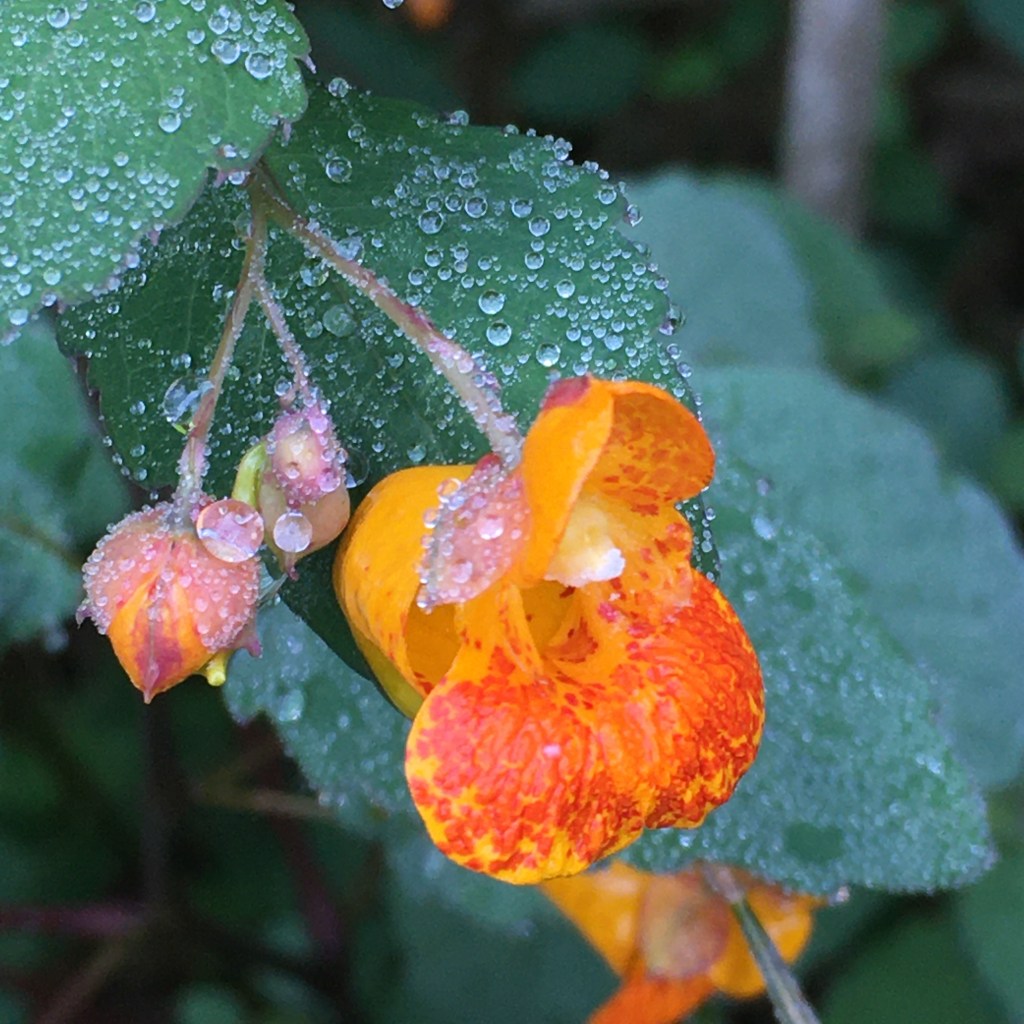
In our neck of the woods, the leaves are just starting to turn- a perfect time to remember the incredible beauty and variety of wildflowers that we saw this past summer on our walks through fields, marshes and the woods!
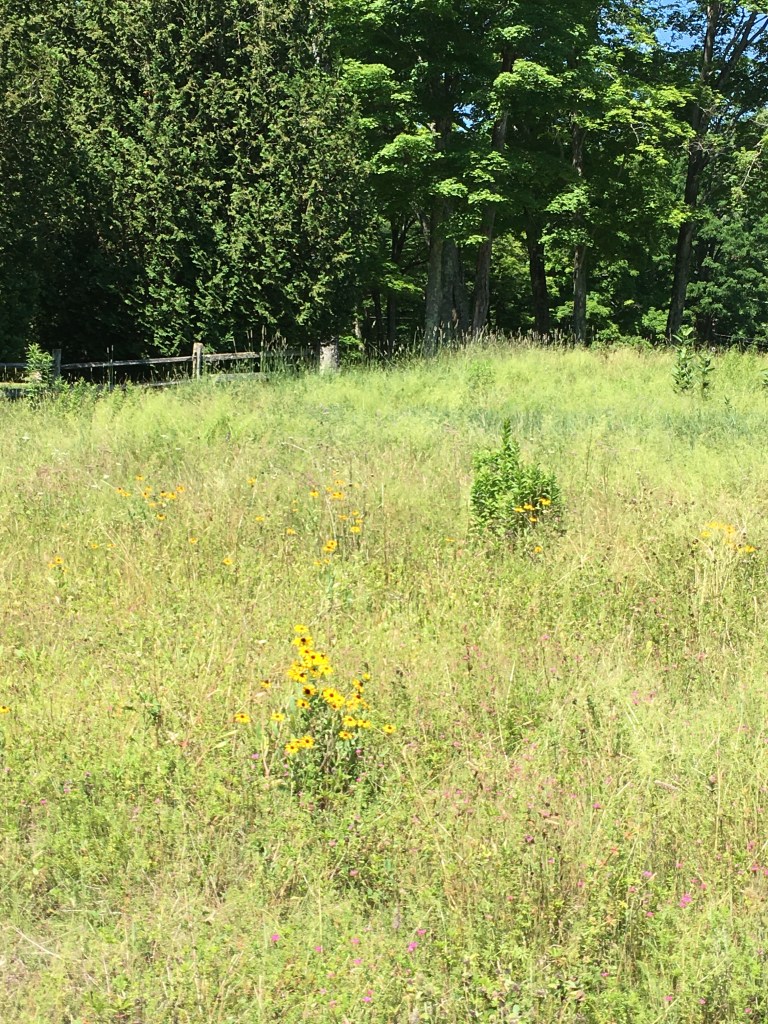
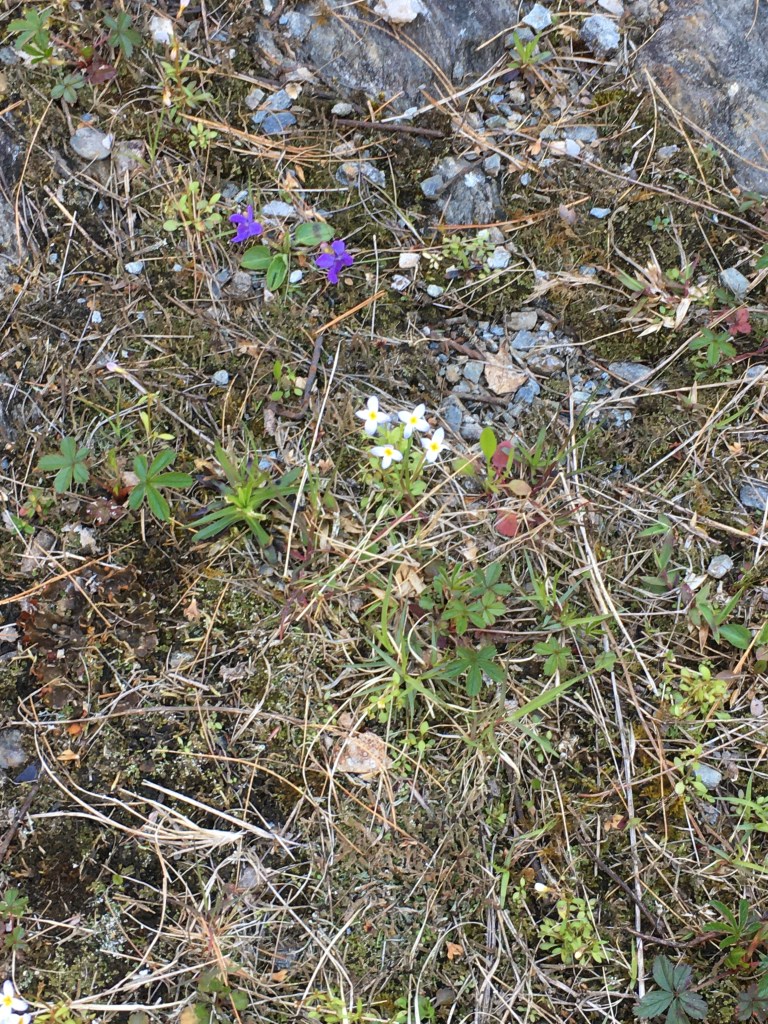
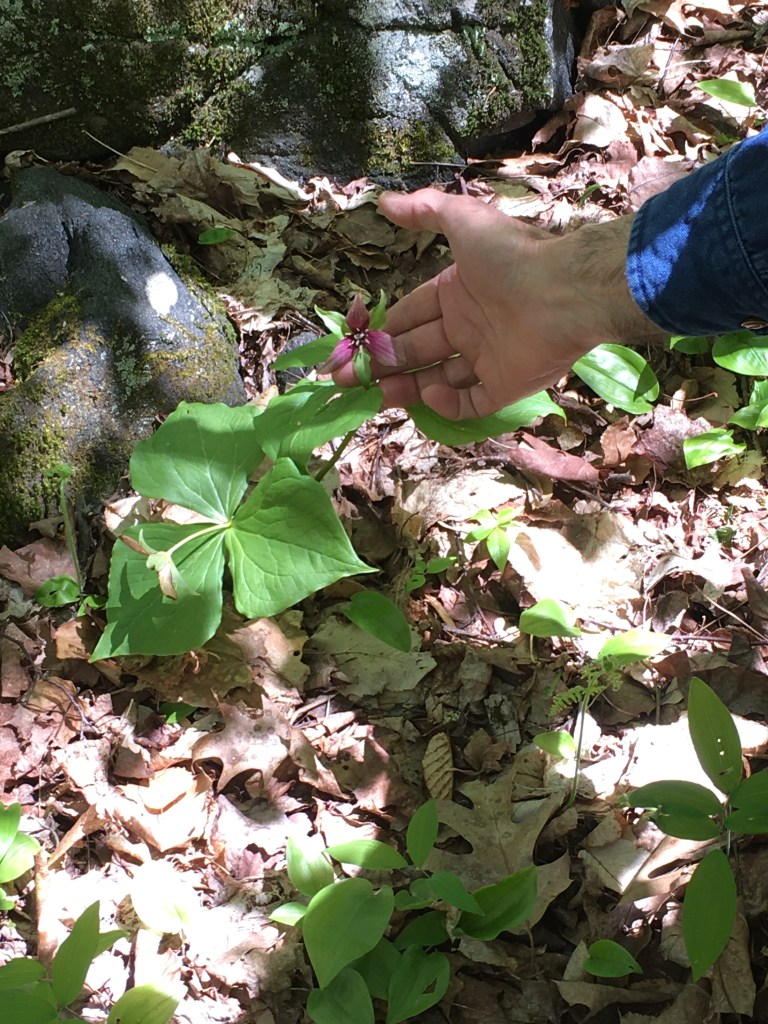
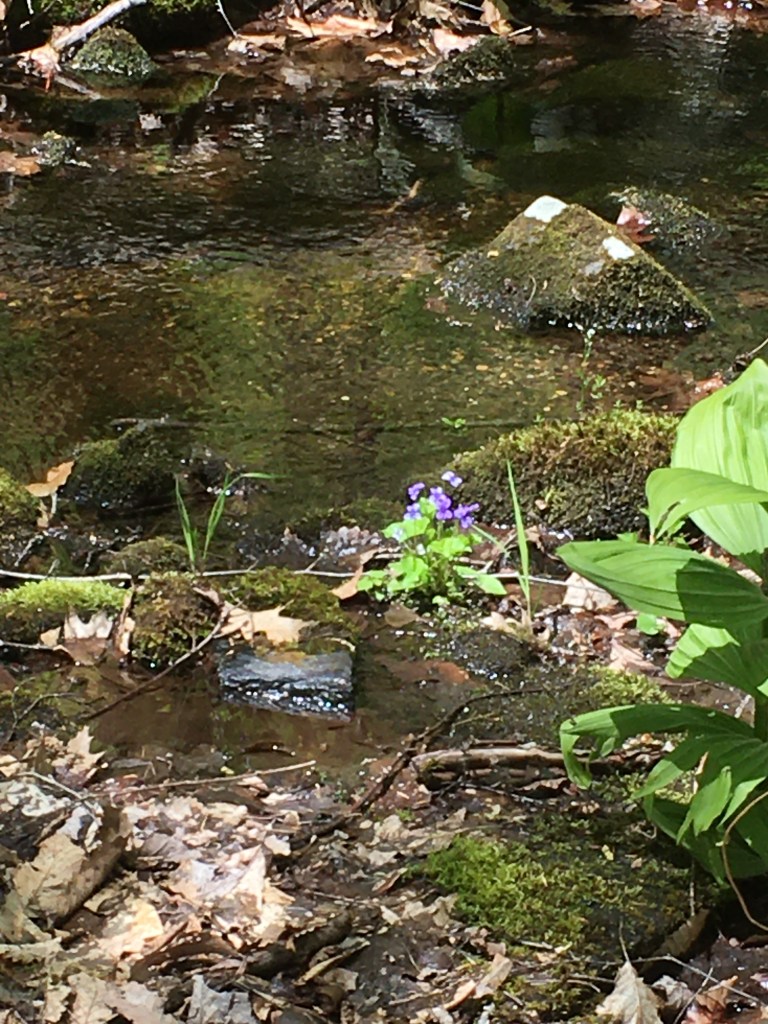
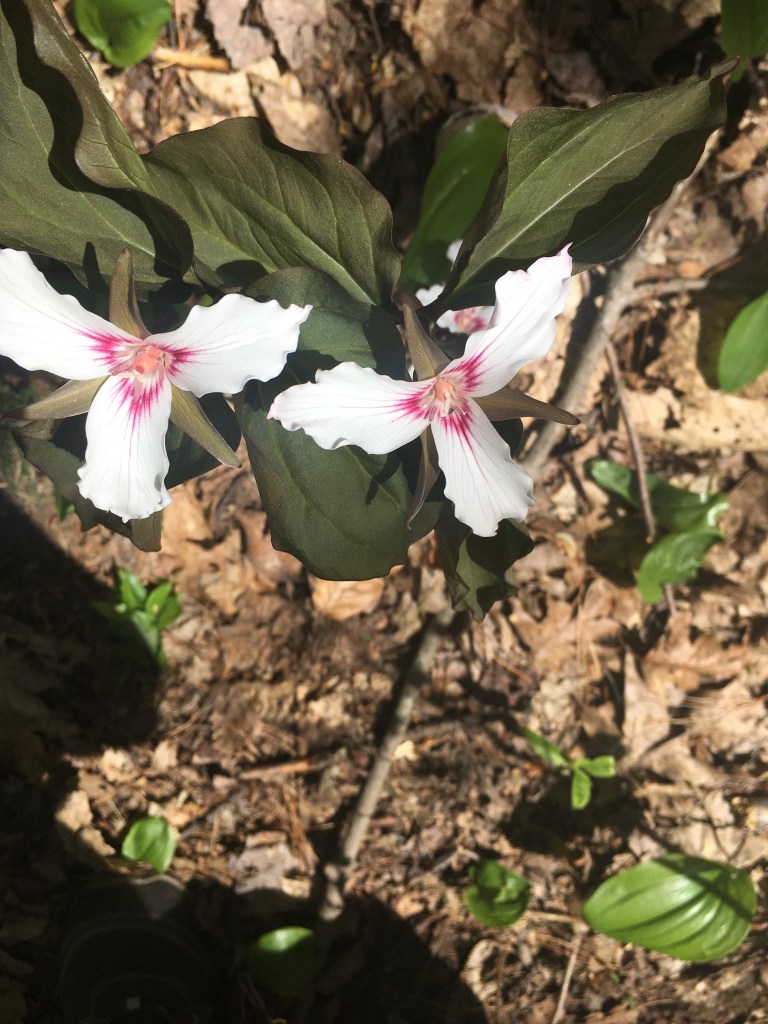
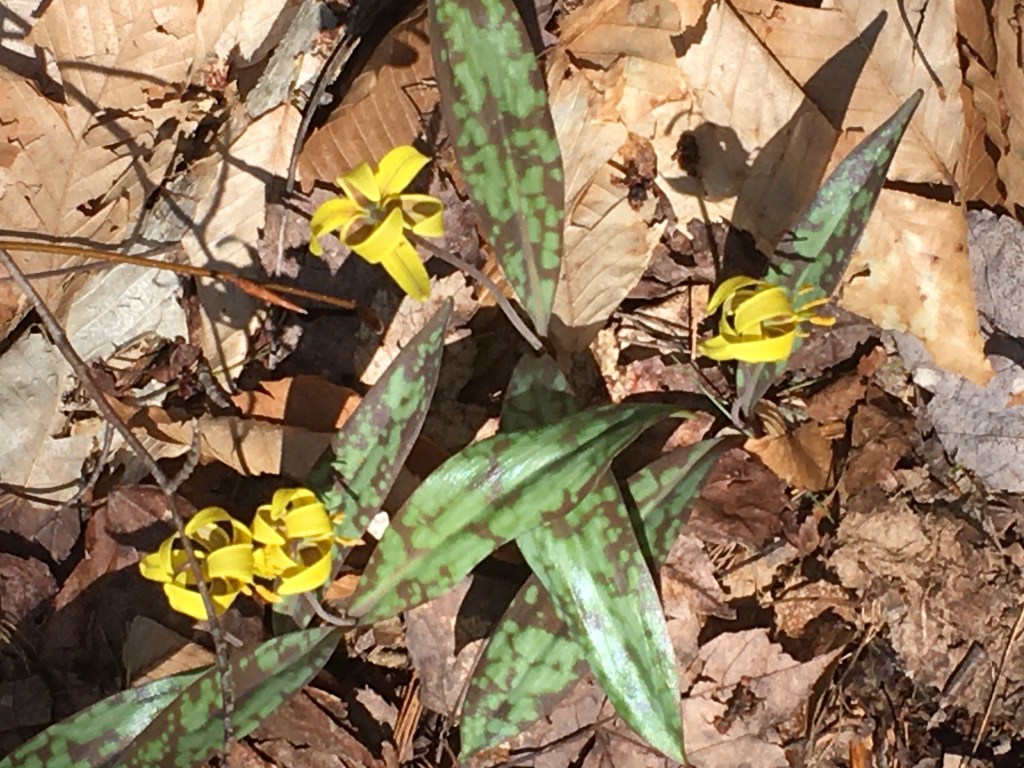
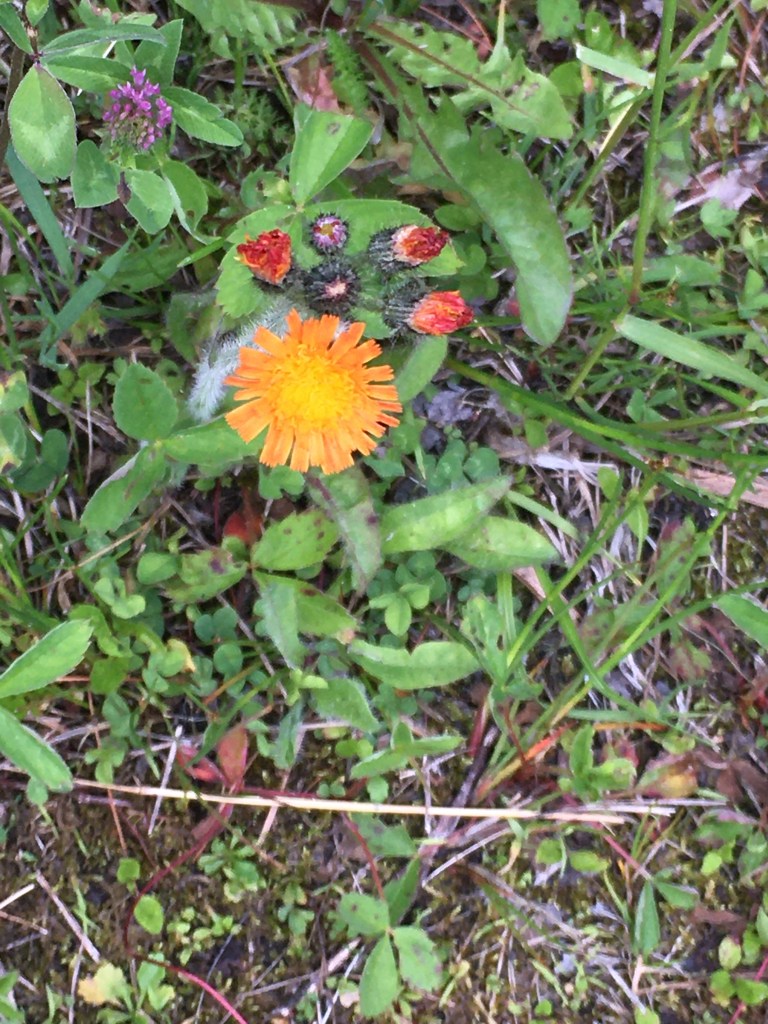
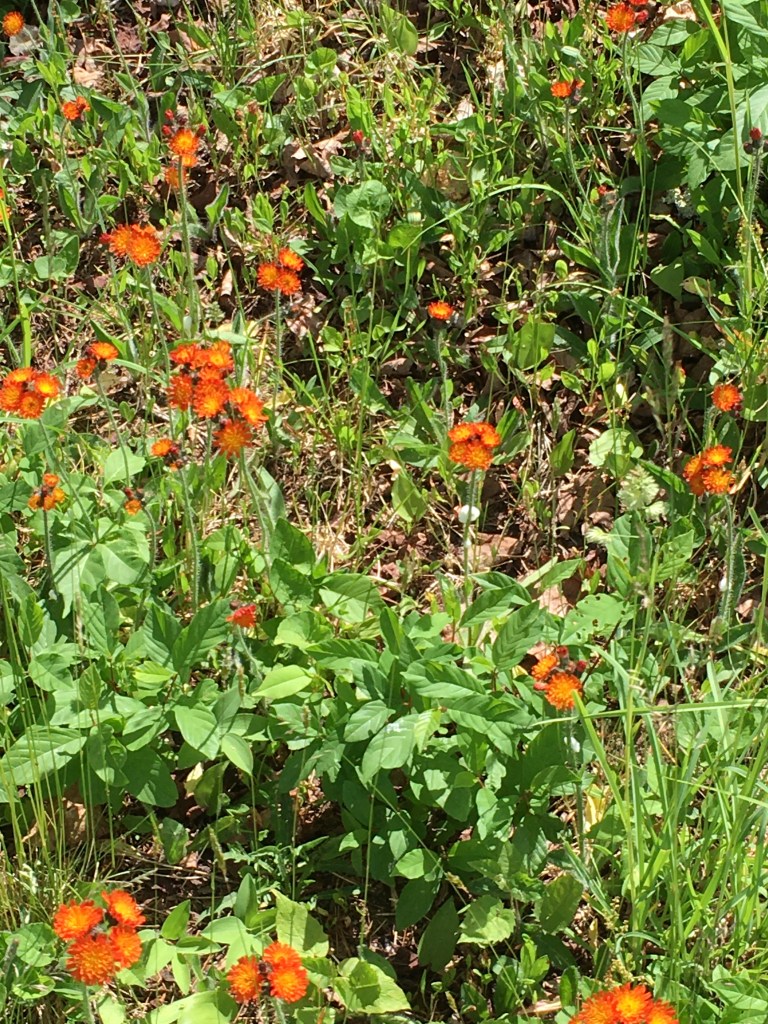
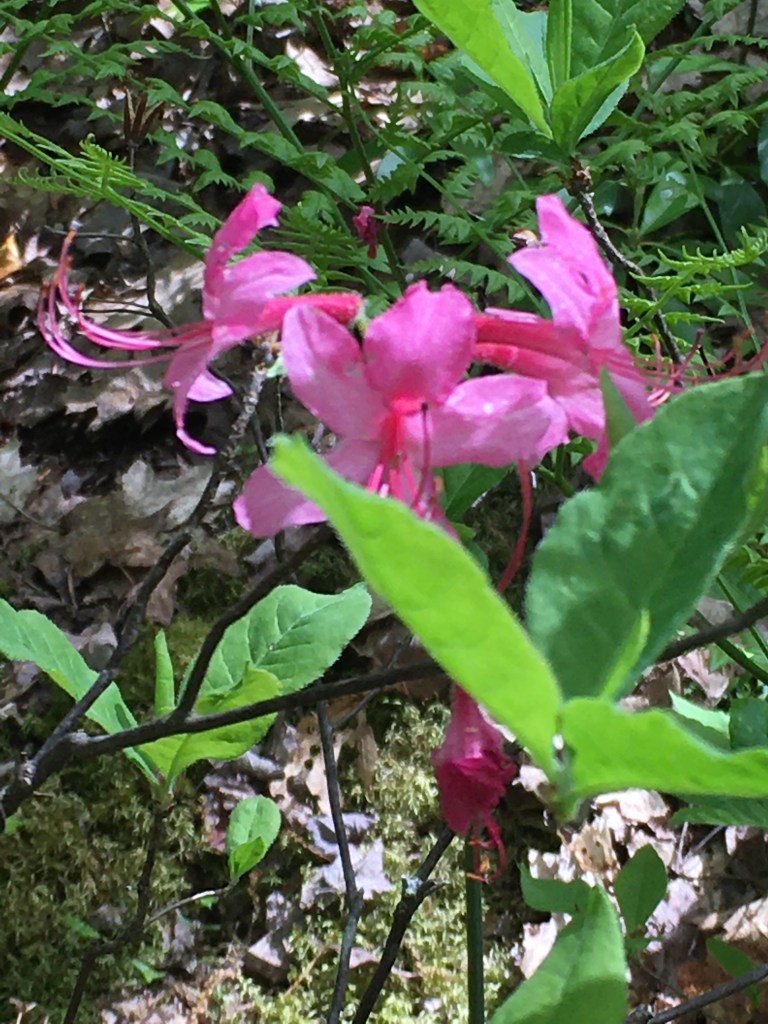
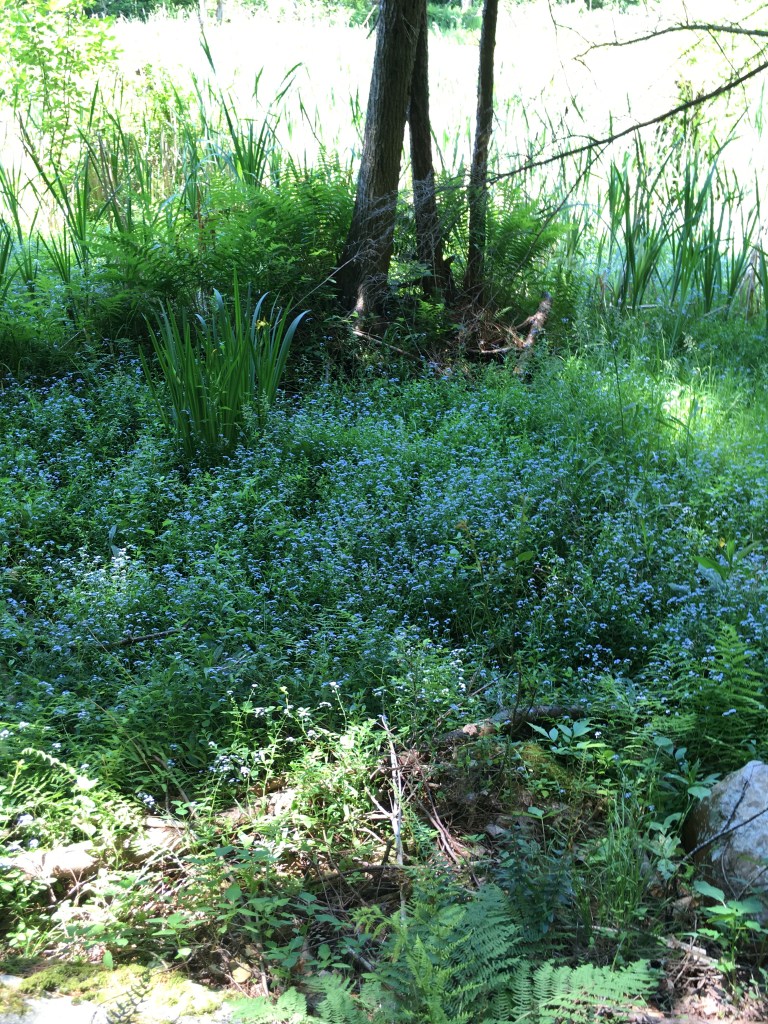
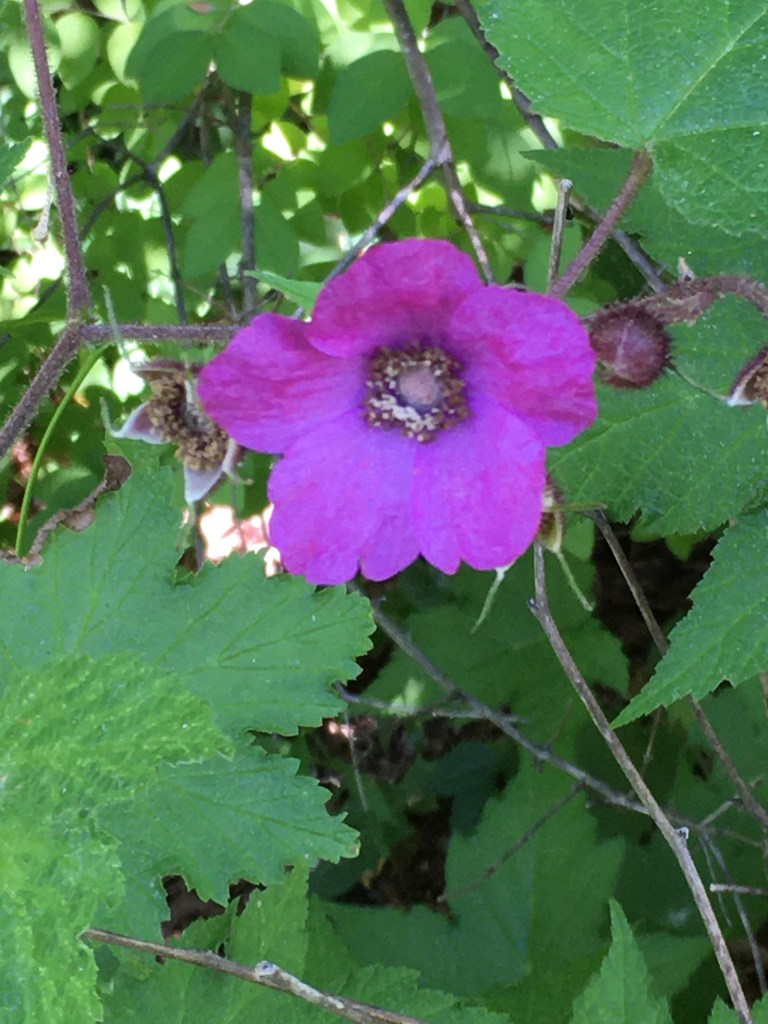
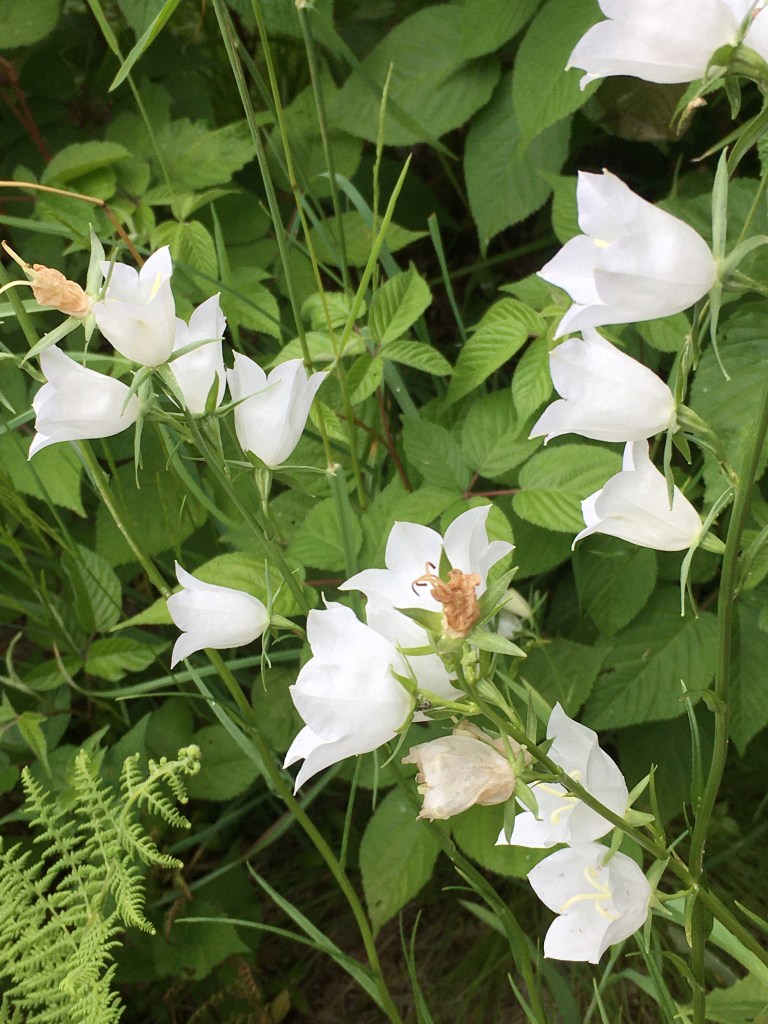
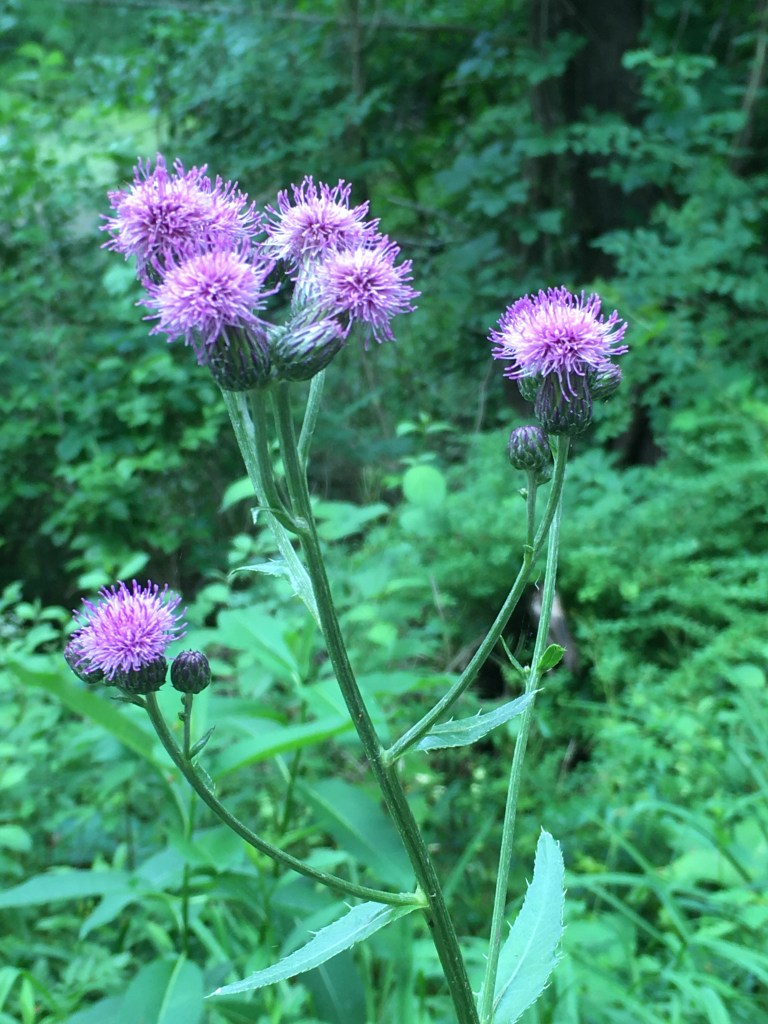
Going through the pictures that I took, it was impossible to pick just a few, so here is a wildflower extravaganza from early spring to late summer! I know the names of a few, but need help identifying many of the flowers- so please help me! Send your comments!
Name that flower!
Here is a short improvisation titled “An Ode to Summer Wildfowers” for alto recorder- I was inspired by a field of late August Jo-Pye weed and the idyllic summer day at a peaceful lake on Savoy Mountain in Western Massachusetts.
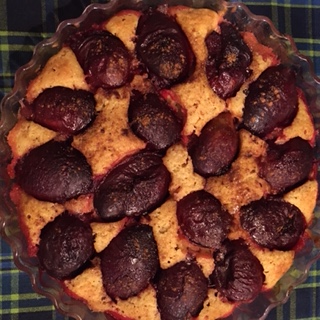
As the days start to shorten noticeably, I am always heartened when I see Italian prune plums at the farm markets. It’s time to make Plum Torte! The New York Times always publishes this beloved and much requested recipe: Original Plum Torte.
I decided to tweak the recipe to make it healthier. Instead of sugar I used Monk Fruit sweetener, which has a very low glycemic index. In the place of white flour, I used whole wheat pastry flour and a small amount of corn flour. For the topping I used just a sprinkle of coconut sugar, also with a low glycemic index. We thought the result was delicious, not too sweet and the tart flavor of the plums was perfect! I hope you enjoy this!
Plum Torte
Ingredients:
1/2 cup Monk Fruit Sweetener * see note
1/2 cup unsalted butter softened
1/4 cup corn meal
3/4 cup whole wheat pastry flour
1 teaspoon baking powder
pinch of salt
2 eggs
24 pitted Italian prune plums or fewer larger plums (I used 8 plums)
1 tablespoon coconut sugar, lemon juice and cinnamon for topping
Preparation:
Preheat oven to 350 degrees.
Cream the sugar and butter in a bowl until light and fluffy.
Beat in eggs one at a time.
Add flour, baking powder, salt and beat on low speed until just mixed.
Spoon mixture evenly into a pan or glass pie dish of 8, 9 or 10 inches.
Place the plums skin side up on top of the batter. Sprinkle lightly with coconut sugar and squeeze lemon juice over top- I used a quarter of a lemon, but more would also be nice! Sprinkle with cinnamon- again as much as you like.
Bake aprox. 40 minutes until fruit is bubbly and a toothpick comes out clean.
Let cool completely.
Note: I use Lakanto brand Monk fruit Sweetener and I have seen it at Whole Foods and my local food coop. It looks just like regular sugar and the sugar replacement is 1:1.
This is a perfect cake to usher in the Jewish New Year which starts this Friday.
Best Wishes for a Sweet and Happy New Year! Please be safe!!
These past few months have given me the wonderful gift of time. I also have the good fortune to live in a place of great natural beauty. Since the middle of March my husband Paul and I have taken many beautiful walks and hikes in the Berkshires and Northwest Connecticut. One of my biggest challenges during the pandemic has been not being able to perform with my colleagues and with my group Hevreh Ensemble. I did play two socially distant outside concerts this summer and it felt wonderful to play music with others! The situation we find ourselves in gives one the choice to create virtual projects or to play solos. A creative outlet slowly took shape as I started to bring along my recorder and Native American Flutes on our walks. This past summer I have been playing short improvisations on mountain tops, woodland trails, marshes and ponds. Here is a short improvisation from the Skiff Mountain Preserve in Kent, Connecticut.
Skiff Mountain Preserve
One of the most beautiful walks we have taken this past summer has been at the William Cullen Bryant Homestead in Cummington, Massachusetts about forty minutes from Northampton. We discovered the site by accident. A copy of the New Yorker Magazine was almost about to join an anonymous pile of books and other old magazines. Luckily Paul picked up the May 25th issue and read about a writer named Alan Weisman who has taken refuge at his rural Massachusetts home during the pandemic. He is the author of the 2007 best seller, “The World Without Us”; in the book, all life on Earth has vanished, a bit too apropos for our time!
William Cullen Bryant was born in 1794 and grew up in Cummington, Massachusetts, where his first poem was published at the age of 13. His most famous poem “Thanatopsis” was published in 1817 when he was practicing law in Great Barrington, Massachusetts. He went on to become the editor of The New York Evening Post. He was a passionate abolitionist and was instrumental in helping Abraham Lincoln win the presidential election. He was also a dedicated conservationist and horticulturist and used his editorials from the New York Evening Post to support Frederick Law Olmsted’s plans for Central Park.
When we approached the Bryant Homestead for the first time, we were struck by the serenity and peacefulness of the area. It felt as if we had stepped back in time- it was a hot summer day and in the late afternoon sun, as we listened carefully, we heard only birds and the gentle whirring of insects, but no sounds from cars or other engines. The air had a delightful stillness to it. From Byrant’s boyhood home, which is now a museum (closed during the pandemic), we walked down the gentle slope of a meadow and came to the Rivulet Trail. As we entered the cool dark woods from the bright hot sun of the meadow, the sweet, musky, spicy and calming scent of the pine trees enveloped us. The tall pines, some over 150 feet, stood reaching toward the sky like stalwart soldiers. They swayed gracefully, as the sunlight wove intricate patterns through the tops of the trees. Bryant loved this trail and it is the inspiration for many of his poems.
I played this improvisation on the Pine Tree Loop part of the Rivulet Trail.
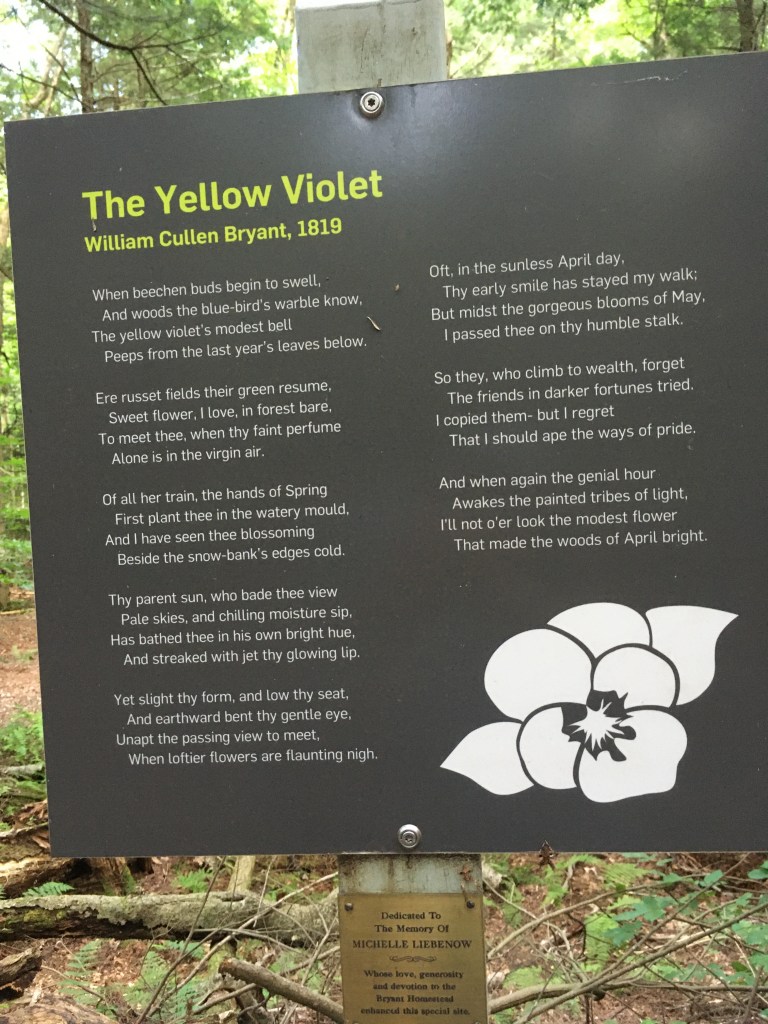
Interspersed throughout the walk are several placards with Bryant’s poetry.
Since our initial visit we have returned many times to walk through these serene woods. It has been a dry summer and the Rivulet that runs along the path had no water, but this past weekend we arrived just as a rain storm had passed. As we stepped into the woods, the air was misty and cool. The pine floor of the woods was soft and each step felt like there was a cushion underfoot. As we walked down the gentle slope, the peaceful gurgling sounds of the Rivulet accompanied us.
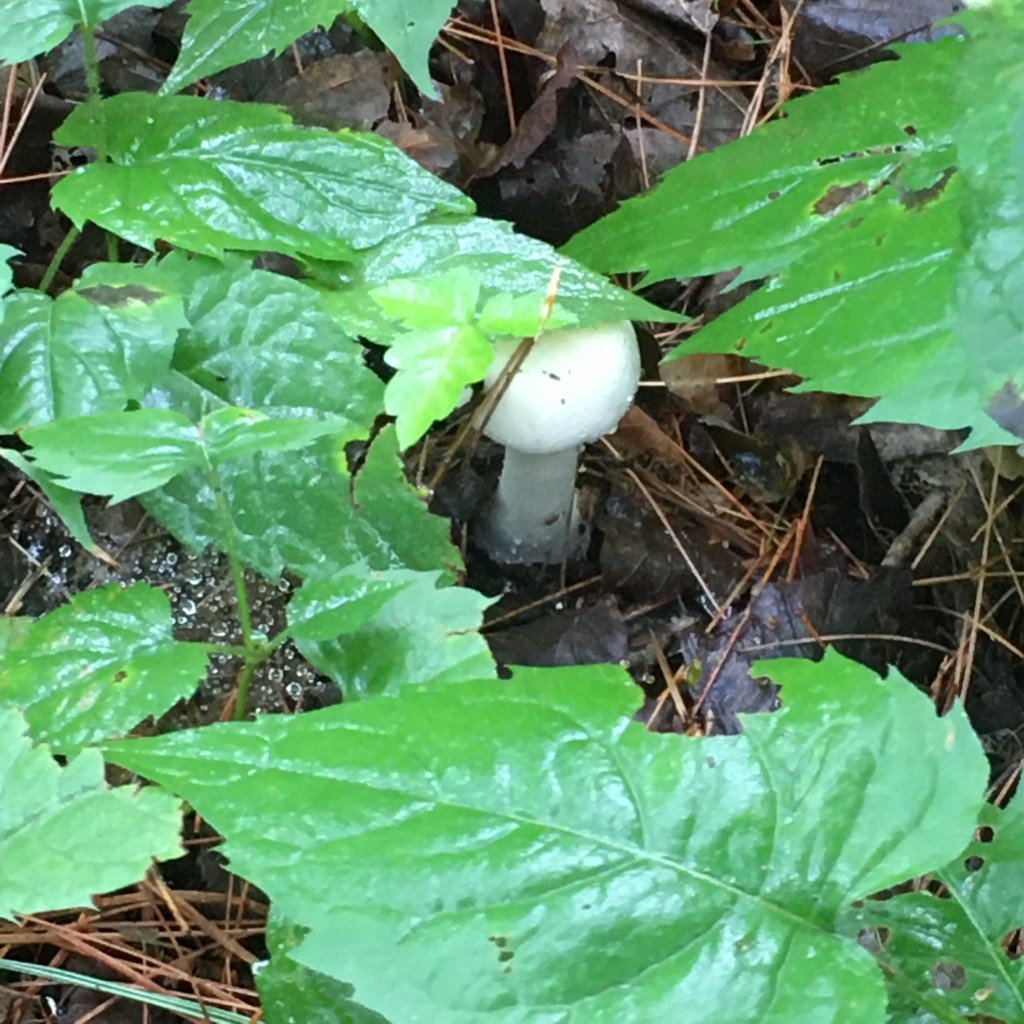
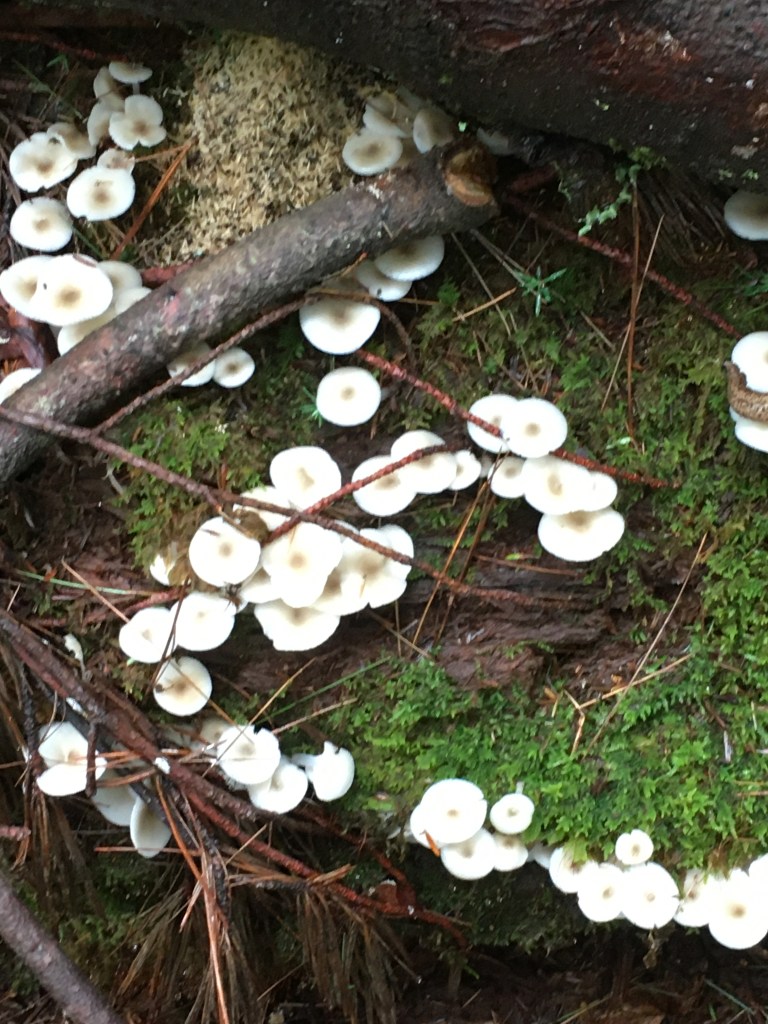
The trees and moss were dark with moisture and different varieties of mushrooms and fungi poked their tiny heads out of covering of leaves, pine needles and tree trunks. The woods were quieter than usual and a lone owl hooted into the distance.
During his lifetime, William Cullen Bryant returned many times to the Rivulet Trail. We will look forward to visiting in the fall as the leaves turn and then again in the spring where we hope to see the delicate spring Yellow Violet that Bryant describes lovingly in this poem:
On our way home after our most recent excursion to the trail, we stopped at Taft Farms in Great Barrington to stock up on their excellent summer bounty. That day we purchased tomatoes, berries, zucchini, peaches and CORN!
It was a stormy day and when we arrived at the store, there was a tremendous downpour along with the ominous news of a possible tornado in the area. The other intrepid patrons were all wearing their masks and keeping a reasonable social distance from each other, but I was touched by an elderly man standing alone in front of me in line. He had come out in the storm to buy a single pumpernickel bagel from the store’s bakery- he held it up to me apologetically and said,”I only wanted a bagel”. I believe that he also came for a bit of social interaction, as brief as it was!
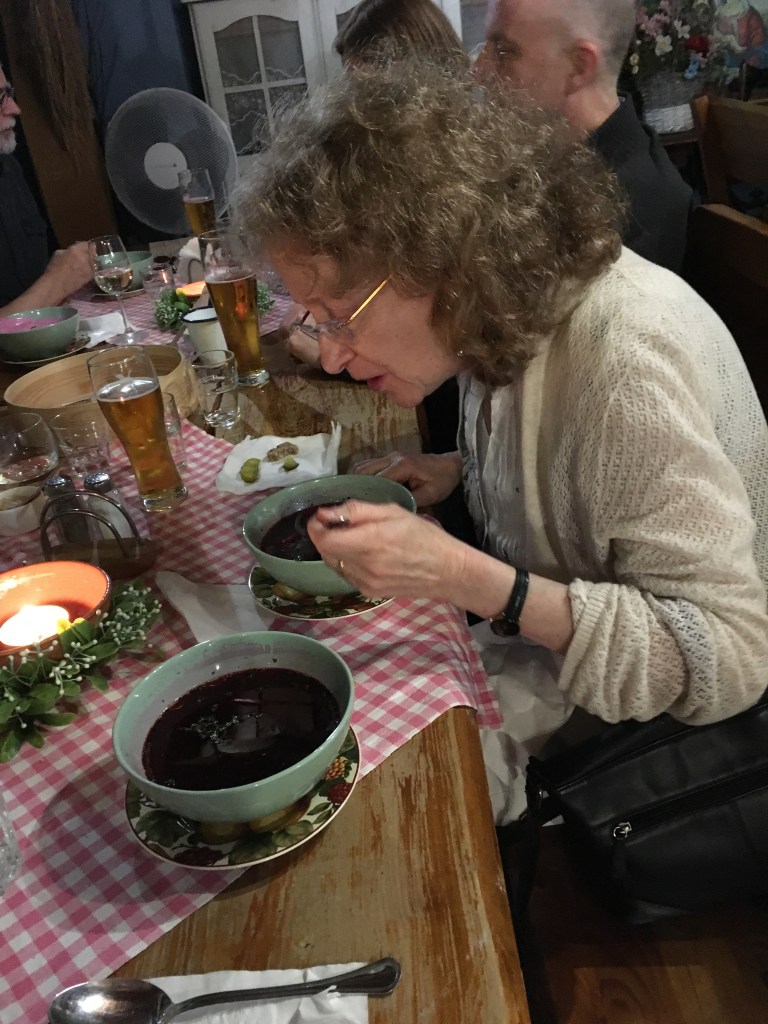
I am not much of a gardener, however, I am the happy recipient of surplus from our friends gardens. My refrigerator filled up with red beets from our talented gardener friend Jerry, so it was time to make Summer Borscht! Red beets are one of my favorite foods and I love Borscht-a sturdy winter version with meat, potatoes, carrots, dill, onions, garlic and tomato is wonderful, but I mostly crave Summer Borscht. I was wondering recently why I like beets so much. Is it in my Eastern European DNA? I read that there is a chemical in red beets that causes a feeling of well being! Summer Borscht– I ate way too many bowls of it in Poland when my group Hevreh Ensemble was on tour.
Lublin, Poland 2018
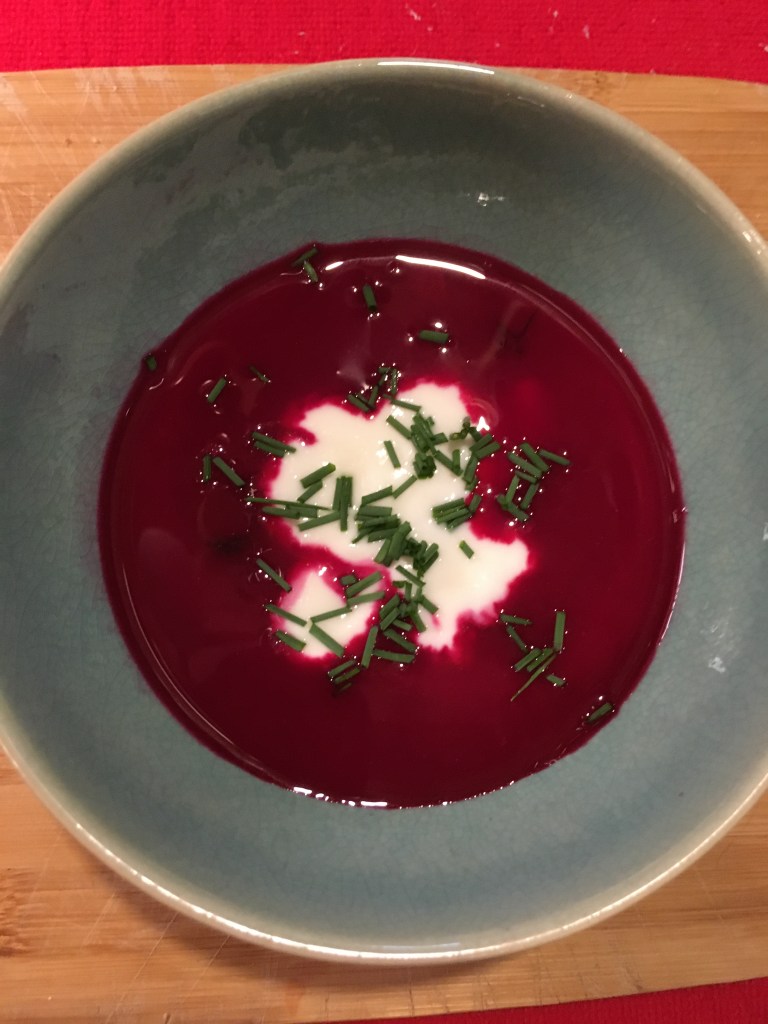
I tried to recreate it and lately I have been happy with the result. Red beets simmered until tender, peeled and diced with plenty of chopped cucumber,radish,dill, scallions or chives; seasoned with brown rice vinegar, salt, pepper, honey and plain yogurt. Left alone for a few days in the fridge to meld all of the flavors together, it is wonderful with a dollop of yogurt or sour cream and maybe a hard boiled egg sliced on top. This also freezes well and if you defrost a bowl of it with some ice crystals left in it, the taste is a bit like red beet granita! A perfect summer dish!
Summer Borscht
Ingredients:
4 or 5 large red beets
1/2 cup diced cucumber
1/2 cup diced radish
1/2 cup minced dill
1/4 cup diced scallion or chives
salt and pepper to taste
brown rice vinegar to taste* see note
1 or 2 tablespoons honey to taste
1/2 or more plain yogurt
Prepare Borscht:
Scrub Beets well and if large cut in half
Cover with water in a medium sized pot
Bring to a boil and then reduce to a simmer
Cover and cook until tender
Save water that beets were cooked and strain into a large bowel
Let beets cool completely
Peel Beets and cut into small dice
Add diced beets along with cucumber, radish, dill and scallions or chives into reserved beet liquid
Add brown rice vinegar to taste- start with a small amount and add more as desired.
Stir in yogurt and honey
Add salt and pepper to taste
Refrigerate for at least a day to let flavors meld
Serve with a dollop of yogurt or sour cream
Add a sliced hard boiled egg on top if desired
Note: I do not specify exact amounts of brown rice vinegar, honey or yogurt. After the borscht sits for a day or two, you can add more seasonings to your taste.
ENJOY!!
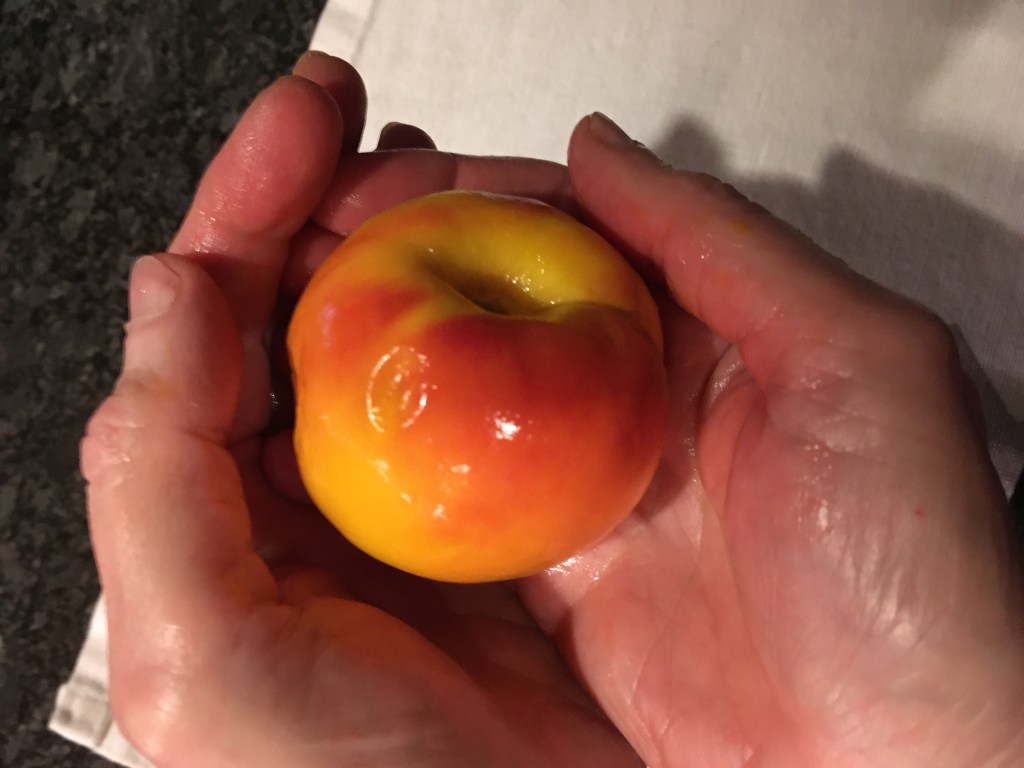
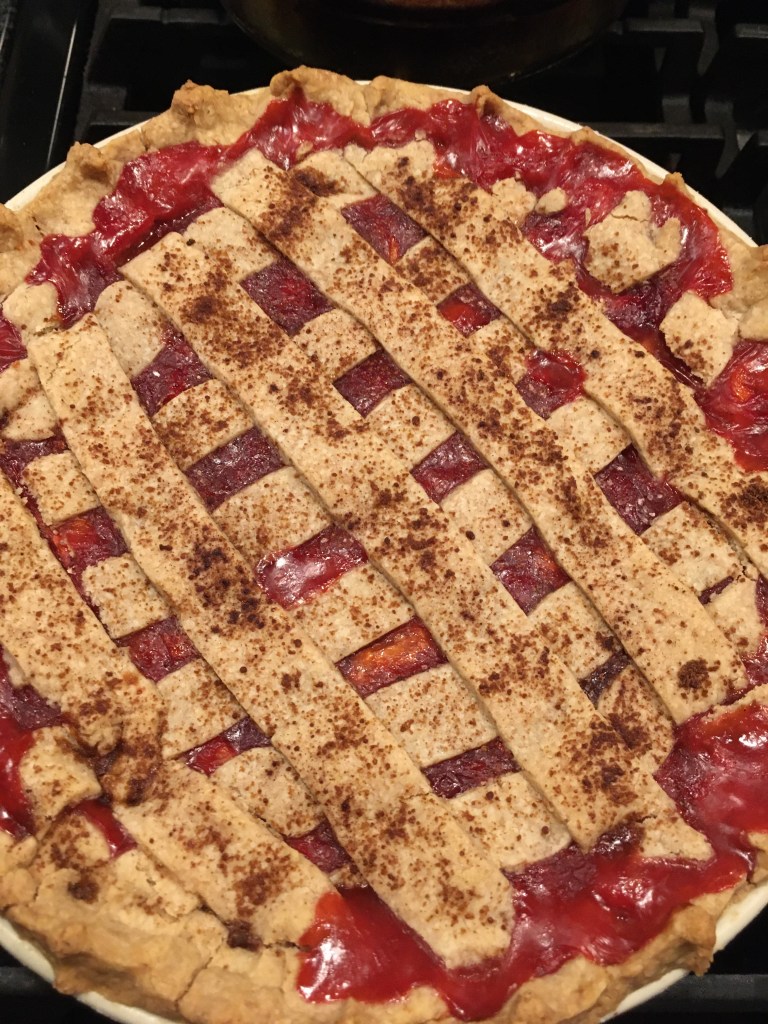
I will leave you with one more summer treat. We try to cook without processed sugar. The peaches this summer have been so sweet that they do not need any other sweetener. We came up with a sugar free peach/strawberry pie. I hope you enjoy making this recipe!
Sugar Free Peach/Strawberry Pie
Ingredients:
3 cups strawberries
3/4 very ripe peaches
2 tablespoons cornstarch
pinch of cinnamon
squeeze of fresh lemon juice
Pastry Crust:
1 cup whole wheat pastry flour
1 cup whole grain spelt four
1 teaspoon salt
1 stick unsalted butter
3 tablespoons non- hydrogenated shortening ( I like the organic Spectrum brand)
3 or more tablespoons ice water
Make the pastry crust:
In the bowl of a food processor combine flours, salt, butter and shortening until just combined.
Add the ice water and process until a ball shape forms. You may need to add more water a tablespoon at a time.
Take the ball of dough and cut into 2 pieces and refrigerate at least one hour. When you want to make the pie, bring the dough back to room temperature.
Make Filling:
Bring a pot of water to boil
Place peaches in boiling water for a minute or two and the skins will slip right off!
Slice strawberries and peaches and place in a medium sized pot
If you want a sweeter pie, add 1/2 sugar to fruit
Make a slurry with the cornstarch and a small amount of water
Simmer fruit over medium heat until the fruit releases it’s juices and the fruit softens a bit.
Mix in cornstarch and cook briefly until mixture thickens and the color of the fruit mixture turns clear.
Add pinch of cinnamon and a squeeze of lemon juice.
Preheat oven to 350 degrees
Lightly flour counter top
Roll out one piece of dough and fit into a pie plate
Pour fruit mixture into pie plate
Roll out second piece of dough and cut into strips
Lay strips in a crisscross pattern over filling
Sprinkle with cinnamon
Bake until crust is light brown and filling bubbles aprox. 40 minutes
Welcome to my new blog! I look forward to sharing my love of music, art, travel, nature and food with you! Yes, there will also be recipes! I am a professional oboist, and during this time of Covid when it has not been possible to perform live concerts, I have been inspired by the daily walks and hikes that I take with my husband Paul. On our excursions, I have started to bring along my Native American Flute and Recorder and have been creating short spontaneous improvisations on mountain tops and by serene marshes and ponds. I hope you enjoy accompanying me on my adventures and explorations!
Water Music: Steepletop Preserve
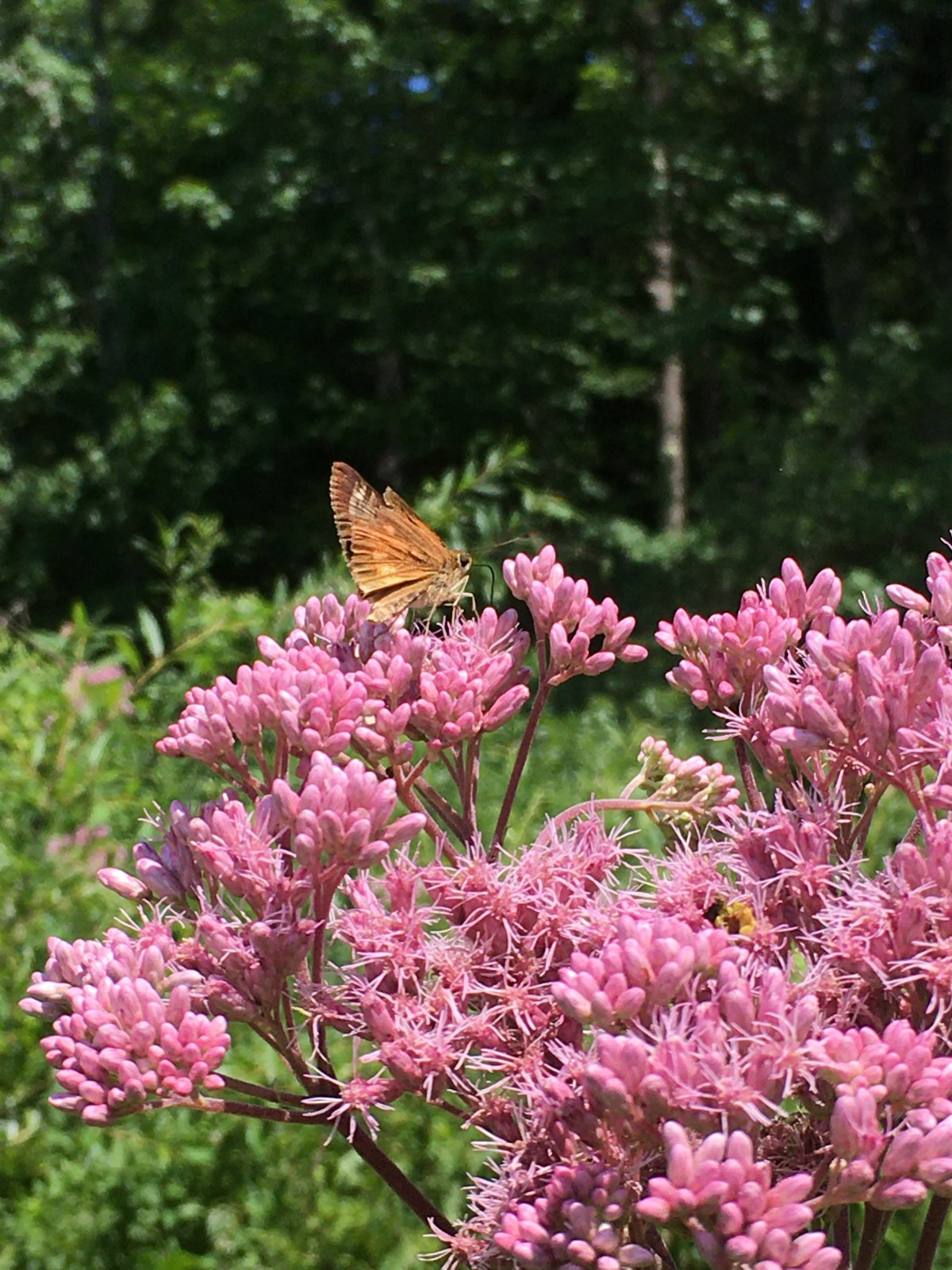
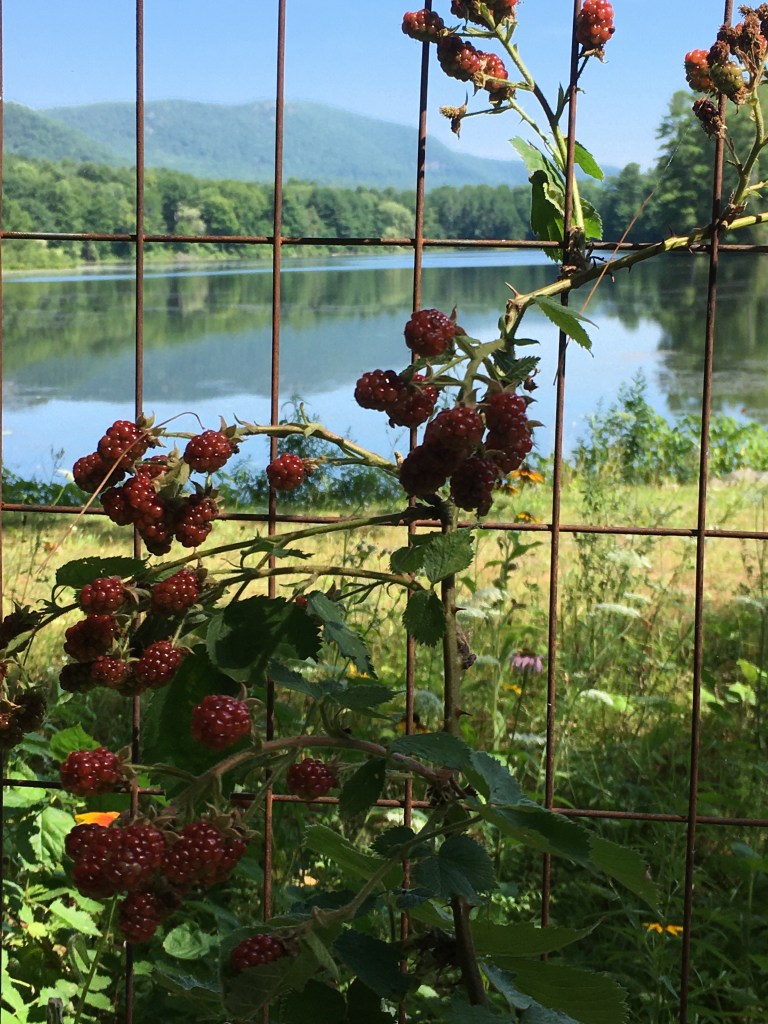
Recently after reading the NY Times and visiting the drive through at the bank I felt a bit stressed. Hoping to change my mood pattern quickly, I decided to take a short drive to one of my favorite solo walks on Beaver Damn Road. I have been watching several patches of wild blackberries that line the road for a few weeks, hoping that they will ripen soon for picking! Not quite ready…. but as I walked down the road, I noticed several swallowtail butterflies perched in a lovely patch of purple cone flowers….. a hawk soared high above in the blue sky. Mood fixed!!
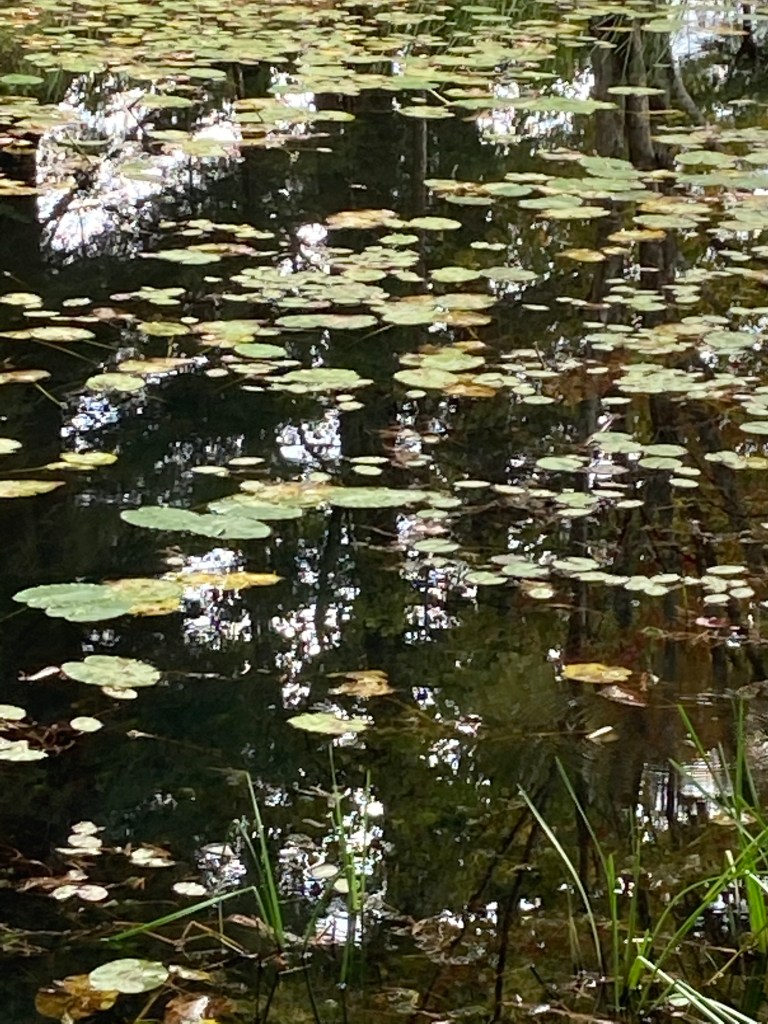
Over the last few weeks, we have gone on several new hikes, all beautiful! Thousand Acre Swamp, part of Cookson State Forest in New Marlborough, Massachusetts is a small lake; a haven for birds, wildlife and it is covered with lily pads. There are miles of trails that meander through the woods and around the lake. Looking at the lily pads I felt as if I was in a Monet painting! So… “Music from the Water” was born!
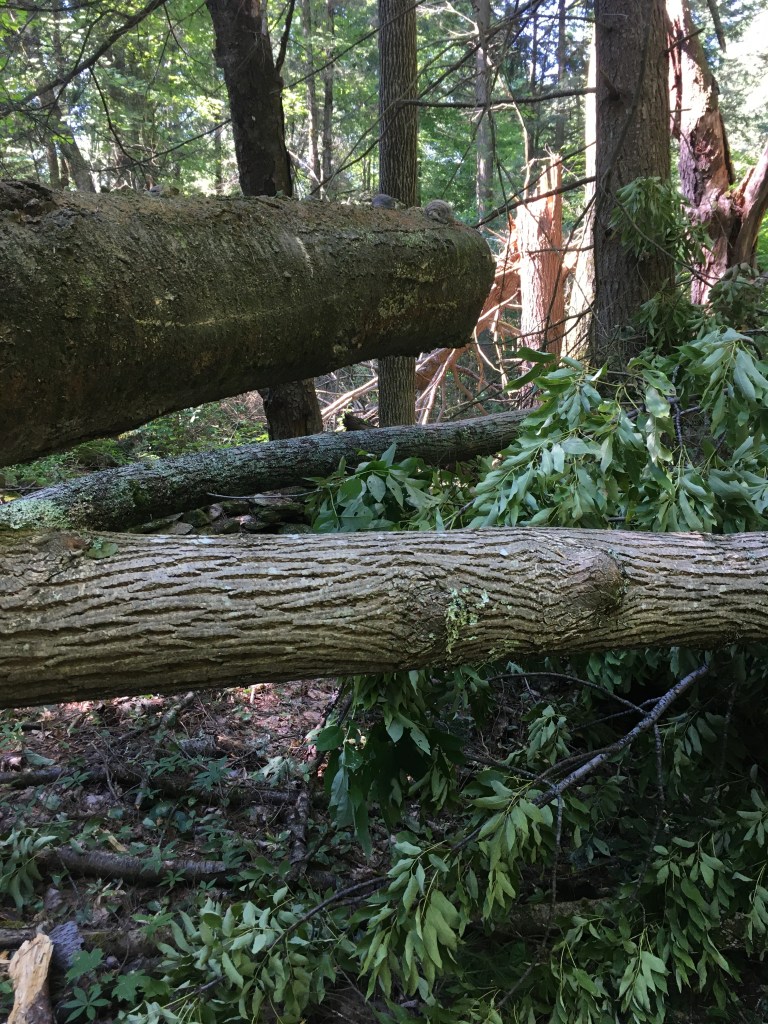
The day after a huge storm that caused havoc and downed many trees and power lines, we decided to return to Thousand Acre Swamp to make a music video. We quickly realized that getting to our destination was not in the cards- we tried several different routes; all were impassable with downed trees and wires. We decided to try to visit another favorite, Steepletop Reserve, run by the Berkshire Natural Resources Council. The 1,230 acre reserve includes expansive wetlands and a series of well marked trails that weave around the marsh and woodland areas. We finally made it to Steepletop although the trail had several trees blocking the path that we had to climb over!
Here is a video from the lovely marsh area of the trail:
The next day we finally made it back to Ten Thousand Acres Swamp. Arriving in the late afternoon, the light was stunning and made intricate patterns on the water.
We walked to a suspension bridge that was a bit wobbly, but it was the perfect place to make another video! As I played my flute, I looked over the water and felt a deep sense of peace.
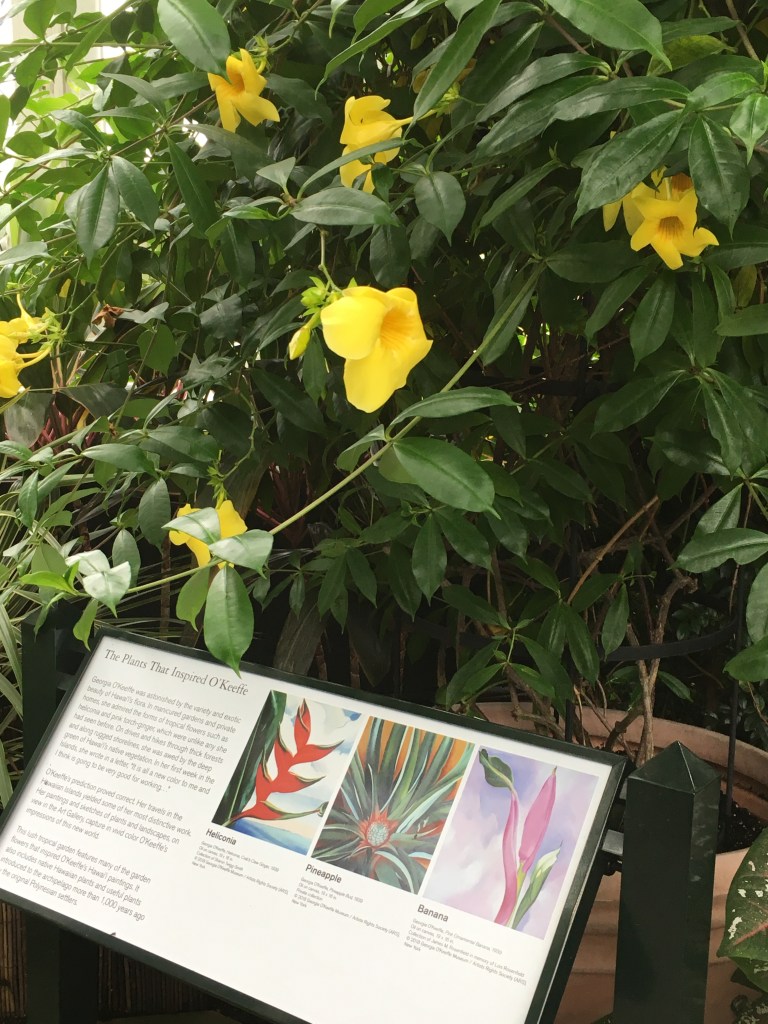
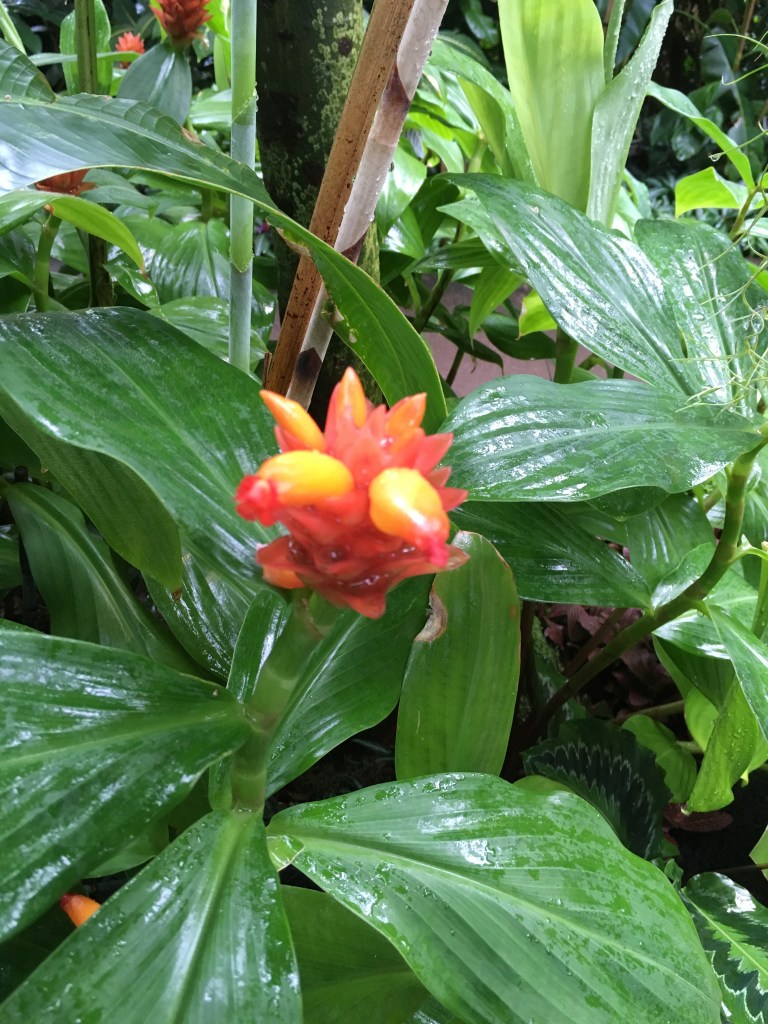
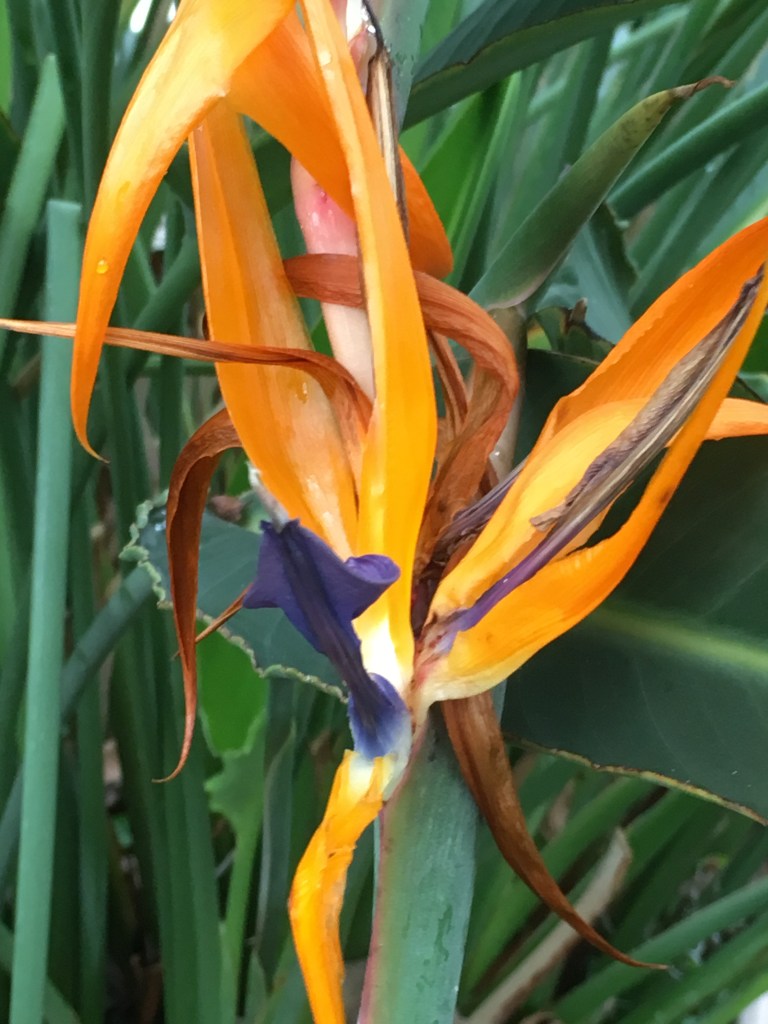
AND, here is a bit of escape from the present! In October 2018, I visited the Bronx Botanical Gardens and was excited to learn that there was a Georgia O’Keefe exhibit: “Visions of Hawaii”. It was a sunny and cool fall day-I had never had the opportunity to visit the botanical gardens. I was impressed by the intricate design of the gardens and how accessible everything was to the public. I took a leisurely stroll through the gardens and on the wide paths that led to the Enid A. Haupt Conservatory; an Italian Renaissance style greenhouse. The exhibit included plants, gardens, and landscapes that inspired Georgia O’Keeffe and were paired with an exhibition of her Hawaii pictures in the Art Gallery. As I entered the humid and hot conservatory, my senses were momentarily overwhelmed by the enormous variety of exotic vegetation and lush vividly colored tropical flowers. Interspersed throughout the exhibit were quotes from Georgia O’Keefe and insightful commentary about her paintings.
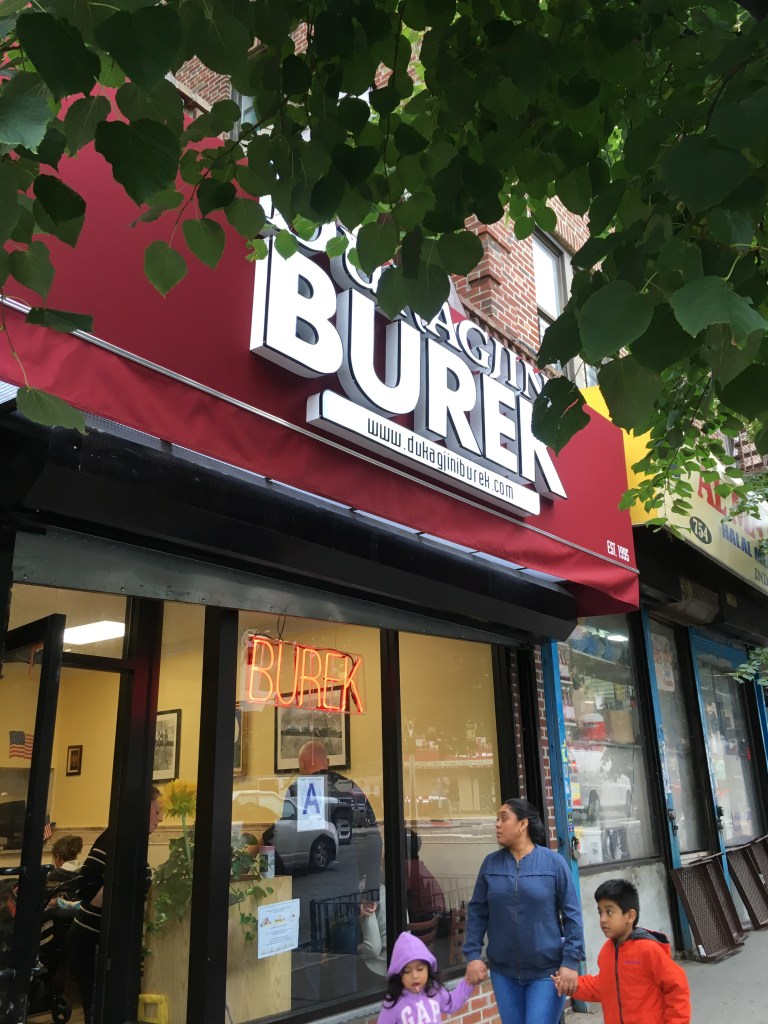
The exhibition was totally engrossing, but soon it was time to find a place for lunch! I did a quick google search for ethnic restaurants near the Botanical Gardens and Dukagjini Burek came up- it was seven minutes away on Lydig Avenue. This was a good sign! I located the restaurant and discovered that the neighborhood was a small Albanian enclave with bakeries, ethnic grocery stores and family run restaurants.
I entered the small restaurant that had a just a few tables and the menu on the wall posted the following:
Burek w/ Meat | $4 Burek w/ Cheese | $4 Burek w/ Spinach | $4 Burek Any Pie | $16
Yogurt / Kus | $1.50
Espresso | $2.00 Cappuccino | $2.50
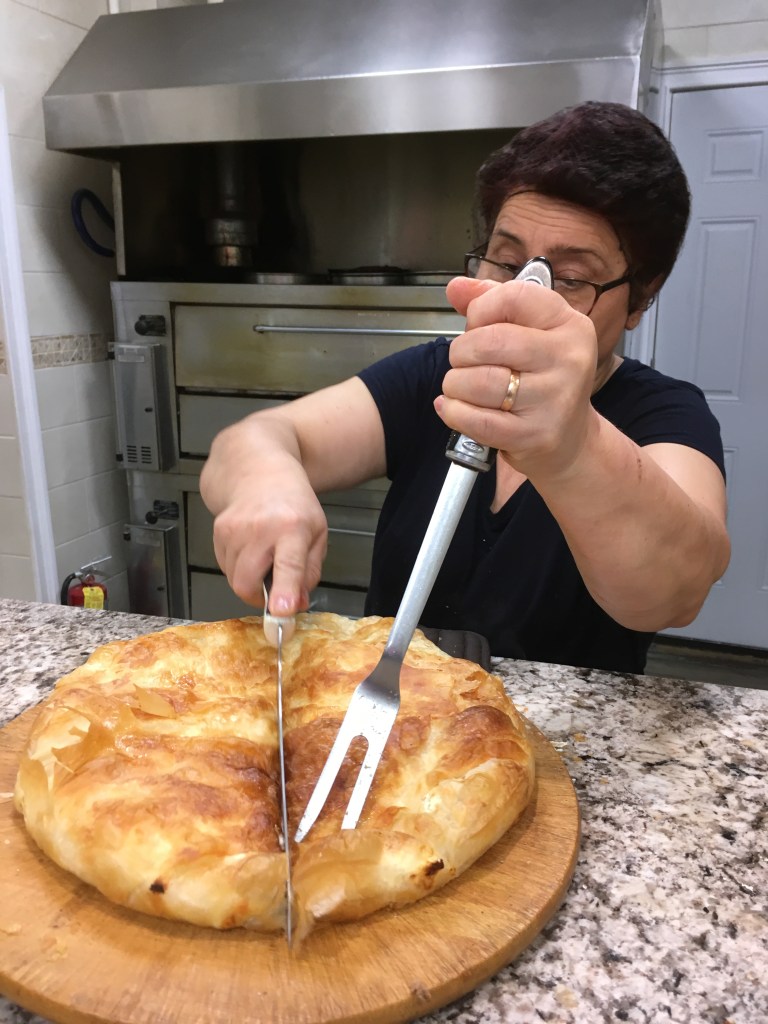
A Burek is a pizza sized pie with a crust that is a combination of phyllo and pastry dough. I discovered that the owner, Marjan Kolnrekaj who is from Dulagjin, Kosovo has made this specialty for many years. His family has been making Bureks for over a hundred years. I ordered a slice of the burek with cheese and an order of yogurt. I bit into the crisp buttery crust with a cheese filling that included onion and herbs and it was simply delicious! I felt the sense of pride and respect that the workers had for the food and their culture. As I ate, several burly men came in speaking a language that I could not place. I asked a woman standing nearby if she knew what the language it was and she told me with pride that it was Albanian.
I wanted to take a picture of one the counter workers cutting and serving the pies and I may have pushed my luck a bit! The woman at the counter did not smile when I asked if it would be alright to take a picture. She wielded her sharp knife a little threateningly in my direction, but it was worth it!
I am happy to say that Dukagjini Burek is thriving during the pandemic. I called the other day to see if the restaurant was open and they sounded busy- a burek would be the perfect comfort food during this time! I look forward to returning soon!!
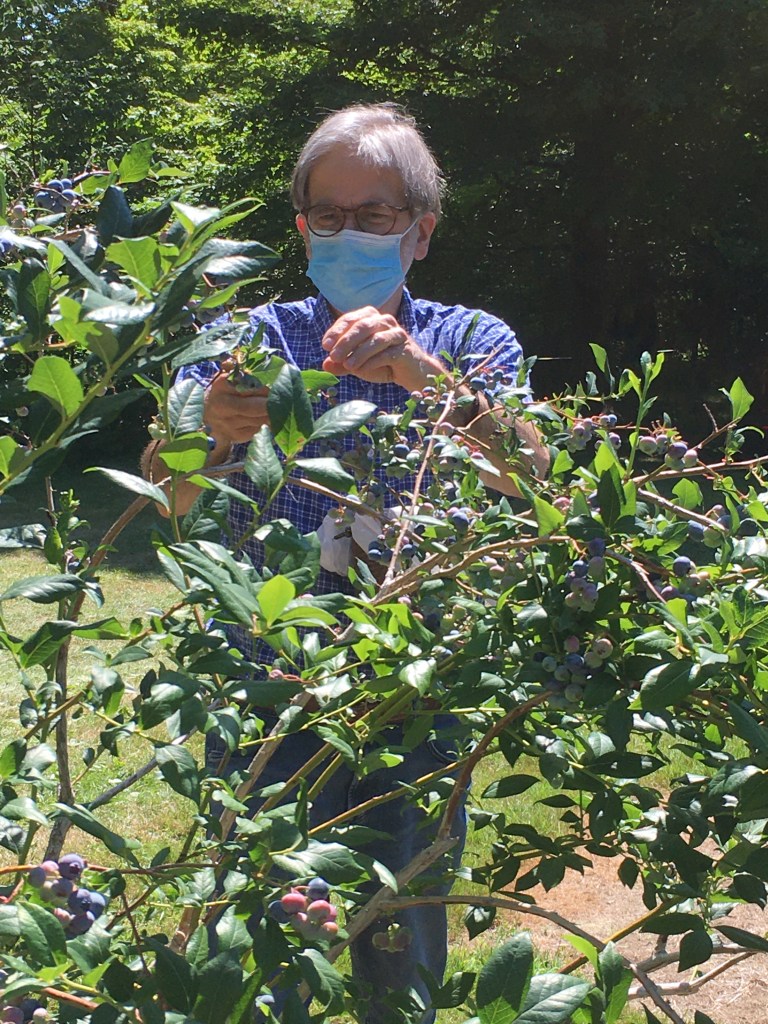
AND… Blueberries are ready for picking! We went to Jameson’s High Meadow Farm in Chester, Massachusetts- a perfect place for socially distant picking!
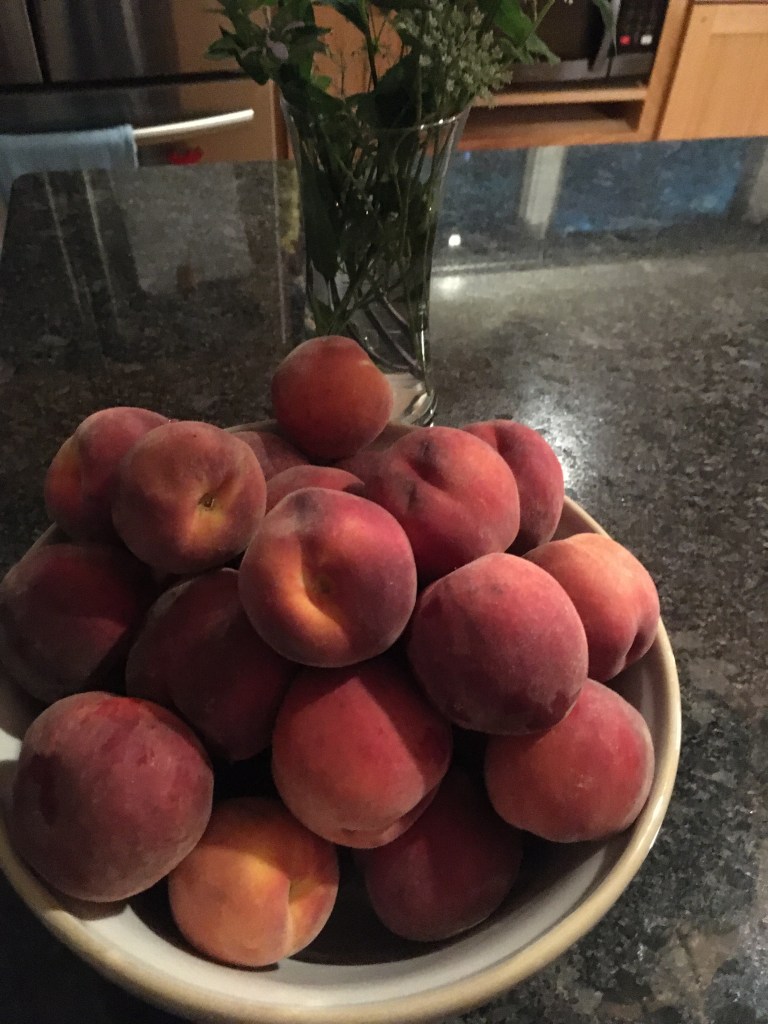
After a walk at the Siegel-Kline Kill Conservation Area in Ghent New York, we stopped by nearby LoveApple Farm and got a half bushel of the sweetest peaches I think I have ever tasted….. more about the beautiful wildflowers in the fields at Siegel-Kline Kill in another blog!
Here is a Sweet Ending with a perfect summer dessert! I had a version of this dessert a few years ago at the wonderful restaurant, Hazelnut Kitchen in Trumansburg, NY- near Ithaca. I remember that the dessert was topped with freshly chopped chilled mango. This dessert is light, very refreshing and there will be plenty of lemon curd, peaches and tapioca pudding left over for snacks!
3/4 cup sugar ( I used 1/2 cup of Monk fruit Sweetener- see note)
2/3 cup freshly squeezed lemon juice
1 tablespoon lemon zest freshly grated
1 tablespoon butter
Make Lemon Curd:
In a medium non-reactive sauce pan whisk together egg, egg whites, sugar, lemon juice and lemon zest.
Add butter and cook over low heat stirring constantly until thick- aprox. 5-7 minutes. Do not let mixture come to a simmer.
Use a fine mesh strainer and strain mixture into a small bowl-refrigerate until cold.
Peach Compote
Bring a large pot of water to boil- add 6 large peaches – let sit for about a minute.
Remove and peel peaches- the skins will slip right off!
Cut peaches into slices and place in a medium sized pan
Bring peaches to a boil reduce to a simmer, cook for about 5 minutes until they soften and release their juices – add a bit of fresh lemon juice and 1/2 teaspoon cinnamon
Mix 2 tablespoons cornstarch and make a slurry with a small amount of water
Mix into peaches and stir over low heat until the mixture thickens and the color turns clear.
Refrigerate until cold.
Tapioca Pudding
Ingredients
2 3/4 cups milk
1/3 sugar-( for a low sugar version, use 2 tablespoons coconut sugar)
3 tablespoons instant tapioca
1 teaspoon vanilla
To make pudding:
Whisk together milk, sugar and tapioca in a medium saucepan- let stand 5 minutes.
Bring to a full boil over medium heat stirring constantly until mixture thickens.
Remove from heat and stir in vanilla.
Refrigerate until cold.
Wash and drain 2 cups fresh blueberries ( you can also use raspberries or blackberries)
Assemble Parfaits:
You can use wine glasses or small bowls.
Place a layer of tapioca pudding on bottom of glass or dish
Add a layer of peaches, then the lemon curd and top with the berries.
Note:
Monk fruit sweeter comes in granulated form and looks just like sugar. It has an extremely low glycemic index and it be used with the same quantities as regular sugar. I used less then the recipe calls for because we like a very tart flavor.























































 A Musician's Travels