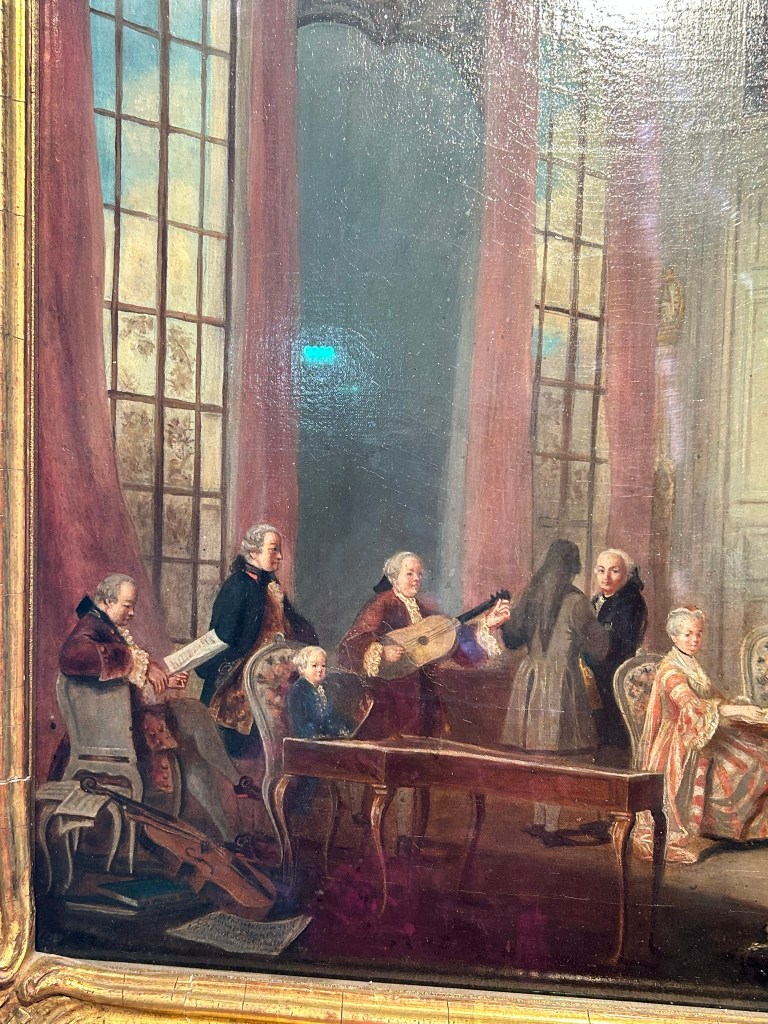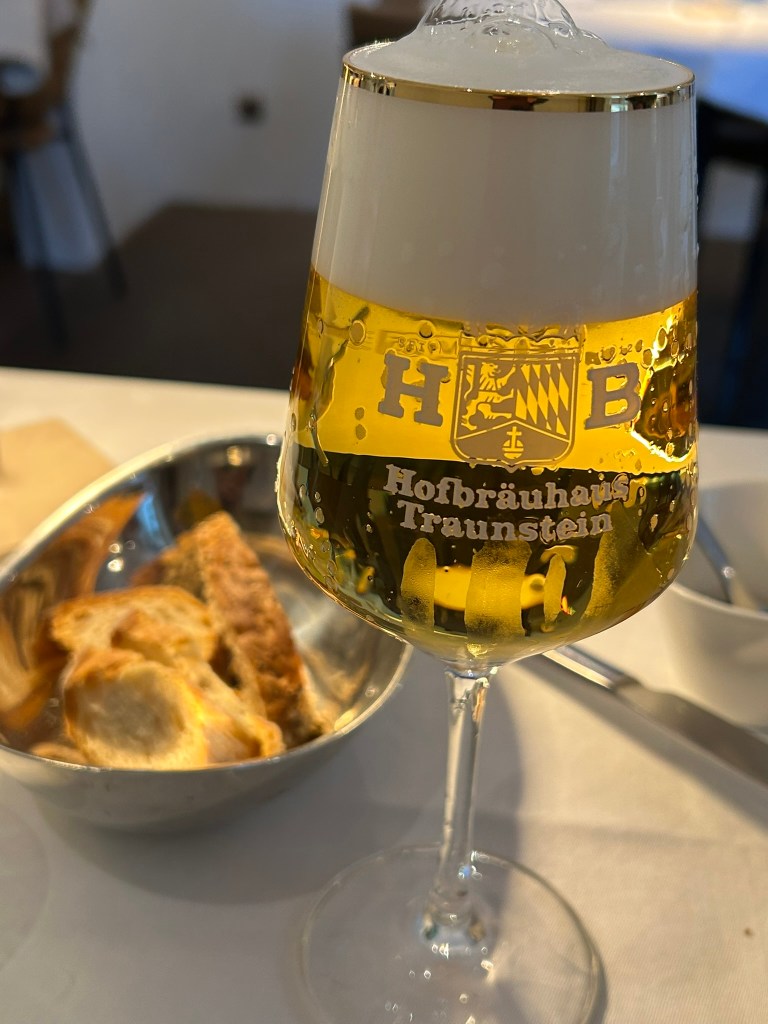
Knodels and Pappardella- From Munich to Bolzano: Part 2

Munich and Salzburg:

Salzburg, Austria

It’s been a busy fall; I have been meaning to complete an entry about summer travels, but time flies! Here finally, is the belated second part of the Knodels and Papardella blog!

After my travel buddy Carol and I choose our destination, one of my favorite parts of the planning process is researching the local food and restaurants; I make reservations and the rest of the itinerary easily falls into place!

The ambitious plan for our most recent trip was to visit Munich, Salzburg, Ljubliana in Slovenia, Trieste and Bolzano. We flew into Munich on Condor (a smaller German airline). We entered an upgrade lottery and lucked out-we were moved up to Business Class and the seats to us in the middle were also empty!

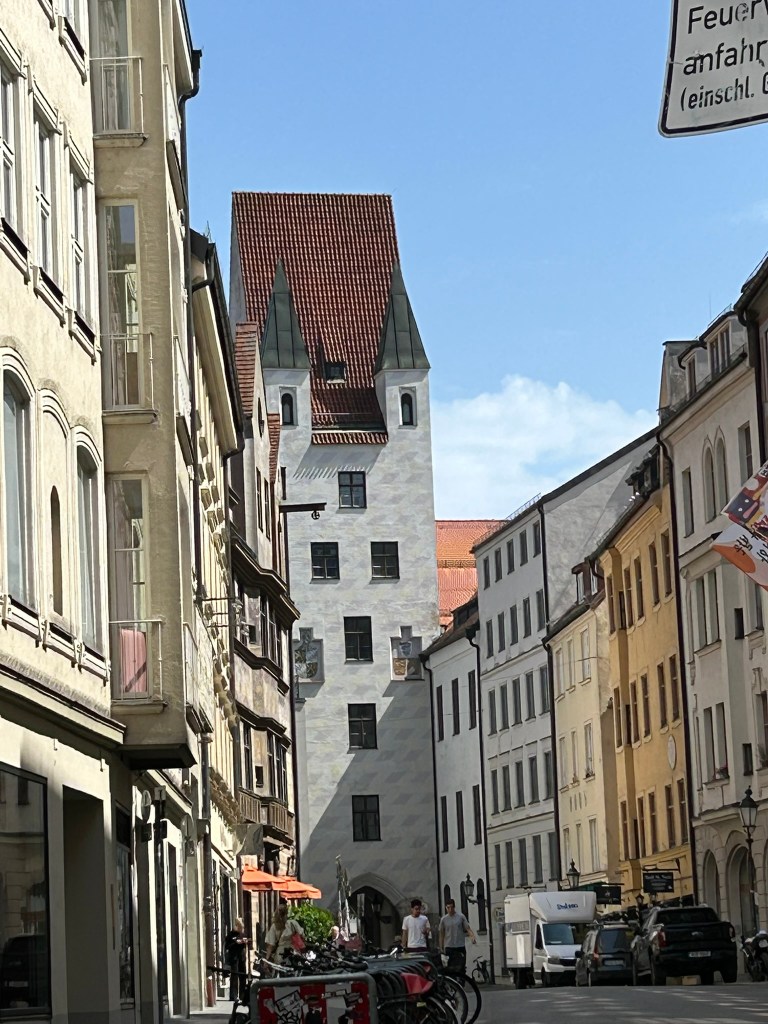
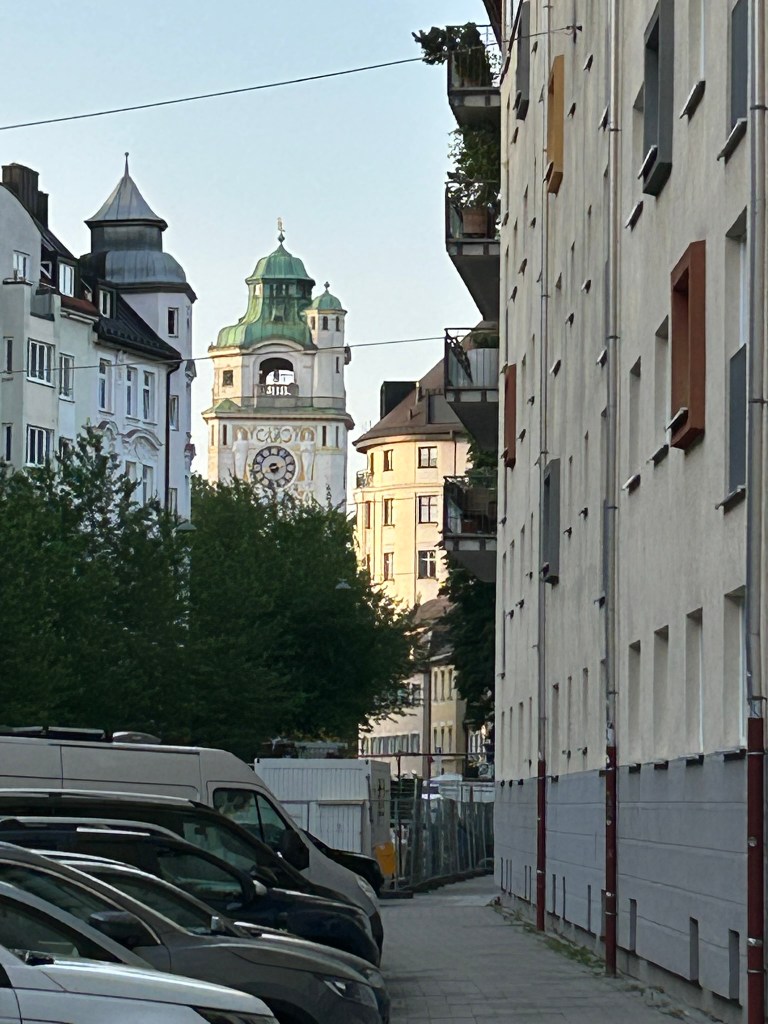
We arrived early morning in Munich on a hot sunny June day; being too early to check into the Hotel Torbrau, we left our bags and spent the day walking slowly around the city, enjoying our surroundings while trying to ignore our growing jetlag.

That evening, our first dinner reservation on the trip was at Wirthaus in der Au, famous for a popular German dumpling specialty called Knodel.

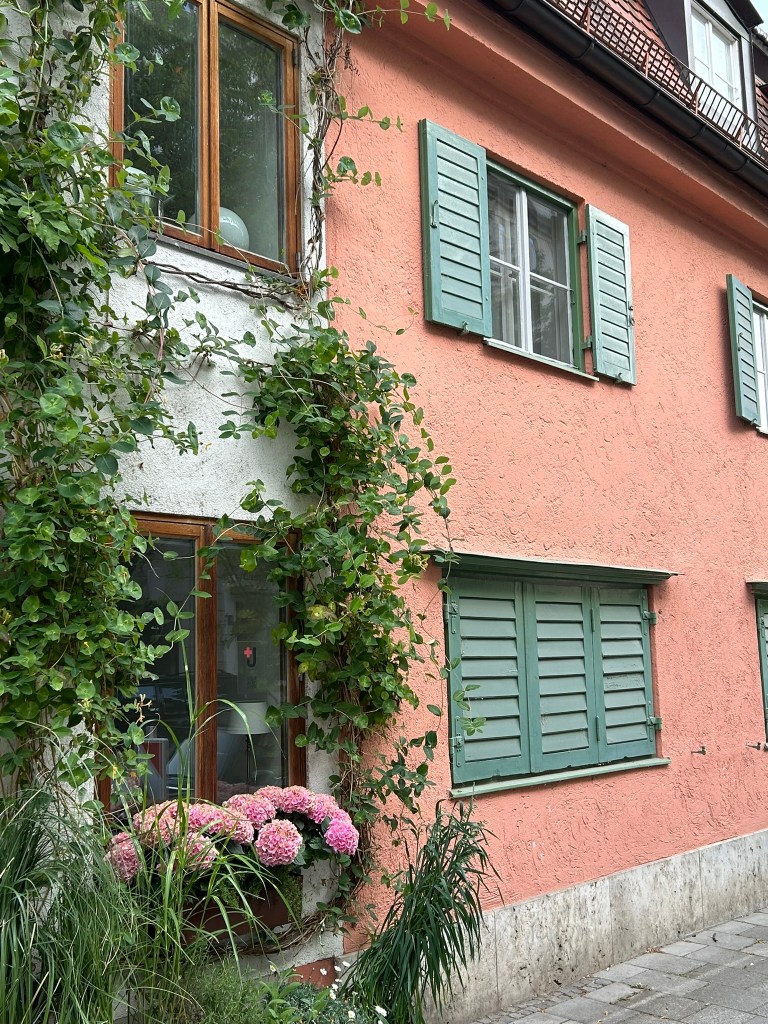
The restaurant is located in the neighborhood Au, an artsy and leafy residential area that was once a working class quarter. It is outside the heart of the old town of Munich and next to the Isar River.

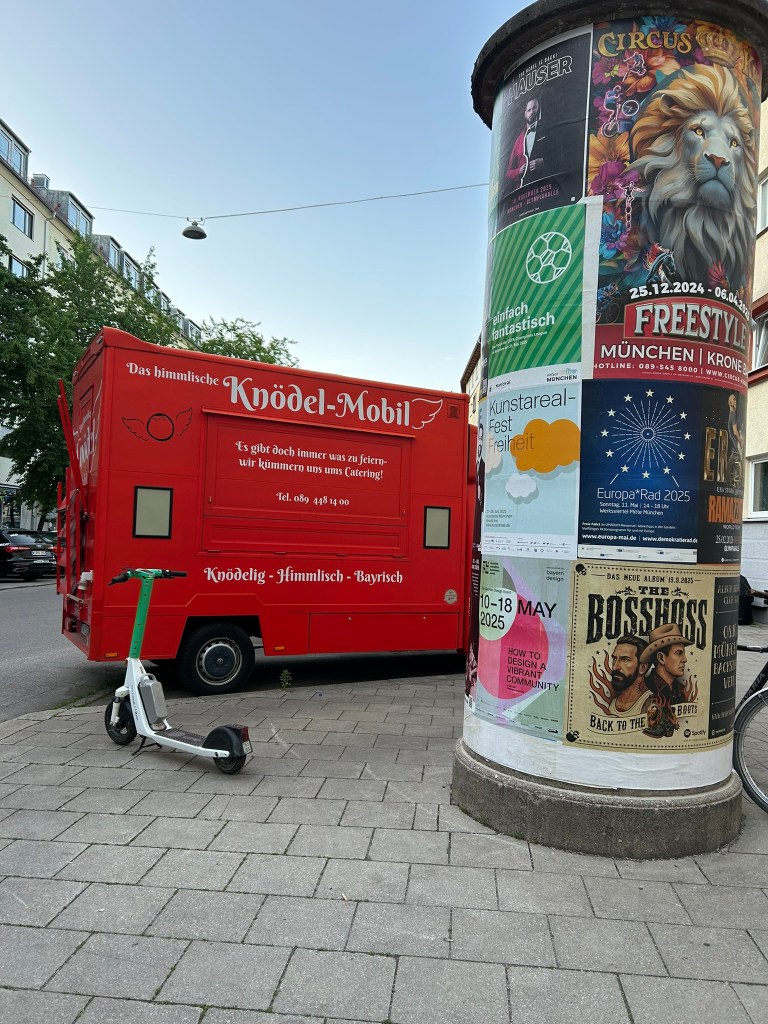
We were delighted to see a Knodel food truck painted with the title, “The Heavenly Knodel- Mobil” parked outside the restaurant!

We sat outdoors on a leafy patio and the food was wonderful; a creative modern take on traditional German food.

We started with a colorful appetizer plate that included bread, local cheeses and assorted dips.

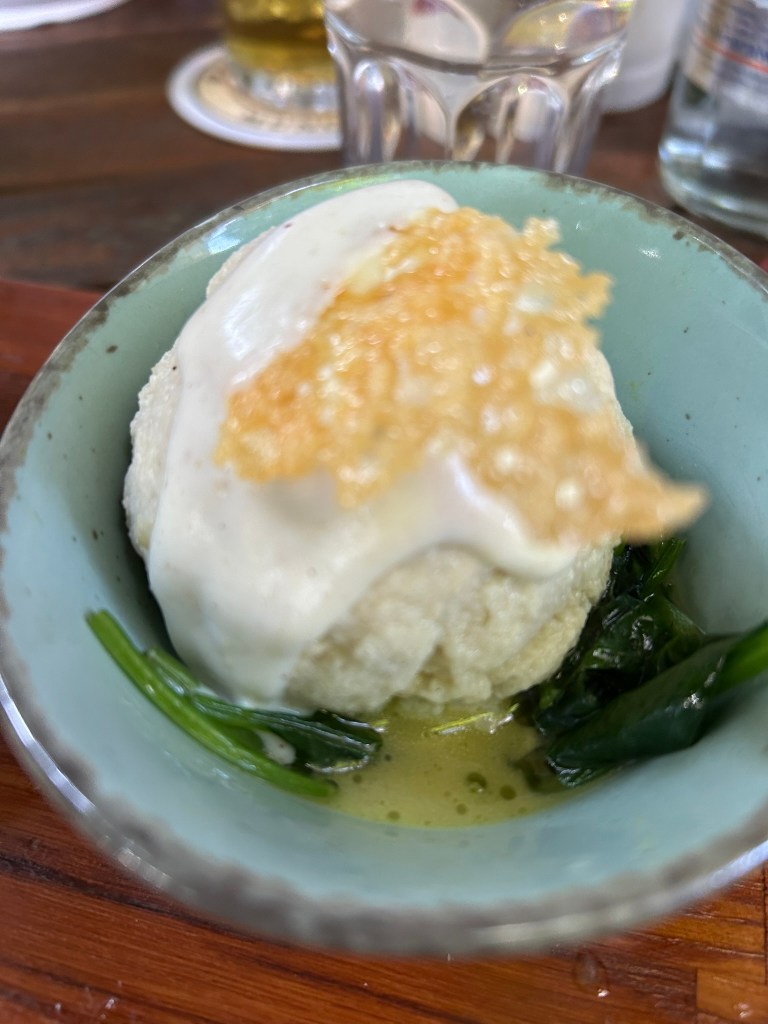
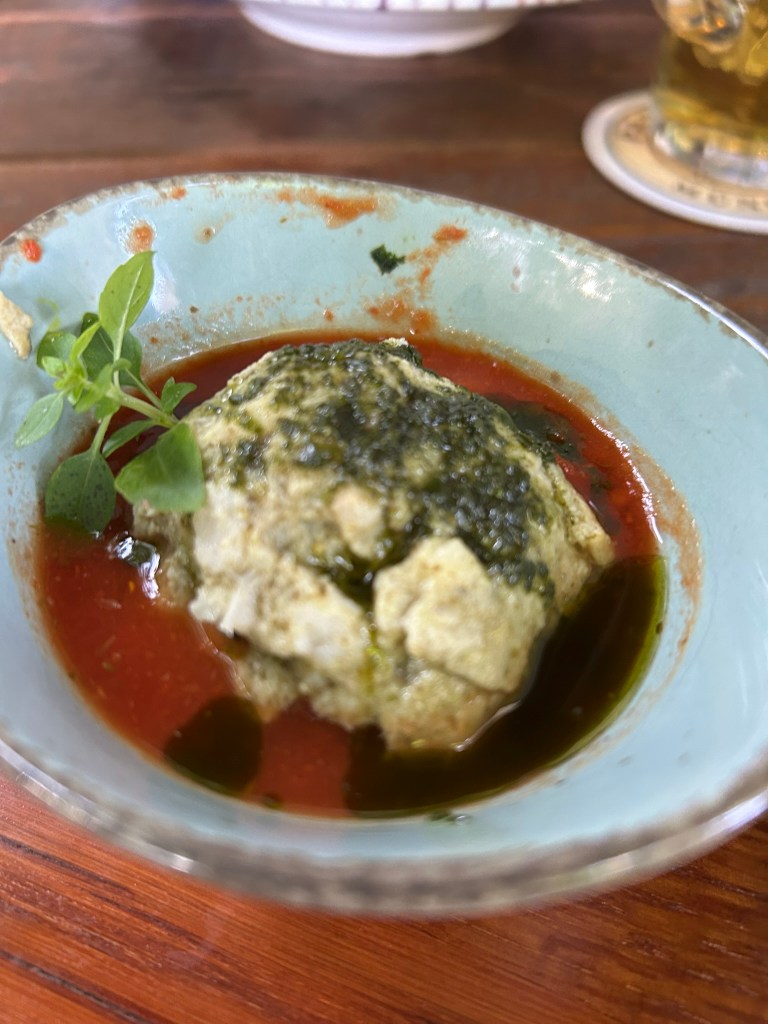
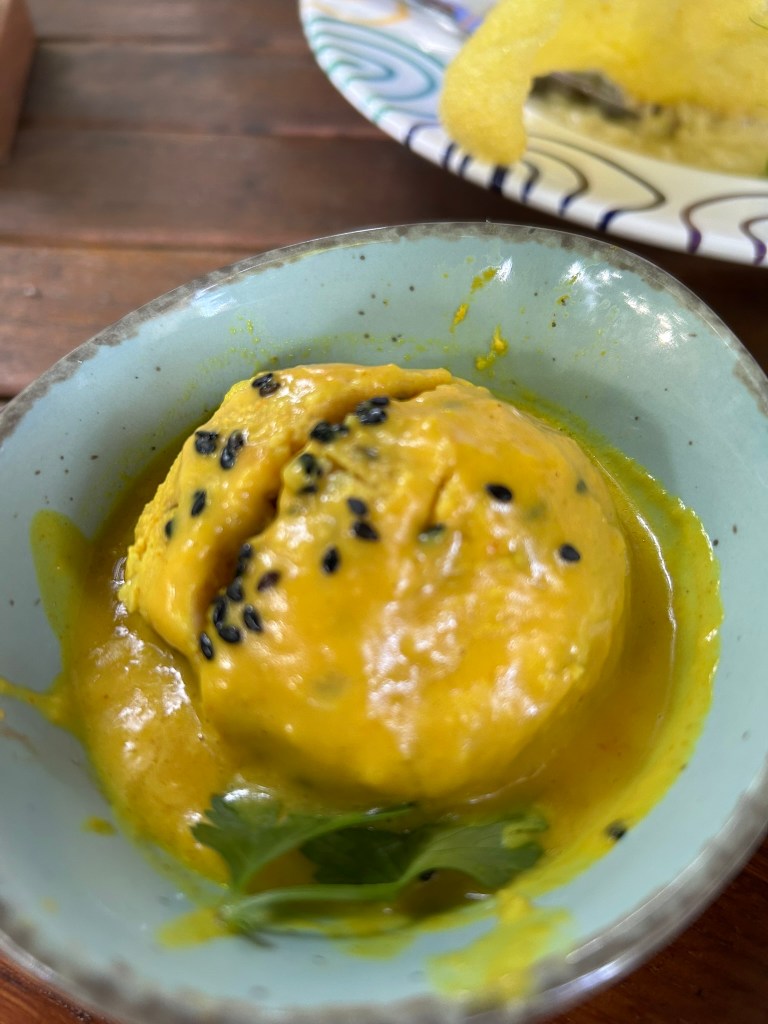
We ordered a trio of Knodels and they were just as advertised on the food truck; heavenly- hearty, flavorful and at the same time light and not at all doughy.

Parmesan, Spinach & Bechamel Knodel

Basil Pesto with Tomato Broth Knodel

Curried Vegetable Knodel

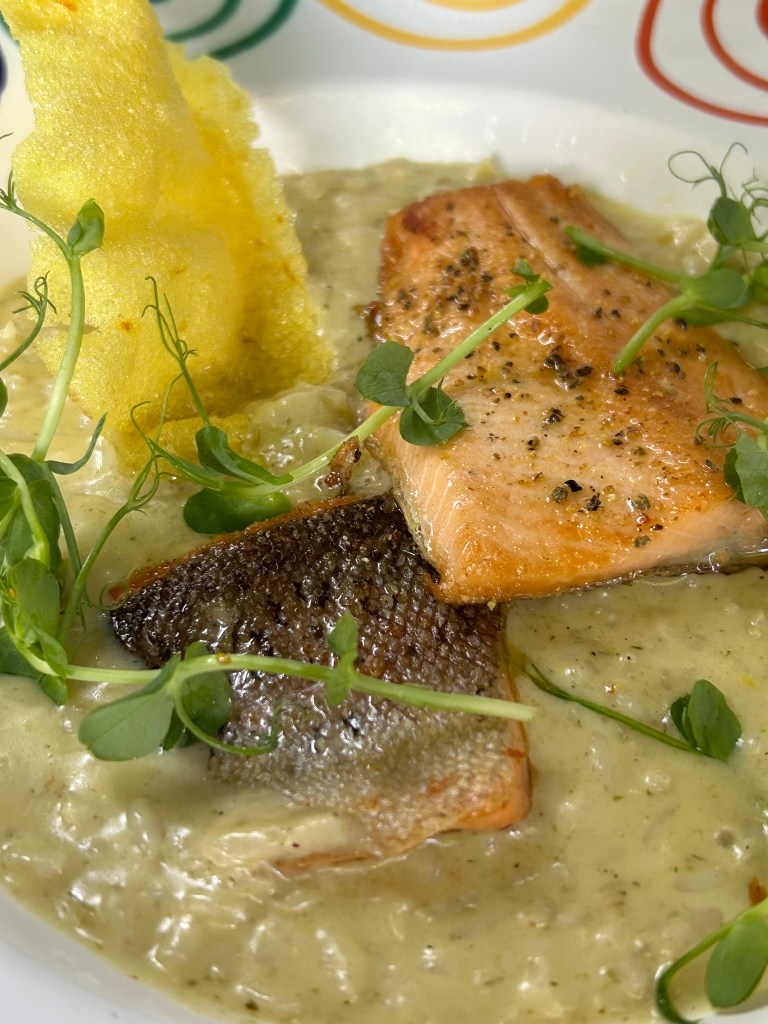
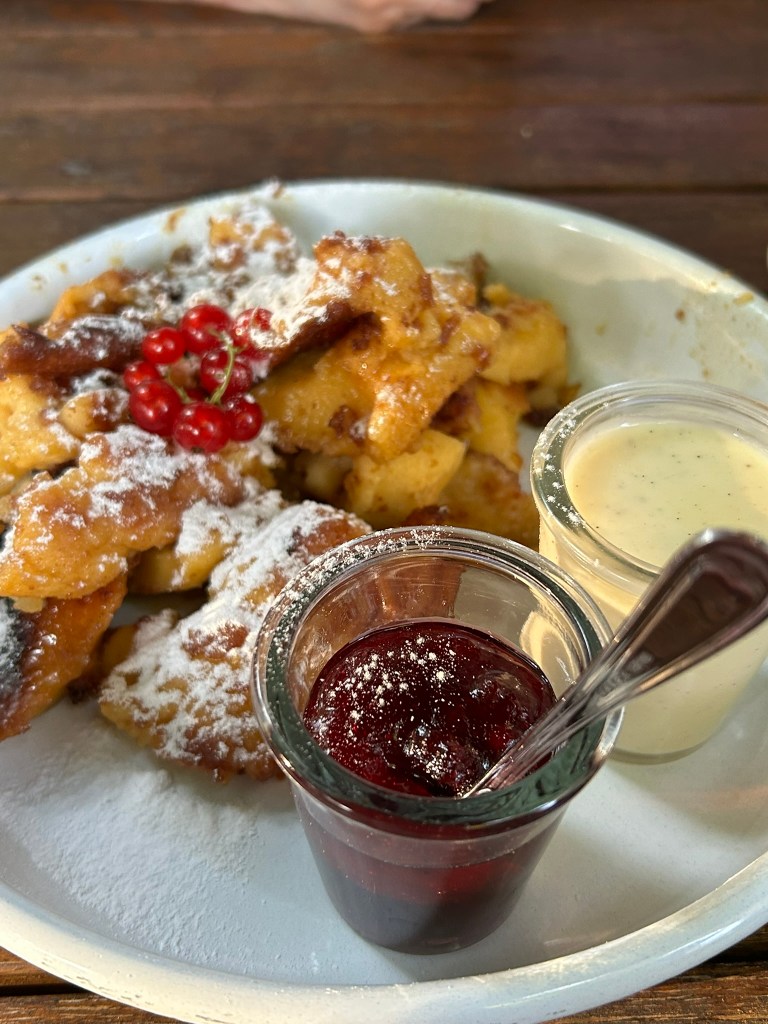
We shared a delicious dish of pan seared brook trout and somehow managed to find room for dessert; a traditional German apple pancake with a berry compote and creme anglaise.

Pan Seared Salmon

Apple Pancake

After this wonderful feast we returned to our hotel and fell into a blissful sleep!

***********************************

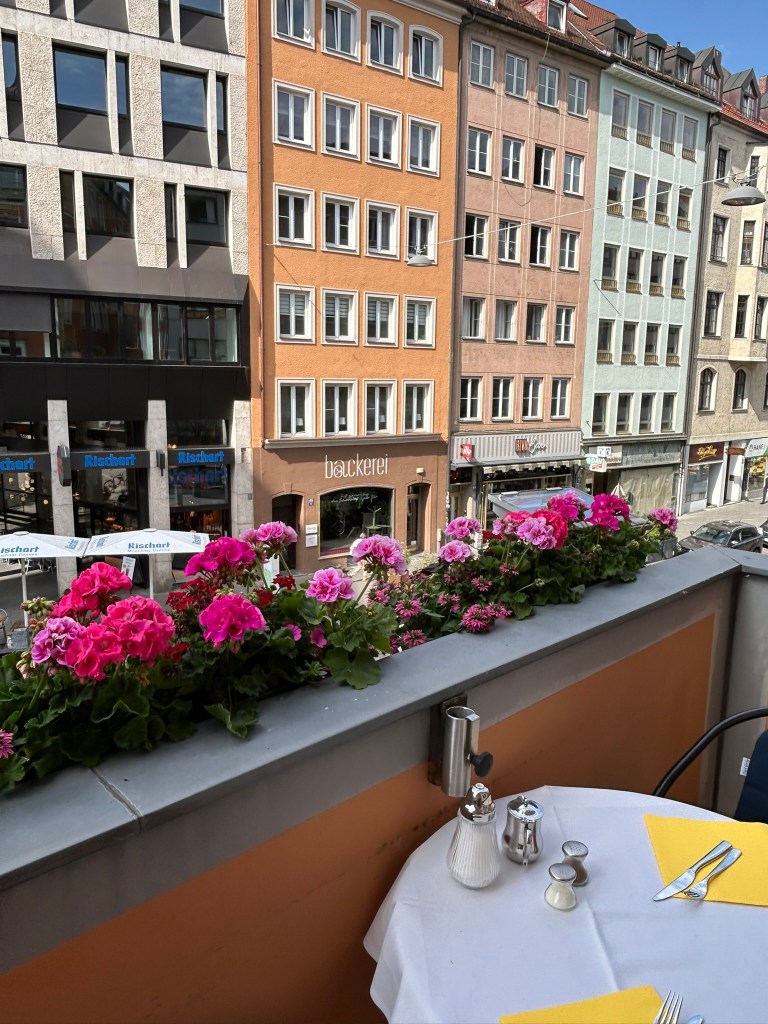
The next day, we enjoyed breakfast on the balcony of our hotel and then spent the day visiting art museums. We walked through the bustling town to the beautiful Alte Pinakothek that was built in 1868.

Here is a description of the museum from their website:

A world-class gallery: the Alte Pinakothek (Old Pinakothek) in Munich is home to an outstanding collection of European paintings, stretching from the 14th to the 18th century.

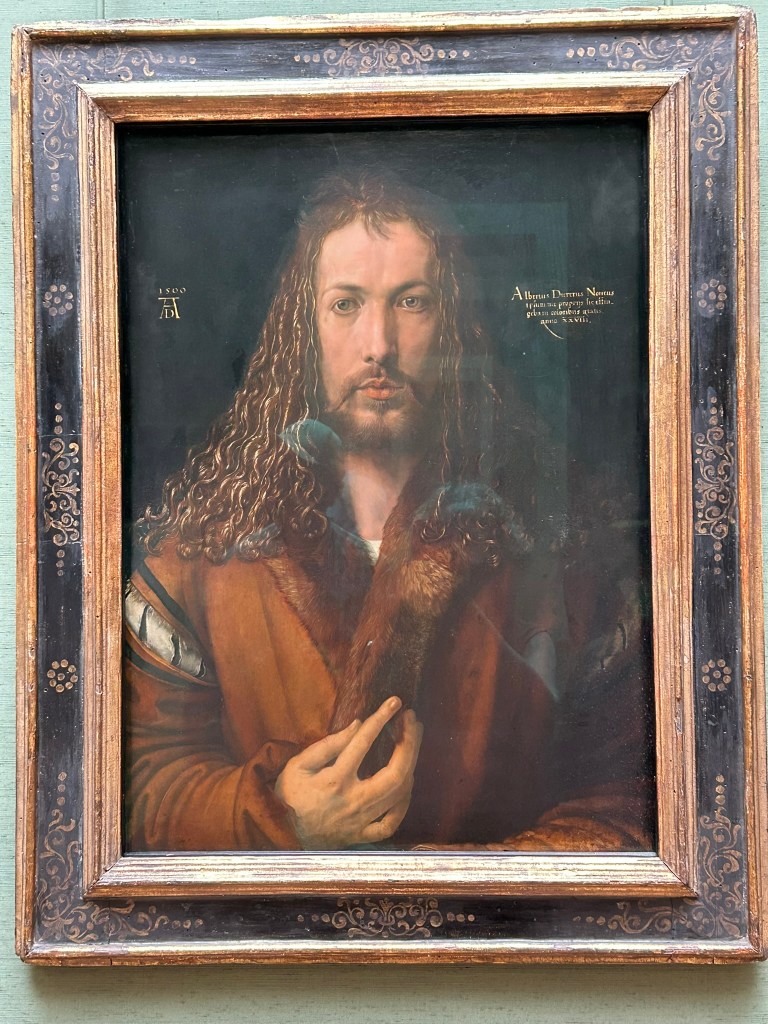
Many of the 700 pieces on display represent high points in the history of art, including Albrecht Dürer’s epochal “Self-Portrait at Twenty-Eight Years Old Wearing a Coat with Fur Collar” from 1500. As the owner of the painting “Madonna of the Carnation” (which was painted in around 1473), the Alte Pinakothek is the only German museum to have its very own Leonardo da Vinci.

Visitors can also see pieces by Raphael, Titian, El Greco, Rubens, Rembrandt and Boucher.  Albert Altdorfer’s painting “The Battle of Alexander at Issus”, which is on show in the Pinakothek, is one of the first paintings to come from the Wittelsbach family’s original collection.

My friend Carol is an amazingly talented visual artist, so it was a special treat to visit the Alte Pinakothek with her- she became my personal art guide! We decided to concentrate on a few paintings and I asked Carol to tell me anything that came to mind as we enjoyed the artwork. We first chose Albert Durer’s famous self portrait, “Self-Portrait at Twenty-Eight Years Old Wearing a Coat with a Fur Collar”.

Albrecht Durer- “Self Portrait at 28 Years Old”

Carol mentioned that this painting could be considered a breakthrough in the way Durer depicted emotional realism and psychological depth. We were transfixed by the expressiveness of the eyes.

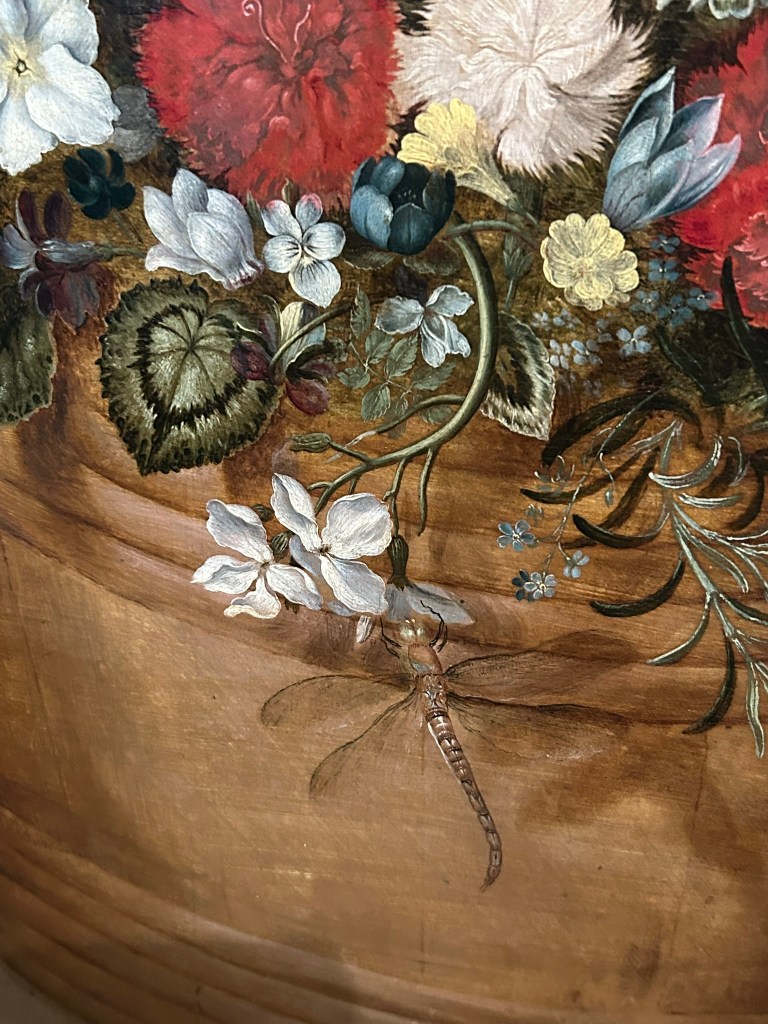
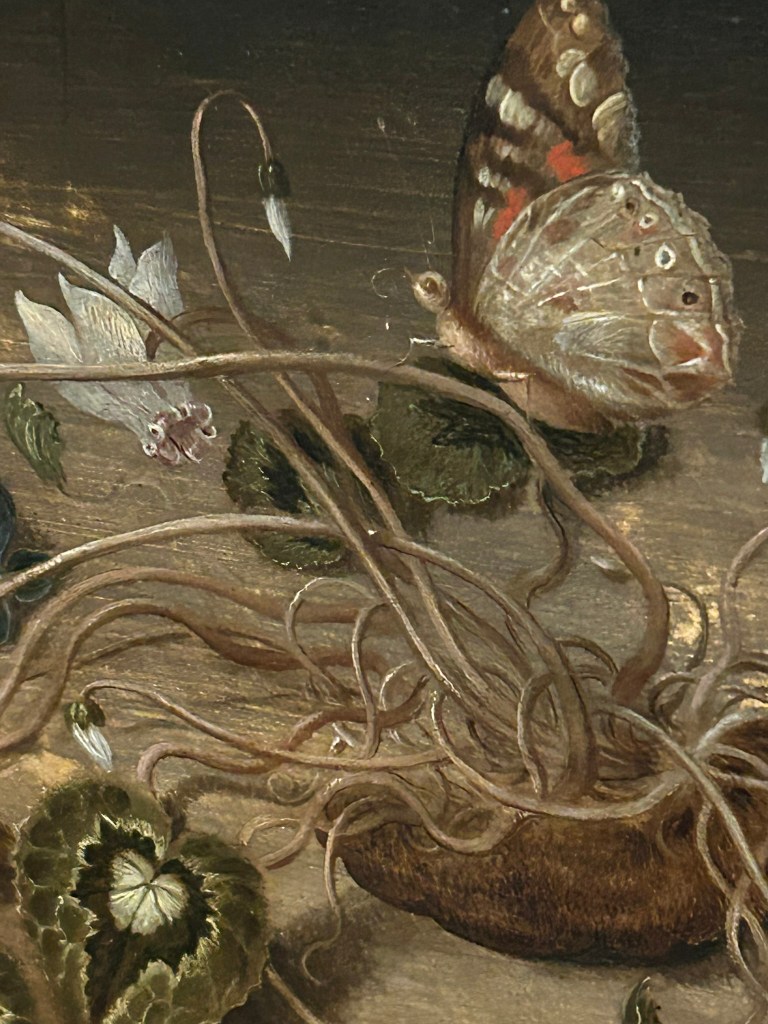
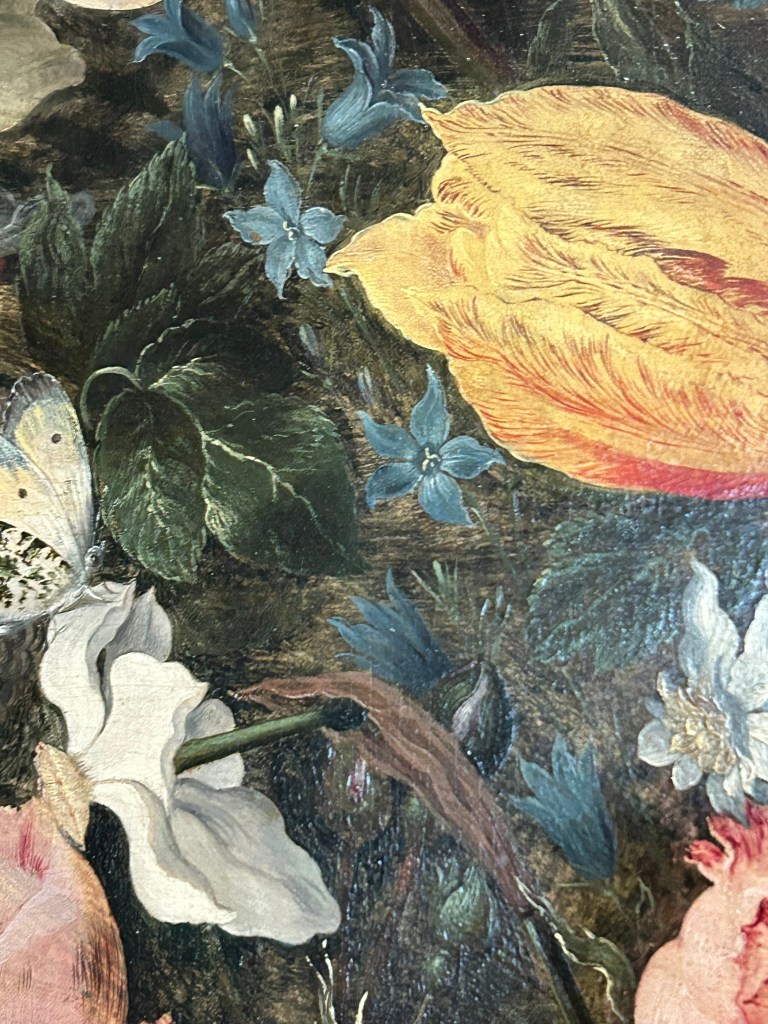
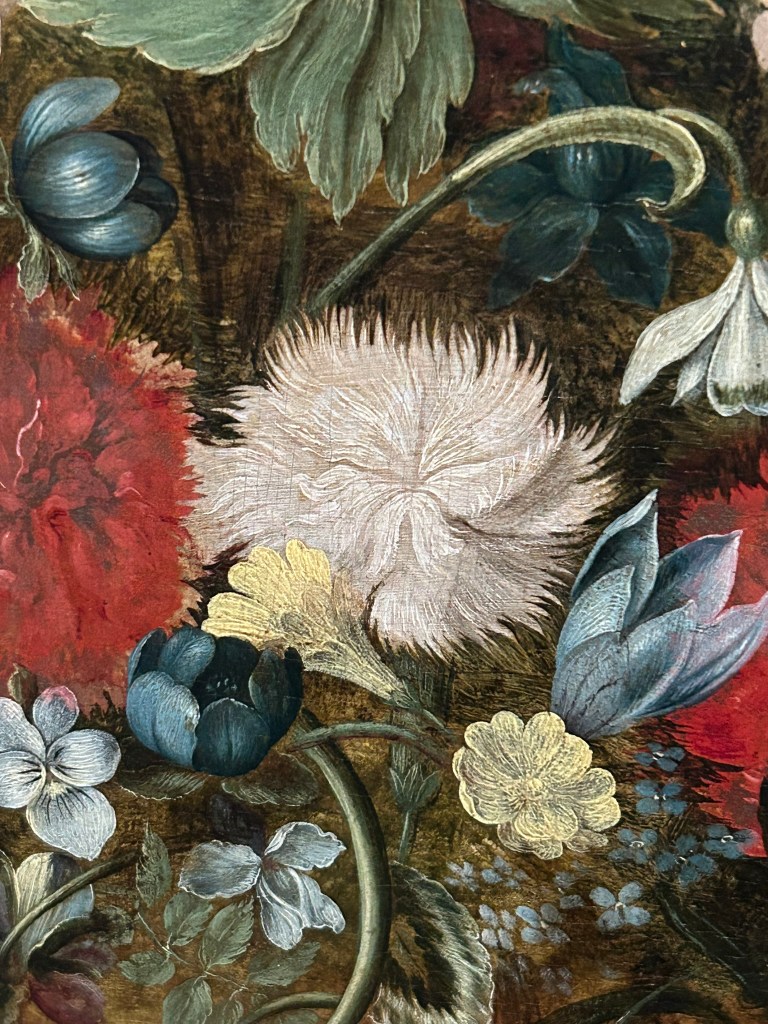
We were also mesmerized by the exquisite detail in Jan Bruegel’s painting “Large Bouquet of Flowers”.

Jan Bruegel-“Large Bouquet of Flowers”

We arrived in Salzburg on an atmospheric day; cool and cloudy.

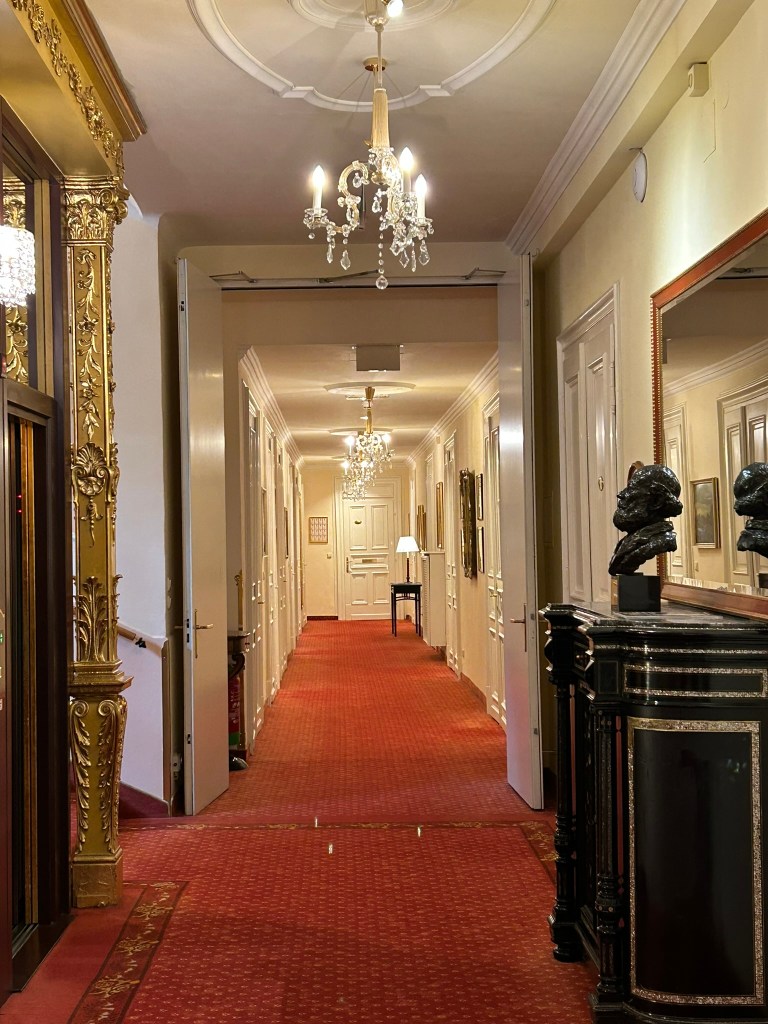
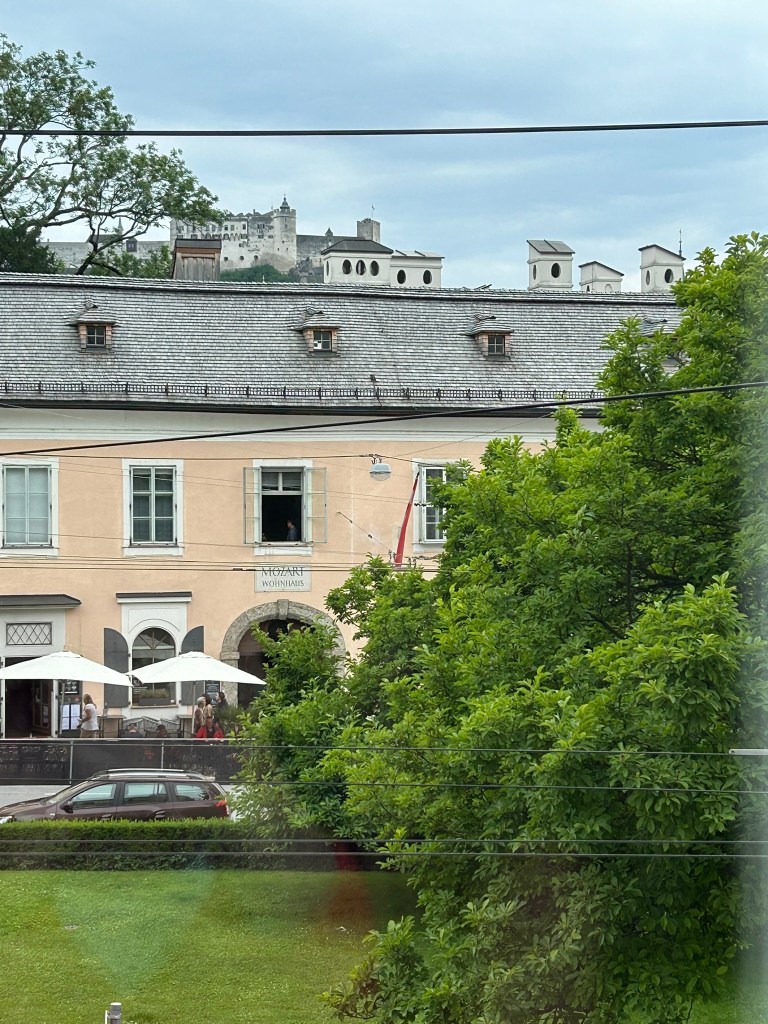
We checked into our beautiful and elegant five star Bristol Hotel across the street from the Mozart Wohnhaus (family residence)! We had decided to give ourselves one special hotel treat!

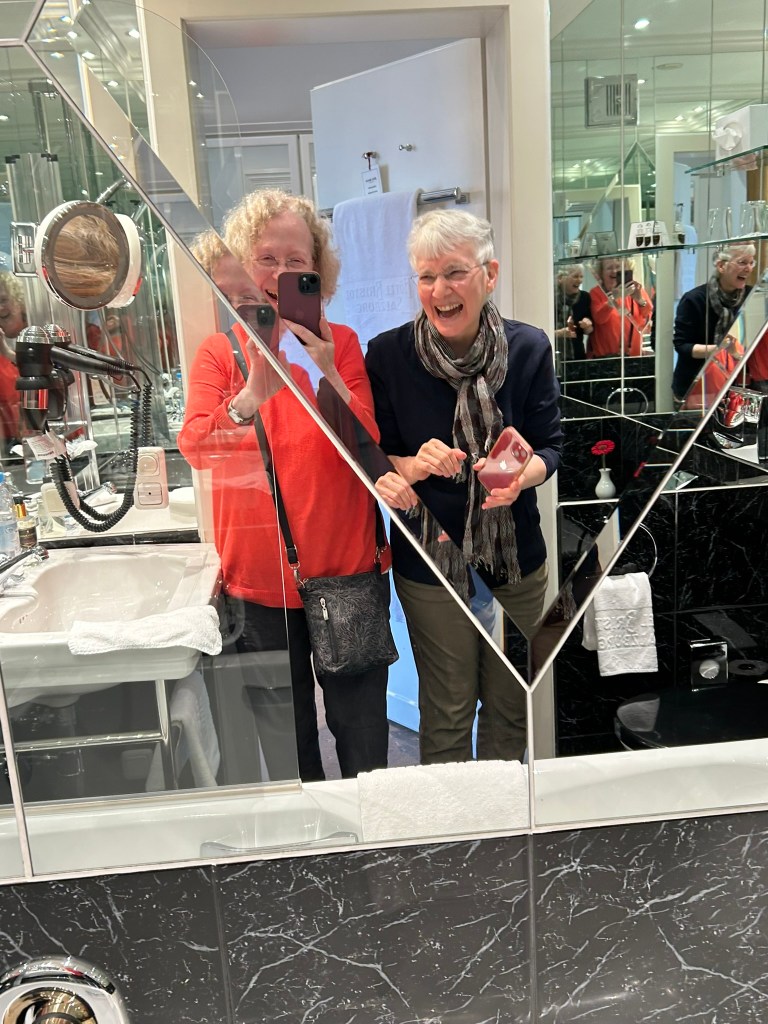
Before we headed out to see explore the town, we could not resist a few minutes of hilarity in the elegantly mirrored bathroom!

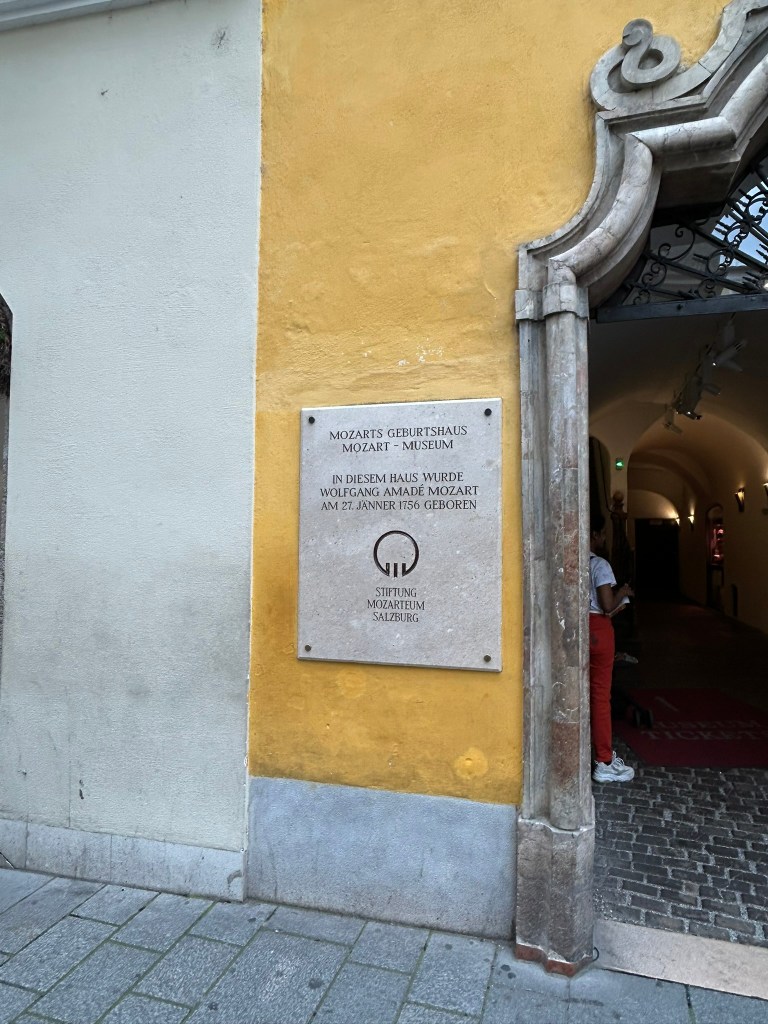
Just a few blocks from out hotel was the Mozart Geburtshaus (Birth house).

Mozart Geburtshaus, Salzburg

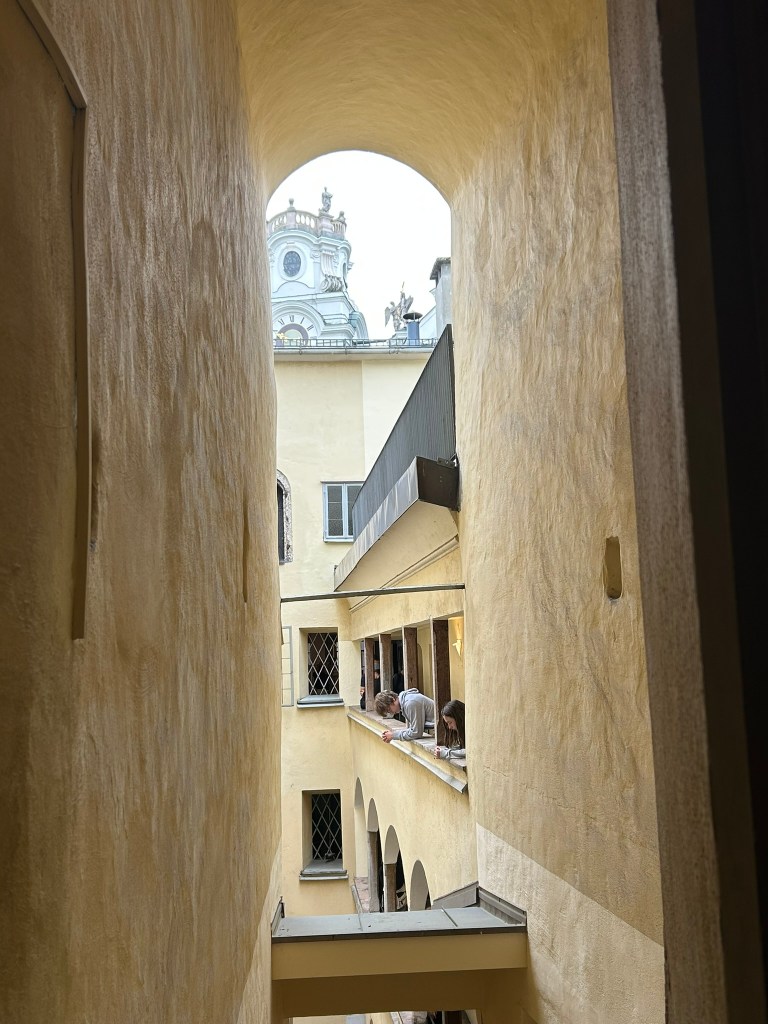
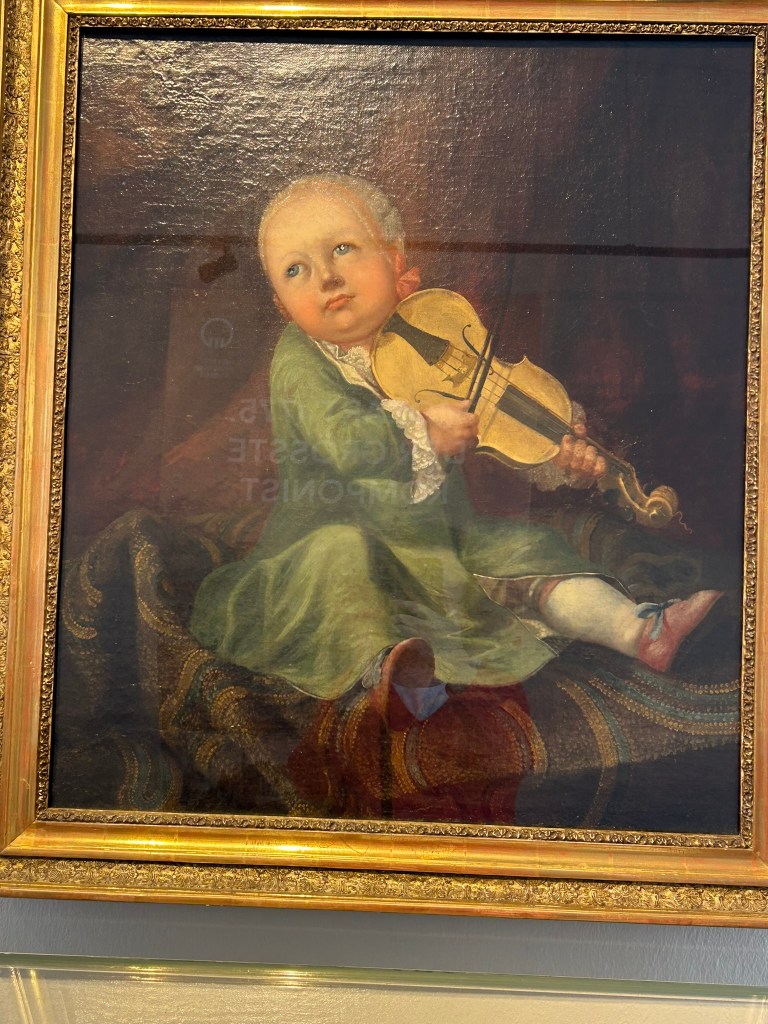
We were thrilled to walk in the small ancient musty rooms decorated with manuscripts, instruments and paintings; a display case held the tiny violin that Mozart played as a young child!

Kitchen- Mozart Geburtshaus

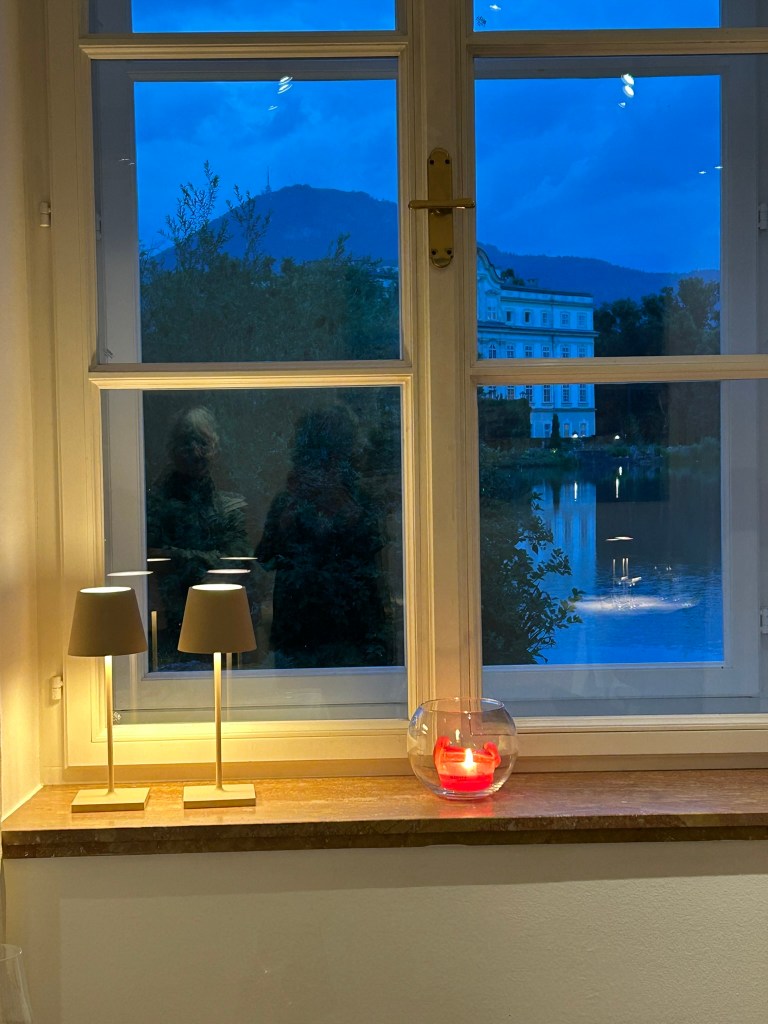
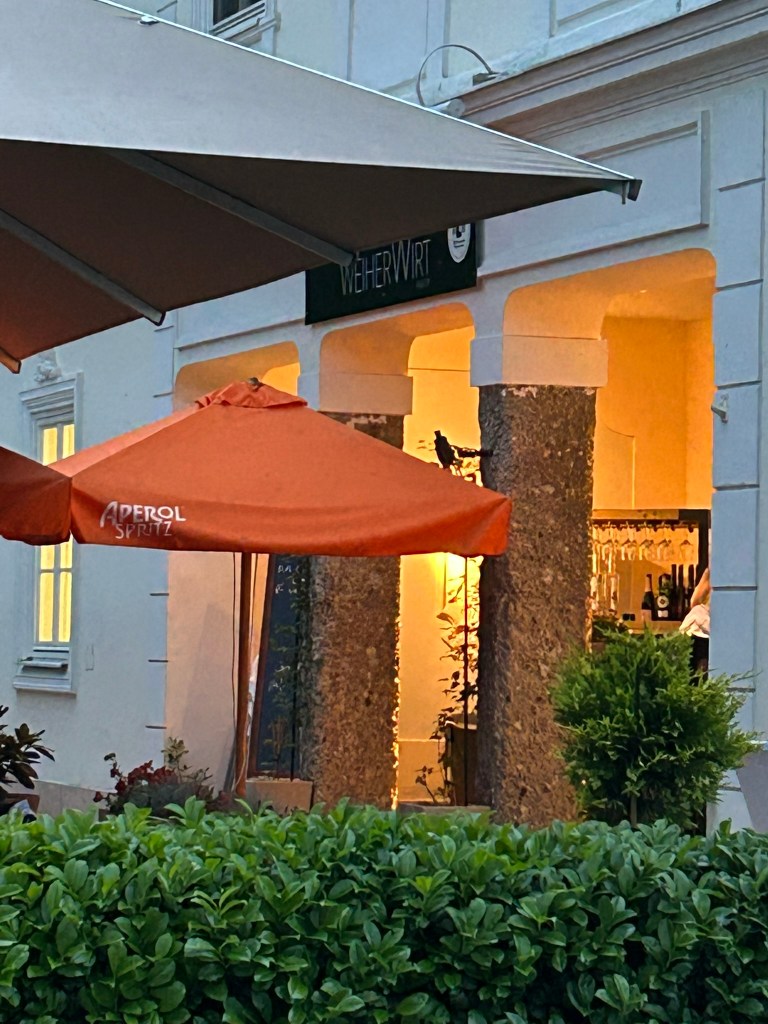
That evening, our dinner reservation was at Maxim im Weiherwirt, a beautiful upscale restaurant with creative and lighter Austrian cuisine. It was located in a town about 15 minutes from Salzburg, across from the Leopoldskroner Weiher lake. Distant mountains and the Leopold Castle are perched on a nearby hillside.

We started our dinner with a simple salad made with delicate local lettuces and tomatoes dressed with a light vinaigrette.

We enjoyed the salads with frosty classes of Austrian beer and freshly baked bread.

I ordered spring pea soup that was a rich treat; creamy and garnished with chives and crispy bits of guanciale topped with an egg that I stirred into the piping hot soup- delicious!

Carol enjoyed grilled pork loin with mixed grains and glazed carrots in a light wine sauce.

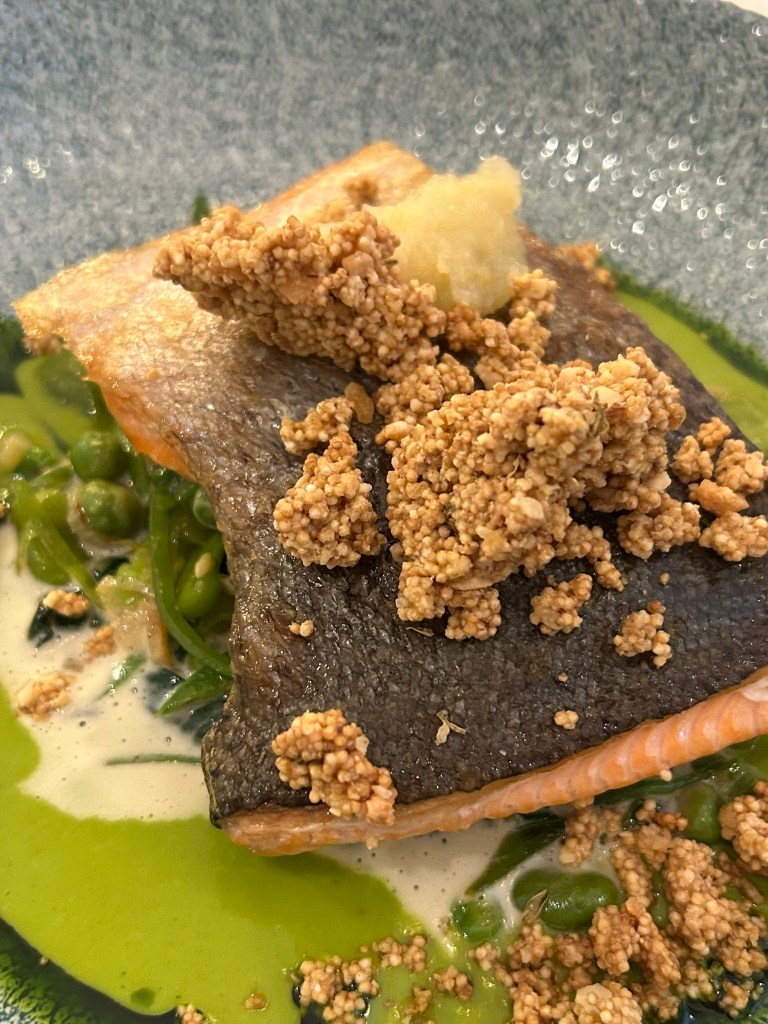
Sauteed trout served over peas and greens and topped with toasted couscous was light and delicious.

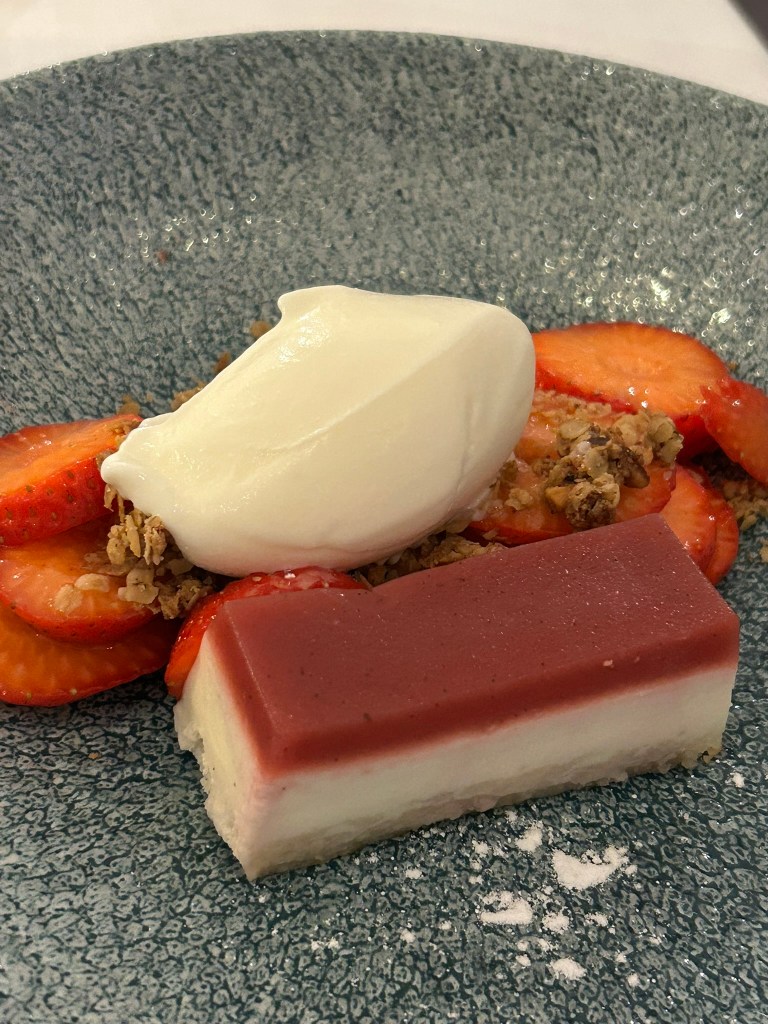
We had a bit of room left to share light and airy Rhubarb Pana Cotta with fresh strawberries and creme fraiche.

We lingered over dessert as the sun started to set over the lake.

A warm light glowed from the restaurant window as we took a leisurely after dinner stroll around the lake.

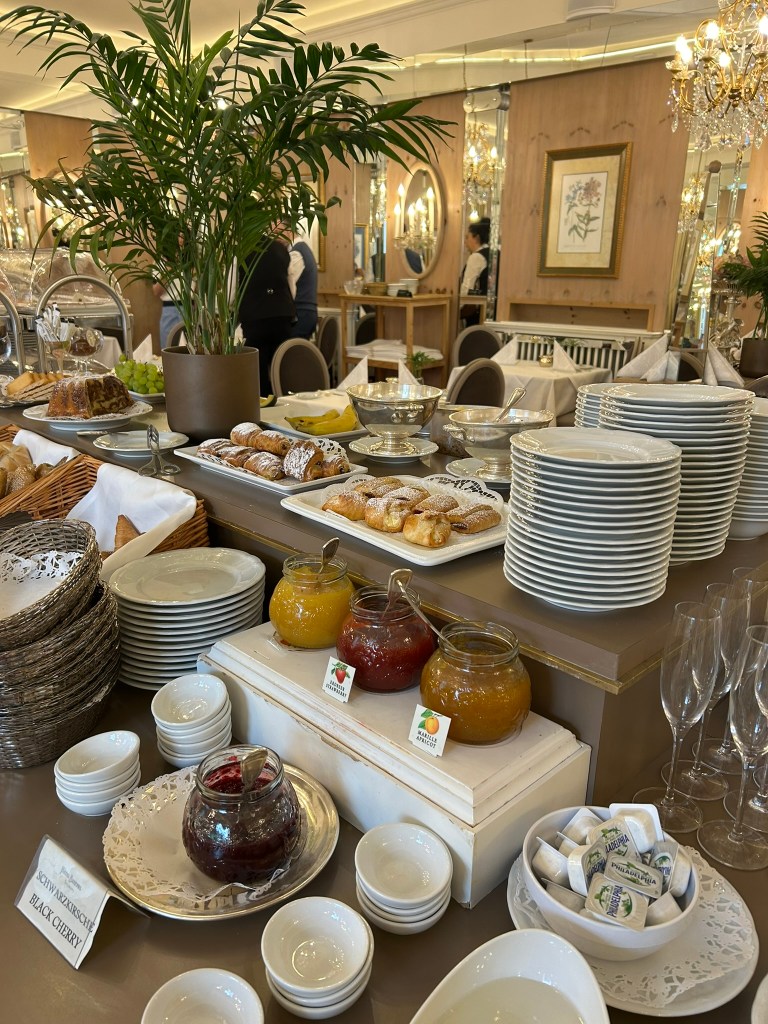
The next morning we awoke to a beautiful sunny day and enjoyed the opulent breakfast buffet at our hotel.

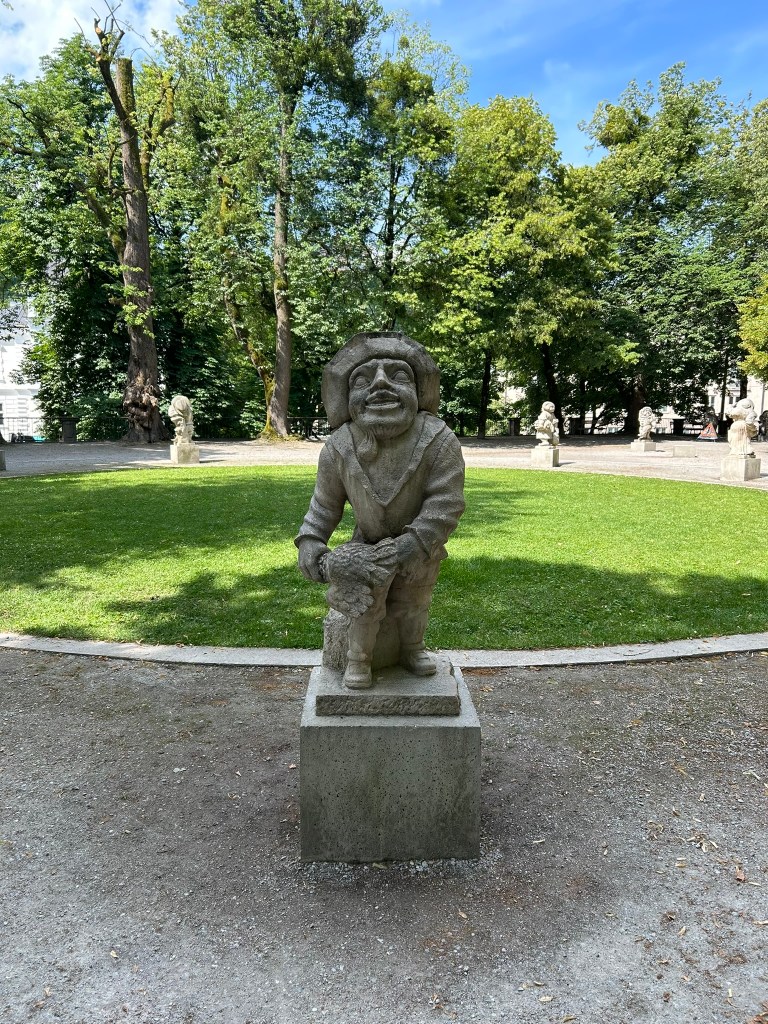
We took one last walk around town and discovered the Mirabellgarten that includes the Troll Garten with adorable and captivating tiny statues that date from the Renaissance.

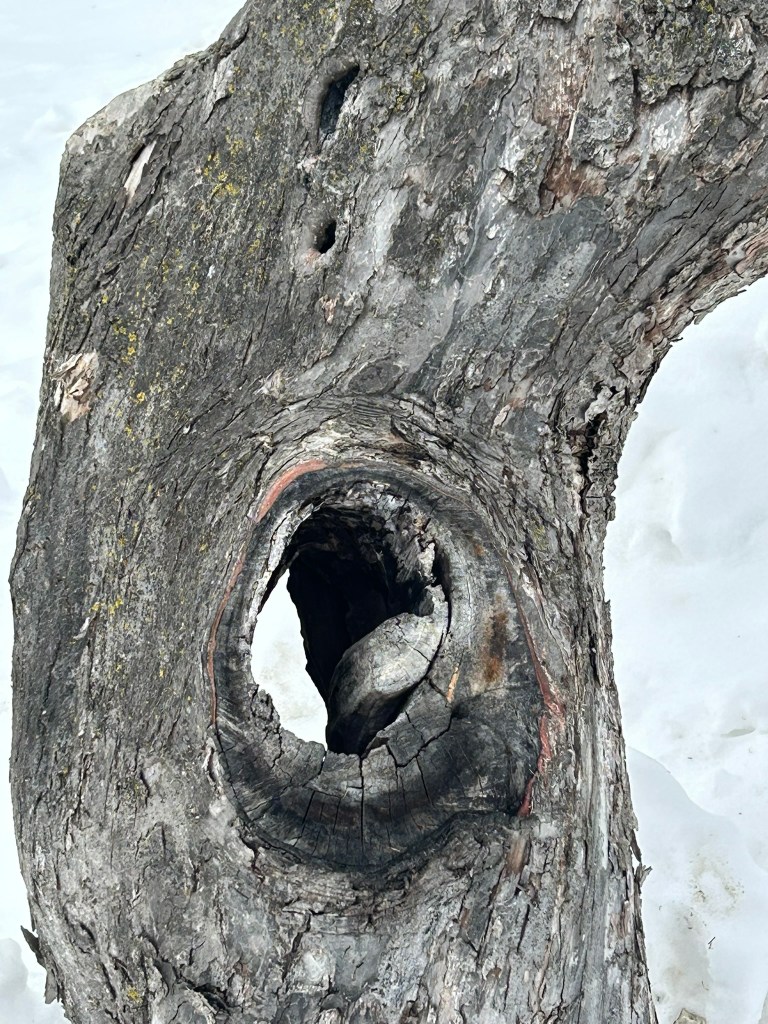
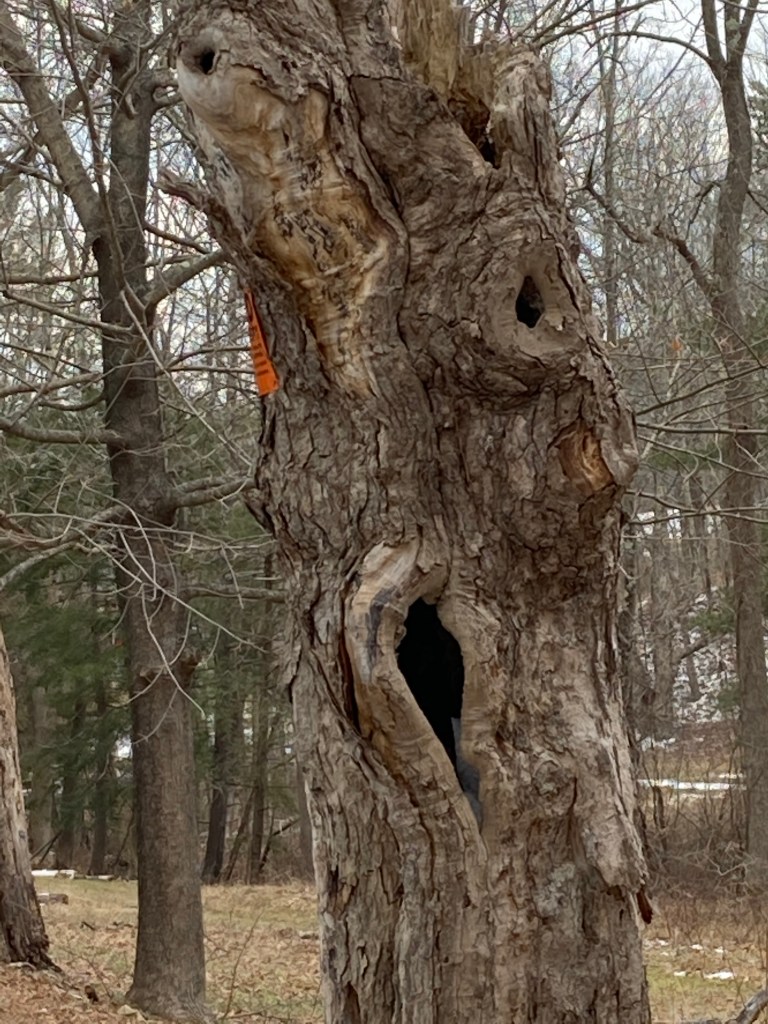
As we walked around admiring the small statues, I noticed several ancient stalwart trees standing guard with troll like features begging to be included as “Trees of the Week“!

“TREES OF THE WEEK FROM SALZBURG”!

We’ve been in the Troll Garden for a Very Long Time!

Then we were off to our next destination to Lbjuliana in Slovenia.

Part Three of the blog- Trieste and Bolzano will come soon!

I hope this blog is an antidote to our crazy world and that it brings you pleasure and a bit of a respite for you!

Decoration on Mozart’s piano

“French Tapestry” at the Clark and Pesto Chicken Kale, White Bean and Tortellini Soup!”

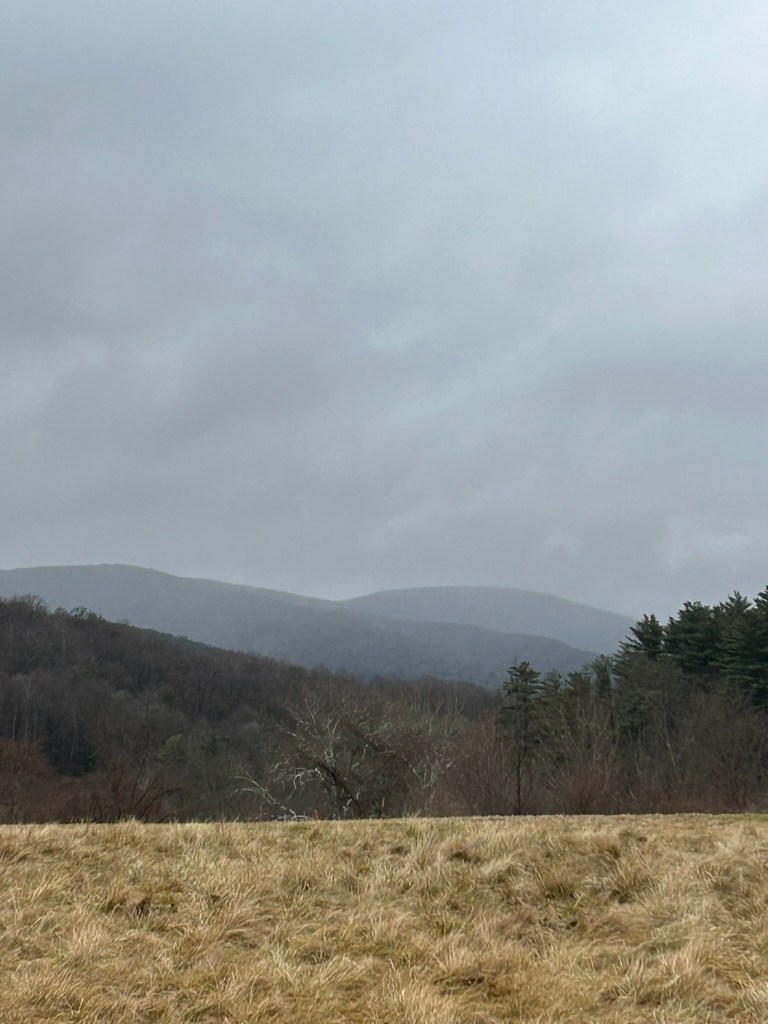
Outside the Clark Art Institute in Williamstown, Massachusetts, the hills in the distance were gray and foreboding and the wind chill was sharp and bitingly cold; what better time to be inside!

We were delighted to discover a special exhibition at the Clark: Wall Power! Modern French Tapestry from the Mobilier national, Paris. The exhibit displayed a wide range of tapestries created by contemporary artists from the 1920’s to today. Artists, weavers and dyers revived ancient techniques and created bold and daring new works of art. The room was full of brilliant colors and patterns; warming to the soul.

The beautifully curated exhibit included the following insightful commentary:

“Since the middle of the 20th century, the art of tapestry has continued to offer a vast field of expression to major artists, to the most varied trends and plastic research: Picasso, Matisse, Miró, Delaunay, but also to abstract artists (Hartung, Vasarely) non-figurative (Nemours, Bazaine), part of Minimal Art, new realism (Hains), narrative figuration (Erro, Aillaud) or the Supports-Surfaces group (Buraglio, Rouan, Pincemin). More recently, Louise Bourgeois, Bertrand Lavier, Sheila Hicks or Orlan have distinguished themselves with their woven creations. In perpetual evolution, the works created by the Manufactures nationales reflect the most diverse trends in contemporary art”.

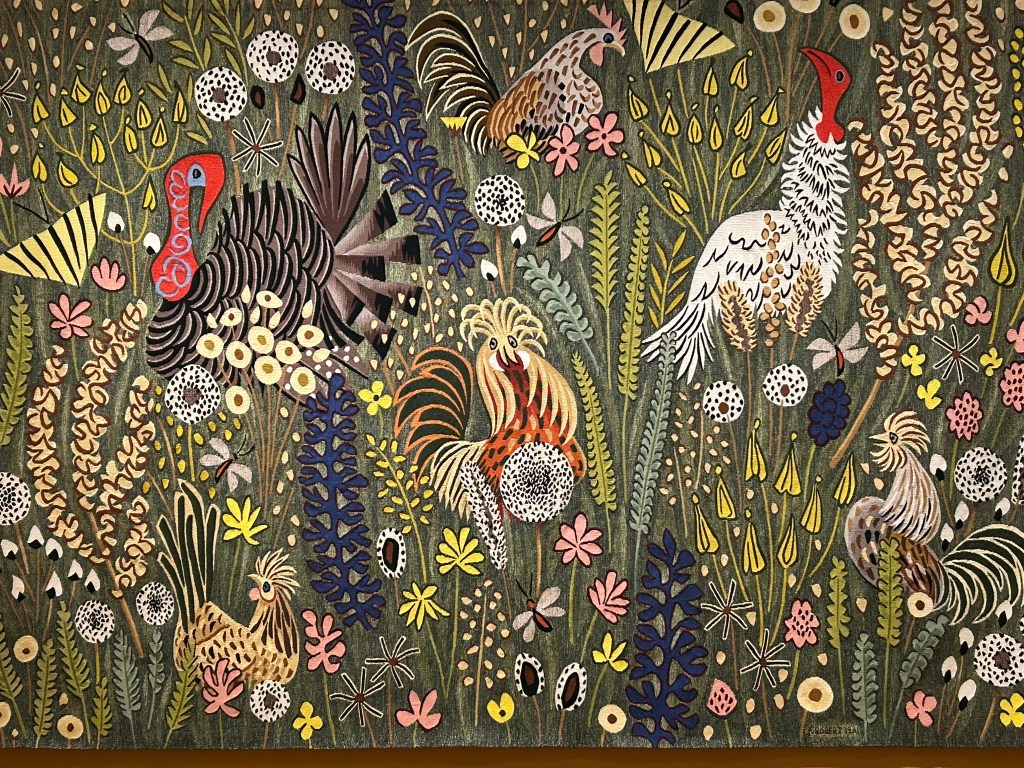
“A Thousand Wildflowers” by Dom Robert, a Benedictine Monk, recalled wildflower fields that were popular in the Middle Ages.

“A Thousand Wildflowers”- Dom Roberts (1907-1997)

Several of the tapestries were designed from existing works of art and then woven. Designing a work and then weaving it with a team of weavers, can take up to 2 or 3 years.

“Swallow Love”- Joan Miro (1893-1983)

Evening Music“-Pauline Peugniez-1890-1987

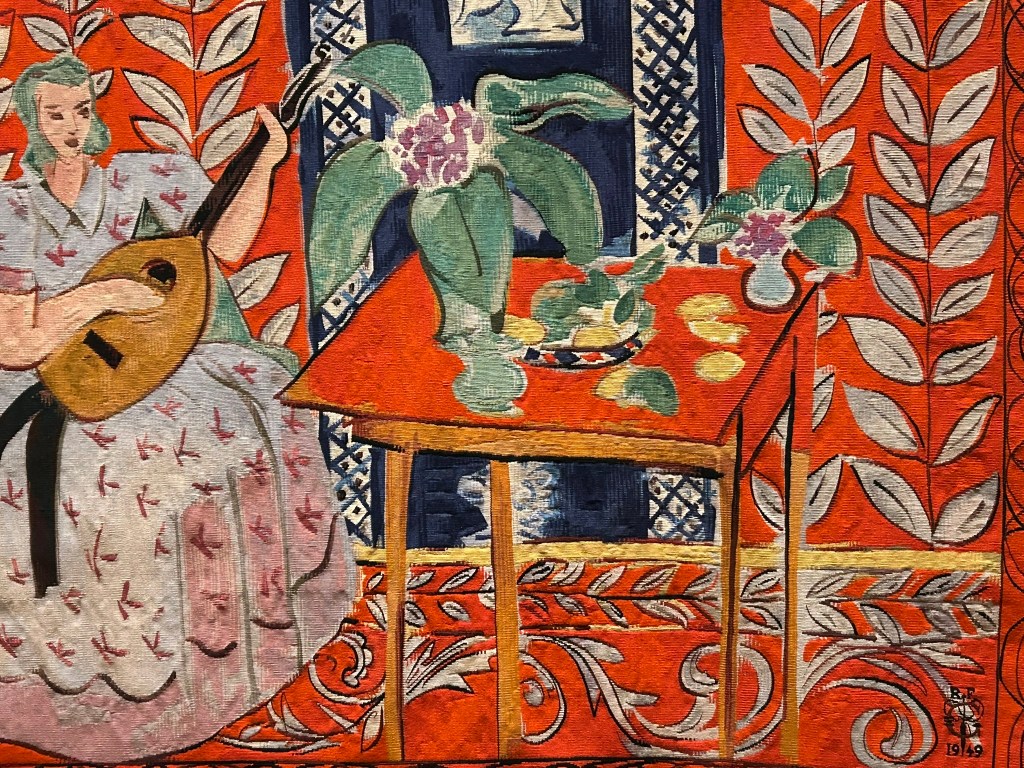
“The Woman with the Lute”- Henri Matisse (1869-1954)

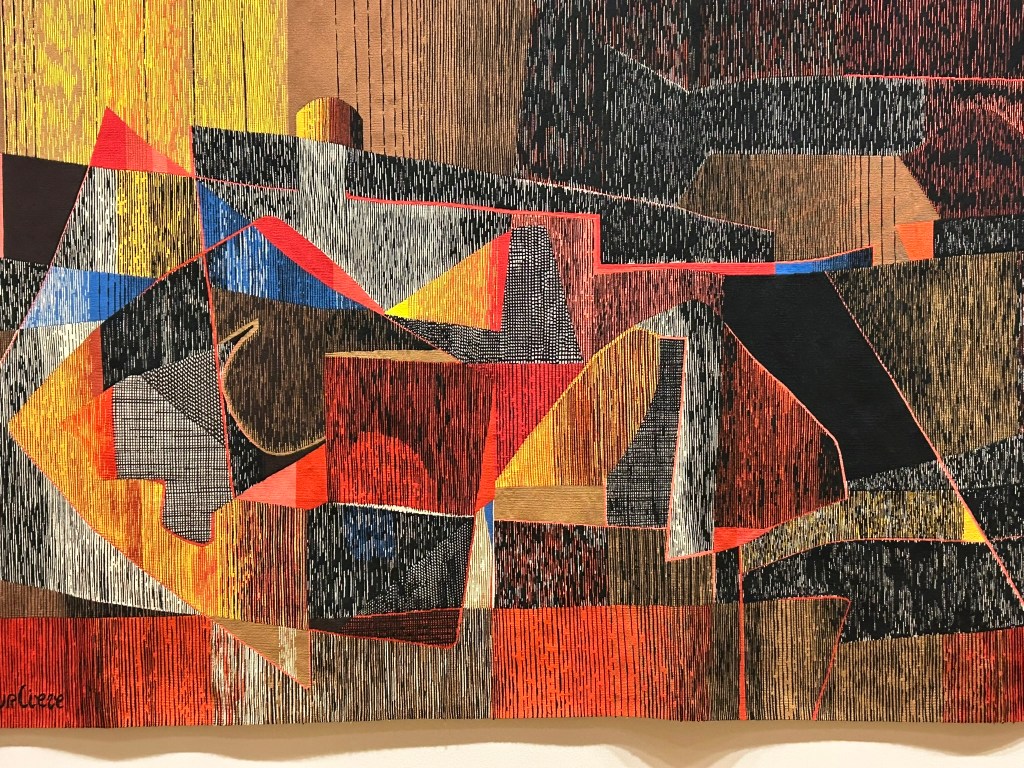
“The Vines of Volnay”- Michel Tourliere (1925-2004)

The French artist Michel Tourliere who lived from 1925-2004, came from wine country in Burgundy and specialized in designing woven tapestries. His works often depict landscapes from Burgundy.

We also viewed stunning contemporary works by the American artist Kiki Smith and the French artist Jean Messagier.

“Seven Seas”- Kiki Smith (American-born Germany 1954)

“Red Flames”- Jean Messagier (1920-1999)

At the end of the exhibit, it was fascinating to see the back of “Red Flames”; a work of art in itself!

And then, back home for some hearty soup!

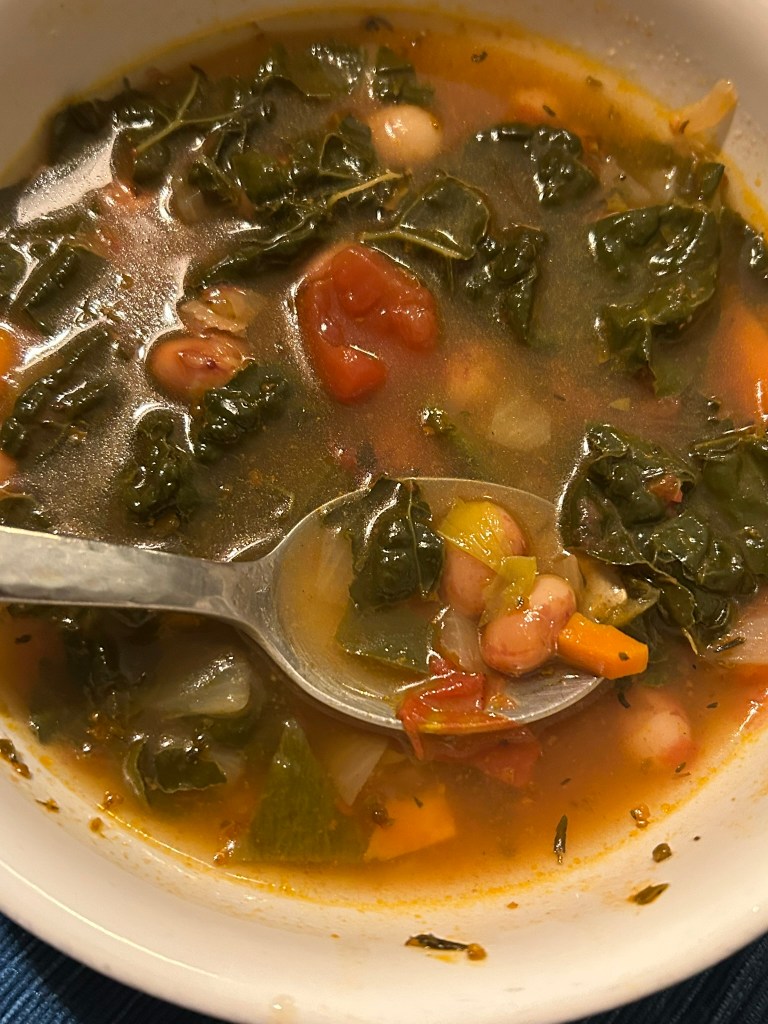
I had roasted a chicken with basil pesto slipped under the skin and was looking for a use for the leftover chicken. I decided to make a quick stock with the remaining chicken carcass. I threw the chicken bones along with a carrot, onion, celery, thyme, peppercorns, salt and bay leaf into a big pot, covered it with water and let it simmer on the stove for a few hours and then strained the stock and discarded the solids. The result was a delicate basil scented stock, just right for beans and kale! I defatted the stock and added chopped, onion and carrot, a can of white beans and a small bunch of chopped lacinato kale. Along with bay leaf, dried thyme, dried sage and dill, I simmered the soup until all of the vegetables were tender. I added leftover chopped chicken and a small package of cooked tortellini. Sprinkled with freshly ground pepper and grated pecorino cheese, this was truly a heartwarming winter soup! ENJOY!!

Pesto Chicken, Kale, White Bean and Tortellini Soup

Ingredients for Pesto Chicken Stock

Leftover chicken bones

3 quarts water

one onion cut in half

1 large carrot roughly chopped

1 stalk celery with leaves roughly chopped

1 clove garlic peeled and smashed

2 teaspoons salt

10-12 whole peppercorns

2 teaspoons dried thyme

2 bay leaves

Ingredients for soup:

3 quarts defatted pesto chicken Stock (home made is best, but you can use store bought and add a tablespoon of pesto)

1 tablespoon extra virgin olive oil

1 medium carrot chopped

1 onion chopped

1 stalk celery chopped

leftover chicken cut into small pieces

8-10 lacinato kale leaves

1 can cannellini or great northern beans, drained and rinsed

1 teaspoon dried thyme

1 teaspoon dried sage

1 teaspoon dried dill

1 bay leaf

1 small package tortellini (I used Kite Hill tortellini with almond milk ricotta)

To Make Soup:

In a large pot, heat olive oil and add chopped onion. Saute a few minutes until onion softens. Add chicken stock and all other ingredients, except tortellini and cut up chicken.

Bring to a boil and then reduce to a simmer. Cook covered about an hour until vegetables are very tender. Cook tortellini according to directions on package and add to soup along with the leftover cut up chicken.

Serve with freshly ground pepper and sprinkle with grated pecorino cheese!

ENJOY!!

AND: Here is the “Tree of the Week”!

“It is a bit cold out here”!

STAY WARM!

“Happy Winter Solstice and Smoky Tomato Soup”

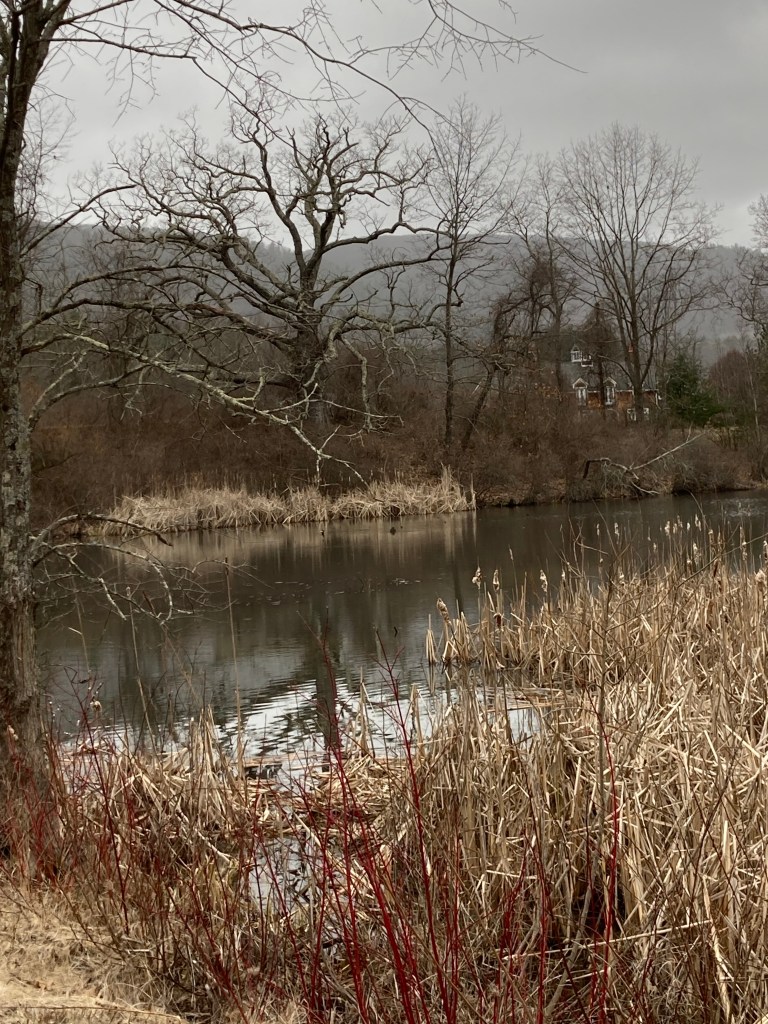
A last Winter’s Solstice blog for 2024! Here are some of my favorite late afternoon pictures from our shortest days of the year. Many thanks to my loyal followers. Best Wishes for a Happy Holiday and a Healthy New Year!

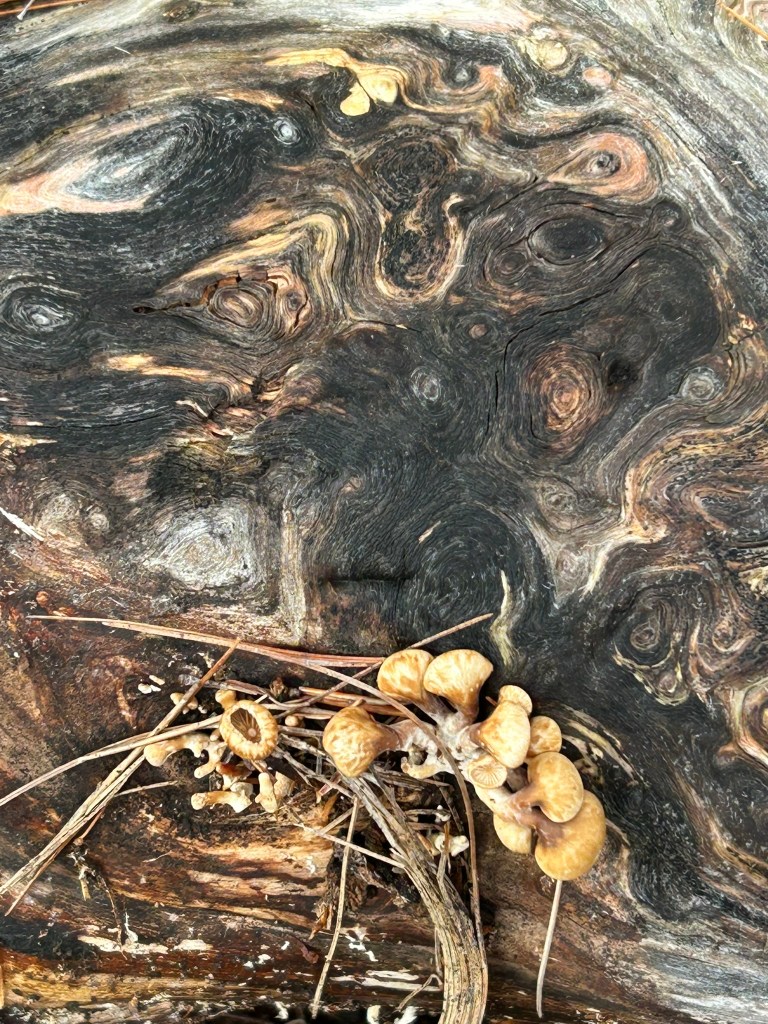
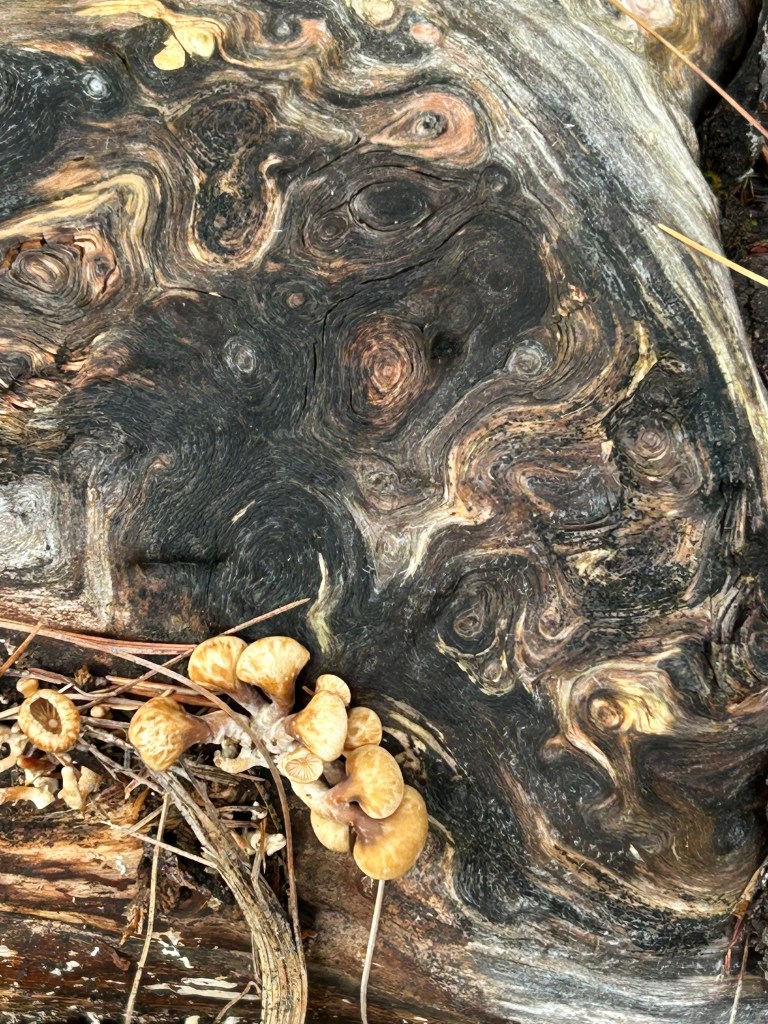
I can’t resist adding pictures with beautiful abstract patterns!

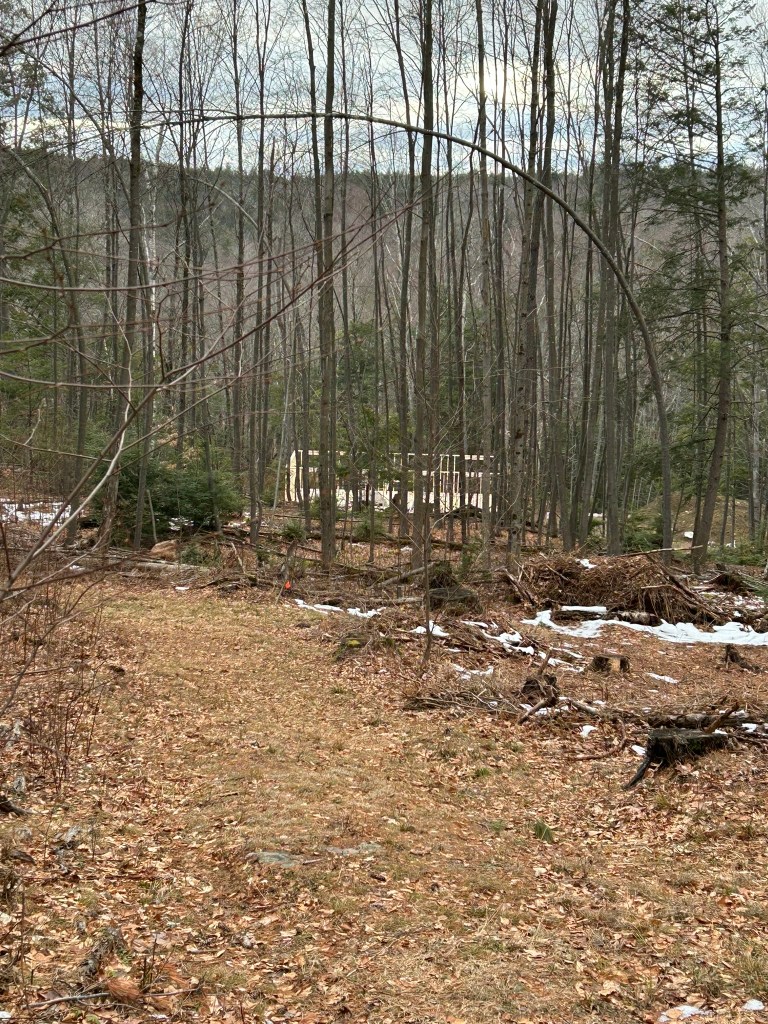
AND: Here’s a pic of our new house peeking through the woods!

STAY WARM AND COZY!

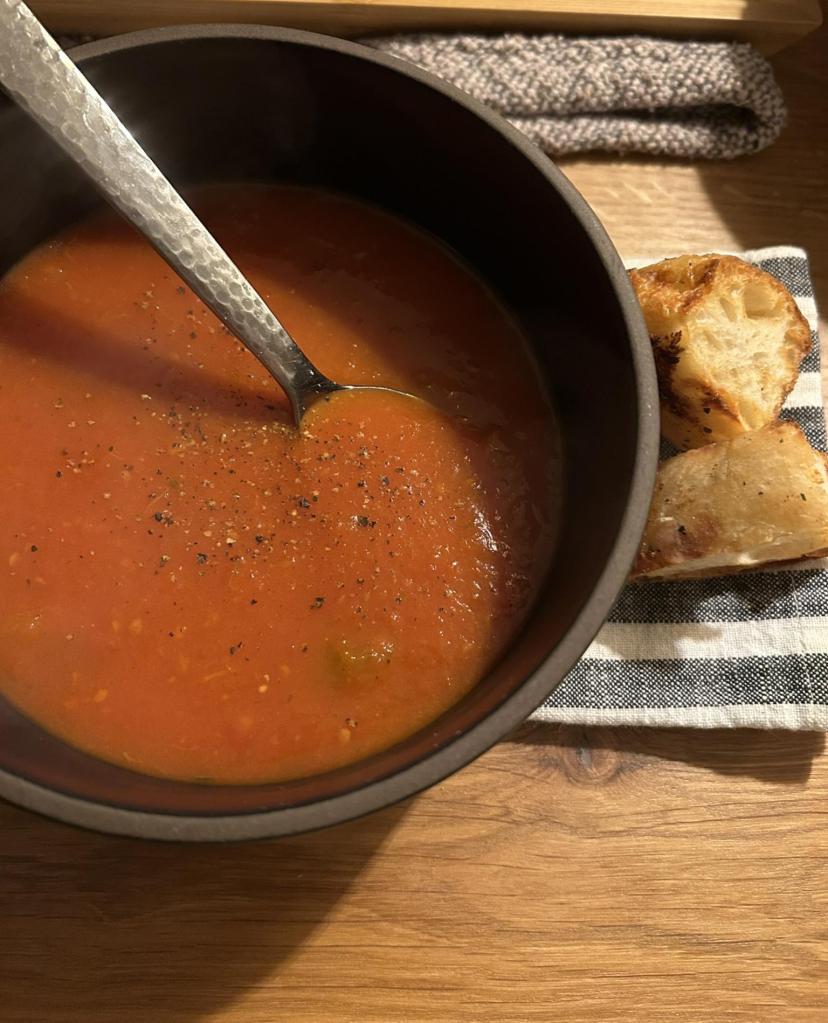
Here’s a recipe for Smoky Tomato Soup, that we had on a recent lunch at the newly reopened Roadside Diner in Monterey, Massachusetts. We enjoyed our version of soup with Crispy Sour Cream and Onion Chicken featured in my recent blog:https://wordpress.com/post/musicianstravels.com/9143 along with a green salad.

Smoky Tomato Soup

Ingredients:

2 large cans (28 ounce) whole plum tomatoes

1 small stalk celery finely chopped

1 medium onion finely chopped

1 small carrot finely chopped

2 teaspoons paprika

2 teaspoons smoked paprika

pinch cayenne pepper

1 teaspoon dried thyme

1 teaspoon ground cumin

1 bay leaf

salt and freshly ground pepper to taste

2 tablespoons extra virgin olive oil

1 cup water- more if needed

To make soup:

Heat olive oil in a large soup pot and add onions.

Saute onions until slightly softened. Add carrots and celery. A bit of chopped fennel might also be good! Cook a few minutes.

Add tomatoes and rest of ingredients.

Bring to a boil, reduce heat to a simmer. Cover and cook about 1 hour. Add more water if soup is too thick.

Remove Bay leaf and puree with an immersion blender. Remaining chunks of vegetables are fine.

ENJOY!

AND: Here’s the last “Tree of the Year” for 2024!

“Oh Well”

HAPPY WINTERS SOLSTICE!

Late Summer Sounds at Chesterwood with The Salisbury Four and Vegan Raspberry Spelt Scones!

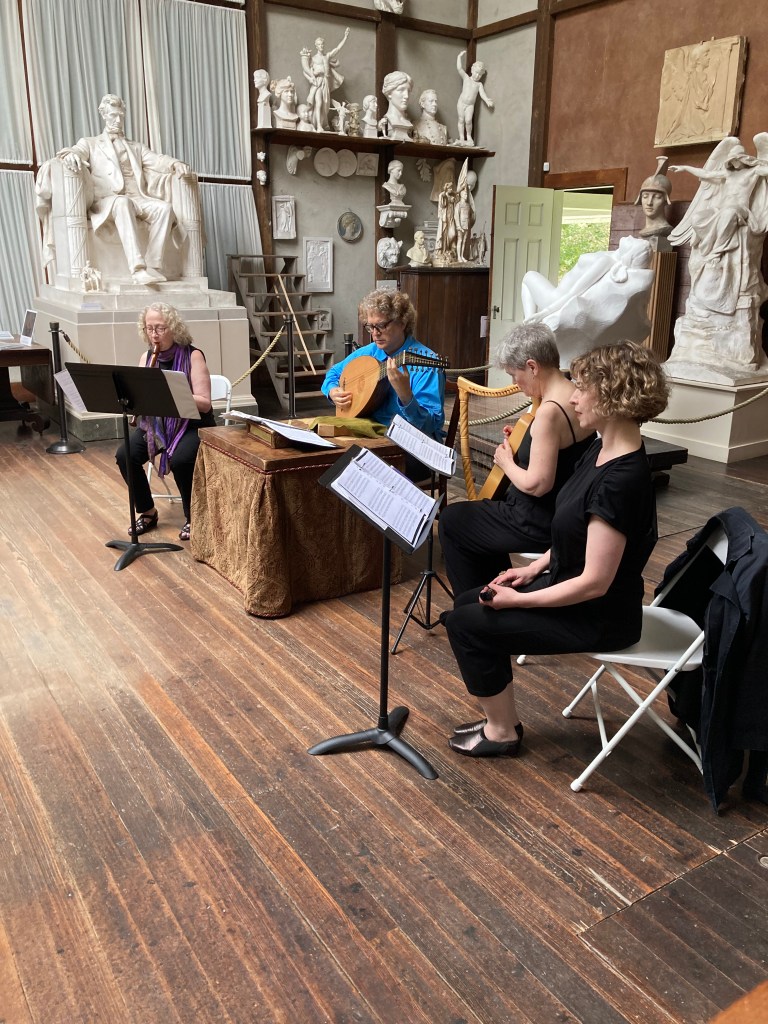
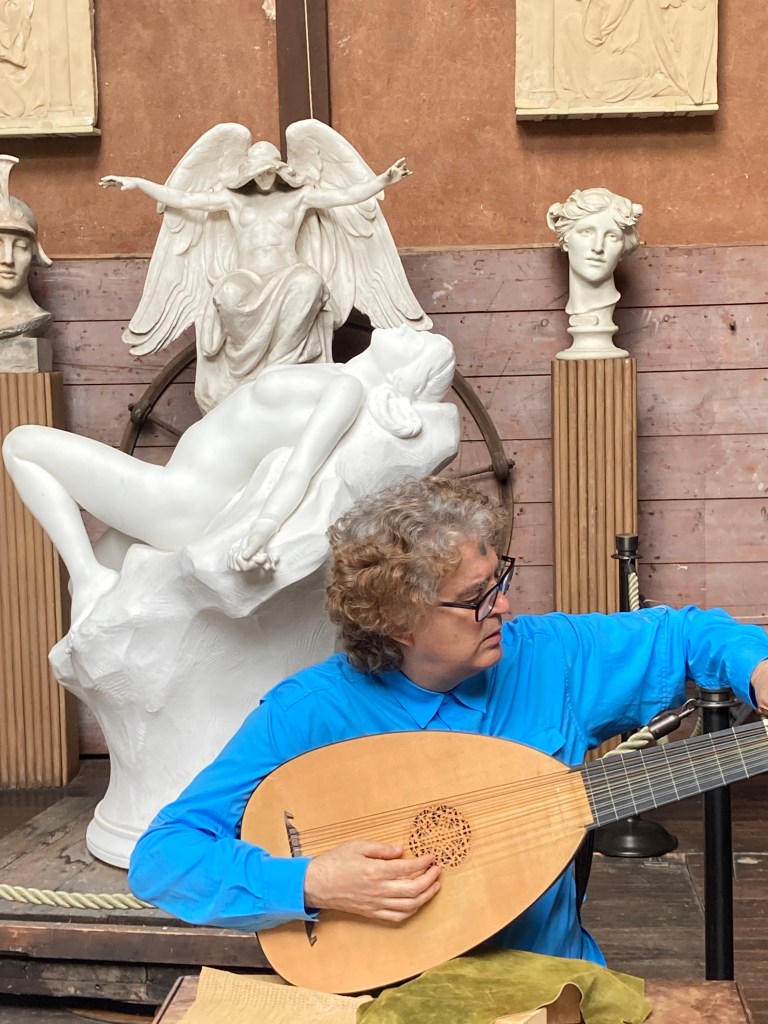
What a pleasure it was to perform a concert at the end of August with my group, The Salisbury Four at Chesterwood, located in Stockbridge, Massachusetts. For many years we have presented an annual Holiday concert for the Salisbury Association in Salisbury, Connecticut.

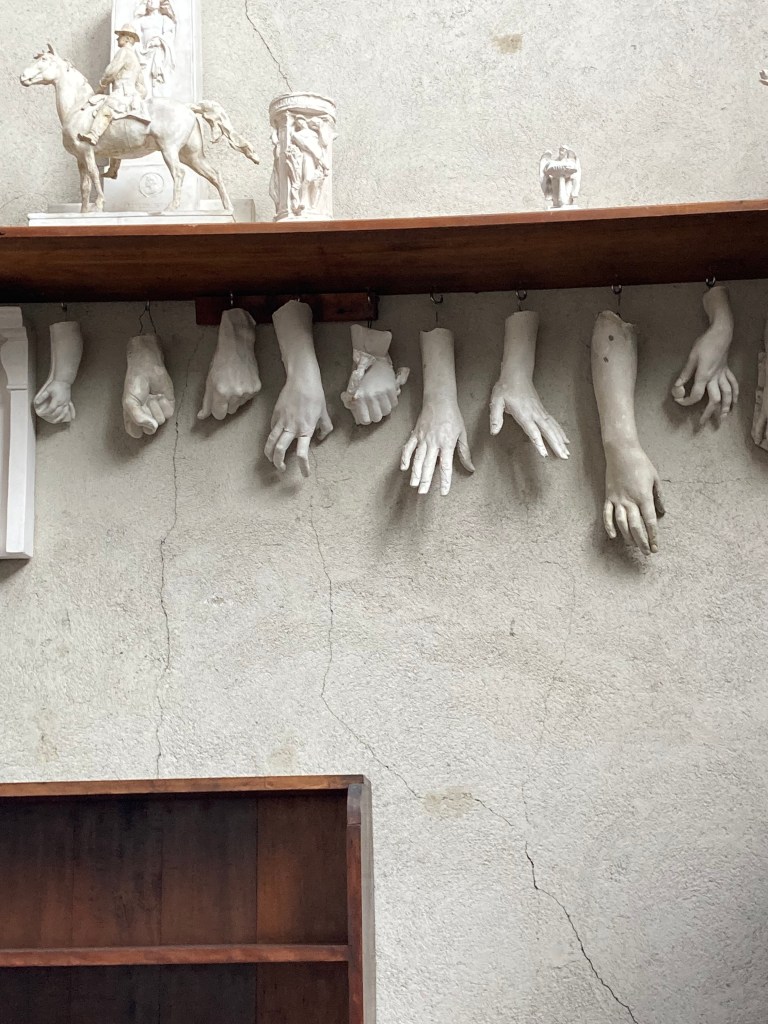
Chesterwood was the home, studio and gardens of America’s foremost public monument sculptor Daniel Chester French who lived from 1850-1931. French is most famous as the sculptor of the Lincoln Memorial. The concert was held in the artist’s spacious studio that had high vaulted ceilings It was thrilling to sit next to studies of Lincoln’s hands and of the Lincoln sculpture!

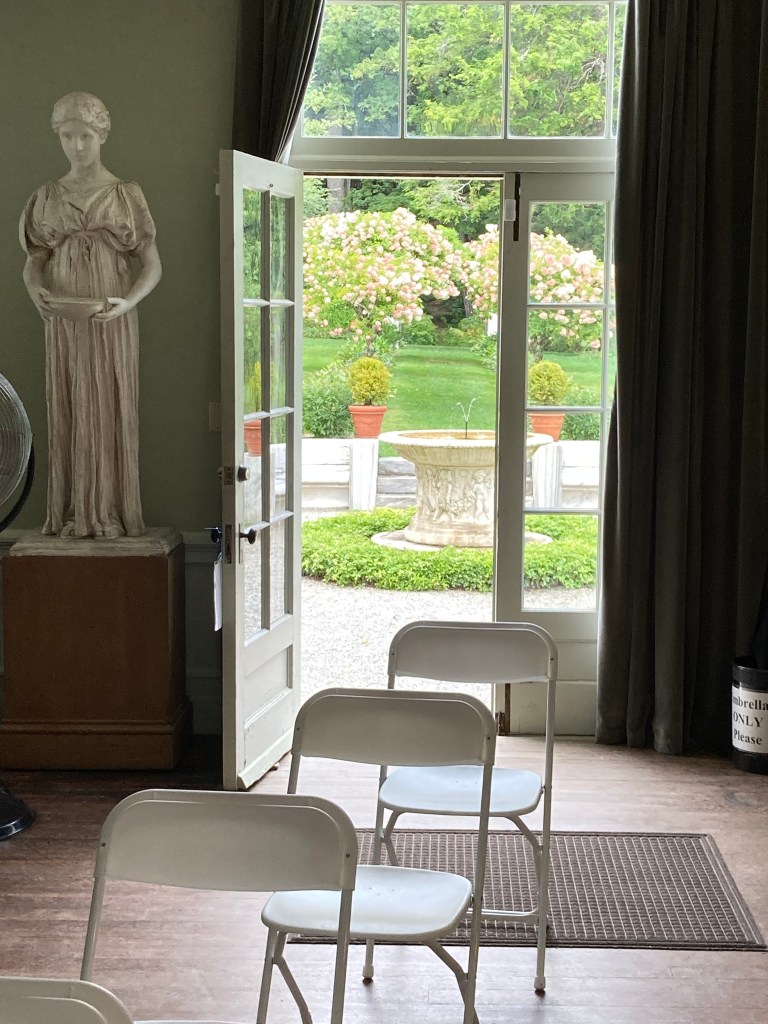
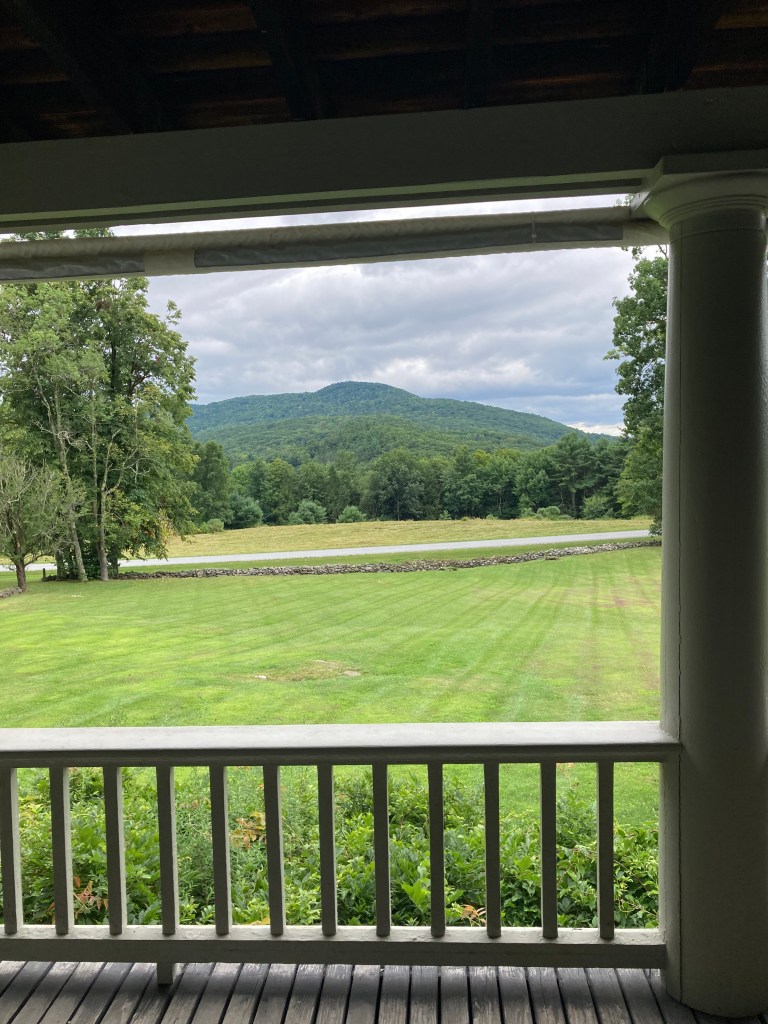
The studio opens up onto a lovely peaceful garden and the large wrap around porch overlooks Monument Mountain in Great Barrington, Massachusetts!

Our repertoire for lute, recorder, voices, historical harp and Baroque dance has expanded to include a new summer themed program; with our recent concert titled: “Fortune, Love and Time”. We are so fortunate that one of our singers, Zahra Brown, is also a gifted dancer and is a specialist in Baroque dance. Enjoy this short video of our warmup rehearsal!

The other Salisbury Four members are all food lovers and are talented cooks and bakers. When we rehearse at our singer and harpist Marcia Young’s apartment, she always has a wide assortment of unusual teas at the ready and often a freshly baked goody such as a lemon drizzle cake. Another person once brought a rich chocolate babka.

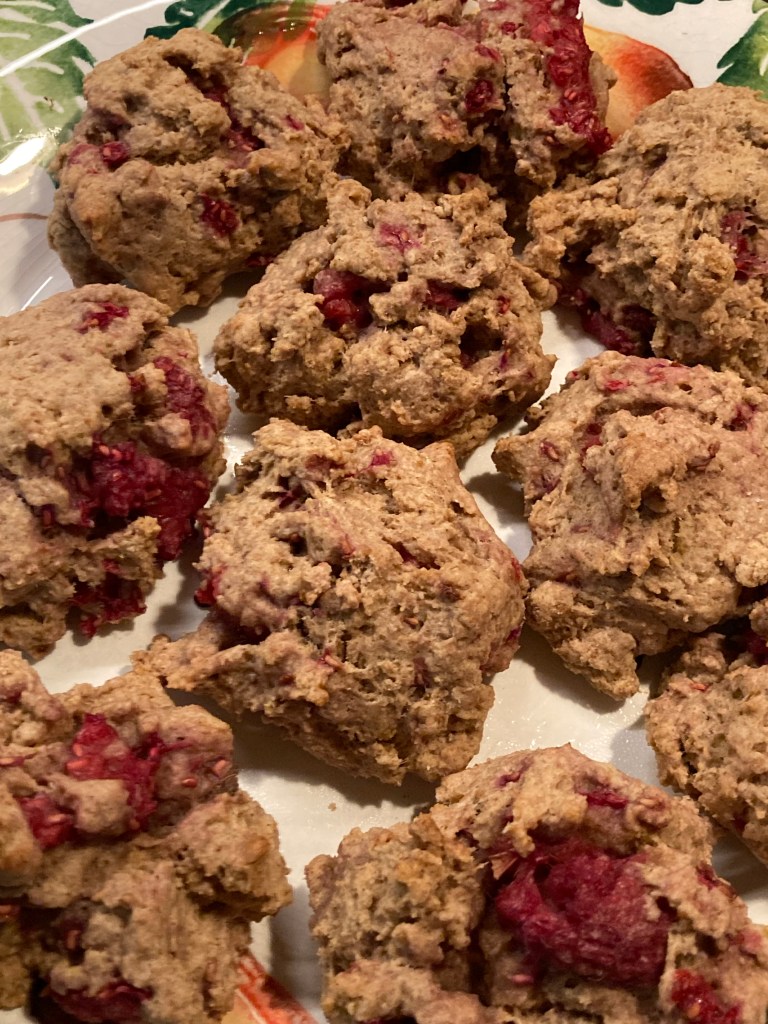
I often make spelt raspberry scones that are super easy to make with a nutty delicious flavor and they also happen be healthy! I planned to bring a plate to the concert and our lutenist Christopher Morrongiello mentioned that he was thinking about the scones a bit obsessively on his long ride up from Long Island!

I have been using this vegan recipe for spelt scones from Erin McKennas’s Baby Cakes cookbook for several years; the dough for the scones, without the sweeteners also make a great topping for either savory potpies or fruit cobblers. I substitute coconut sugar for the agave syrup used in the original recipe.

Spelt Raspberry Scones

Preheat oven to 375 degrees

Ingredients:

1 cup whole wheat pastry flour

1 cup whole grain spelt flour

1/4 cup coconut sugar

1 teaspoon salt

1 teaspoon ground cinnamon

1 tablespoon baking powder

2 teaspoons vanilla extract

1/3 cup canola oil

1/3 cup hot water

To Make Scones:

In a large bowl, combine flours, salt, cinnamon baking powder. Mix well.

Add oil, vanilla and hot water, stir to combine and knead mixture gently a few times with your hands. Lightly stir in raspberries. You could also use blueberries or add chopped walnuts.

Line a baking sheet with parchment paper.

Pat dough into 10-12 mounds.

Bake aprox. 12-15 minutes until light brown.

ENJOY!

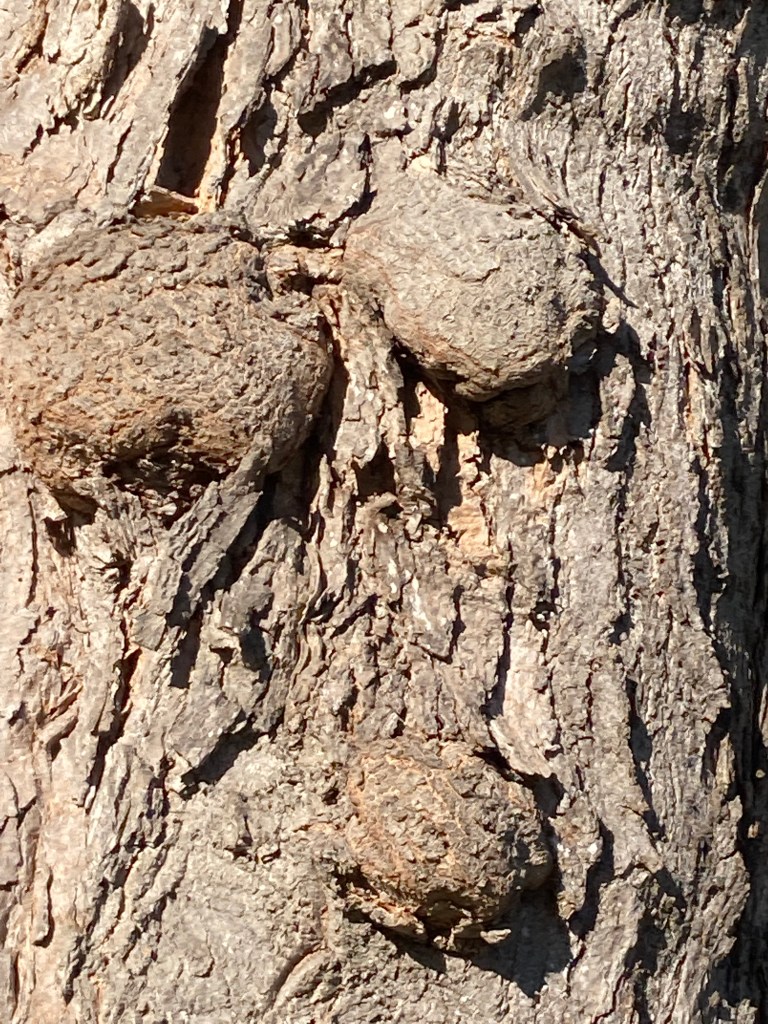
AND: Here is the “Tree of the Week”!

I think she’s going to make it!!

HAPPY FALL!!

Mountain Meadow Preserve and Vegetarian Tamale Pie

Mountain Meadow Preserve- Williamstown, MA

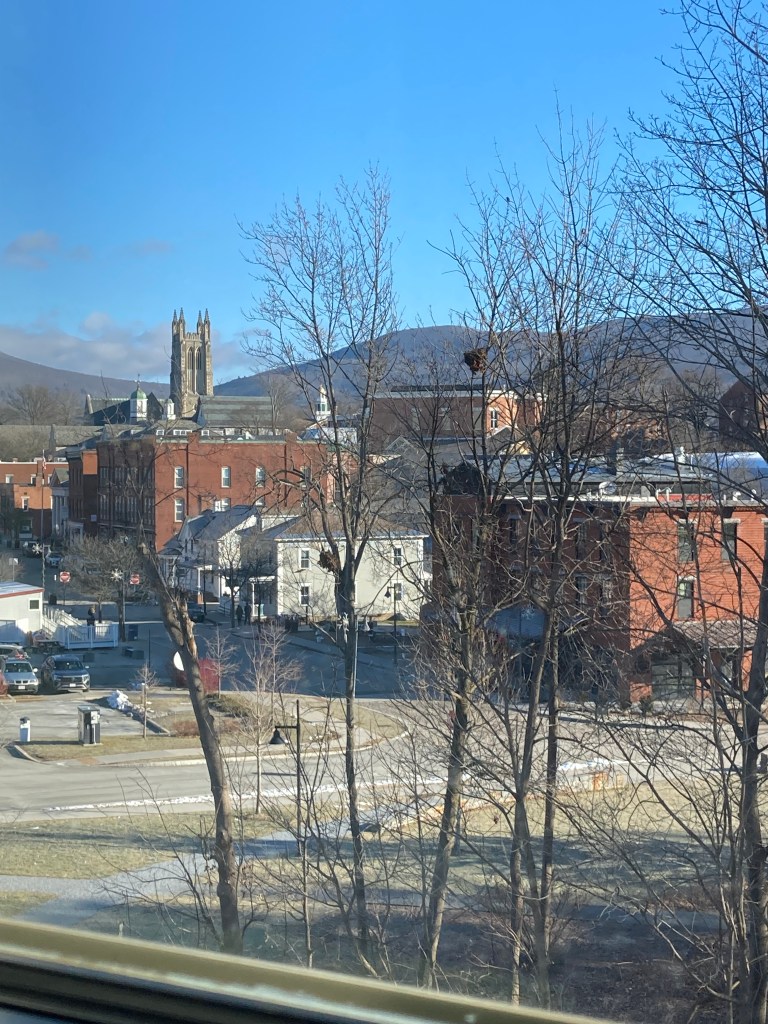
At the beginning of February one of my teaching positions had a short winter break. We decided to treat ourselves to a “Cabin Fever” mini vacation and traveled further north to Williamstown, Massachusetts in the Northern Berkshires- with even colder temperatures!

Mohawk Trail- North Adams, MA

Williamstown is an idyllic small New England town that includes Williams College. We have often made day trips to visit the Clark Art Institute or to nearby North Adams to MASS MoCA, scene of my most recent blog post! We looked forward to having a leisurely dinner, going to see a film and not making the long trek back home in the dark!

Williamstown, MA

We checked into the upscale but cozy Williams Inn made all the more attractive with inexpensive off season rates.

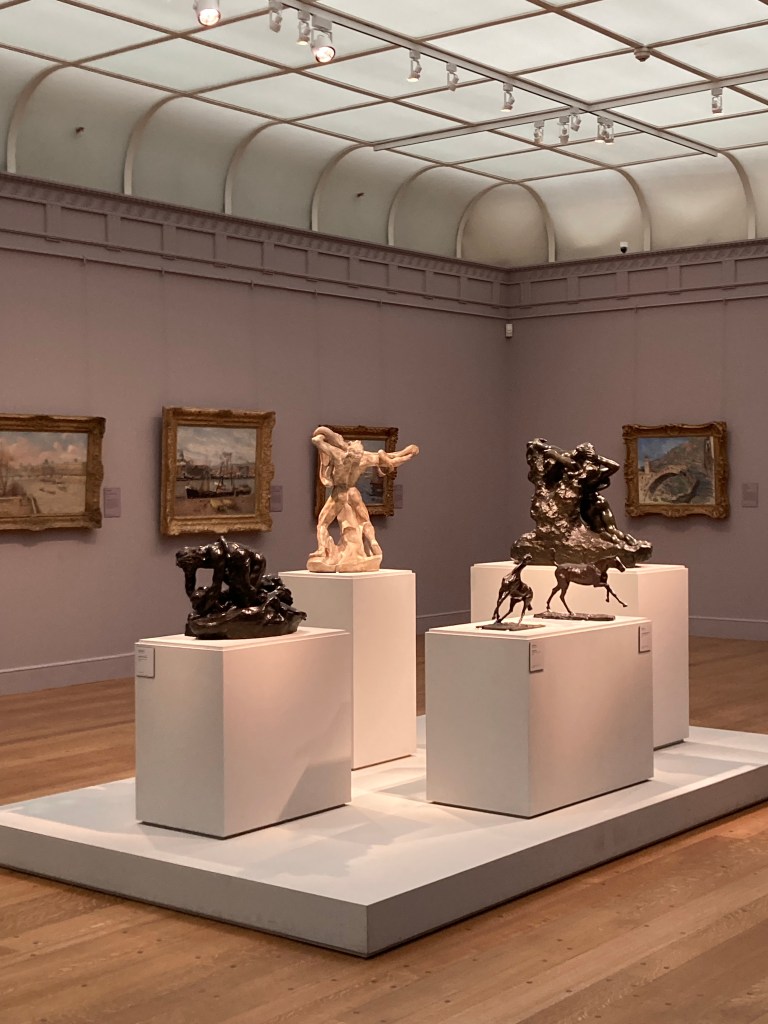
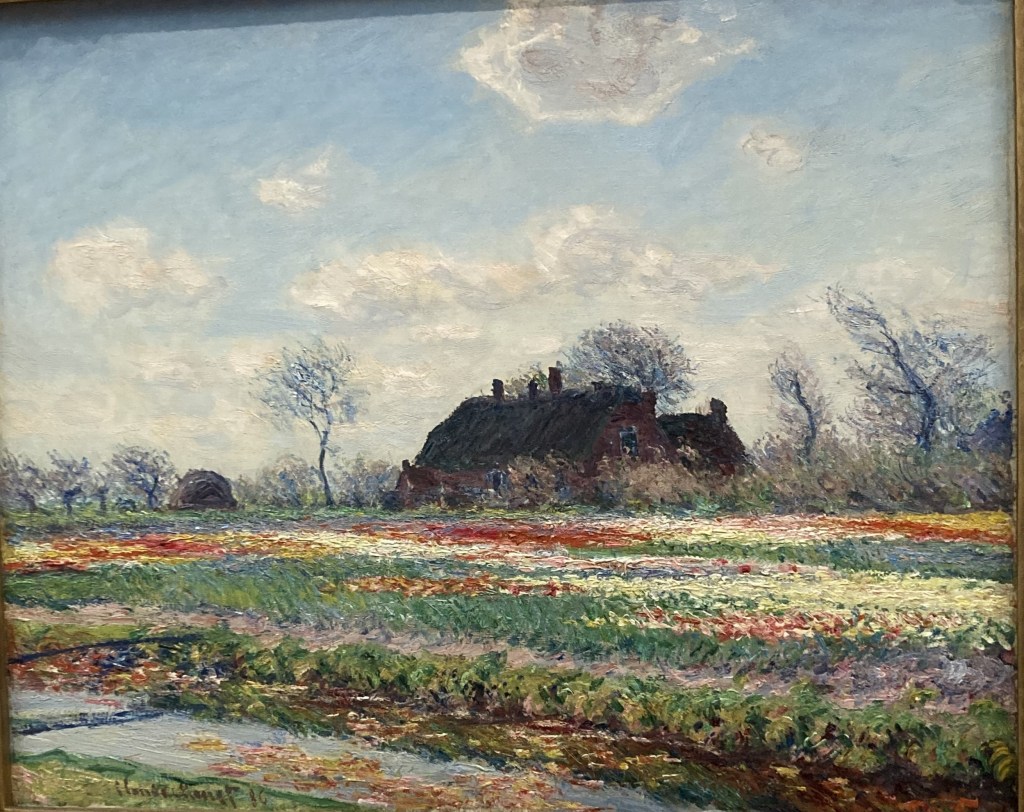
We decided to first visit the Clark Art Institute and headed to a favorite gallery that includes many treasures- paintings by Cezanne, Renoir, Monet, Redon and sculptures by Rodin.

It was not crowded that day, the gallery was almost empty- we sat on a comfortable couch in the middle of the room. Surrounded by beauty, we pretended we were in our mansion in the drawing room; the troubles of the world drifted away.

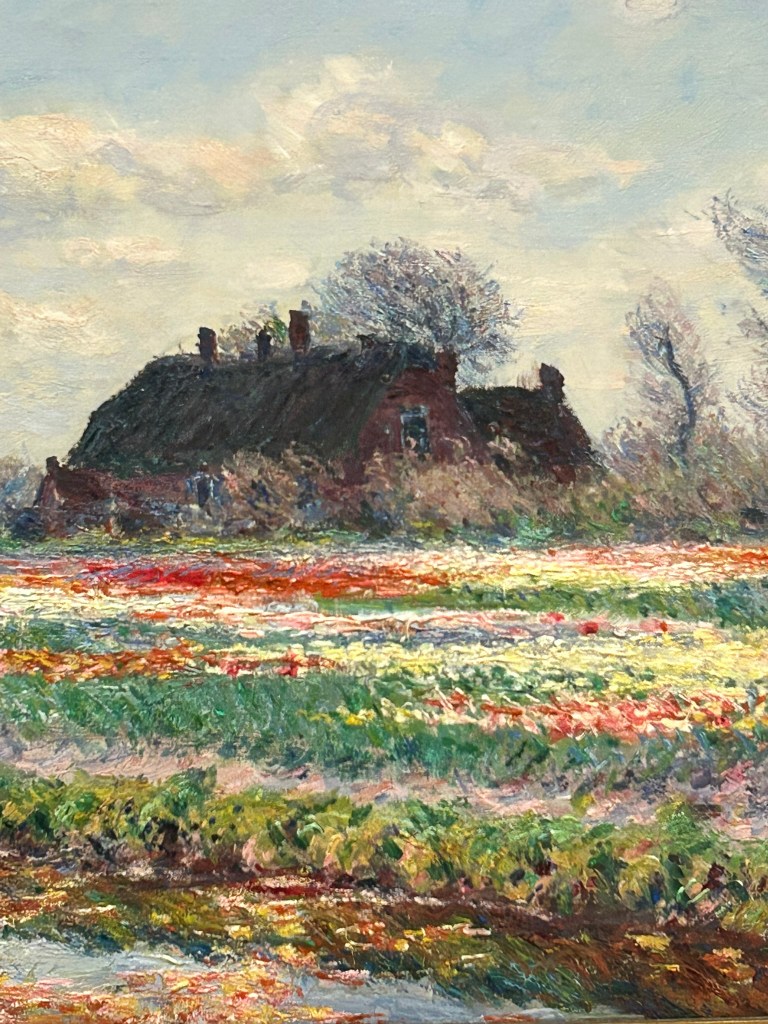
Claude Monet- Tulip Fields at Sassenheim

Odilon Redon- Woman with a Vase of Flowers

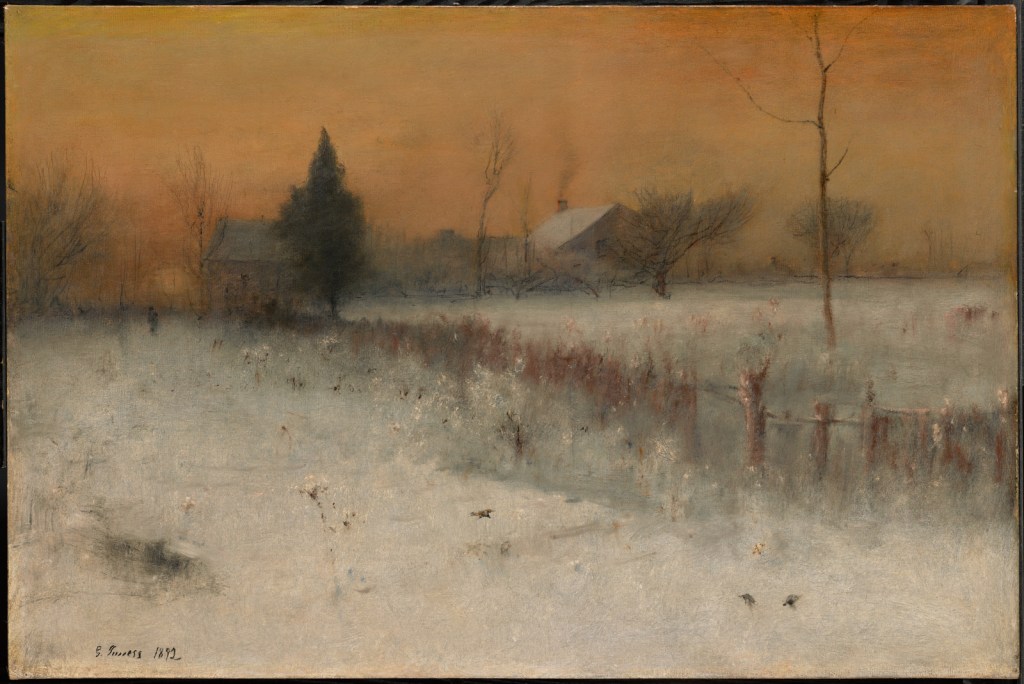
In a nearby hallway we visited one of our favorite paintings, “Home at Montclair” by the American painter George Innes.

George Innes- “Home at Montclair” 1892

The painting expresses the stillness of twilight at the end of a cold snowy day. A wisp of smoke rising from a chimney and muted light from a window in the distance drew my thoughts inward; I imagined a warm hearth and a pot of soup simmering on a wood stove.

Afterwards, we treated ourselves to dinner at the Barn Kitchen and Bar at the Williams Inn. Although the setting was lovely with friendly servers, the food was bland and disappointing and so earns my new restaurant review- a simple, “Meh”. Some think that this word which means indifferent or expresses boredom, may be derived from Yiddish!

We still enjoyed ourselves and after dinner headed just down the street to a small independently owned movie theatre. We enjoyed the quirky movie “Poor Things” with excellent acting by Emma Stone and then returned to our inn and fell fast asleep in our cozy room.

The next day, we had a quick breakfast at a local diner and then had just enough time for a brisk walk before we needed to return home. We drove to nearby Mountain Meadow Preserve with views of snowcapped Mt. Greylock in the distance; we had last walked here on a steamy day in late summer.

Today is the first day of spring, but outside it is cold and blustery; still the kind of weather for making hearty casseroles in a hot oven! Vegetarian Tamale Pie from the NY Times Cooking section, is easy to make; with a crunchy irresistible cornmeal, cheddar and scallion topping!

Vegetarian Tamale Pie – based on NY Times Cooking: Recipe by Melissa Clark

Yield:6 to 8 servings

Ingredients:

  • 1large red or white onion, halved
  • 2jalapeños, halved lengthwise and seeded (I omitted the jalapenos in my version)
  • 1poblano or green bell pepper, sliced in half lengthwise, seeds removed
  • 2tablespoons extra-virgin olive oil, plus more for brushing
  • 1¾teaspoons kosher salt (such as Diamond Crystal), plus more as needed
  • 1(28-ounce) can whole plum or diced tomatoes
  • 3fat garlic cloves, finely grated or minced
  • 2tablespoons mild or hot chili powder, more as needed
  • 2teaspoons dried oregano
  • 1¾teaspoons ground cumin
  • 3(15-ounce) cans black or pinto beans, drained and rinsed
  • 1cup chopped fresh cilantro leaves and tender stems (optional)
  • ¾cup/135 grams fine cornmeal
  • 2tablespoons all-purpose flour (I used whole wheat pastry flour)
  • 1½teaspoons baking powder
  • ½teaspoon kosher salt
  • 1large egg, at room temperature
  • ⅓cup/80 grams sour cream or whole-milk yogurt, plus more for serving
  • ¼cup/57 grams unsalted butter, melted and cooled (I used extra virgin olive oil)
  • 2scallions, whites and greens thinly sliced, plus more for serving
  • 1/2 cup grated Cheddar

PREPARATION

  1. Prepare the chili: Move a rack as close to the heating element as possible and heat the broiler. Cover a baking sheet with foil. Finely dice half of the onion and set aside for later.
  2. Slice remaining onion half into ½-inch-thick half-moons and arrange on the prepared baking sheet. Place jalapeños and poblano next to onions, cut sides down. Lightly brush vegetables with oil and sprinkle with a pinch of salt. Broil 2 to 4 minutes, until vegetables are charred on one side. (If the chiles are small, they will be charred after 1 to 2 minutes.) Flip vegetables and broil until the other side is charred, 1 to 3 minutes.
  3. Transfer pan to a rack until cool enough to handle, then stem the peppers. Transfer charred vegetables and any accumulated juices to a blender (or use a bowl and immersion blender). Add canned tomato and ¼ teaspoon salt, and blend to a coarse purée. You can make this up to 4 days ahead, and store in the refrigerator until needed.)
  4. Heat oven to 425 degrees. In a large Dutch oven, heat the 2 tablespoons olive oil over medium-high. Add diced onion and sauté until lightly browned, 6 to 9 minutes. Add garlic and cook until fragrant, about 1 minute. Stir in chili powder, oregano, remaining 1½ teaspoons salt and cumin, and cook until spices darken, about 30 seconds.
  5. Add beans and the reserved tomato purée, and let mixture simmer until thick like a chili, 10 to 15 minutes. Stir in cilantro, if using. Taste and add more salt and chili powder, if needed.
  6. While the chili simmers, prepare the cornbread: In a medium bowl, whisk together cornmeal, flour, baking powder and salt.
  7. In a small bowl, whisk together egg, sour cream or yogurt. Whisk egg mixture into cornmeal mixture until combined. Fold in scallions.
  8. Spread cornbread topping over the chili, then top with grated cheese, if using. Bake, uncovered, until cornbread is golden brown, 20 to 25 minutes. Serve hot or warm, topped with sour cream and more scallions. I topped our version with Greek Yogurt. ENJOY!

AND: Here is the “Tree of the Week”!

“Almost Spring??”

North Beaver Dam Road- Salisbury, CT

Happy Spring!

A Winter’s Afternoon at MASS MoCA and Turmeric Chicken With Crispy Rice

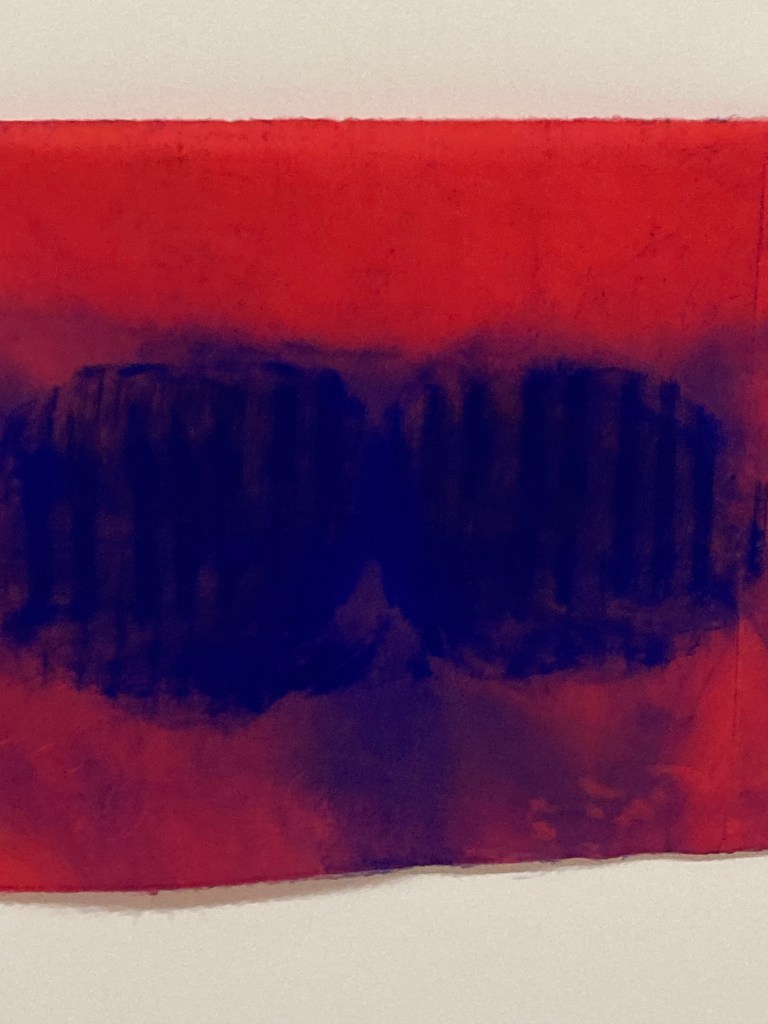
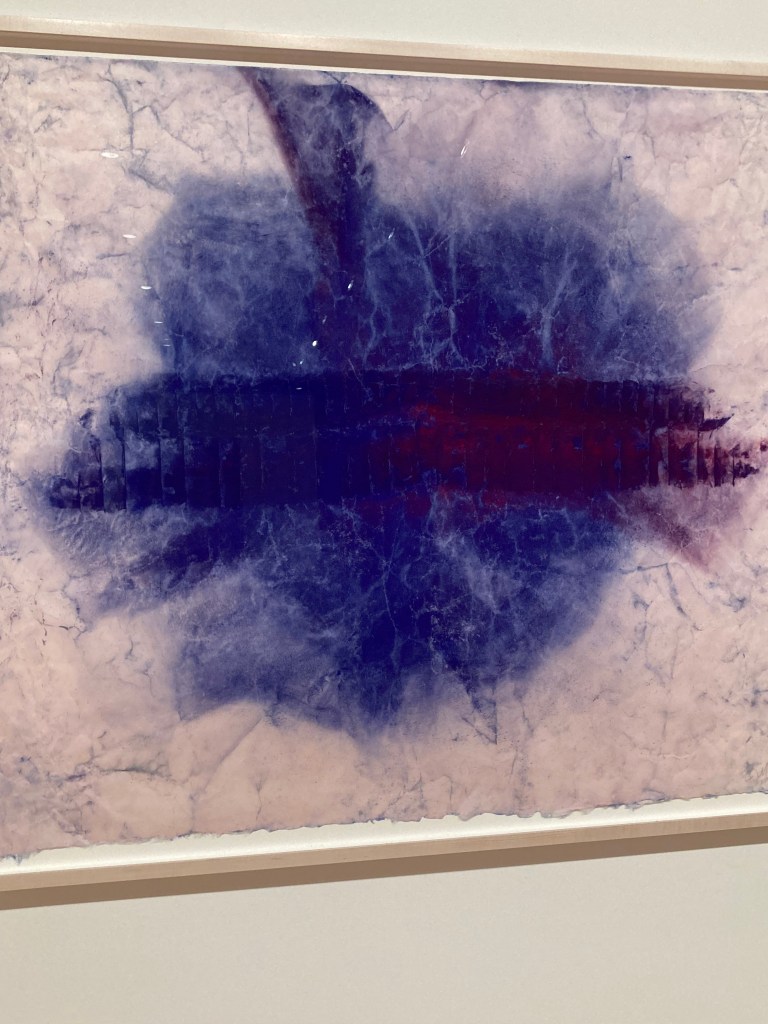
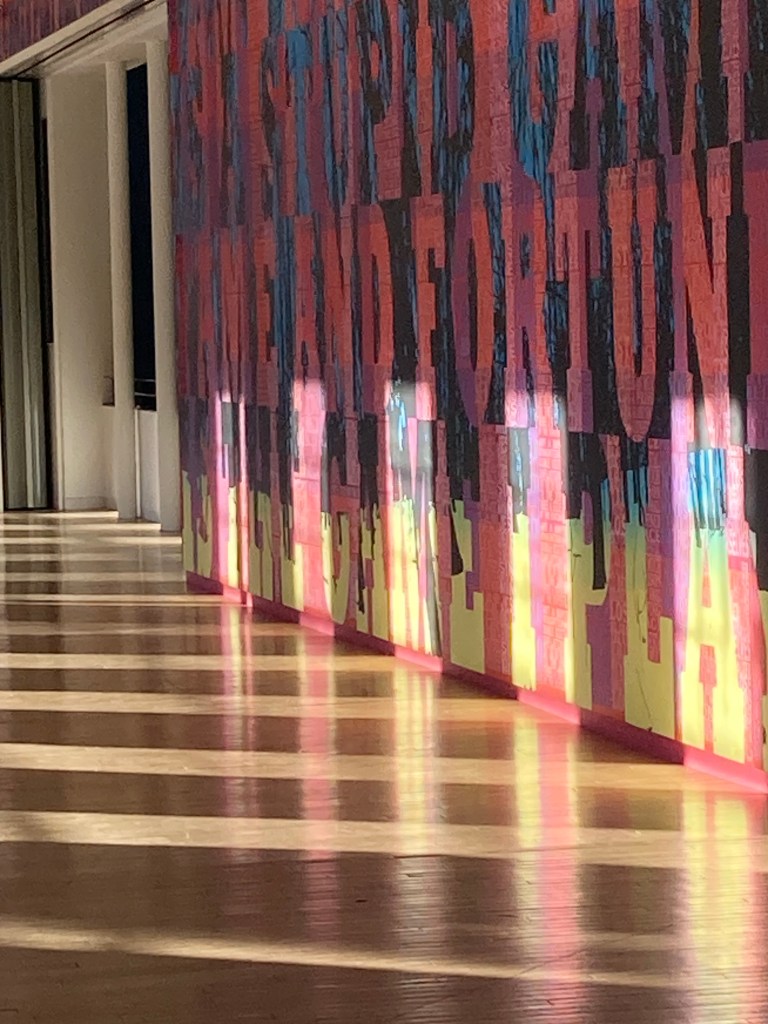
A bitterly cold day with an icy wind chill- what better way to spend the day then safely inside, happily exploring MASS MoCA. Located in North Adams, Massachusetts and housed in an old factory, the quirky contemporary art museum has a seemingly never ending series of labyrinths and cavernous spaces. We viewed dynamic art work, some pushing the boundaries; other pieces stimulating and inspiring. We loved an exhibit of boldly colorful works by the visual artist, composer and musician Jason Moran titled “Black Stars-Writing in the Dark”. The curator’s text for the exhibition offers the following description: “Moran’s work registers the movement of the artist’s fingers across piano keys”.

Jason Moran- From “Black Stars: Writing in the Dark”

Jason Moran-From “Black Stars: Writing in the Dark”

We also got a small day’s worth of exercise. The buildings span over 26 acres and without trying walked over 2 miles!

MASS MoCA sits on ancient ancestral grounds of the Mohican people (“peoples of the waters that are never still”) and the Wabanaki people. After the tribes were displaced, the site housed the Arnold Print Works from 1860 to 1942 and the Sprague Electric Company from 1942 to 1985. MASS MoCA opened in 1986.

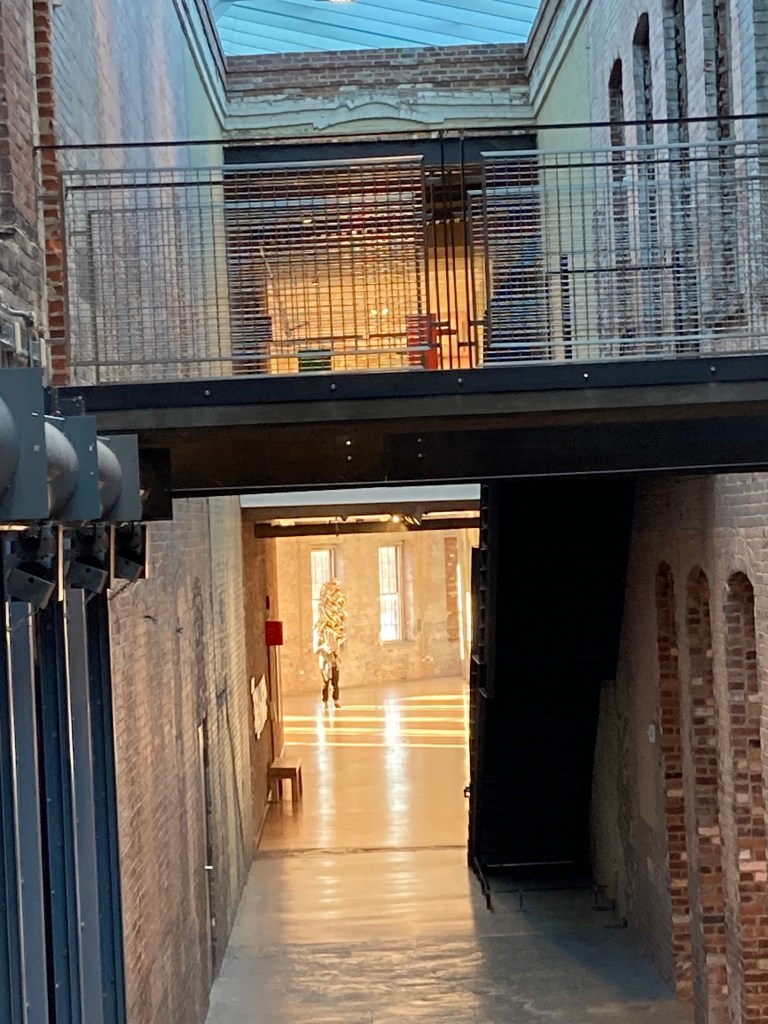
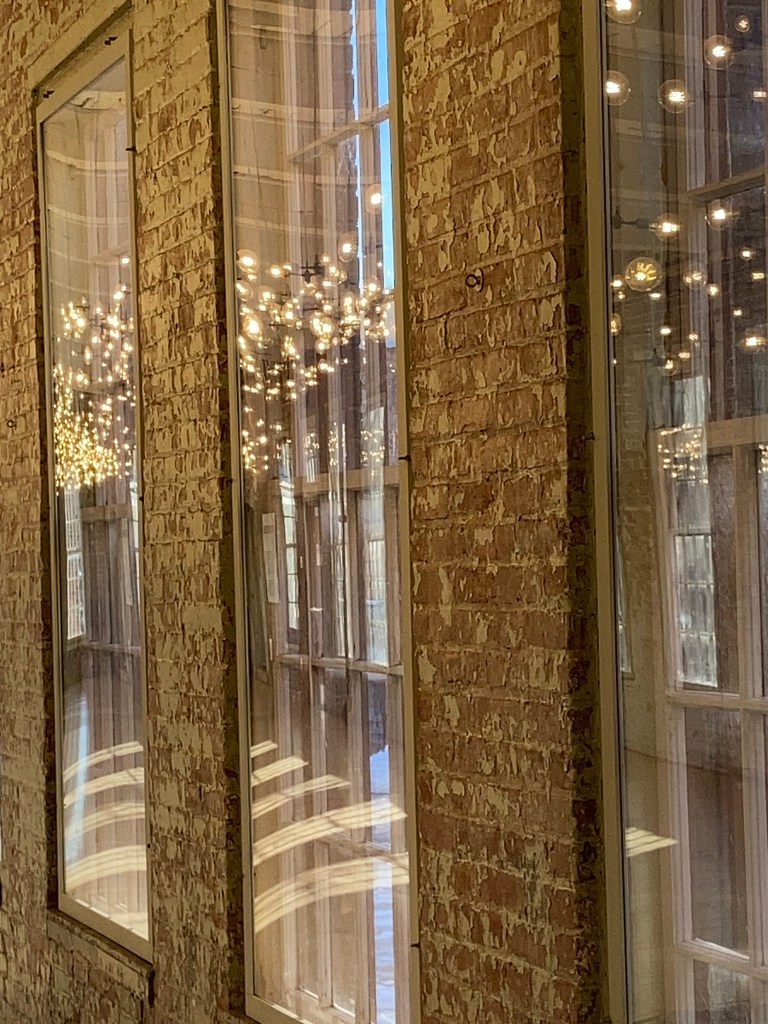
Spanning over many city blocks, we discovered hidden nooks and crannies. On this visit, the sun was shining brightly; rays of light streamed through the ancient windows creating reflections of precise lines over the floors, artwork and on the old brick factory walls.

We walked down a hallway with an indoor bridge connecting two buildings; lights were hung from the ceiling, creating pointillistic patterns on the walls and windows. As the light shifted, the images were fleeting and temporary.

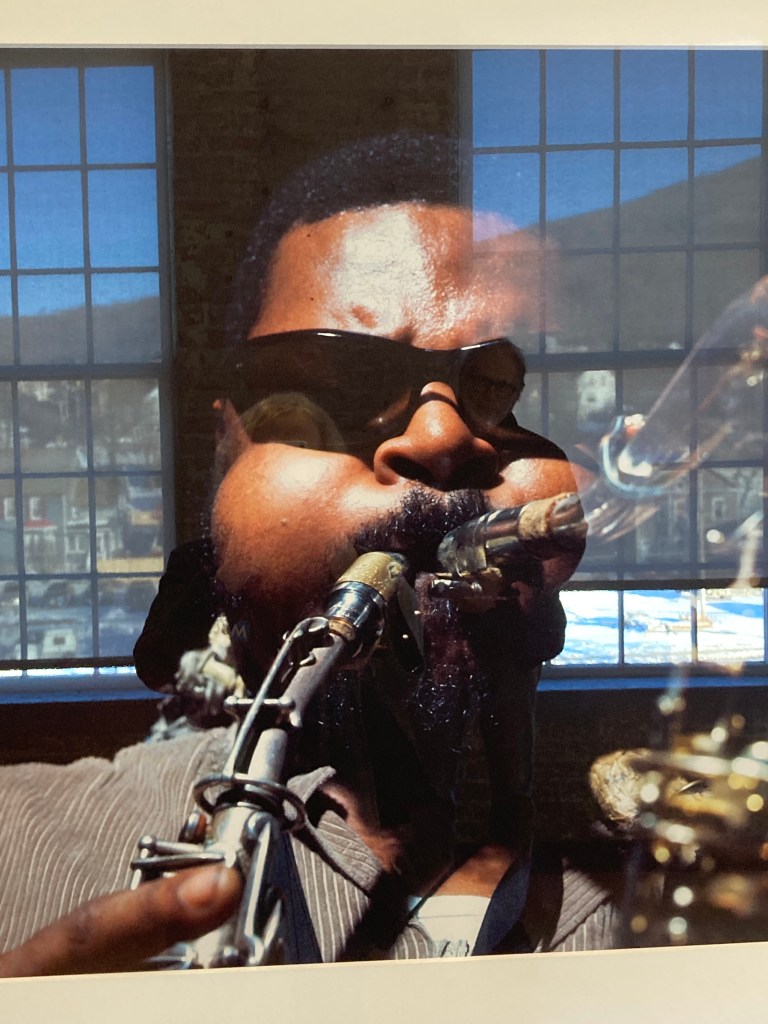
We enjoyed an exhibit titled “Deep Water” that featured photographs of famous black jazz and blues musicians from the 1950’s and 60’s, including Miles Davis. Once again, the light from the windows created a collage like effect reflecting on the art work.

MASSMoCa-“Deep Water”

MASSMoCa-“Deep Water”

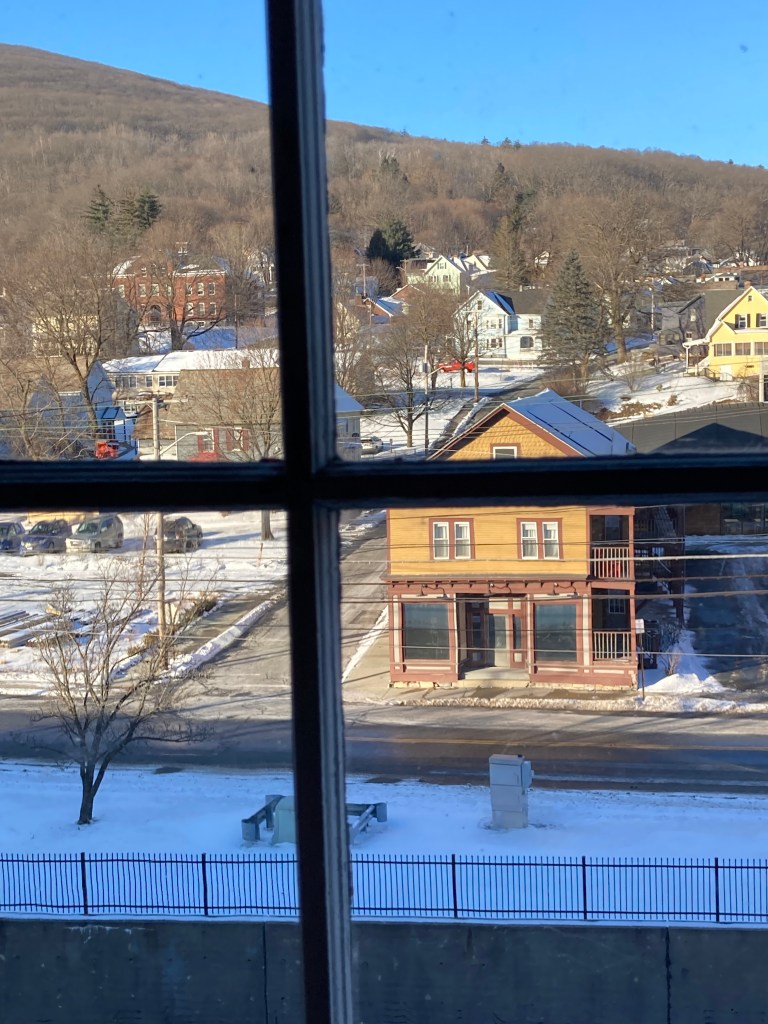
Looking out at North Adams

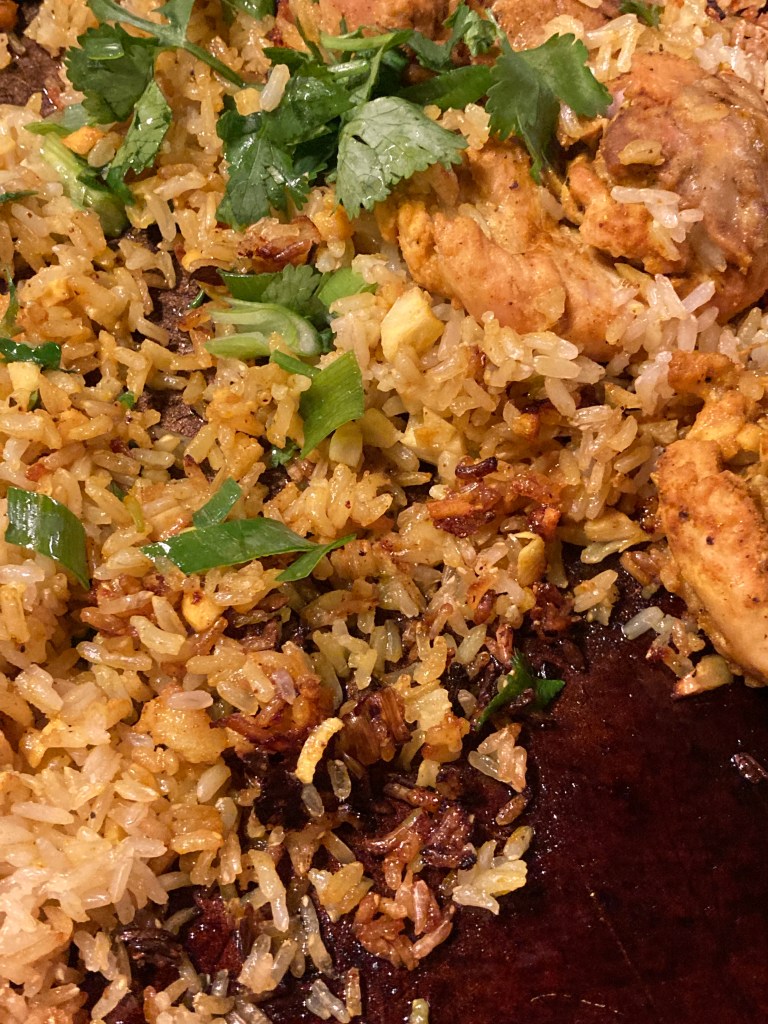
Back home, it was time to think about dinner-the cold weather encourages one to make recipes that call for a very hot oven. We have made Turmeric Chicken with Crispy Rice several times this winter; the oven is heated to 450 Degrees F. filling the house with enticing aromas; resulting in moist flavorful chicken and irresistibly crispy rice. Based on a recipe form NY Times Cooking, I used boneless and skinless chicken thighs and brown rice in my version; this worked beautifully! This dish would be perfect to serve to company along with a green salad, a hearty red wine and plenty of crusty peasant bread! Enjoy!!

Turmeric Chicken with Crispy Rice (based on a recipe from NY Times Cooking)

INGREDIENTS:

Yield:4 servings

  • ¼cup fresh lemon juice, plus more for serving
  • 6garlic cloves, finely grated or minced
  • 2tablespoons fresh ginger (from 1 2-inch piece), finely grated or minced
  • 3teaspoons kosher salt (such as Diamond Crystal or use 1 ½ teaspoons coarse kosher salt, such as Morton), more as needed
  • 2teaspoons ground turmeric
  • 2teaspoons ground coriander
  • 1teaspoon freshly ground black pepper
  • 2pounds boneless skinless chicken thighs
  • 5cups cooked short-grain brown rice
  • 1bunch scallions, thinly sliced, white and green parts separated
  • 5tablespoons extra-virgin olive oil, more as needed
  • ½cup chopped fresh cilantro leaves and tender stems

PREPARATION:

  1. Place sheet pan on middle rack in oven and heat oven to 450 degrees.
  2. While the oven is heating, marinate the chicken. In a large bowl, combine lemon juice, garlic, ginger, 1½ teaspoons of the salt, turmeric, coriander and pepper, and mix well. Transfer 1 tablespoon of the turmeric-ginger mixture to a small bowl and set aside for serving. To the large bowl, add chicken and toss until the pieces are well coated; let sit at room temperature for 20 minutes.
  3. While the chicken is marinating, toss the cooked rice with the remaining 1½ teaspoons salt, scallion whites and 3 tablespoons of extra-virgin olive oil (the best way to do this is with clean hands). Add a little more oil if needed to fully coat the rice so that it crisps up in the oven.
  4. Add the remaining 2 tablespoons oil to the chicken pieces, tossing well to coat.
  5. Use a large spoon to carefully spread the rice out on the hot sheet pan, then make divots in the rice for the chicken, making sure the sheet pan is exposed. Place chicken, skin side up, in the divots touching the pan. Drizzle the rice and chicken with a little more extra-virgin olive oil.
  6. Roast until the chicken is deeply browned on top, cooked through and the rice is crisp at the edges, 40 to 50 minutes.
  7. Stir a little more lemon juice and olive oil into the reserved turmeric-ginger mixture to thin it out. Use a spoon to dab or drizzle it onto the rice (not the chicken). Stir up the rice on the baking sheet, so the crisp parts get mixed into the soft part of the rice, and the turmeric mixture gets distributed. (Taste rice and add a little more oil, lemon juice and salt if necessary; rice can take a lot of seasoning.) Top everything with scallion greens and chopped fresh cilantro, and serve. ENJOY!!

AND: Here is the “Tree of the Week”!

It’s a little cold out here!”

STAY WARM AND SAFE!

Joffey Preserve- New Marlborough, MA

“Joyful Mountain Landscape” and Lemon Curd/Chia Pudding Parfaits!

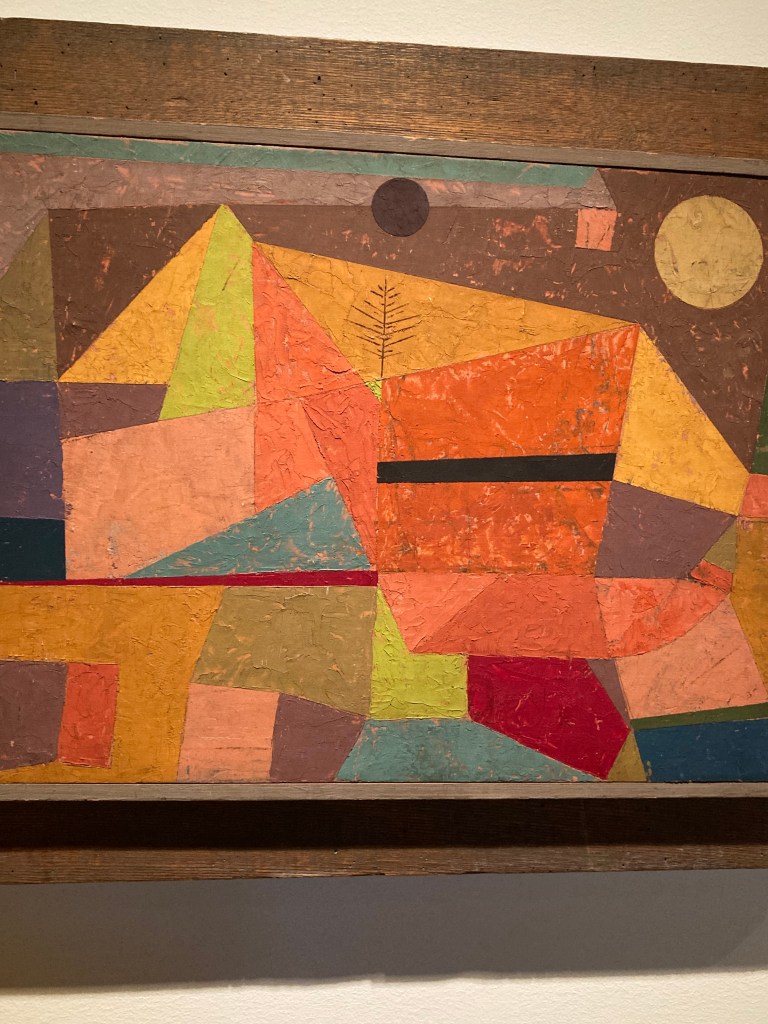
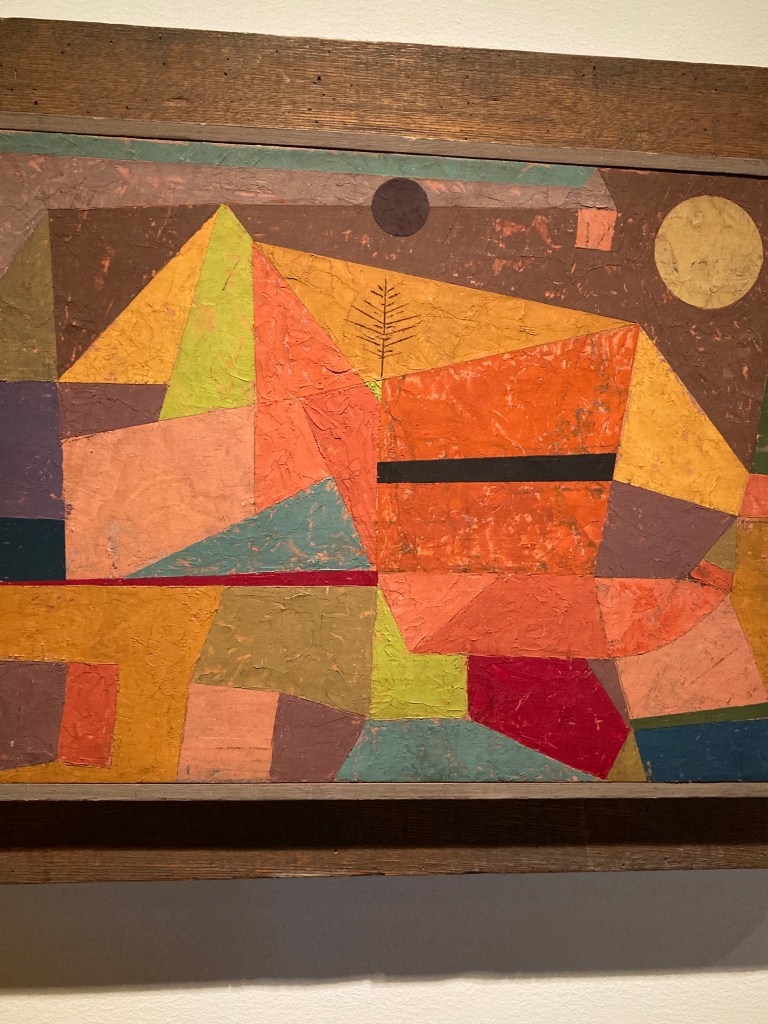
“Heiterre Gebirgslandschaft”- “Joyful Mountain Landscape”: Paul Klee- Swiss 1879-1940
Yale University Art Gallery

The holidays are past us and as we start the new year, I am looking forward to my group Hevreh Ensemble‘s album release concert in February at the Soapbox Gallery in Brooklyn. I realize that I need to get into shape with a regular practice routine. And, if all goes well, I am scheduled to travel to California at the beginning of March for a collaboration with the iconic jazz oboist Paul McCandless; made possible by a professional development grant from Hofstra University- all very exciting! This is made all the more fun because McCandless lives in the middle of wine country in Sonoma County and I will be accompanied by my intrepid travel companion Carol!

Not bad things to have plans on the horizon as we slog through the rest of the winter. And, on a particularly gray, cold and raw Sunday, we thought of a trip to New Haven and the Yale University Art Gallery and maybe takeout from the wonderful ramen restaurant Mecha Noodle Bar!

The Yale University Art Gallery is one of our favorite places to visit. The collection and special exhibits are excellent, the size of the museum is perfect; not too large, but big enough that you leave feeling full and satisfied and there is always free admission.

For this visit, we headed up to the Modern and Contemporary Art Collection. As were entered the large gallery our eyes were drawn immediately to a beautiful and familiar work by Pierre Bonnard- “Interior at Le Cannet”.

Pierre Bonnard- “Interior at Le Cannet”

I often become visually overwhelmed when visiting art museums and have found it helps if I stroll slowly through the galleries, not trying to see everything at once, my eyes become accustomed to all of the richness and beauty of the art; then I am drawn into a few works that I can focus on.

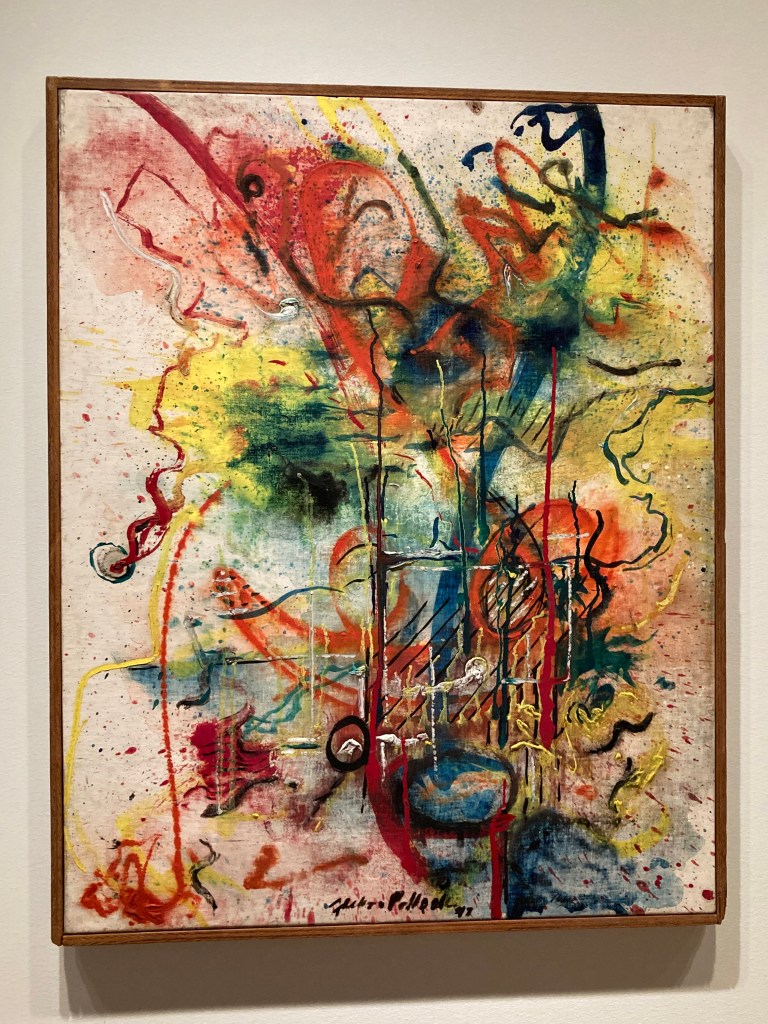
This particular day after a few minutes of walking together, we took off in opposite directions. I enjoyed the bold lines and brilliant colors of works by Kadinsky, Pollack and Picasso.

Wassily Kadinsky-“Abstract Interpretation”

Jackson Pollack- “Burning Landscape”

Pablo Picasso- “The Painter in His Studio”

I was most taken with works created by artists that I was not familiar with including Dora Bromberger’s Village Street.

Dora Bromberger born in 1881, was a German artist who painted expressionist landscapes. She was born in Germany into a Jewish family and in 1941 was deported to a concentration camp where she was killed in 1942.

Sara Bromberger-“Village Street” 1916

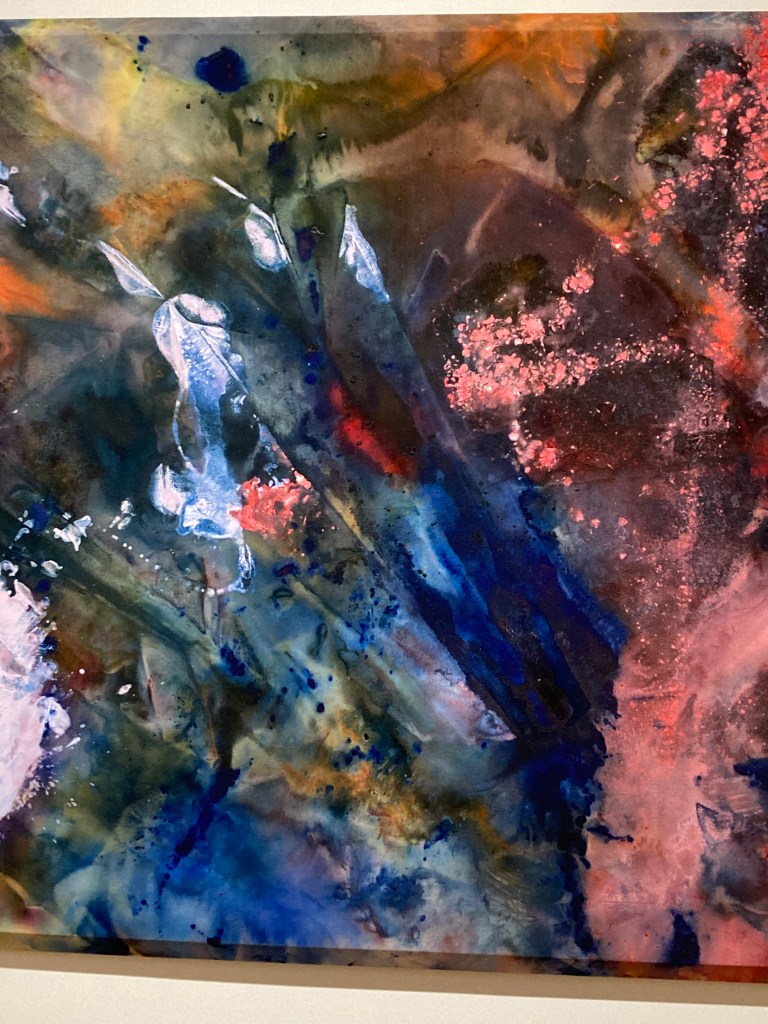
I was most taken by a work by the American painter Sam Gilliam (1953-2022) titled “Haystack”.

Sam Gilliam- “Haystack”

I sat on a nearby bench and was mesmerized by the beautiful intricate patterns and rich imagery.

Paul and I met up and we showed each other some of our favorite paintings. We both were taken by Paul Klee’s “Joyful Mountain Landscape”.

Paul Kee-“Joyful Mountain Landscape”

Perhaps it brought to mind the joy that we have experienced surrounded by the beauty of nature during our walks.

Ashintully Gardens- Tyringham, MA

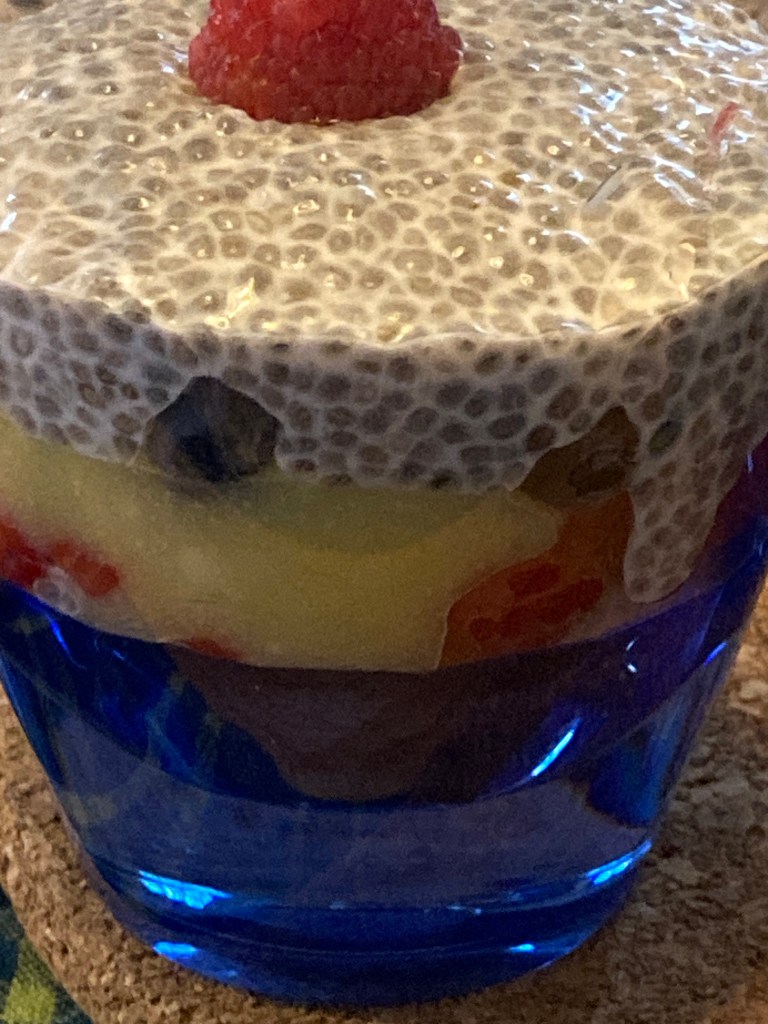
Recently, dear friends from Toronto stopped through on their way to their daughter’s wedding in Boston. We had not seen them since the beginning of the pandemic. After their long drive, we wanted to make something nice for dinner. For dessert, I was thinking of something light but satisfying; lemon curd came to mind. Combined with chia pudding and fresh fruit, it looked pretty and after the holidays, was a guilt free pleasure. This could easily be enjoyed for breakfast!

Lemon Curd/ Chia Pudding Parfaits

Yield: 5 servings

Low fat Lemon Curd

Ingredients:

  • 1 large egg
  • 2 large egg whites 
  • ¾ cup granulated monk fruit sweetener ( I used 1/4 cup for a very tart flavor, you could also use regular sugar)
  • 1 tablespoon freshly grated lemon zest
  • ⅔ cup lemon juice

To prepare lemon curd: Whisk whole egg, 2 egg whites, granulated sugar, lemon zest and lemon juice in a medium nonreactive saucepan. Cook over low heat, whisking constantly, until the mixture is thick enough that drawing your finger across a coated spoon leaves a mark, 5 to 12 minutes. Do not let the sauce come to a simmer. Pour the hot curd through a fine-meshed sieve into a small bowl, pressing on the solids. Let cool slightly and refrigerate until chilled, about 4 hours.

Chia Pudding

  • 2cups unsweetened almond milk
  • ½cup coconut milk
  • 85grams chia seeds (½ cup)
  • 1-2 tablespoons maple syrup (or to taste)

In a quart container with a lid, combine almond and coconut milks, maple syrup and a pinch of salt. Stir thoroughly so that seeds are evenly hydrated. Let rest at least 20 minutes or until pudding has a rich, creamy texture. Seeds should be fully hydrated. (Pudding will keep for up to 3 days but may require rehydrating with more almond or coconut milk as the seeds continue to absorb liquid.

1 cup fresh blueberries, rinsed and dried on a paper towel

1 cup fresh raspberries, rinsed and dried on a paper towel

Assemble Parfaits

Place 1/2 of the chia pudding at the bottom of 5 wine goblets or clear glasses

Layer raspberries on top.

Place lemon curd on top.

Add a layer of blueberries.

Finish with a layer of the remaining chia pudding.

Refrigerate for a few hours .

ENJOY!

AND: Here is the “Tree of the Week”!

“Whoo Boy”!

STAY WARM!!

Autumn in Chelsea: Himalayan Art at the Rubin Museum

Rubin Museum of Art

I am back to my fall teaching schedule at Hofstra University in New York where I teach oboe, recorder and chamber music. I often combine my trip to New York City with food and art explorations. The crisp cooler air is energizing and I am excited to head out to visit art museums and galleries and to discover more of the wonderful ethnic neighborhoods and small restaurants that make New York City so unique.

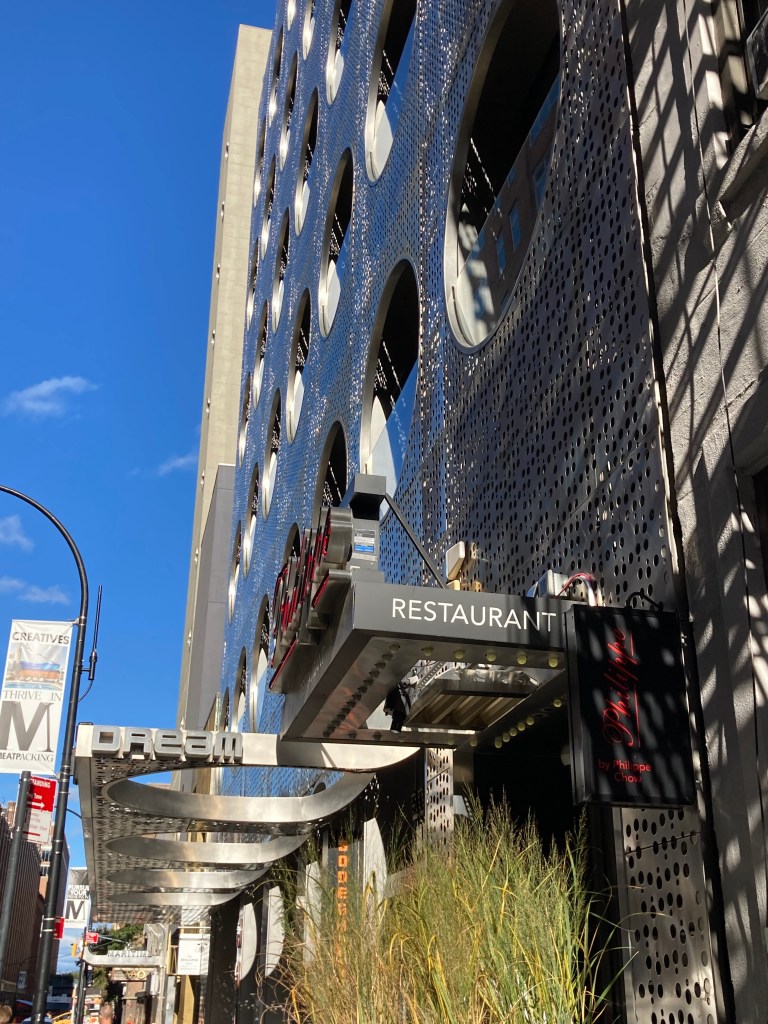
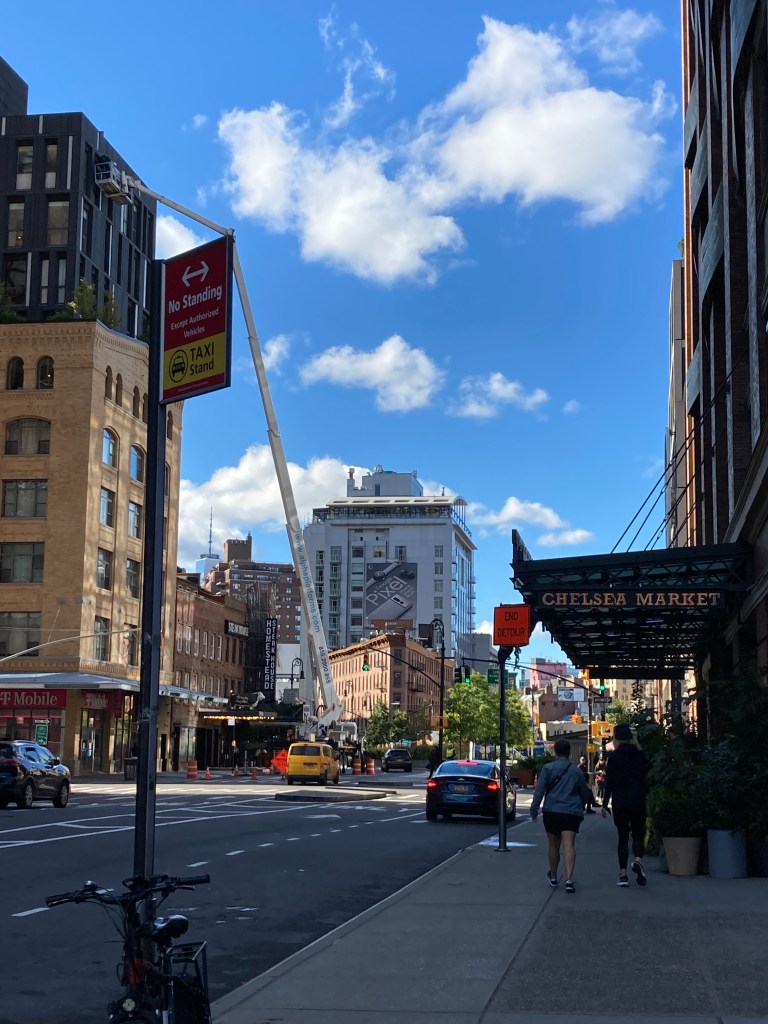
One clear and sunny Saturday morning I decided to go to Chelsea; an area on the West Side of Manhattan that stretches from 14th street to the upper 20’s; from the Hudson River to the west and to 6th Avenue to the east.

The neighborhood is known as the center of the city’s art world with over 200 art galleries and recently has seen good a good deal of gentrification. When I was a young music student at Juilliard, my boyfriend at the time lived on a block in Chelsea that had seen better days. The windows in his walk up apartment faced a dark courtyard where feral cats fought and the sound of their loud screeching made a caterwaul that reverberated against the walls- very peaceful. One day, two cats engaged in an especially ferocious battle flew through an open window and landed with an unceremonious thud on the floor of the apartment. I’m not sure who was more surprised; the cats or the people!

Walking down a Chelsea street the other day, I passed by glitzy new high rises, trendy art galleries and fancy restaurants.

I had planned to visit The Rubin Museum of Art, which features masterpieces of Himalayan art. I arrived before the museum opened and decided to visit Chelsea Market, just a few blocks away.

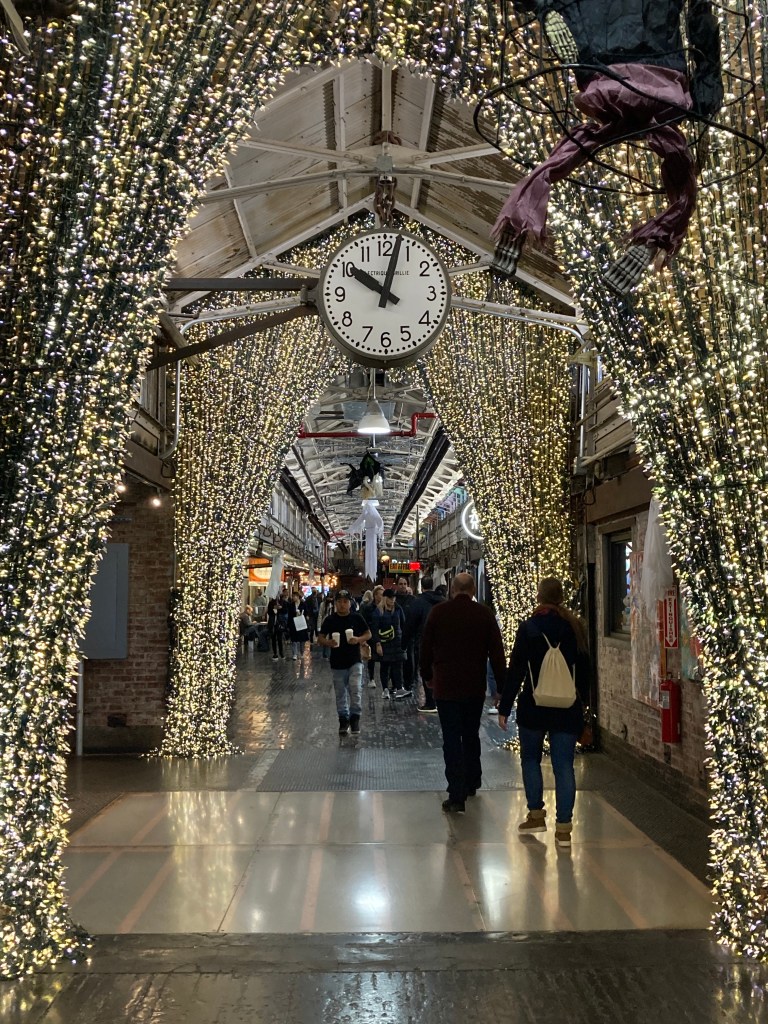
Chelsea Market is housed in an enormous old factory that once was the National Biscuit Company, later known as Nabisco. Built in 1913, the building stretches from 9th to 10th Avenue and fills up a whole city block.

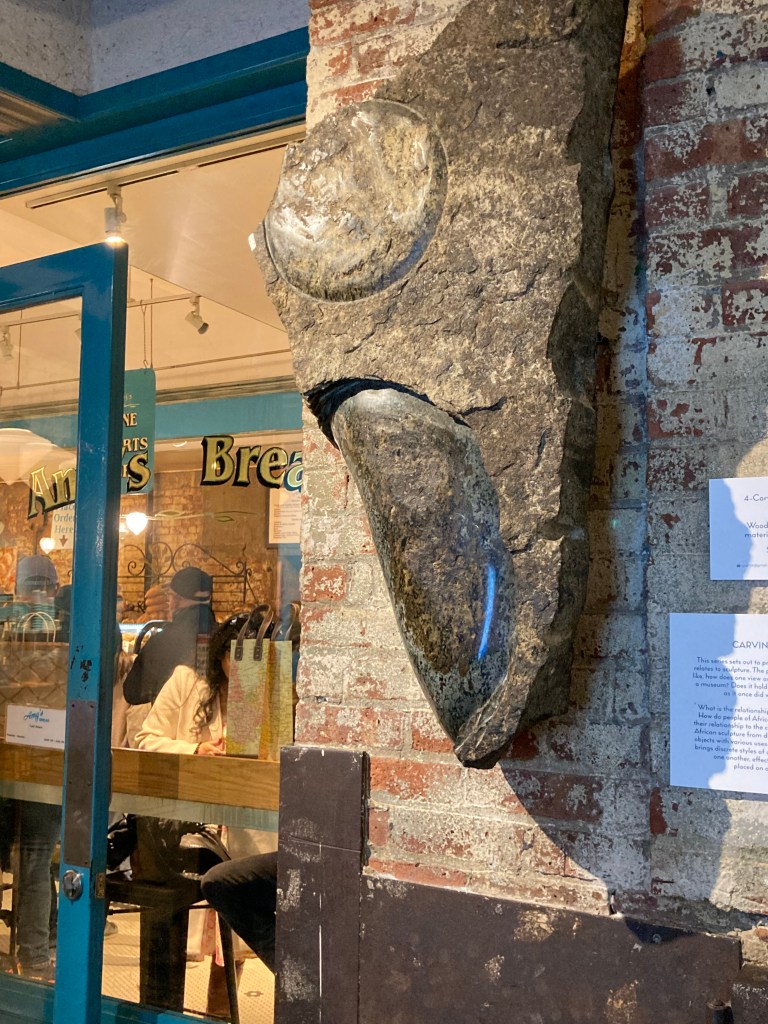
Vendor stalls were selling everything from falafels, sushi, dumplings, noodles, Tai food, etc. Side by side with upscale stores and outposts were of some of the best NYC bakeries. The maze of hallways was somewhat overwhelming with sensory overload. In a small dose it was exhilarating; an atmosphere supercharged with energy and extravagant Halloween decorations.

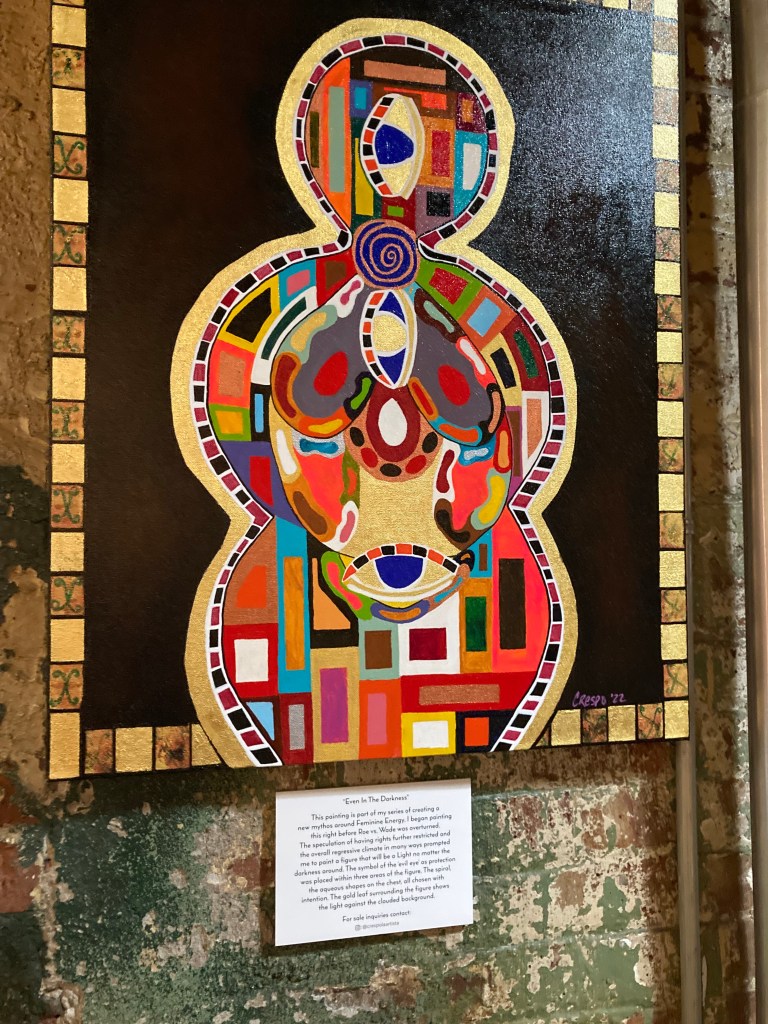
Walking slowly through the labyrinth of hallways, I enjoyed looking at colorful and vibrant works of art displayed on the walls.

I saw one of my favorite all time bakeries, Amy’s Bread, which makes some of the most delicious bread in the city. At this point, I was just browsing and admiring.

And then I succumbed to temptation; ahead of me was an outpost of the famous bakery/restaurant Sarabeth’s. According to her website, Sarabeth Levine first began her business in 1981 making her family’s unique 200-year-old recipe for Orange Apricot Marmalade at her apartment in New York City.

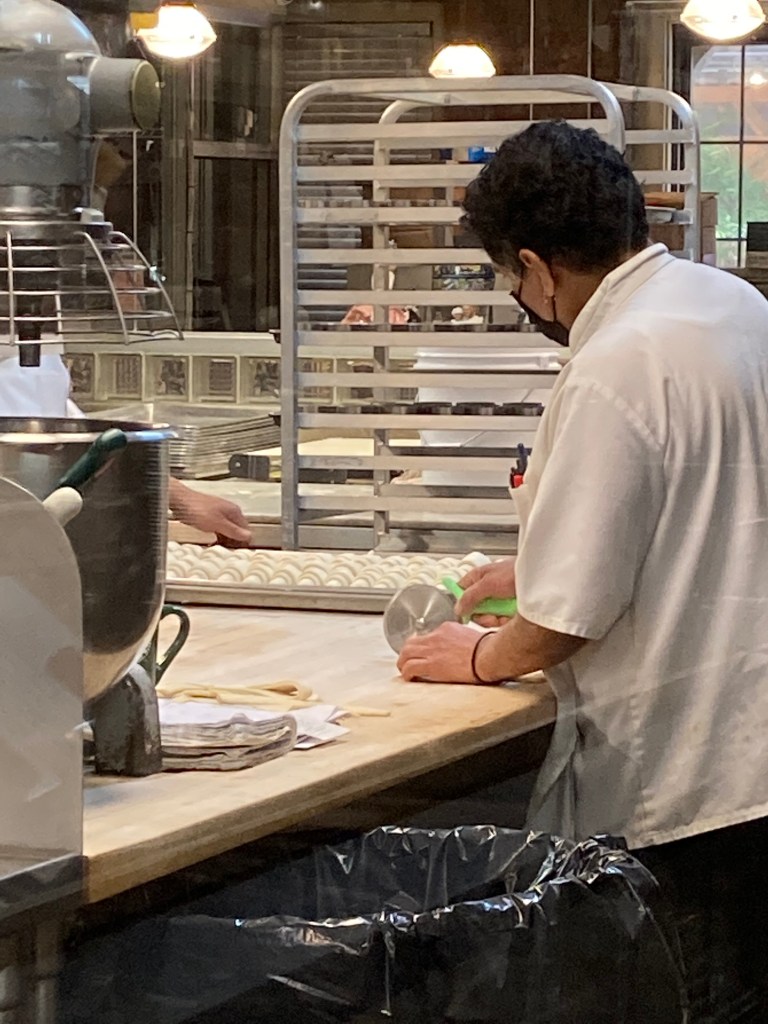
Manhattan’s Chelsea Market Sarabeth location operates a 15,000 square foot jam manufacturing facility and a 4400 square foot wholesale bakery, café, and retail shop. It was great fun to walk through the bakery. It is setup so that the first thing one sees is the manufacturing facility. I joined in with the tourists and watched the bakers making croissants and English muffins!

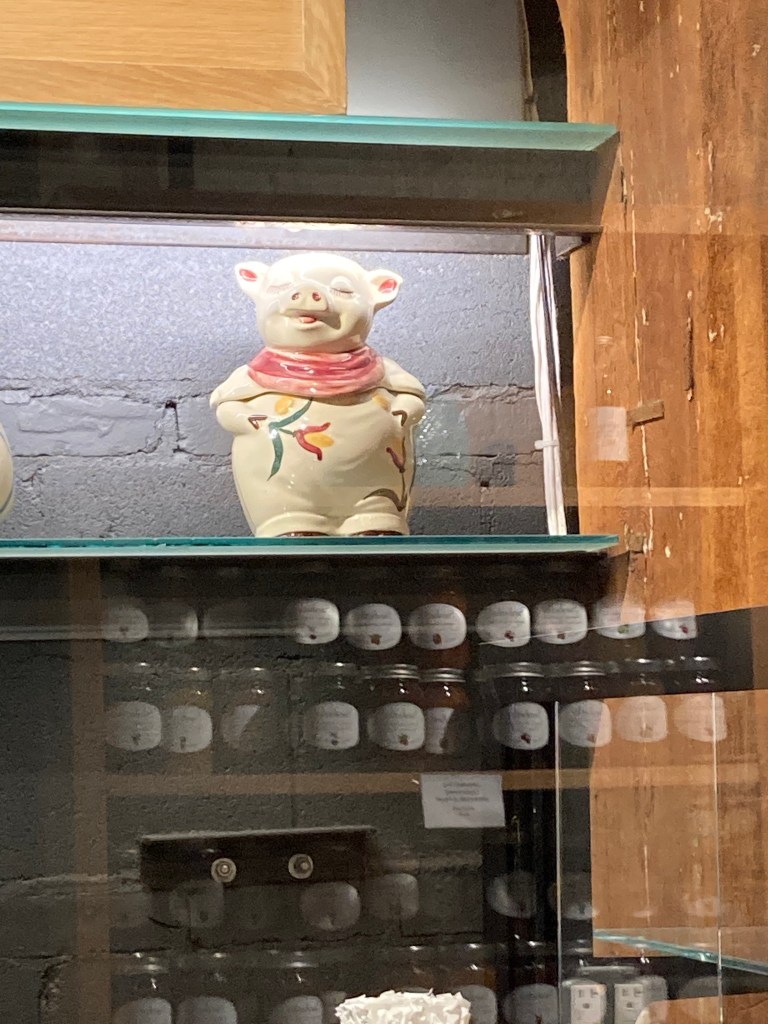
Everything in the bakery looked delicious; I chose a pumpkin muffin to savor on my trip home and I was delighted to see a homey pig ceramic figure above the counter.

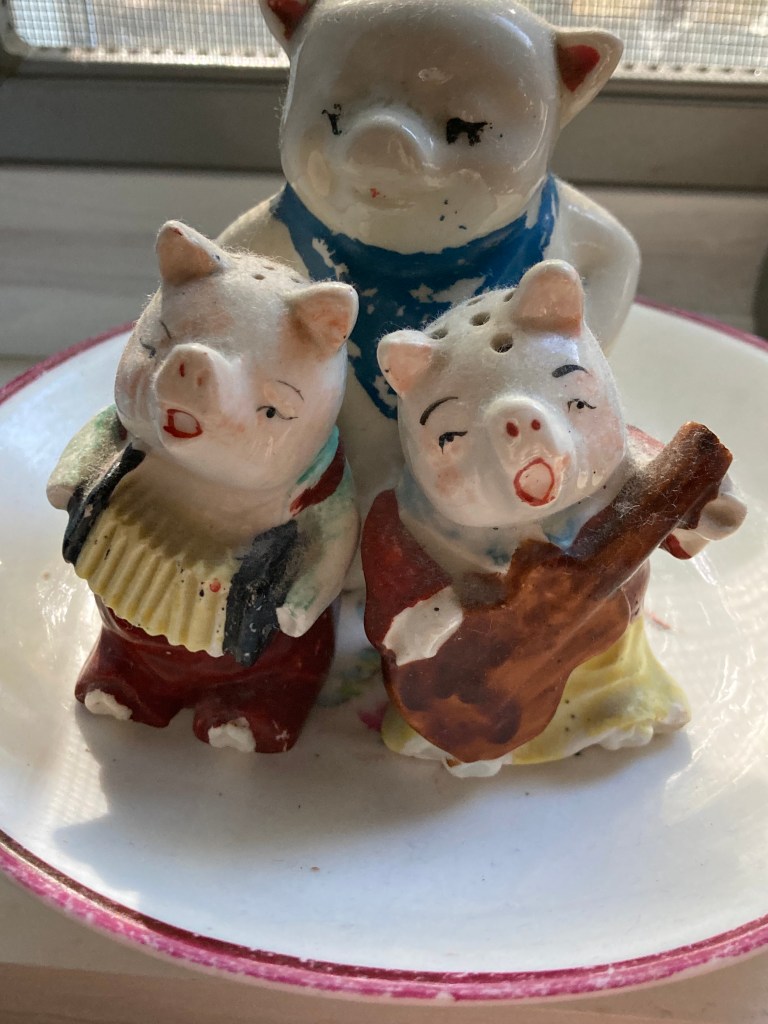
It reminded me of my own antique 3 little pigs that grace my kitchen window sill.

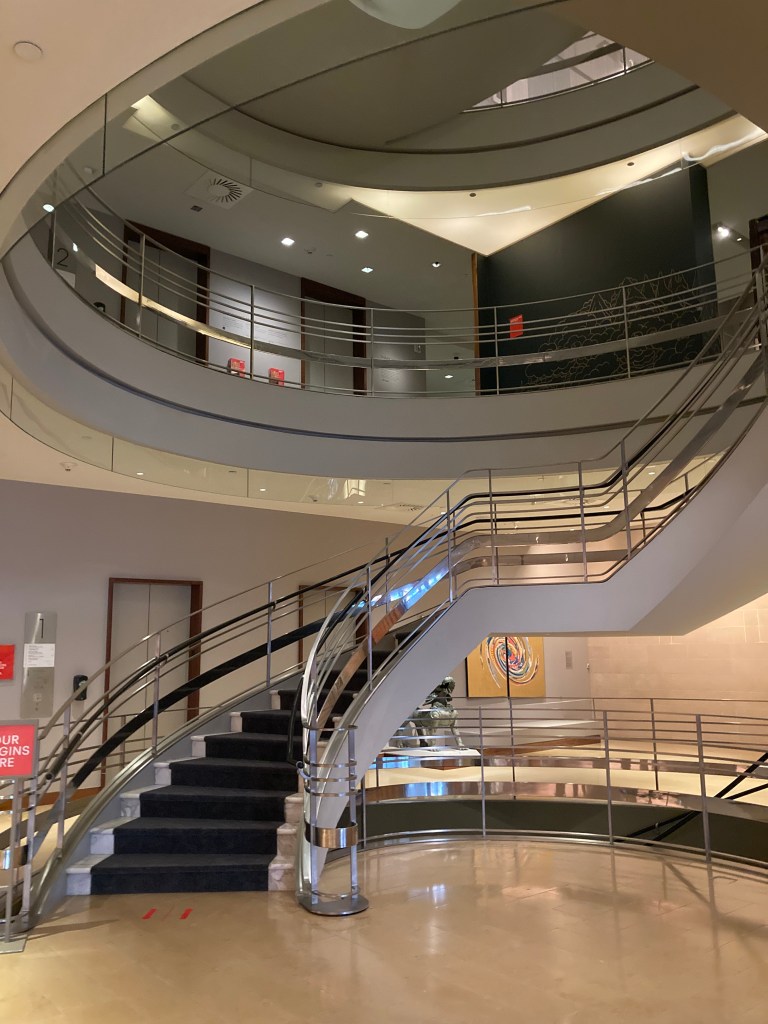
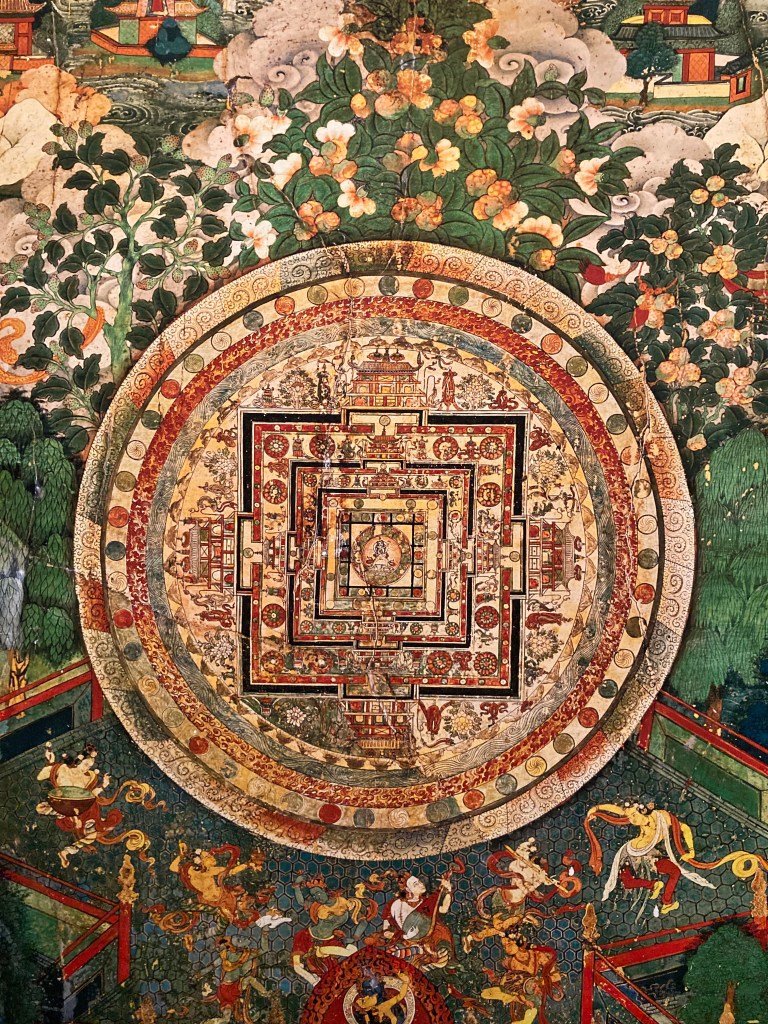
I headed back to the museum and after the frenetic energy of the Chelsea Market, entering the peaceful and serene atmosphere of the Rubin felt like a calming balm. Himalayan art is featured; including the cultures of Nepal, Tibet, and Bhutan as well as the interrelated traditions of India, Mongolia and China. The artwork in the exhibitions depict figures and symbols where sacred images play a prominent role.

The museum was founded by art lovers Shelley and Donald Rubin in 2004 and is the site of the former store, Barney’s-a bastion of New York fashion and celebrity.

There was s0 much to take in, with six floors of art and exhibits. I concentrated on a few masterpieces that were rich with depth and complexity.

“Wheel of Existence”- The Rubin Museum of Art

Rubin Museum of Art

And then it was time to savor the pumpkin muffin that I had purchased from Sarabeth’s for the two hour drive home. I bit into the top of the muffin strewn with toasted walnuts and a light crunchy glaze. The texture of the muffin was light but moist, not too sweet and with hints of nutmeg and ginger; pure perfection!

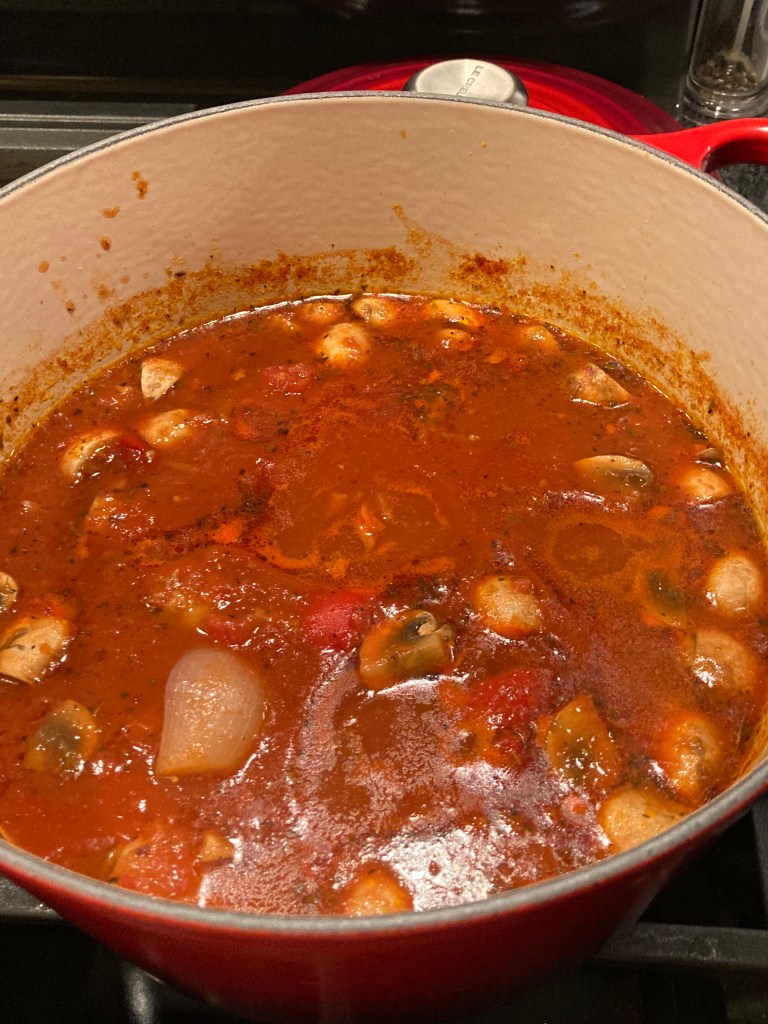
The cooler days have also put me in the mood for cooking with long simmered dishes that fill the house with enticing aromas. I have made countless stews, braises and soups in my heavy blue La Creuset cast iron enamel pot. I like to think that the pot has absorbed it’s own particular character with the many flavors of food cooked in it, but it was starting to exhibit wear and tear, with a stained scratched cooking surface. One day while perusing an online sale from Sur la table, I decided to treat myself to a new bright red La Creuset pot; a tad larger and all the better to make larger amounts of recipes for our guests! For the first dish that I cooked in the pot, I decided on a chicken stew made with red wine, shallot, onion, mushroom, red pepper, thyme, basil, oregano and plenty of garlic. Served over whole wheat rotini, accompanied by sauteed broccoli rabe, freshly grated pecorino cheese and more red wine, it was wonderful first act for my new pot!

Fall Chicken Stew

Ingredients:

2 pounds boneless skinless chicken thighs

1 cup red wine

1- 28 ounce can crushed organic tomatoes

4 shallots finely diced

1 medium onion finely diced

1 large red pepper cuts into thin strips

5-6 button mushrooms cut into quarters

salt and freshly ground pepper to taste

4 cloves garlic peeled and finely chopped

1 teaspoon dried thyme

1 teaspoon dried basil

1 teaspoon dried oregano

3 tablespoons extra virgin olive oil

To Make Chicken Stew:

In a large heavy cast iron pot, heat olive oil.

Add boneless chicken thighs to pot, sprinkle with salt and freshly ground pepper and brown well on each side.

Add chopped onions and chopped shallots; saute until translucent and slightly softened. Add garlic and cook about 2 minutes.

Add dried oregano, thyme and basil.

Add sliced red peppers and chopped mushrooms cook about 3-4 minutes.

Add crushed tomatoes and about 1 cup water. You can always add more water later if the mixture is too dry.

Add red wine and bring mixture to a boil.

Cover pot and reduce to a simmer.

Cook over low heat for about 1 hour until chicken is very tender and vegetables are soft.

Adjust seasoning as desired.

ENJOY!

AND: As always, here is the “Tree of the Week.”

“Feeling a little nervous “

HAPPY AUTUMN!

Vibrant Colors and Albanian Bureks!

New York Botanical Garden- September 2021 Exhibit KUSAMA: Cosmic Nature
Beaver Dam Road Salisbury, CTFebruary 2022

The contrast could not be more stark. The colors on a recent walk were mono chromatic; I felt as if I was in an old black white film. Time to write about a trip to the New York Botanical Garden in September 2021, when I viewed the eccentric, whimsical and boldly colorful work of the contemporary Japanese artist, Yayoi Kusama.

Yayoi Kusama New York Botanical Garden

Pre-pandemic, my usual routine was to commute to New York on Fridays to teach at Hofstra University and then if I did not have a rehearsal scheduled for Saturday, I would excitedly plan a food/art/ethnic neighborhood exploration. I had great fun finding unusual places and small out of the way Mom and Pop ethnic restaurants. This all ended abruptly in March of 2020.

Last September, during a lull in the covid case rate, I started teaching in person again at Hofstra and felt safe enough to go on one of my Saturday excursions. I decided to return to an area of the Bronx and The New York Botanical Garden that I had last visited in 2019. I had the wonderful fortune to view Yayoi Kusema’s featured exhibition. Before I headed up to the Bronx, I made a visit to Zabars, a beloved Westside fancy food store selling the freshest cheeses, the best smoked fish, coffee, breads, etc.; complete with rude but skillful countermen at the smoked fish counter. I loved listening to their sarcastic banter as they expertly sliced nova lox, whitefish and sable; I had missed the aroma of lox and freshly baked bagels mingling in the air with Mozart playing softly in the background.

Kusama: Cosmic Nature

When I arrived at the Botanical Gardens, proof of vaccination was required and we were asked to wear masks at all of the indoor locations. I felt completely safe and even though there were crowds of people, it felt almost normal!

Yayoi Kusama’s wildly colorful and playful sculptures were placed throughout the gardens; some outside and others inside galleries and the Haupt Conservatory.

The artist wrapped trees with dotted fabric and this moved in perfect lockstep with my love of anthromorphizing trees, one of which became a favorite “Tree of the Week”.

” I felt like getting dressed up today!

I was also touched by the artists’s compelling bio; this is from her website:

Yayoi Kusama dazzles audiences worldwide with her immersive “Infinity Mirror Rooms” and an aesthetic that embraces light, polka dots, and pumpkins. The avant-garde artist first rose to prominence in 1960s New York, where she staged provocative Happenings and exhibited hallucinatory paintings of loops and dots that she called “Infinity Nets.” Kusama also influenced Andy Warhol and augured the rise of feminist and Pop art. She has been the subject of major exhibitions at the Museum of Modern ArtCentre PompidouTate Modern, and the National Museum of Modern Art in Tokyo. In 1993, Kusama represented Japan at the Venice Biennale. Today, her work regularly sells for seven figures on the secondary market. Throughout her disparate practice, Kusama has continued to explore her own obsessive-compulsive disorder, sexuality, freedom, and perception. In 1977, Kusama voluntarily checked herself into a psychiatric hospital in Tokyo, where she continues to live today.

Continuing on my walk through the gardens, I was also fascinated by plants and giant lily pads in the pond outside of the Haupt Conservatory.

After walking quite a distance through the gardens, not wanting to miss any of the installations, I became quite hungry. It was time to revisit Dukagjini Burek, I had last been there in 2019. Only a five minute drive from the Botanical Gardens, I was delighted to discover that the small Albanian restaurant located at 758 Lydig Avenue had made it through the pandemic! I was also heartened to learn that my aggressive instinct for finding parking spots in NYC had not disappeared! As I entered the small restaurant, that for the time being is only open for takeout, the hard working counter person and a few customers were speaking Albanian. To my ear, the soft lilting sounds fell somewhere between Greek and Slavic.

Counter Worker cutting Bureks

The small menu includes three kinds of bureks; meat, spinach and cheese. I ordered a slice of the spinach burek and a small plastic container of plain yogurt; nothing fancy here! I took my treasures back to my car a few blocks away and had a lovely picnic. The crisp buttery crust of the burek had the texture of phyllo dough with a bit more heft to it and the spinach filling was mixed with bits of soft onion, feta and herbs. The yogurt complimented the richness of the pastry and filling; simply put- totally delicious! I think it would be well worth a trip to the Bronx just for bureks!!

The days are visibly brightening up, the sun is stronger and I hear the sweet sounds of bird song ; some hearty souls that have made an early return!

Kelsey Road- Sheffield, MA

Still, the weather is cold and bracing and calls for hearty comfort food. Paul recently showed me a recipe that he saw on a website called Little Spice Jar for Pesto Chicken Meatball Soup. It sounded delicious and this is the version that I came up with! If you have the time to make a batch of home made chicken broth, this is great, but store bought will also work in a pinch.

Pesto Chicken Meatball Soup

Ingredients

2 quarts chicken stock

6-7 pieces of lacinato kale- tough centers removed and cut into ribbons

1/2 cup small dried pasta (any small shape is fine)

2 tablespoons extra virgin olive oil

Chicken Meatballs

  •  1 pound ground chicken
  •  ½ cup panko breadcrumbs (add more if mixture seems too soft)
  •  1 large egg
  •  2 tablespoons minced Italian parsley
  •  2 tablespoons prepared pesto
  • 2 small garlic cloves finely chopped
  •  1 teaspoon dried thyme
  • 1/2 teaspoon dried oregano
  • 1/2 teaspoon salt
  • few grinds of freshly ground pepper

To Make Meatballs:

Combine all of the above ingredients and mix well.

Heat olive oil in a large skillet.

With wet hands, form mixture into medium size meatballs and saute in olive oil until nicely browned on all sides.

To Make Soup:

Place chicken stock in a large pot and bring to a simmer.

Add meatballs, kale and bring to a boil.

Lower hear to a simmer and cook for about an hour.

Make Pasta

To Serve Soup:

Place a serving in each bowl, add desired amount of pasta

Top with grated percorino cheese and freshly ground black pepper

ENJOY!!

AND, here is the “Tree of the Week”!

Spring really is coming, I promise!!”

STAY SAFE AND WARM!!
A Joyous Christmas Concert by The Salisbury Four!

The Salisbury Four”- Salisbury Congregational Church December 4, 2021

What a pleasure it was to recently perform with some of my favorite musicians at the Salisbury Congregational Church in Salisbury, Connecticut.

Salisbury Congregational Church

The church, completed in 1842, is an example of Greek Revival architecture. At the time, it was the center of political, social and religious activity. I have performed often at the church and have always felt a strong sense of history and a feeling of calm and peace in the light filled sanctuary.

For our recent concert, I was joined by Marcia Young, singer and historical harpist and my Hofstra University colleague, lutenist Christopher Morrongiello. My daughter, Alicia DePaolo sang with us for several years, but recently moved to Virginia with her partner. We miss her presence in the group, but were happy to welcome a new friend this year; singer and Baroque dancer, Zahra Brown. For many years, I have performed an annual Christmas concert in Salisbury, Connecticut that has been generously sponsored by the Salisbury Association.

Originally the concert was held at the historic Holley House Museum, now a private home. It was complete with it’s own mischievous poltergeist! On two separate occasions, strings snapped suddenly on a viola and harp; in another concert, a note stopped playing on my oboe, as if someone was holding down an extra key! And, then there was time that I felt somebody was tickling my nose with a feather while I was playing!

Holley Williams House- Lakeville, CT

Next, the concert was held for several years at the cozy intimate space at the historical Salisbury Academy building Built in 1833, the exterior is an example of a Federal style school building.

Academy Building- Salisbury, CT

Living in this bucolic New England town, I routinely pass by all of these all of these historical buildings and architectural gems; they have become part of my fabric, almost like a familiar family member!

Last year, we presented an online version of the concert and we felt so fortunate to be able to consider a live concert this year; a few weeks before our current Omicron situation. With proof of vaccination required and a socially distanced audience, the venue of the spacious church with beautiful resonant acoustics was perfect!

I always look forward to the rehearsals we have in NYC; usually a few weeks before the concert. This year, we set two rehearsals on late Saturday afternoons. Both weeks, I had taught at Hofstra University the day before and stayed overnight in the city. Each Saturday I had a few hours to fill and decided to make long over due visits to the Metropolitan Museum of Art and to the Frick Museum.

It was heart warming to walk down Fifth Avenue and see the crowds of people outside of the museum.

And, then as I entered the familiar space of the grand hallway, I stood in awe for moment taking in all of the art and beauty surrounding me. I made my choice of what to view that day. I walked up the grand stairway towards the impressionism wing; through the hallway filled with Rodin and Degas sculptures and eagerly tried to take it all in! I decided to concentrate on an exhibit of Surrealistic painters.

It can be overwhelming at times with so much to visual stimulation; I find that concentrating on one or two works of art is most rewarding. I stroll slowly through an exhibit and stop when a work of art is compelling. Such was the case with a painting by the Austrian-Mexican painter Wolfgang Paalen; who I was not familiar with. A friend of Frida Kahlos, he moved to Mexico in 1939 to escape the Nazi regime. He became interested in the Fourth Dimension and studied with the Russian mystic Peter Ouspensky. I found his painting “The Messenger” fascinating and was drawn to the bold lines of the brush strokes and the hidden symbolism in the work.

“The Messenger”– 1941 Wolfgang Paalen (1905-1959)

The next Saturday, I visited the Frick Museum, which I discovered had recently moved their entire collection to the modern stark Whitney Museum, while renovations are taking place.

At first, it was jarring to see masterpieces from the permanent collection that date from the Renaissance to the early 20th century displayed in a building with modern architecture. I chatted with a surprisingly friendly guard about the new location for the artwork and he thought that some patrons might be able to appreciate the artwork more in a sleek pared down setting. I tended to agree and as I viewed the exhibition, I found that I could concentrate on the art without becoming visually tired. Unfortunately, I was asked to not take any photographs, although I did sneak in one photo; (a tiny sculpture tucked into the wall) as I walked up the stairwell to another floor!

Then, it was time to get ready for our rehearsal and of course think about what to pick up to eat in the car on the way home that evening! We were rehearsing at the apartment of one of the musicians who lives in a high rise in the mid fifties near Eighth Avenue.

One of my favorite dumpling places, Kungfu Kitchen, is on Eighth Avenue and 41st Street, not too far from our rehearsal location!

I knew there was a place to park my car for free on 38th Street; between Eighth & Ninth Avenue, where Hevreh Ensemble usually rehearses at our keyboardist’s studio. AND, here was my plan:

Find a parking spot on West 38th Street; walk to Kungfu Kitchen on West 41st Street and place an order for pickup after our rehearsal; walk to rehearsal on West 55th Street and rehearse for about 1 1/2 hours; retrace my steps and pickup my order- it all worked like a charm! The only thing I had to do was to find a place to park!

I am usually a very calm and considerate driver and pride myself on my smooth acceleration and braking, but a transformation overcomes me when I am seeking out parking spots in New York City. I become eagle eyed and aggressive looking for possible spots and delight in squeezing my car into the tightest of places. Such was the case on this day! I believe that this New Yorker cartoon expresses my metamorphoses perfectly!

After the rehearsal, I picked up my order at the appointed time, walked back to my car and laid my treasure of 2 steamed buns filled with bok choy and shitake museums, an order of steamed chicken dumplings with a pungent black vinegar sauce and a large icy bubble tea made with lemonade; sweetened with honey on the seat next to me. I navigated my way through the midtown traffic making sure to not get into a left turn only lane that would force me to go through Lincoln Tunnel into New Jersey and then I could enjoy my treats as I headed up the West Side Highway towards home-Heaven on earth!

In past years, the musicians from the Salisbury Four would drive up to my house in Northwest, CT the day before the concert. We would have a dress rehearsal and I was treated to the most excellent house guests for the weekend. One of the members is vegan, so I would always have fun dreaming up interesting dishes, like this Mixed Greens Pie inspired by the delightful PBS Kitchen Vignette Series!

Mixed Greens and Bean Pie with Olive Oil Crust

A favorite and often requested dessert by the Salisbury Four members are Strawberry and Walnut Vegan Spelt Scones. This year, we had a quick rehearsal before our Saturday evening concert and enjoyed tea and these scones together. This simple one bowl recipe is adapted from Erin McKenna’s Baby Cakes NYC Bakery. I found the recipe several years ago in an article from Food and Wine Magazine. For my version, I swap out agave nectar with coconut sugar and I add cinnamon. These scones are not very sweet, but are guilt free; perfect for a snack or with a bowl of yogurt and granola for breakfast!

ENJOY!

Strawberry Walnut Vegan Spelt Scones

  • 2 cups spelt flour
  • 1 tablespoon baking powder
  • 1 teaspoon cinnamon
  • ½ teaspoon salt
  • ⅓ cup canola oil
  • 2 tablespoons coconut sugar
  • 2 teaspoons pure vanilla extract
  • ⅓ to 1/2 cup cup hot water
  • 1/2 cup fresh or frozen strawberries cut into pieces (if using frozen berries, thaw slightly and then cut into small pieces-don’t defrost all of the way, it will make the mixture too soft).
  • 1/2 cup toasted walnuts broken into small pieces

To Make Scones:

  • Step 1 Preheat the oven to 375°. Line a baking sheet with parchment paper. In a bowl, whisk the spelt with the baking powder and salt. Stir in the oil, coconut sugar and vanilla. Stir in the hot water and strawberries- if mixture seems to dry, add a bit more hot water at a time.
  • Step 2 Scoop 12 mounds of batter 1/3 cup each onto the prepared baking sheet and lightly brush the tops with oil. Bake the scones for 20 minutes, or until golden. Let the baking sheet cool completely on top of a rack.

AND, here is the last “Tree of the Week” for 2021!

“It’s Been Quite a Year!”

BEST WISHES FOR A HAPPY AND SAFE HOLIDAY AND NEW YEAR!!