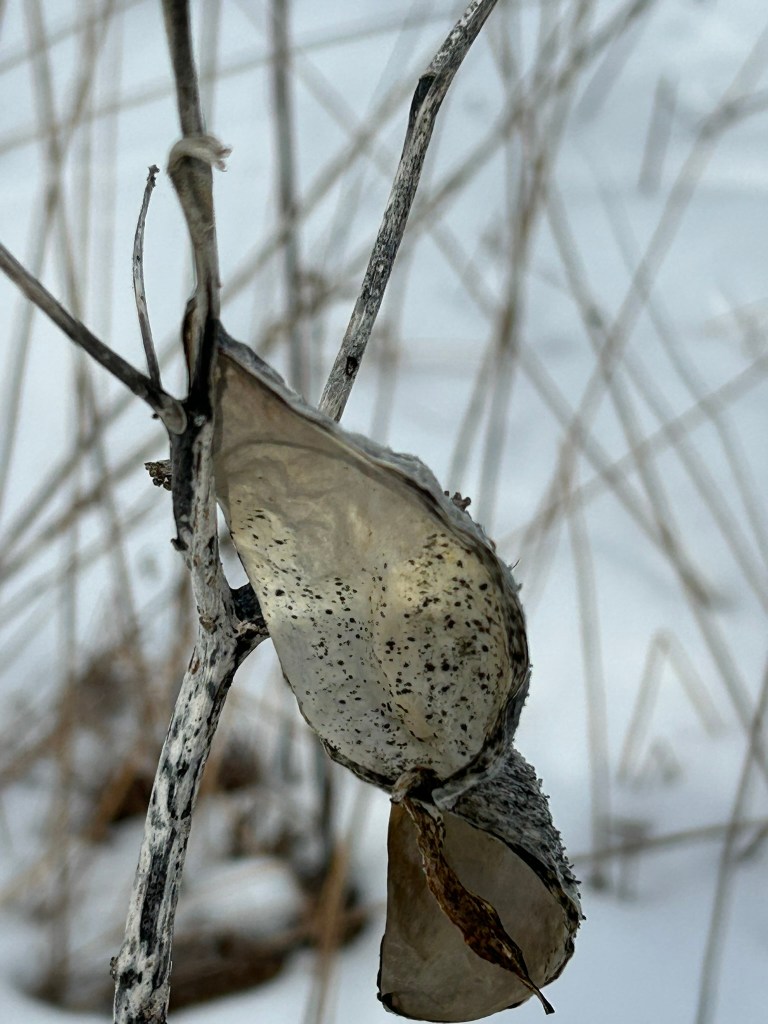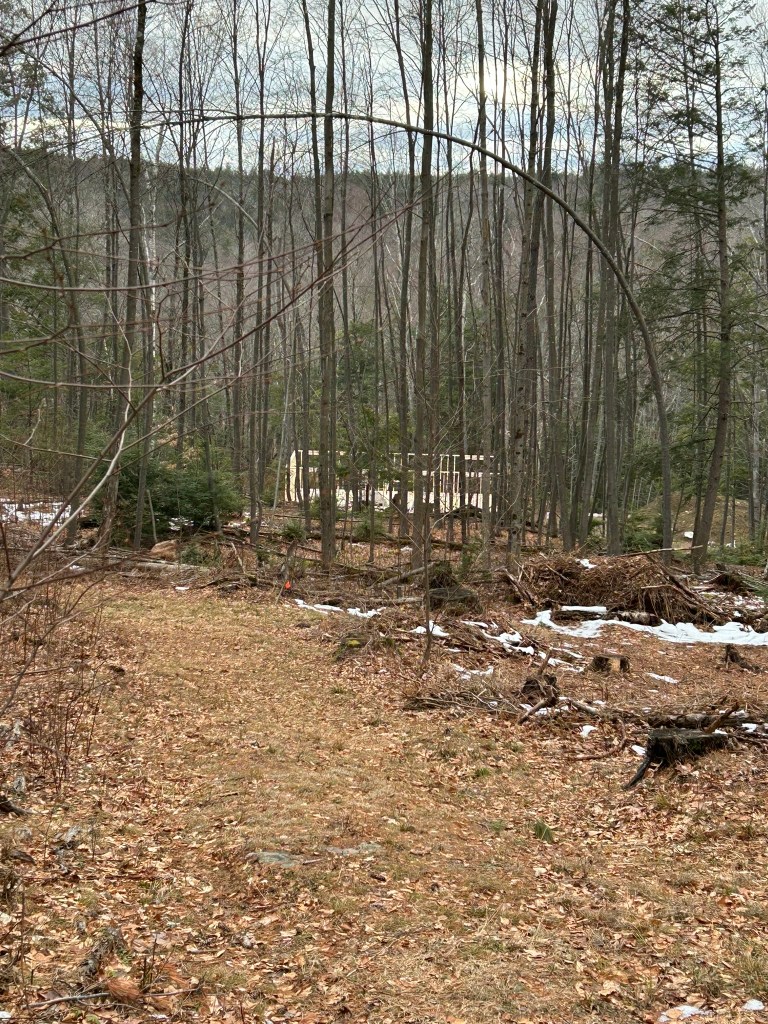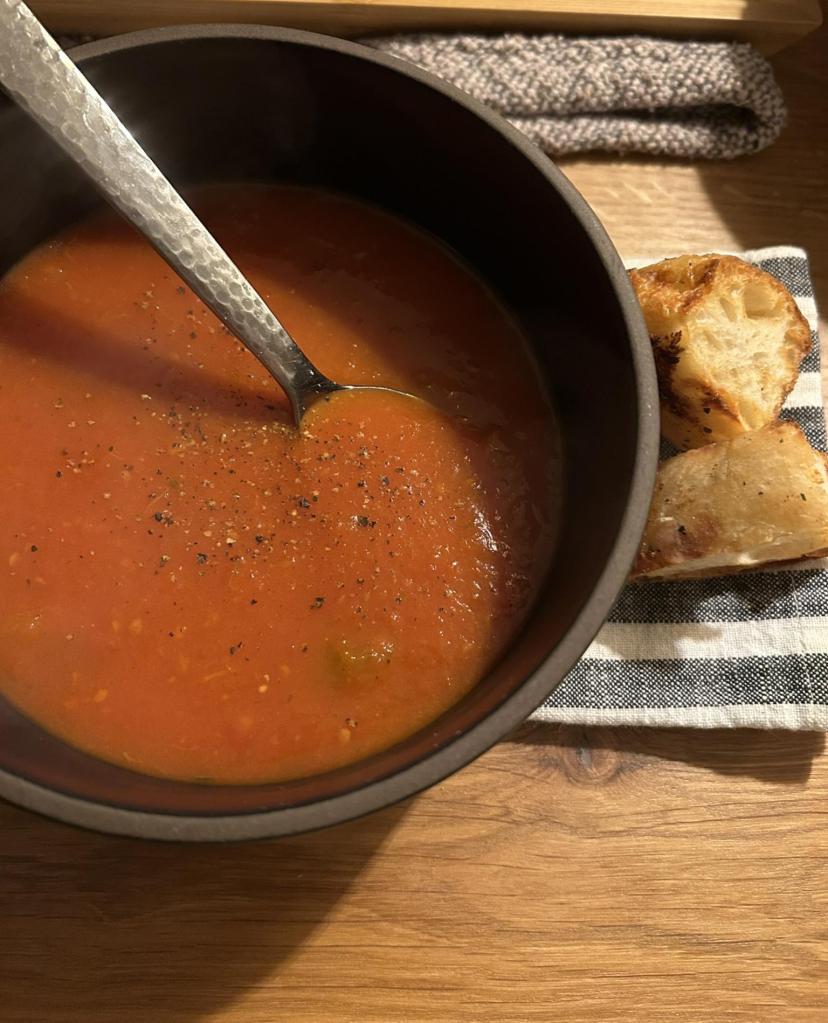
Autumn at Twin Lakes and Crispy Chicken Katsu with Fried Brown Rice!

Twin Lakes-Salisbury, CT

Early Fall at the end of September- with noticeably shorter days; enough daylight to take a late afternoon walk at bucolic Twin Lakes.

I walked down the dirt road that curves around the lake, the contrast of the water and clouds is peaceful and calming; helping to put the events of the day and our turbulent world into perspective. Lately I have been thinking about how to stay involved and help in ways that can effect positive change; at the same time balancing the importance of self care- which today is the winner!

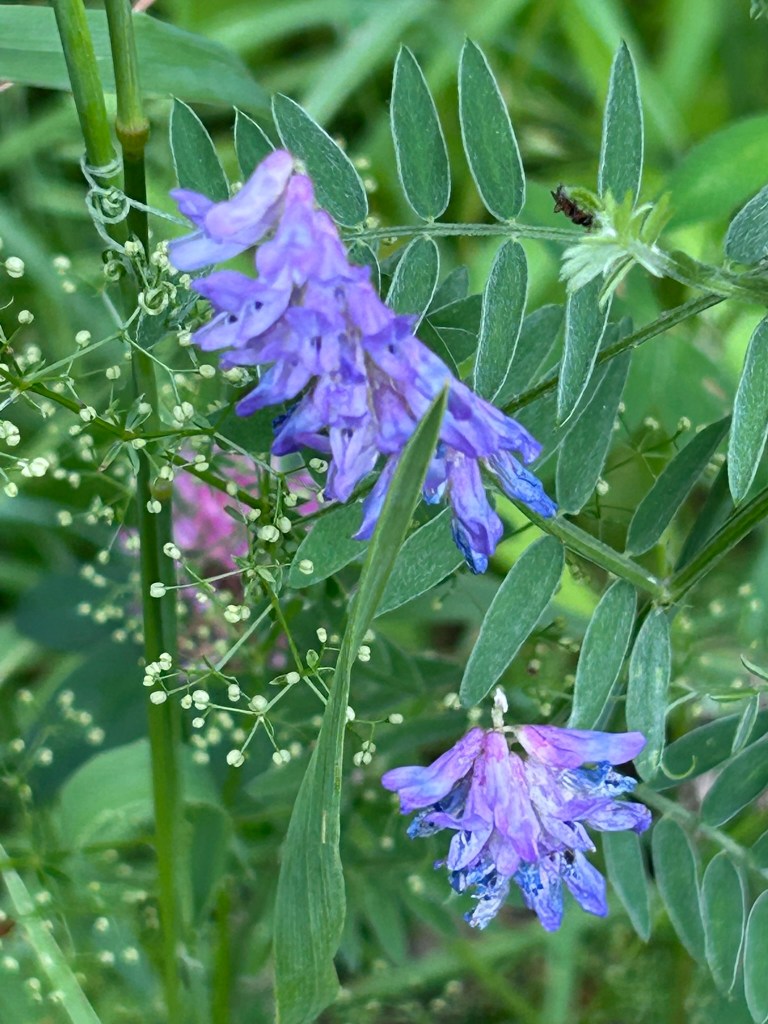
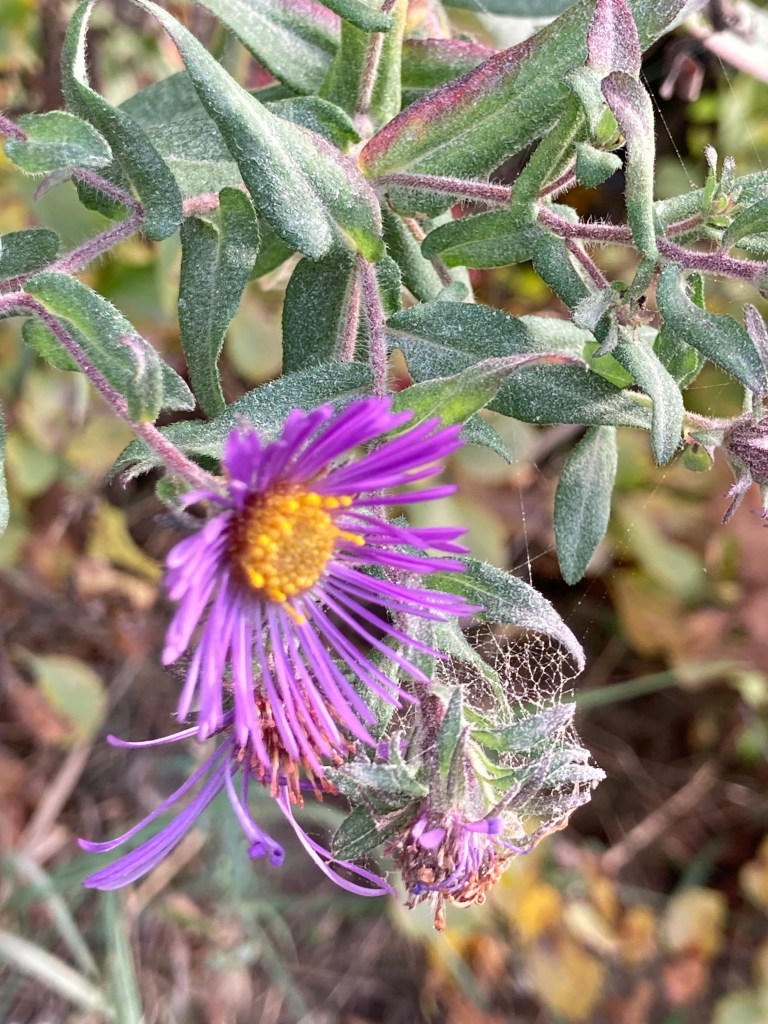
The leaves were just starting to turn and a few brilliant red leaves and a purple aster were suspended in lacey webs.

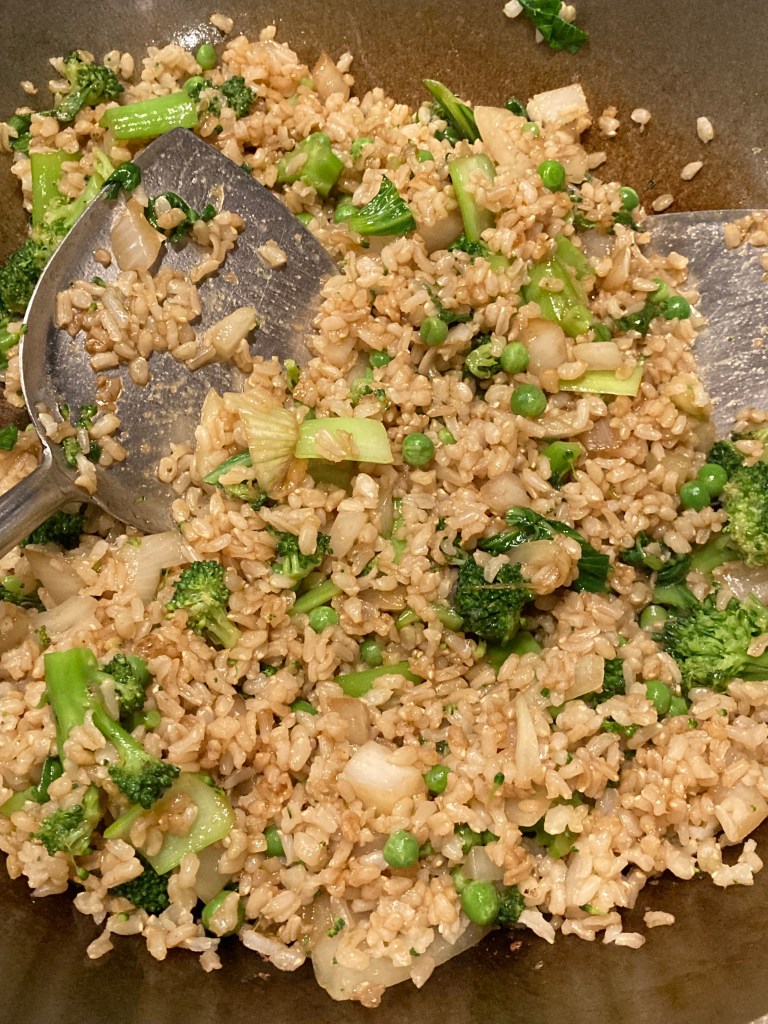
For dinner that evening, I was thinking of a way to use the leftover brown rice and vegetables that I had on hand. This would be a good time to take out my new wok to make a quick fried rice, which I got last spring in New York’s Chinatown at the venerable store, Hung Chong Imports.

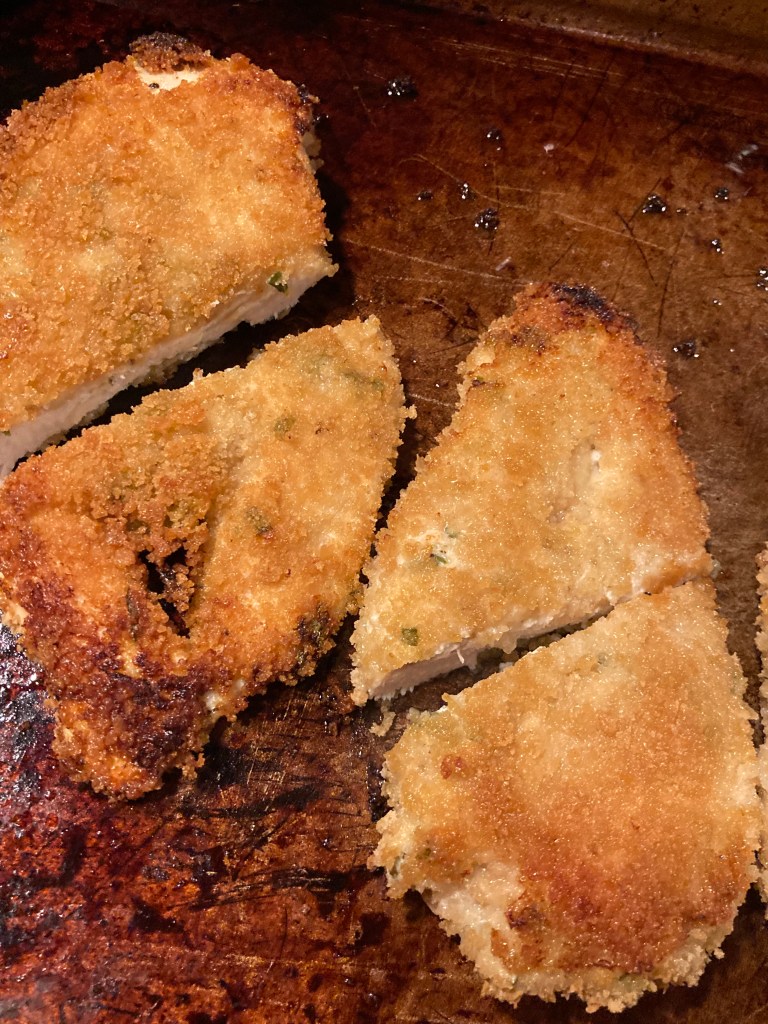
I had chicken breasts marinating in a mixture of yogurt, minced chives and onion powder (a strange combination, based on a NY Times Cooking recipe for Crispy Sour Cream and Onion Chicken). The yogurt tenderizes the chicken and the flavor does taste a bit like sour cream and onion dip! Coated in panko crumbs, drizzled with olive oil and baked in a hot oven results in the best crispy, tender and flavorful chicken! I just watched Yotam Ottolenghi, the Israeli and British chef, on a Stephen Colbert segment demonstrate his yogurt marinated chicken with North African spices. This is from his new cookbook, Comfort. I plan to try this version soon!

Sliced into thin strips and served over the fried rice, this turned into a delicious dinner!

Crispy Chicken Katsu with Fried Brown Rice

Fried Brown Rice Ingredients:

3 cups cold cooked brown rice

2 scallions finely chopped

1 small piece ginger, peeled and finely chopped

Assortment of vegetables (whatever you have on hand is fine)

2 stalks baby bok choy cut into small pieces

1 small onion finely diced

1/2 cup steamed broccoli (cooked briefly and rinsed in very cold water)

1/2 cup frozen peas defrosted

2 tablespoons canola or peanut oil

In a small cup mix together: 1/4 cup reduced sodium tamari, 1 tablespoon sesame oil and 2 tablespoons brown rice vinegar. For a spicier flavor, you can also add a small amount of hot chili sesame oil.

Chicken Katsu- (adapted from NY Times Cooking)

Ingredients:

  • 4boneless, skinless chicken breasts, halved horizontally (see Tip) and pounded ⅛-inch thick, or use 4 chicken cutlets (don’t split or pound)
  • Salt and black pepper
  • ½cup sour cream or Greek yogurt
  • ¼cup thinly sliced chives (or 1 tablespoon dried chives), plus more for serving
  • 2tablespoons onion powder
  • 2cups panko bread crumbs
  • 2 table spoons extra virgin olive oil

To make Chicken Katsu:

Preheat oven to 380 degrees and place rack on bottom of oven

  1. Pat chicken dry, and season both sides with salt and pepper.
  2. In a medium bowl, stir together the sour cream, chives and 1 tablespoon onion powder. Season with salt and pepper. Add the chicken and turn to coat. (Chicken can sit in the marinade for up to 8 hours. Refrigerate, then let come to room temperature before cooking.)
  3. In a shallow bowl or lipped plate, stir together the panko and remaining 1 tablespoon onion powder; season with salt and pepper.
  4. Working one at a time, press the chicken breasts into the panko, using your fingers to pack the panko onto both sides of the chicken, and place on a large sheet pan drizzled with olive oil.
  5. Drizzle top of chicken with remaining olive oil and place in hot oven. Cook about 6 minutes until browned on bottom and then flip over. Continue cooking until chicken is cooked through and crispy and browned all over, about 6 minutes more.
  6. Let sit for a few minutes and slice into small strips.
  7. Note: With this recipe, you will have extra leftover chicken for sandwiches, etc.!

To Make Fried Rice:

TURN ON EXHAUST FAN OVER STOVE!!

Heat wok over high heat until it starts to smoke slightly. This helps to create the traditional Chinese cooking effect of “Wok Hei” translated as “breath of a wok” that gives the food the smoky charred taste found in Chinese dishes.

Add canola or peanut oil to the wok and heat until the wok starts to smoke slightly.

Add chopped scallions and ginger- give it a quick stir.

Add chopped onion and stirring continually, cook about 1-2 minutes until onion starts to soften a bit.

Add vegetables and cook, stirring continually about 2 minutes.

Add rice, cook about 1 minute, stirring and then pour the tamari mixture around the edges of the pan. This is the best part- the sauce will bubble vigorously and give off a wonderful aroma! Stir briskly and you are done!!

ENJOY!!

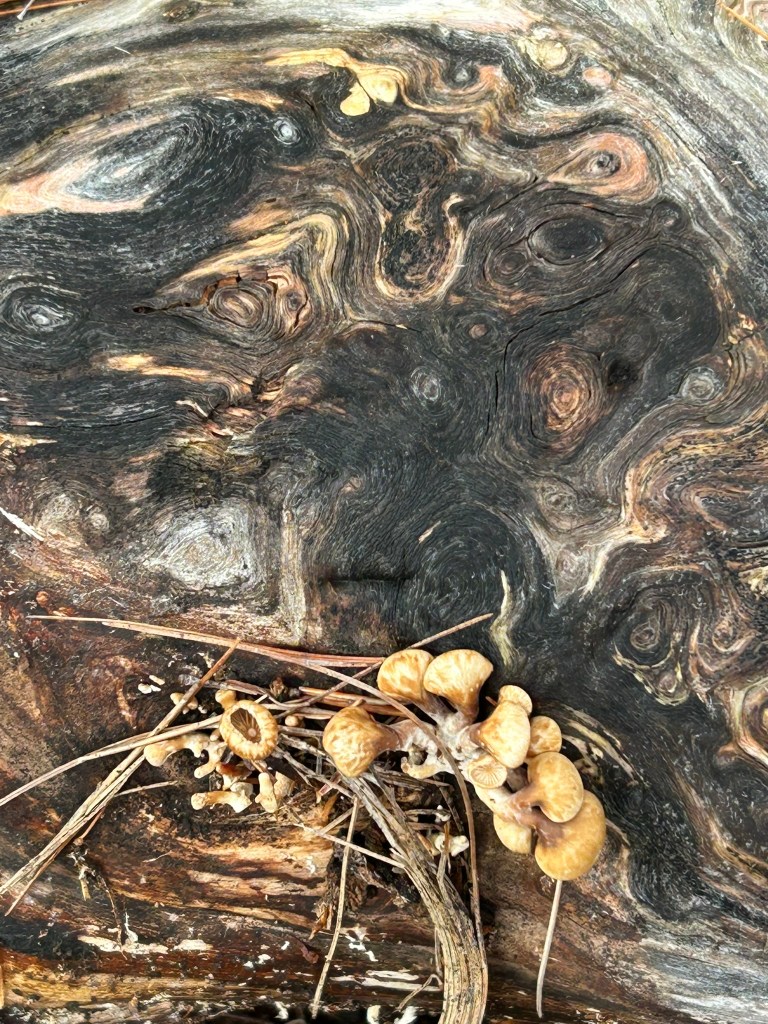
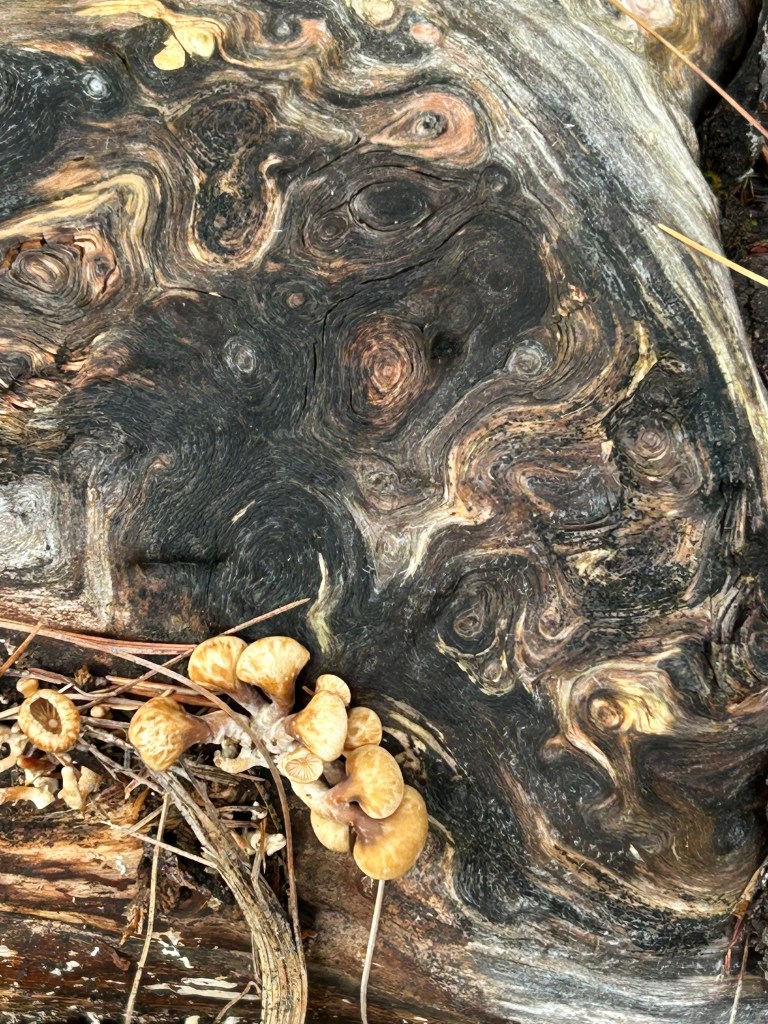
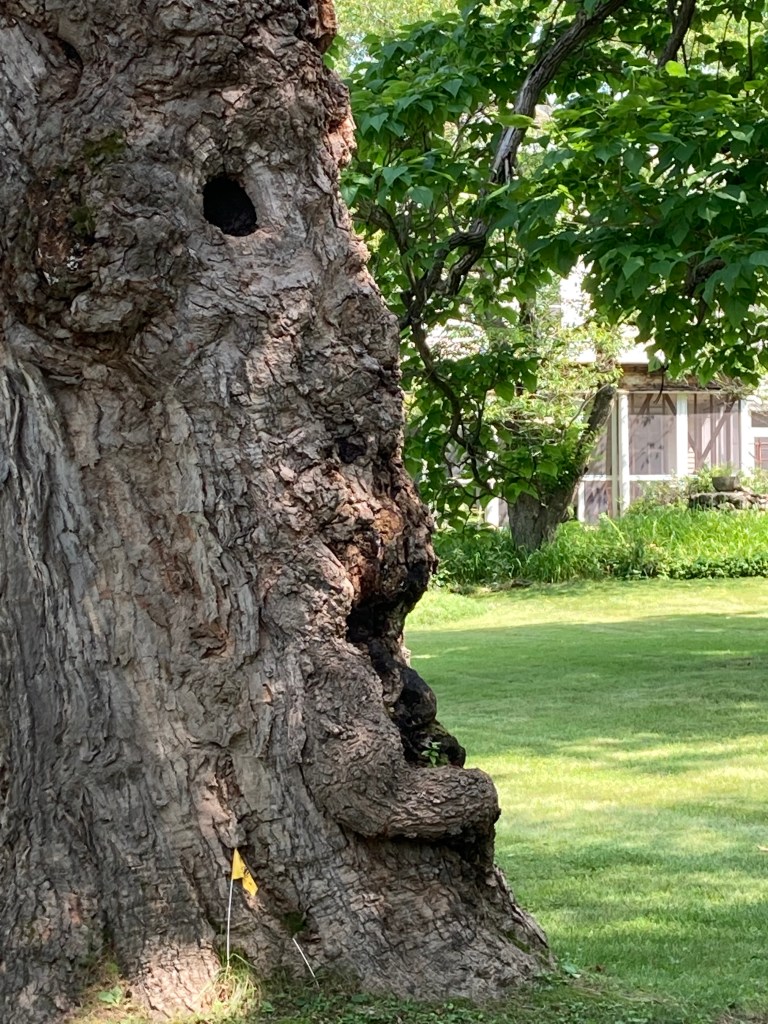
AND: Here is the “Tree of the Week”:

“Feeling a tiny bit Bashful”

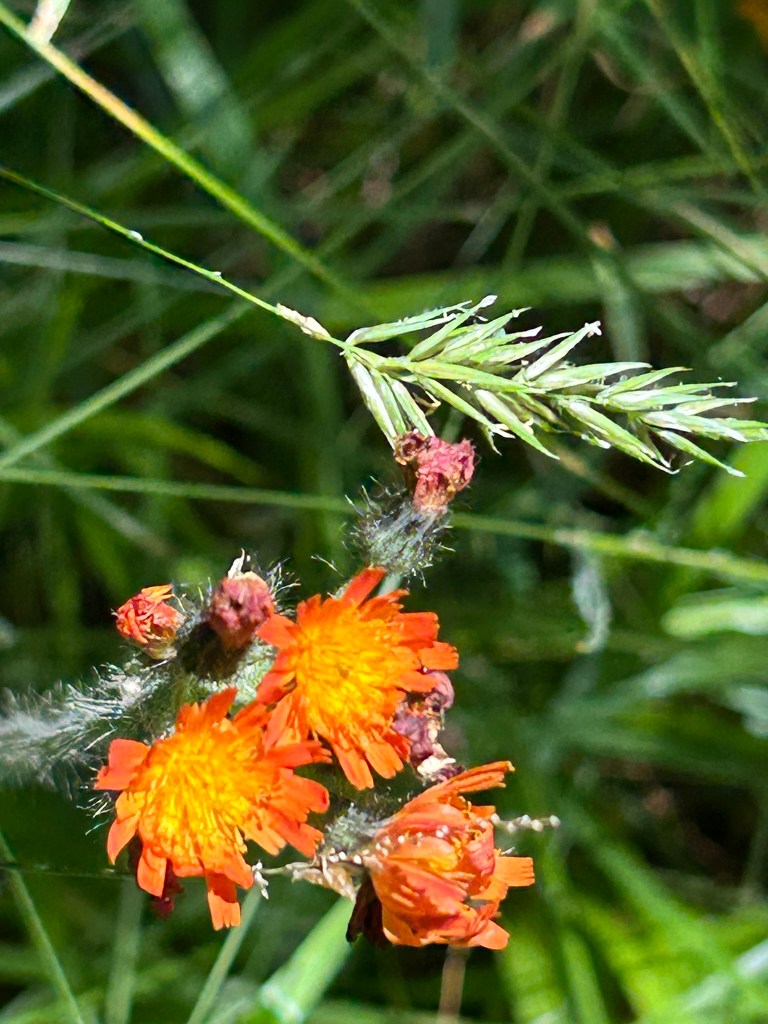
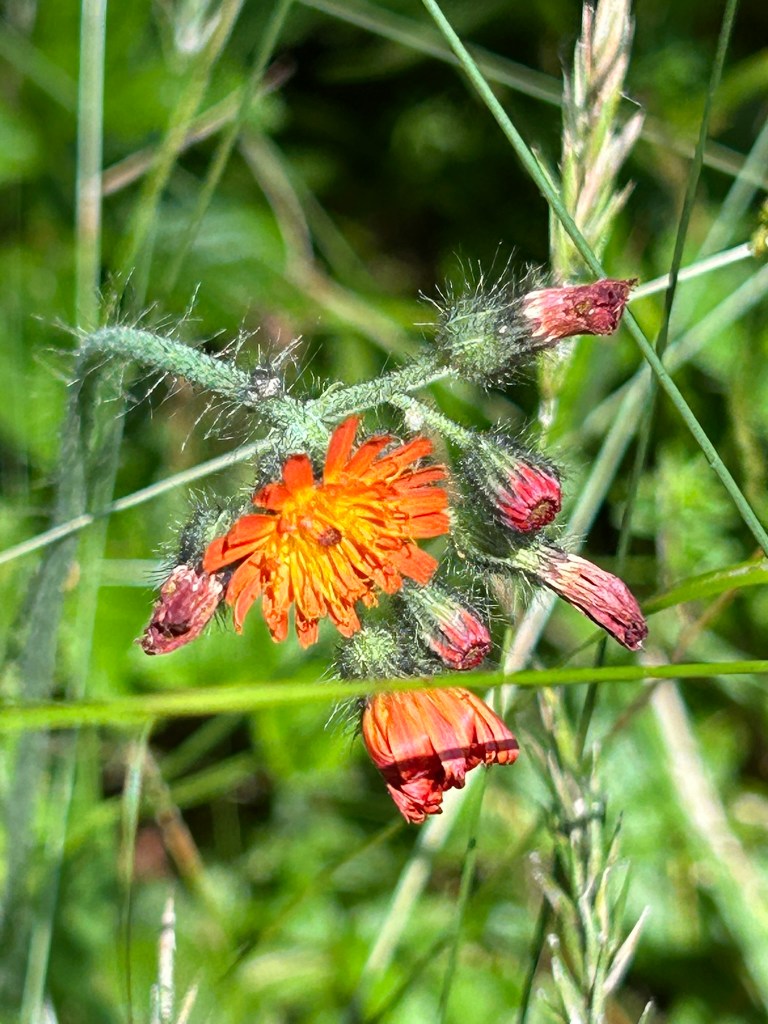
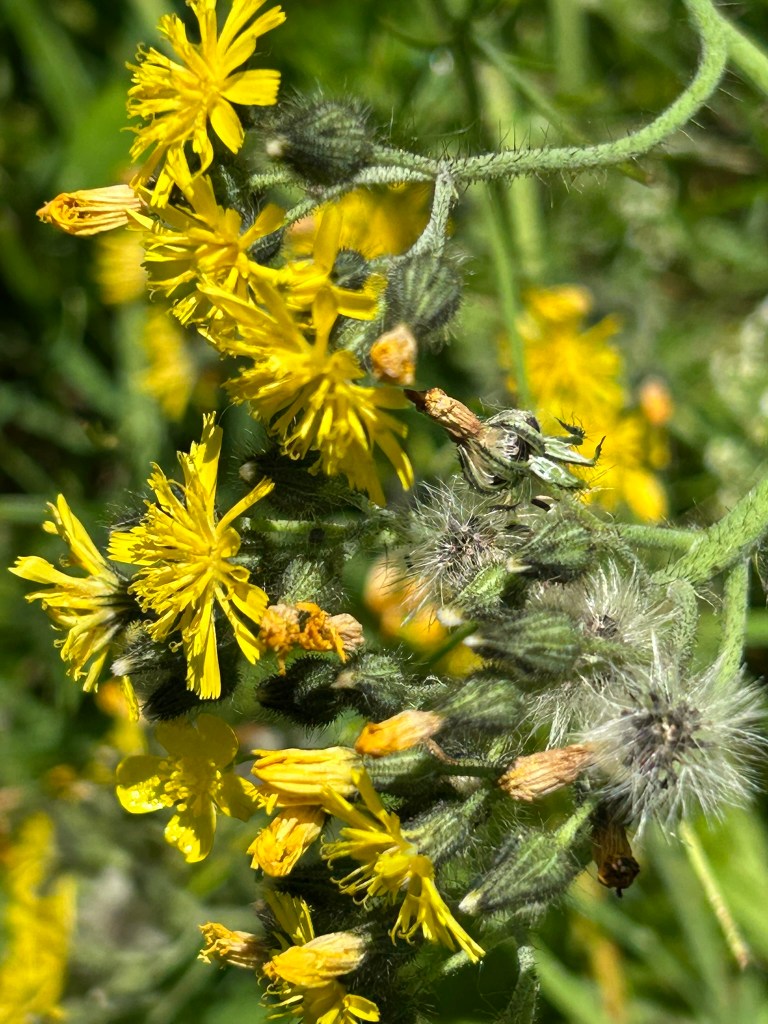
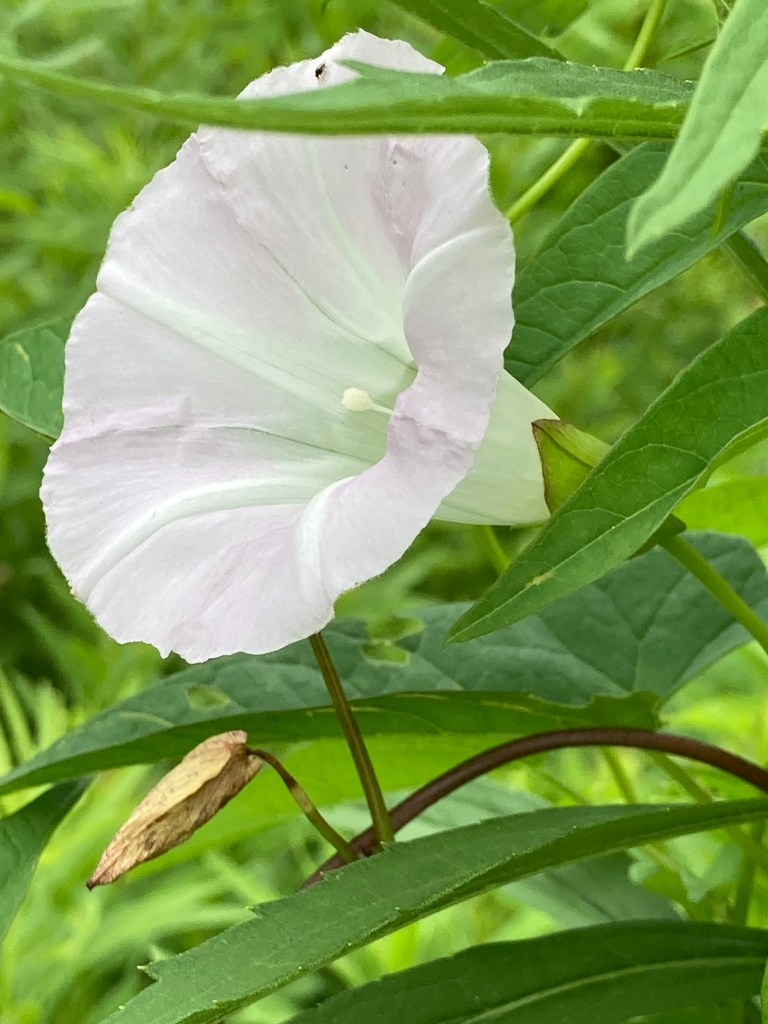
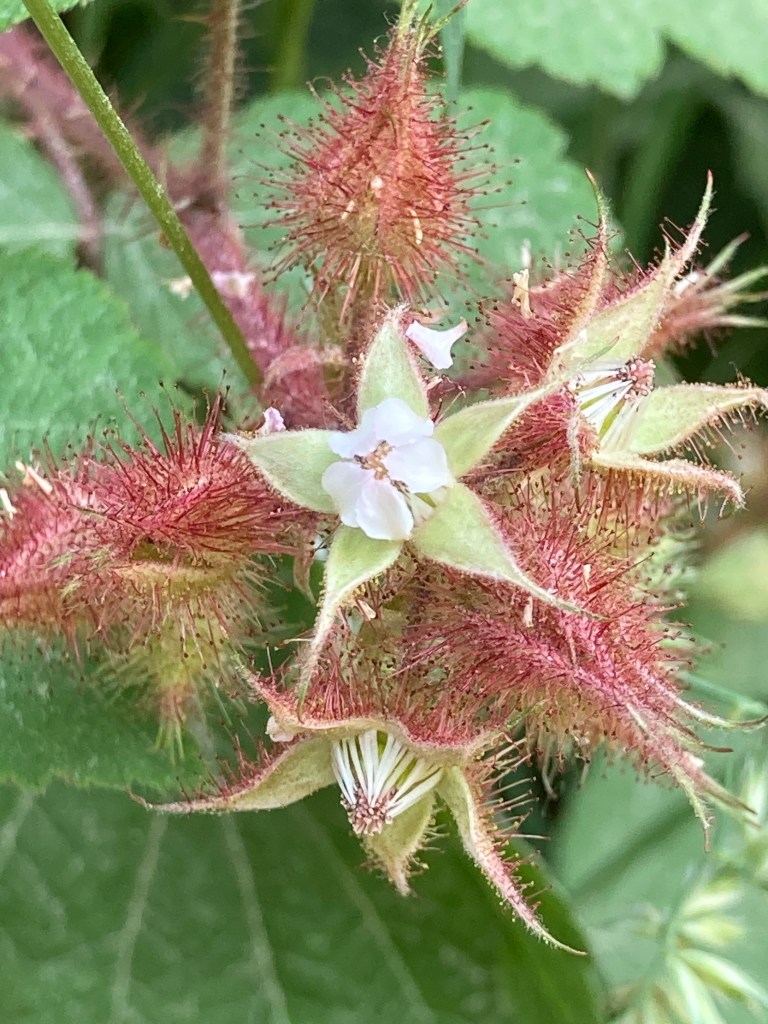
Fall flower at Hofstra University– New York

HAPPY FALL!!

Fjords, Ferries, Tunnels and Mountains: Norway Part 2

NORWAY- PART 2:

We spent one more jam packed day in Bergen; a highlight was the Kode Art Museum which houses one of the largest Munch collections in the world. We discovered evocative works of art by the Norwegian Modernist painter Nikolai Astrup that depicted pastoral mountain scenes.

“Barren Mountain”- Nikolai Astrup (1905)

“Evening with fruit trees in bloom”- Nicolai Astrup

We took a fun ride on a funicular to the top of Bergen and were treated to a bird’s eye view of the city and harbor.

And, of course at the top, I had to pose next to a touristy and kitschy troll!

Afterwards, we treated ourselves to cups of bittersweet hot chocolate at Fjak, an organic chocolate shop.

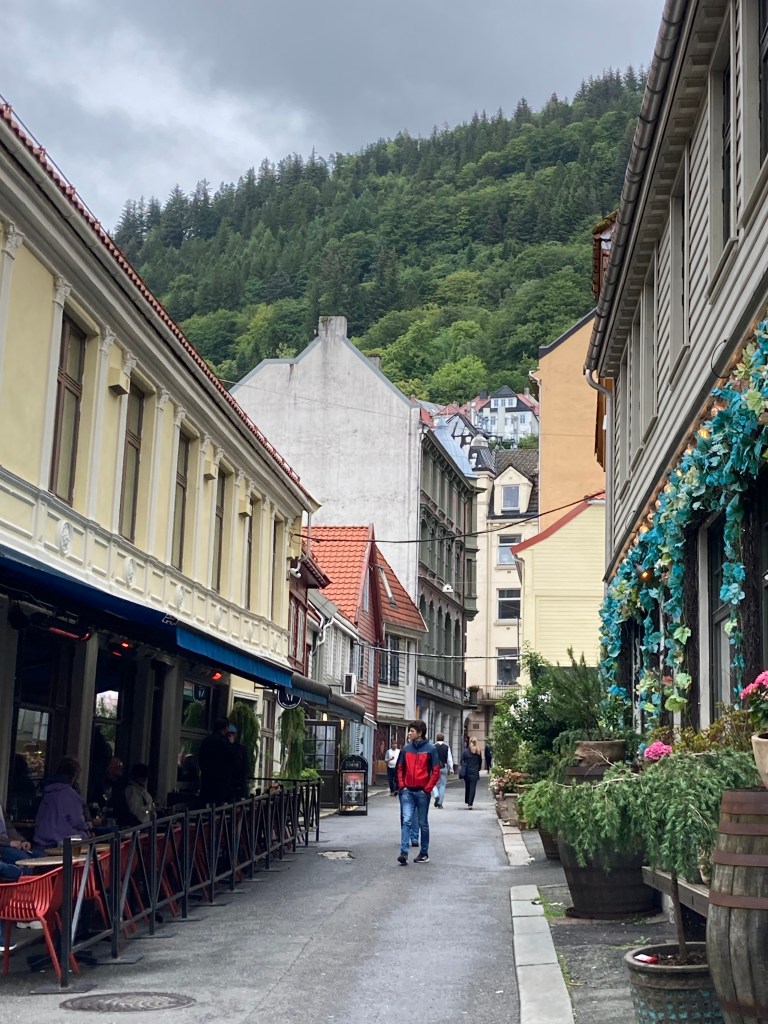
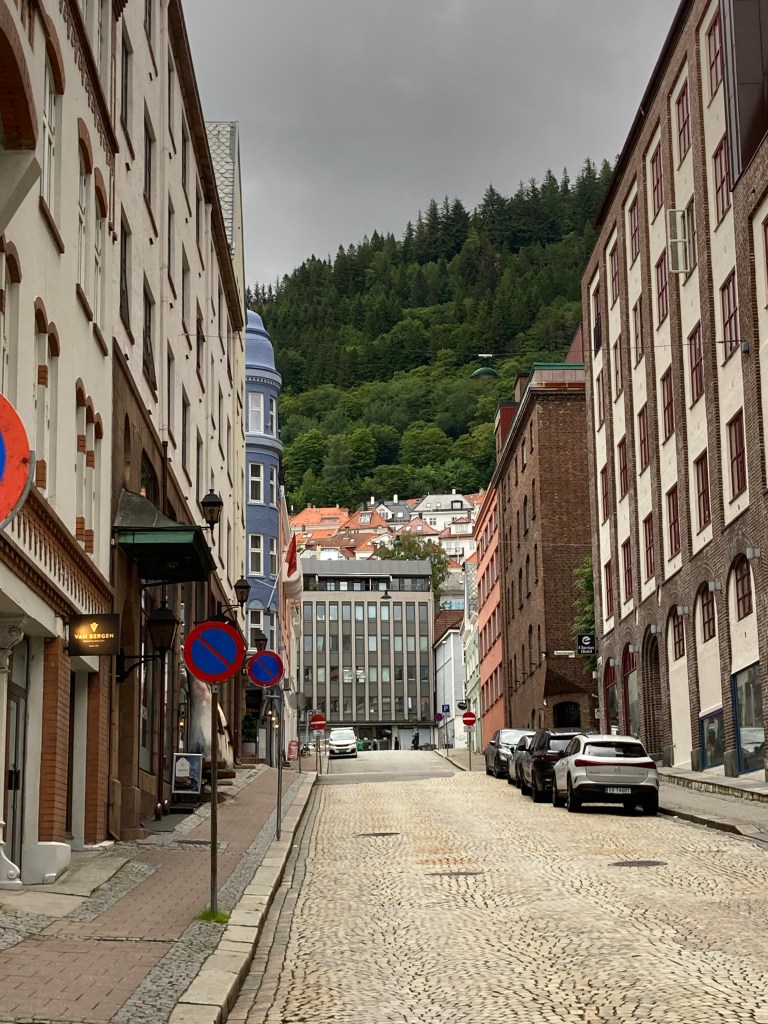
It was located on the same charming side street where we had dinner reservations that night at Les Mathis, an excellent small French bistro.

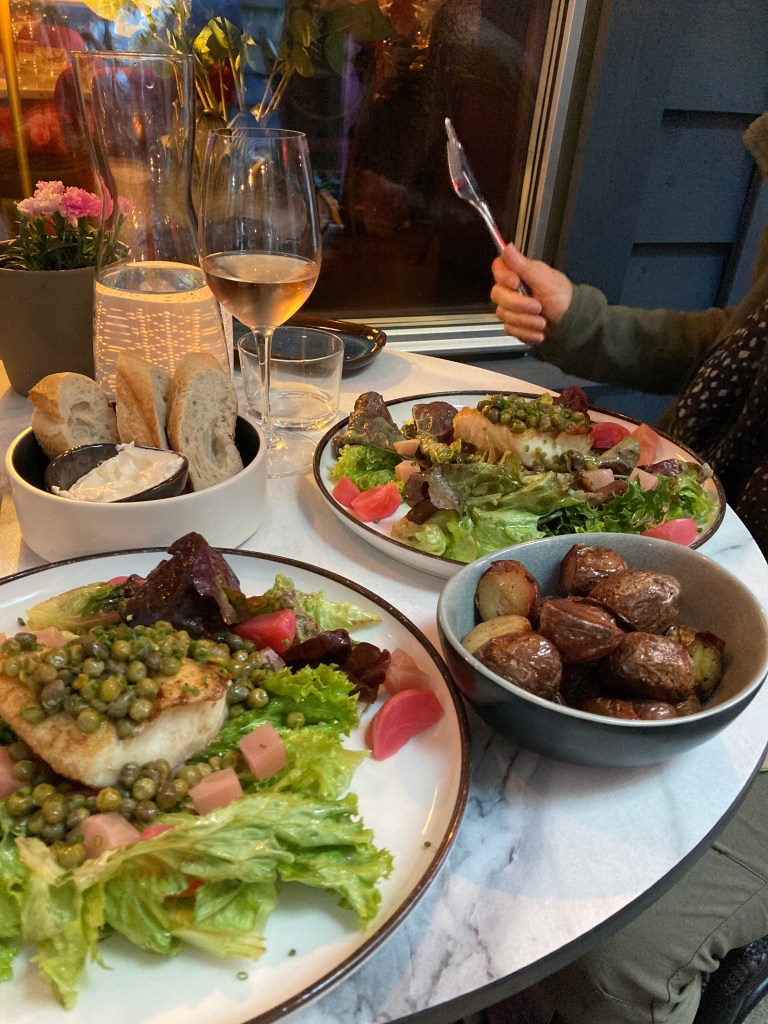
We enjoyed pan seared cat fish with a caper vinaigrette and pickled vegetables served over greens along with a bowl of roasted potatoes. A wonderful day!

The next morning, we picked up our rental car. As we left Bergen, ahead of us were rugged mountains and the roads quickly became steep and narrow; the next part of our adventure began!

Fearless hang gliders were soaring down the side of a mountain!

Countless tunnels cut through ranges of dramatic and imposing mountains. One tunnel was over 20 miles long!

We were headed to the tiny harbor town of Solvorn on the innermost part of the Sognefjorden; about a 5 hour ride from Bergen.

The scenery was so breathtaking; it was hard to not stop the car every few miles to take pictures!

The road would abruptly end with signs for a ferry crossing.

At one crossing, while waiting to board the boat, I noticed a German license plate and van called a Burstner; I ventured out and had great fun practicing my German with the owner!

Solvorn is an exquisitely beautiful town on the innermost branch of a long fjord with breathtaking views in any direction.

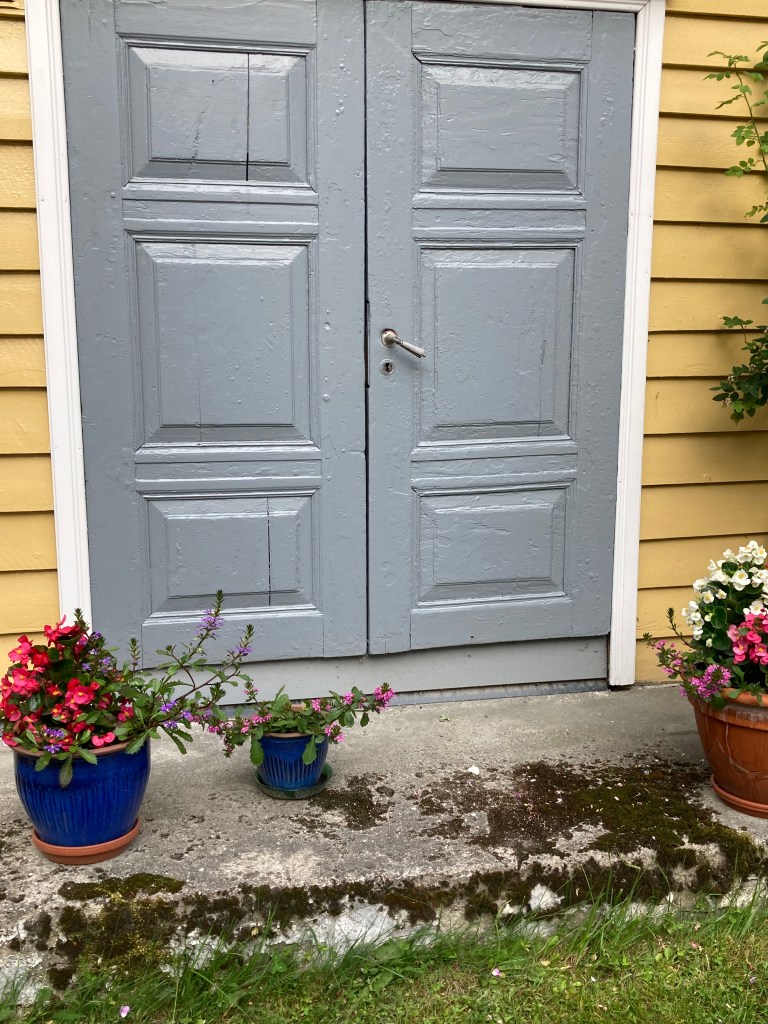
Our destination in Solvorn was the historic Walaker Hotel; the oldest hotel in Norway, it has been operated by the same family since 1690.

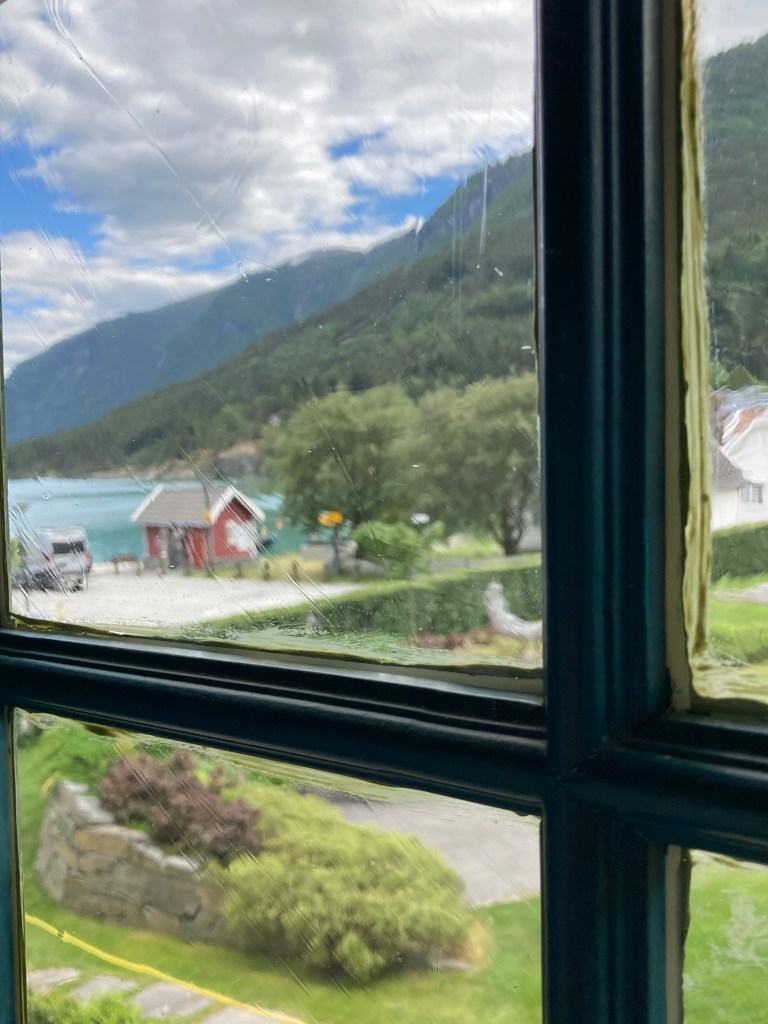
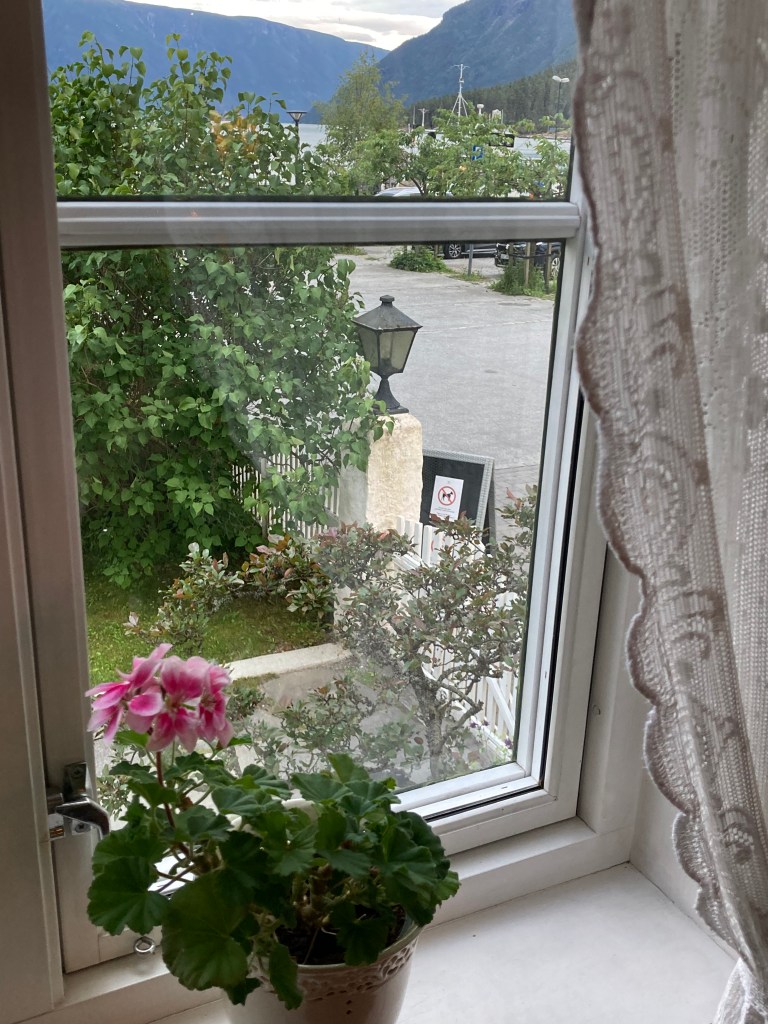
From the window of our small cozy bedroom, there was a view of the harbor.

The room also included a four course dinner. Before the feast, we took a small walk to the harbor.

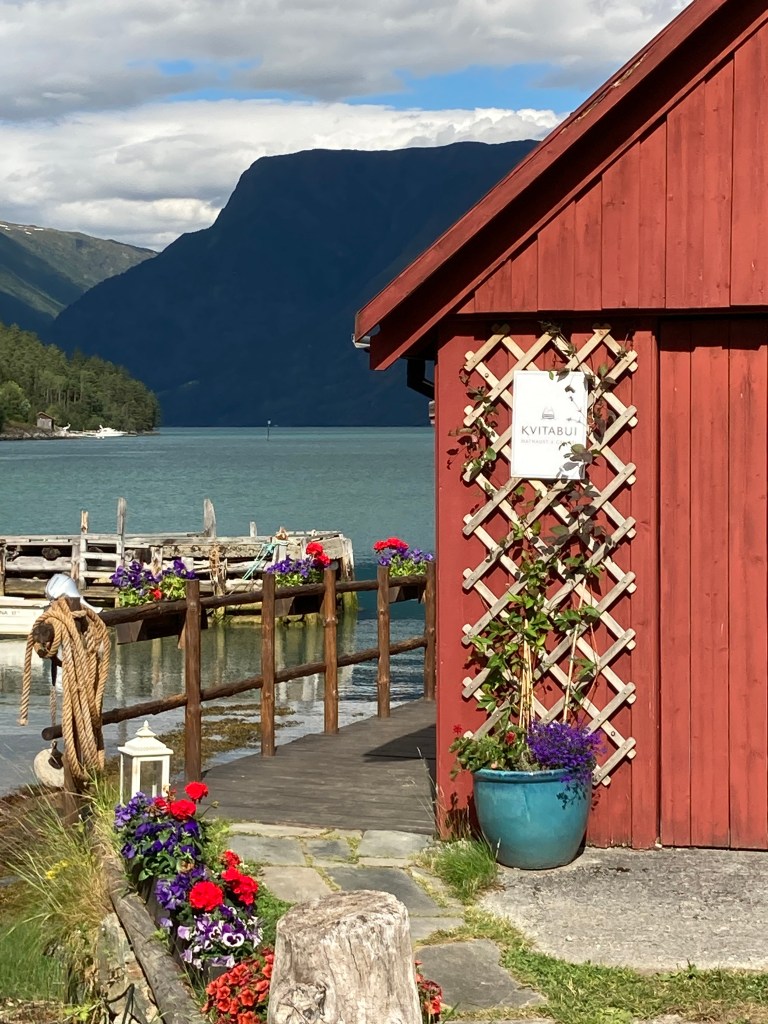
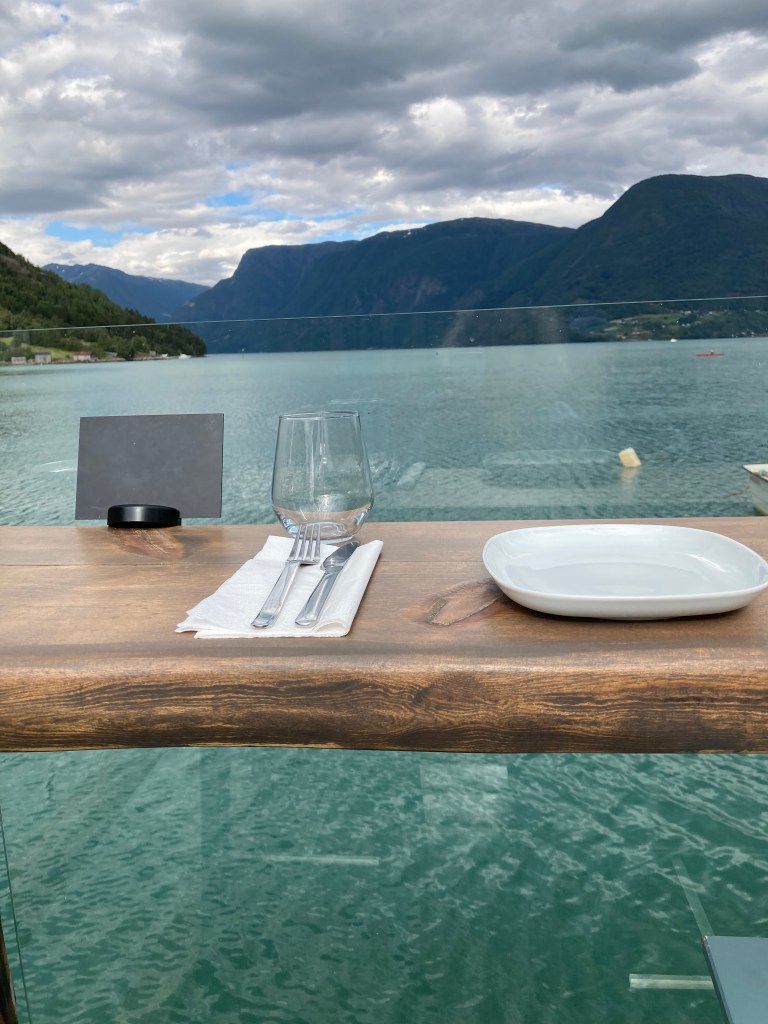
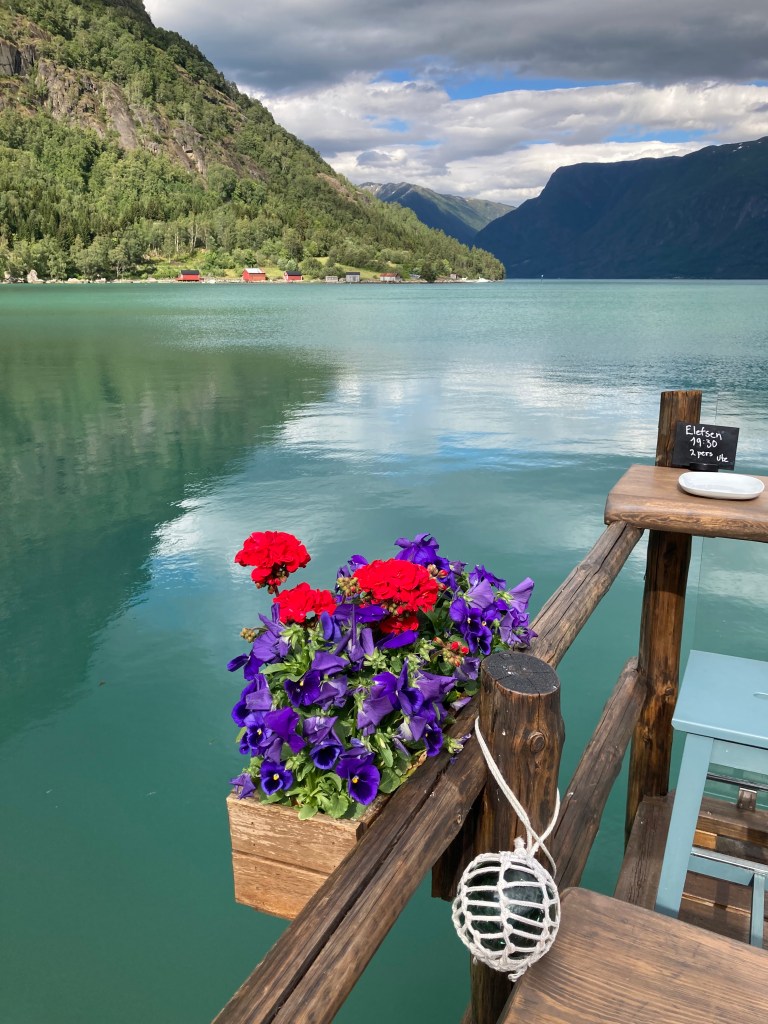
Just down the road was a lovely little cafe with a deck that extended out over the water.

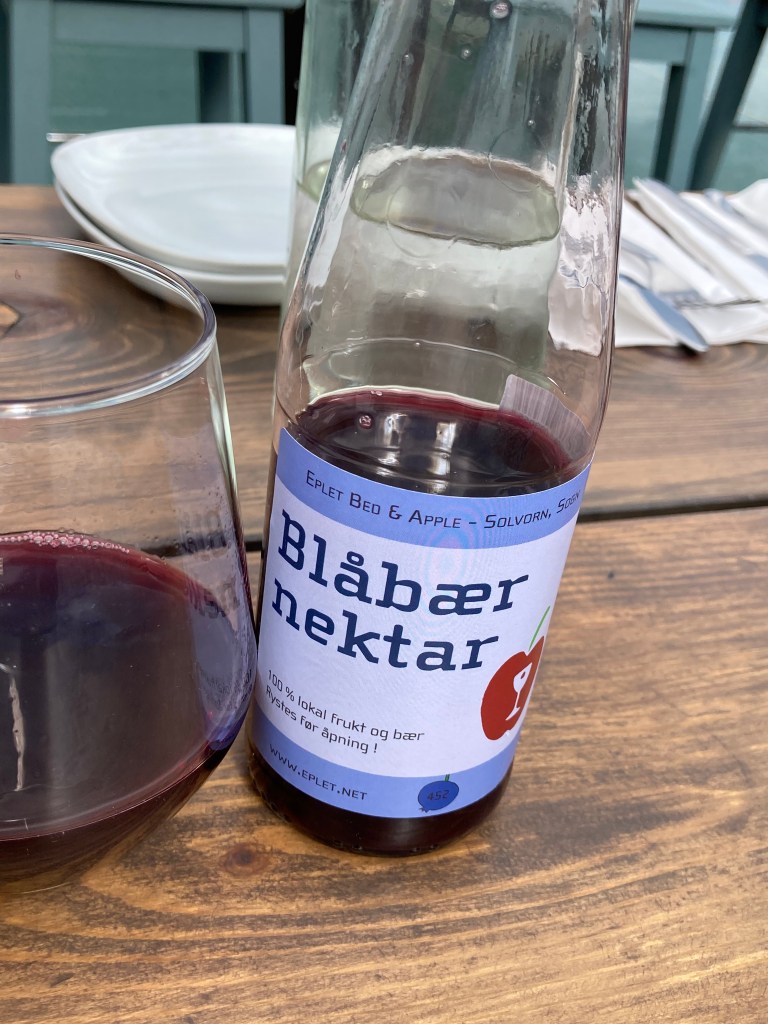
We ordered two icy glasses of local organic blueberry nectar; we had arrived in heaven!

It was time to return to the hotel for dinner.

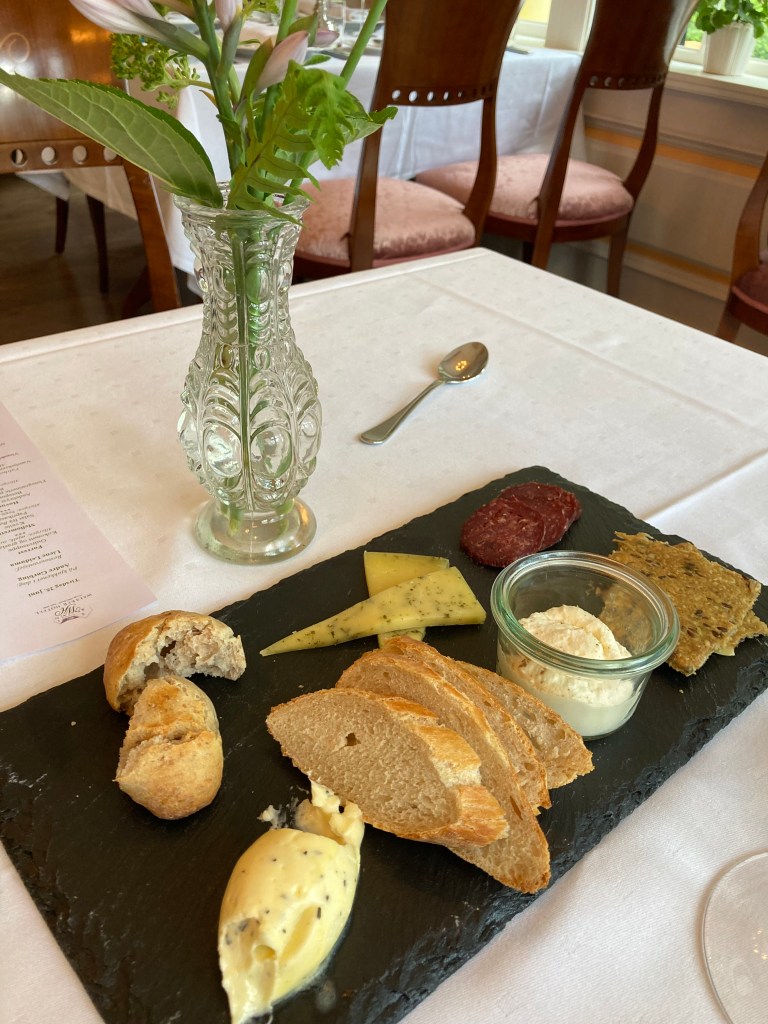
We were warmly escorted to our table in the charming small dining room and presented with an appetizer plate that included reindeer sausage, local cheeses, Norwegian crackers and a cream fraiche spread that was delicately flavored with nutmeg. Along with a glass of white wine, this would have been a delicious small supper!

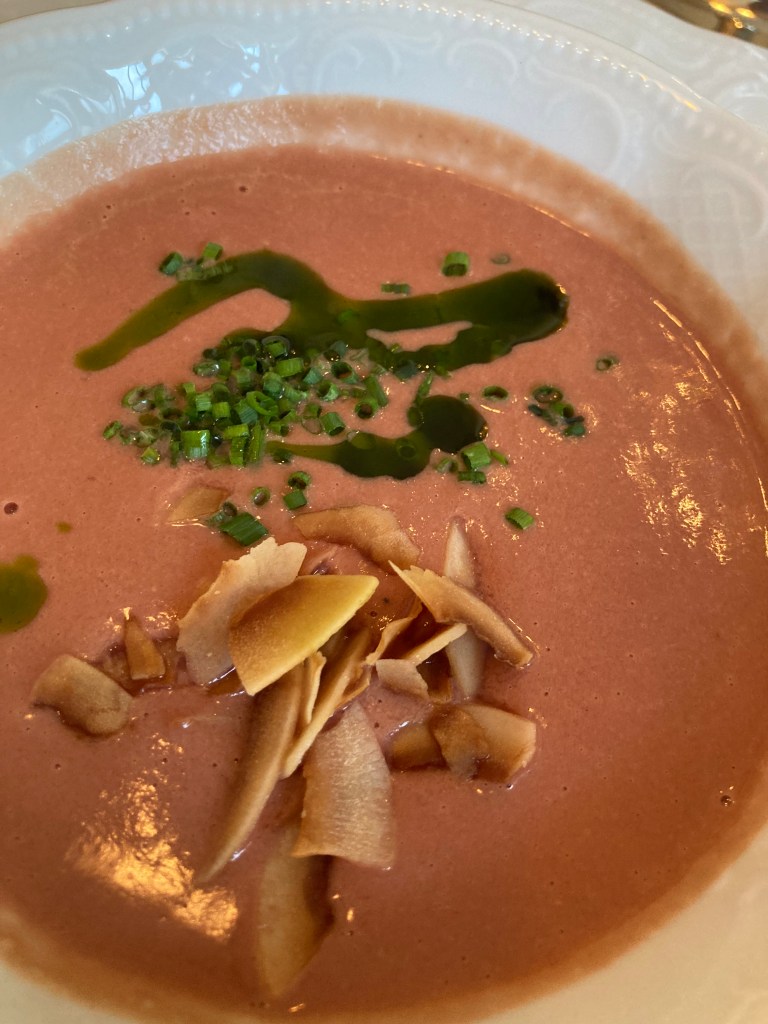
The first course was a creamy but light carrot soup garnished with toasted coconut, scallions and a basil puree.

This was followed by poached cod with a delicate paprika sauce.

We were starting to be quite full, but somehow managed to find room to enjoy tender and succulent duck breast with potatoes Anna and a brightly flavored lingonberry sauce.

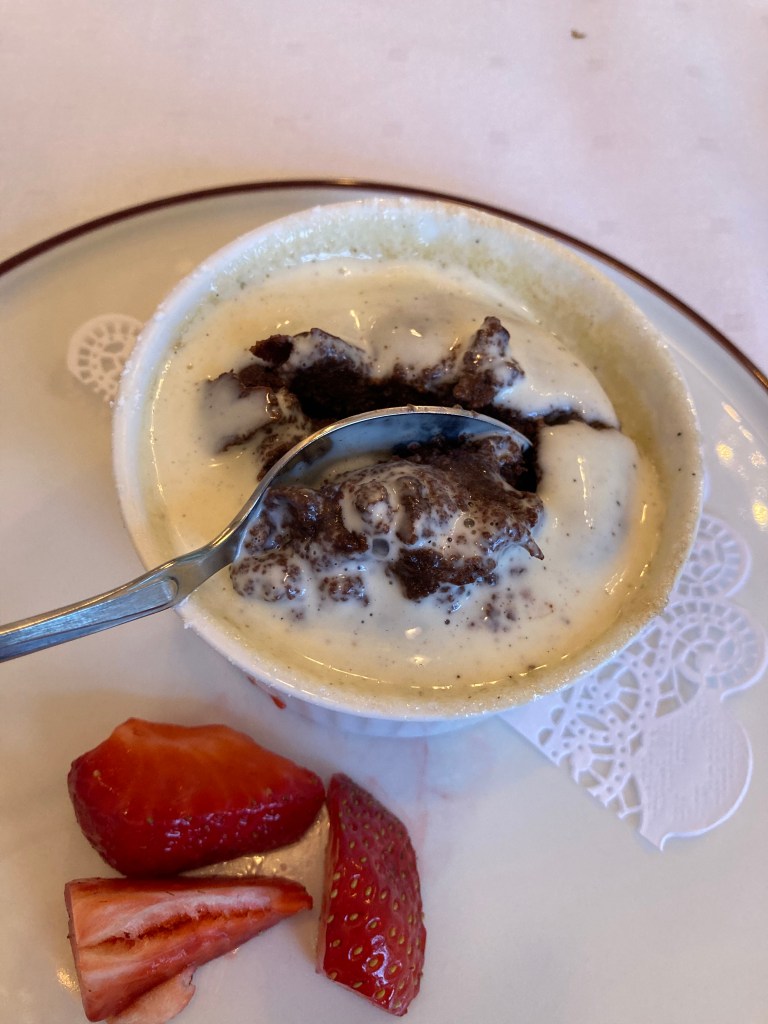
And of course, we were able to happily devour a dessert of warm chocolate souffles served with local strawberries and creme anglaise!

By this time, it was 10:00 at night and still light outside. Between the excellent courses, we had the luxury of talking to our heart’s content!

The next morning was misty and cloudy; stunningly atmospheric and beautiful!

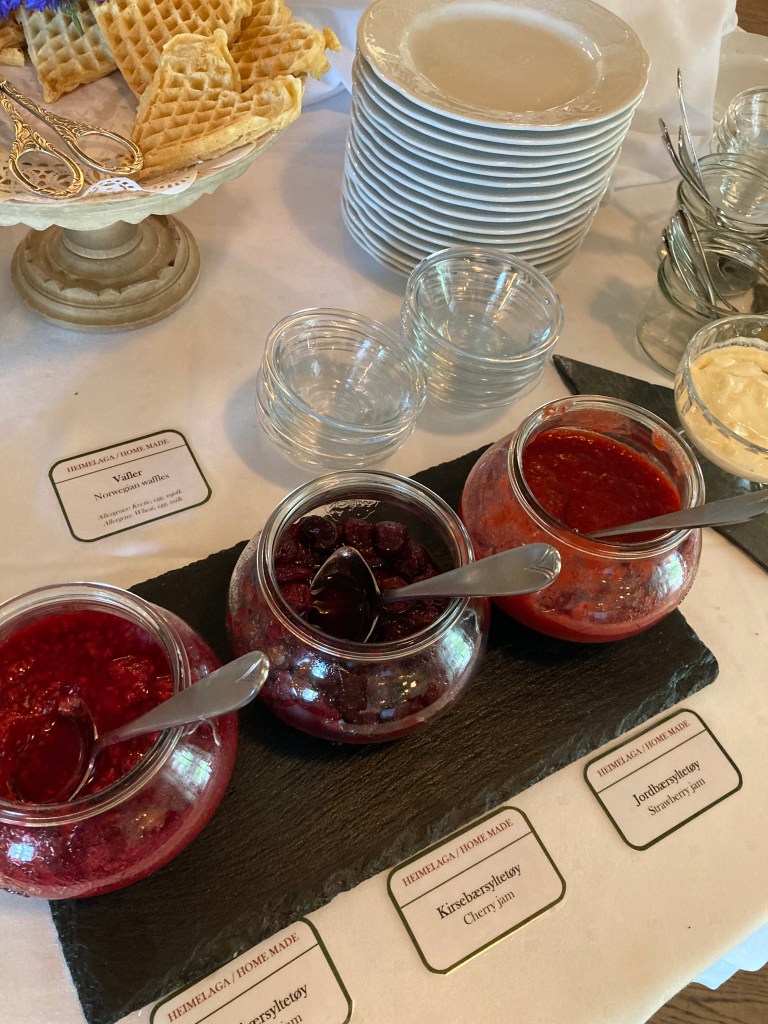
After enjoying the plentiful breakfast buffet with homemade jam, it was time to move on to our next destinations; to Balestrade located in another small harbor village on the Sognefjorden, to Stalheim, perched high in the mountains and then back to Bergen with a visit to Troldhaugen, the Grieg home.

STAY TUNED for Norway: Part 3

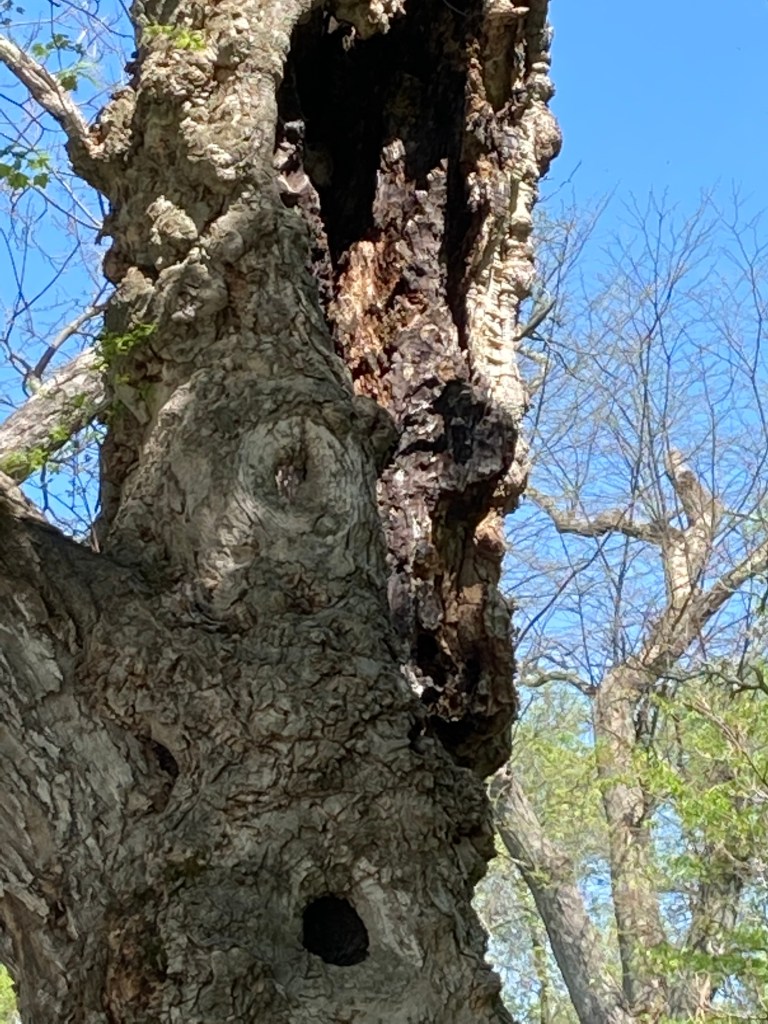
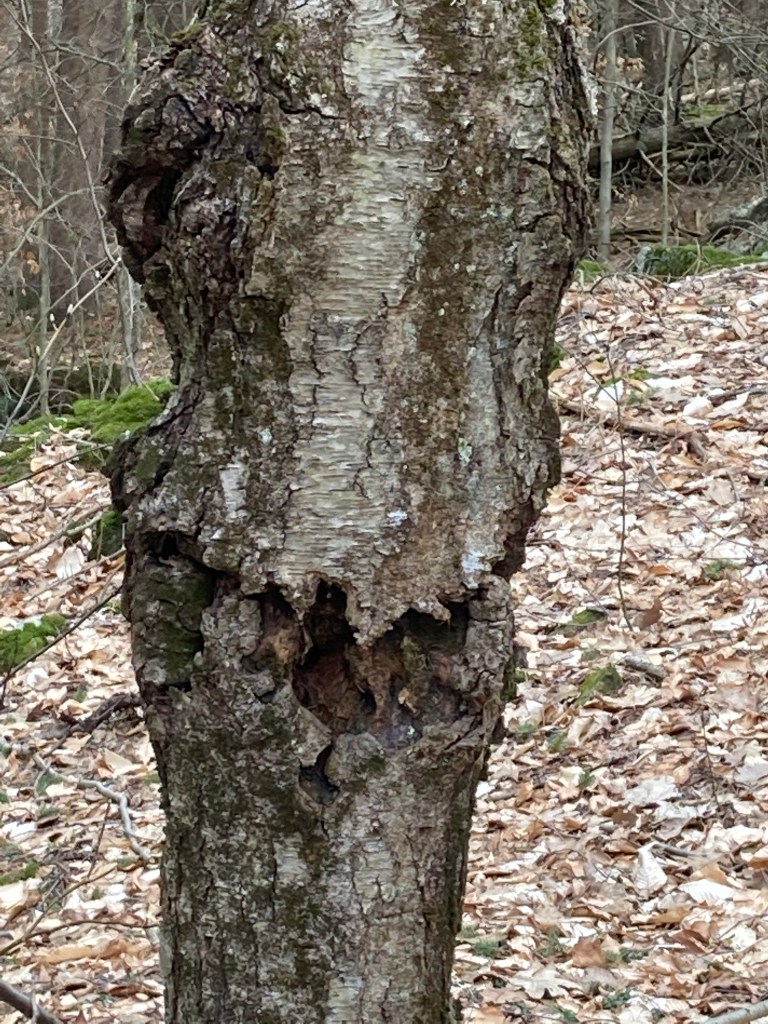
AND: Of course, here is the “Tree of the Week”!

“I feel like I may have a hole in my head!”

Solvorn, Norway

Norway: Grieg and Bergen- Part 1

As we made our descent into Bergen, the sky was cloudy and overcast; a rainbow appeared in the sky seeming to welcome us to our Norway adventure!

I was accompanied by my intrepid traveling companion Carol. The plan was to spend three days exploring Bergen on foot and then go on an expedition by car, driving on narrow winding roads with spectacular views of the mountains and fjords. And, of course this included many memorable meals!

A convenient bus from the airport dropped us off right in the middle of the bustling Bergen harbor a few blocks from the Clarion Hotel that was located on a cozy side street.

After settling in and taking a short nap to shake off some of our jetlag, we set out on a walk around the neighborhood and were delighted by medieval side streets and tiny doorways.

It was time for our first dinner reservation at the historic Enhjorningen (Unicorn Fish) Restaurant. We entered the medieval era building and climbed up a winding staircase.

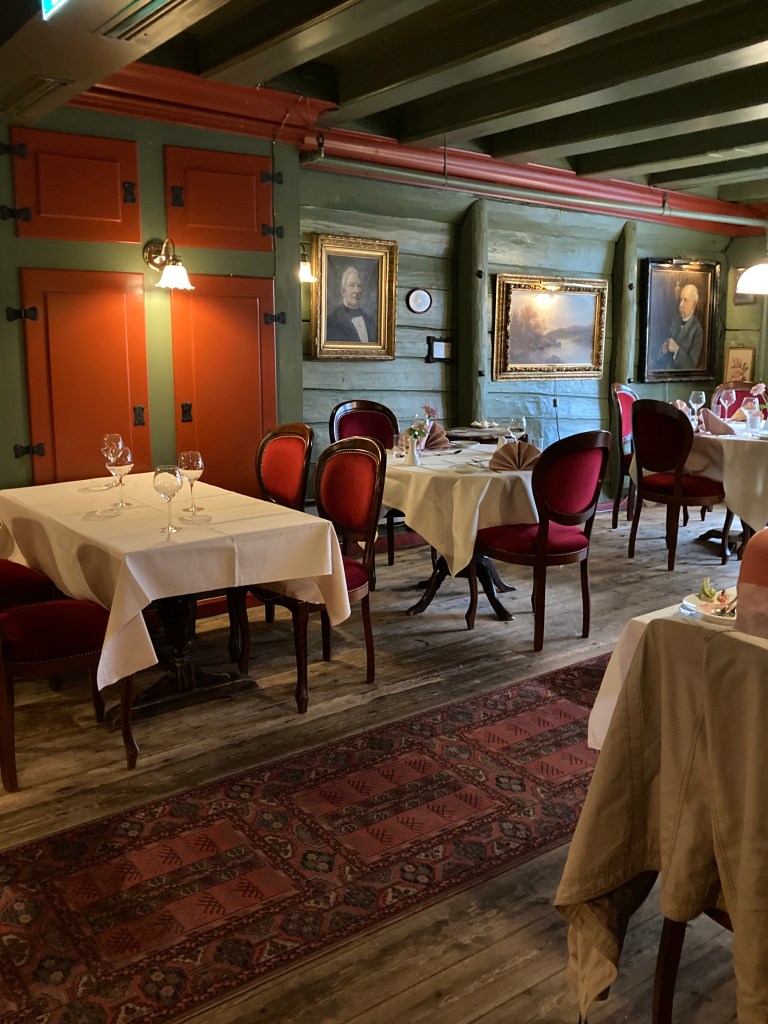
The door opened up into a cozy and atmospheric restaurant with ancient wooden walls and beams.

Our quaint table looked out over the water and the food was also excellent!

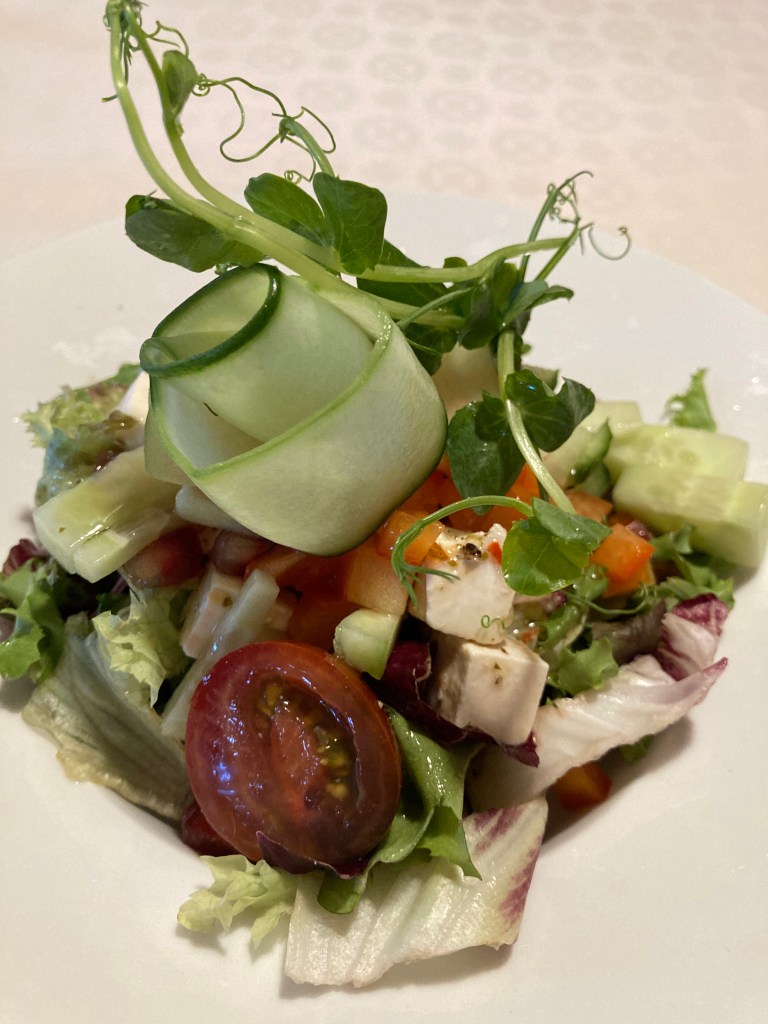
We started with an artfully arranged salad with fresh local cherry tomatoes and feta.

We each ordered beautifully prepared fish entrees with monkfish and salmon that were accompanied with carrot puree, roasted baby potatoes, pickled vegetables and broccolini.

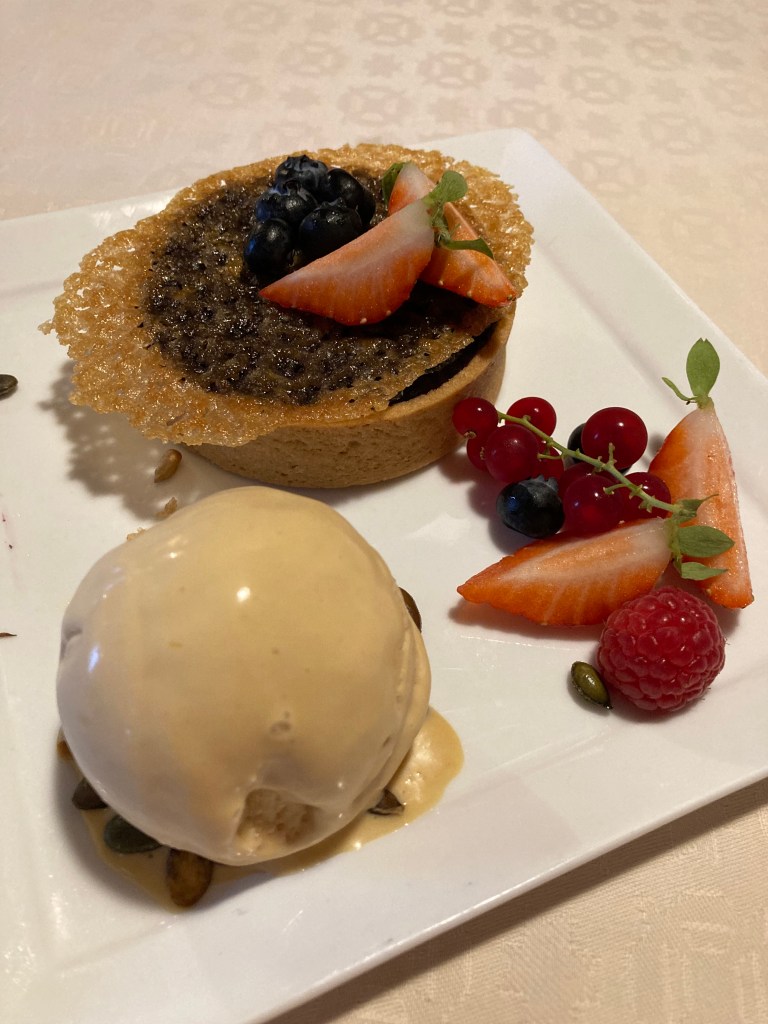
For dessert we shared an excellent blueberry tart with a crisp cookie crust top and brown cheese ice cream. After I tried Norwegian brown cheese at other meals, I recognized the nutty, sweet caramel flavor- a perfect ending to our first dinner!

We strolled back slowly to our hotel. From our room we enjoyed a view of the harbor with a bright sky at 10:30 PM. We quickly fell into a deep sleep!

The next morning we dug eagerly into a sumptuous breakfast buffet that included smoked fish, fresh crusty whole grain breads and rolls, home made jams, fresh fruit and yogurt.

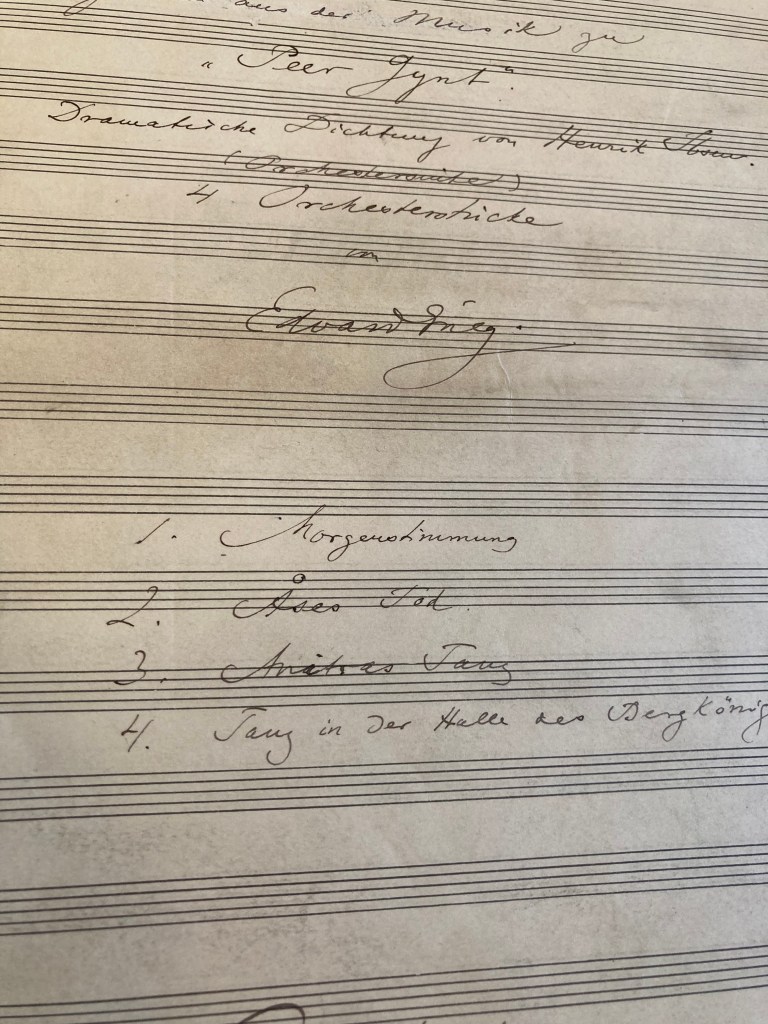
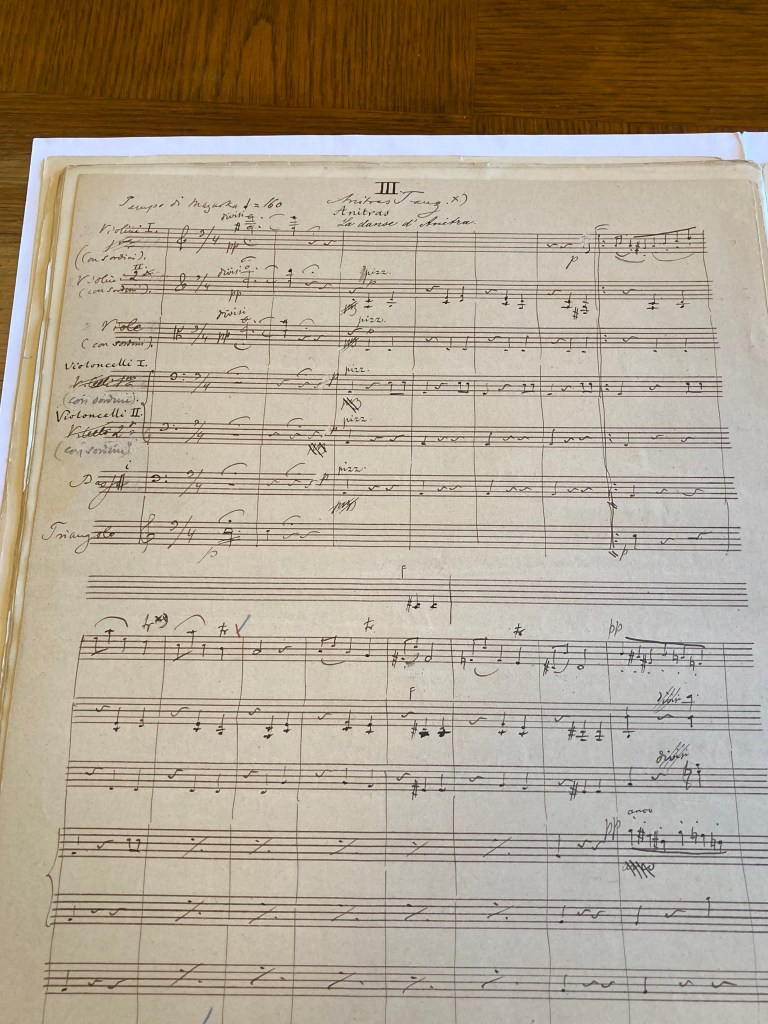
We headed out to find the Bergen Public Library which houses the Grieg archives, including the original manuscripts for many of his compositions.

Edvard Grieg was born in Bergen in 1843. Widely recognized as one of the major Romantic composers, his compositions incorporated many Norwegian folk melodies. Before our trip, I had been in contact with the archive department at the University of Bergen to find out how to access Grieg’s manuscripts. I was told that the manuscripts were housed at the Bergen Public Library and that no appointment was required.

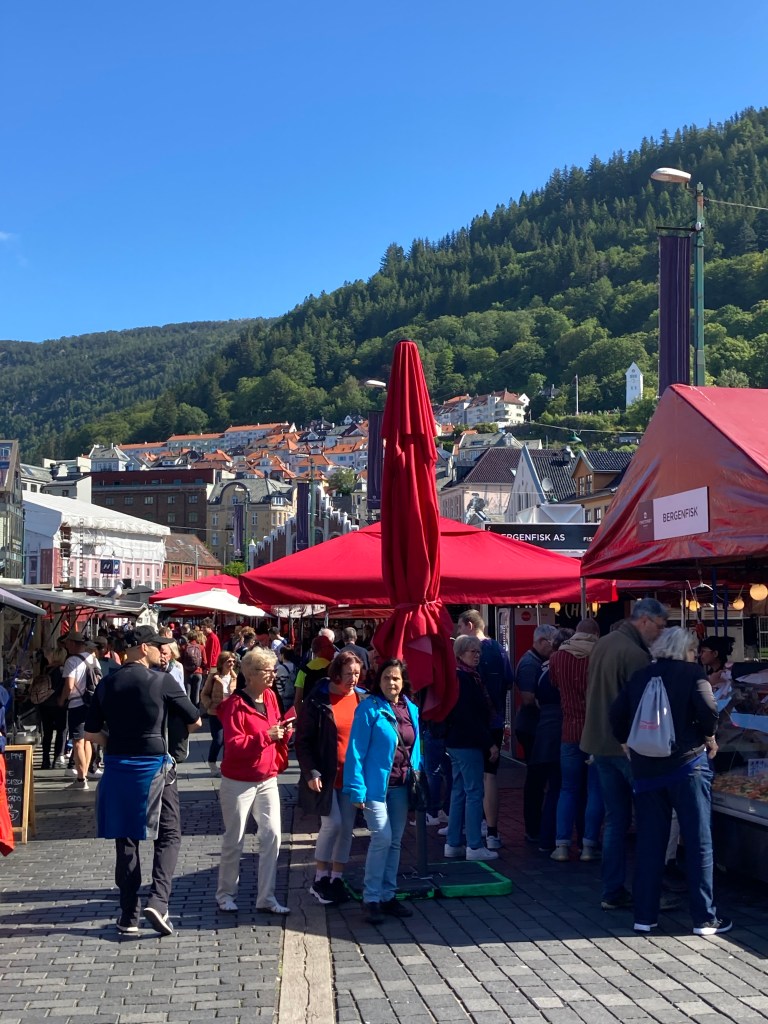
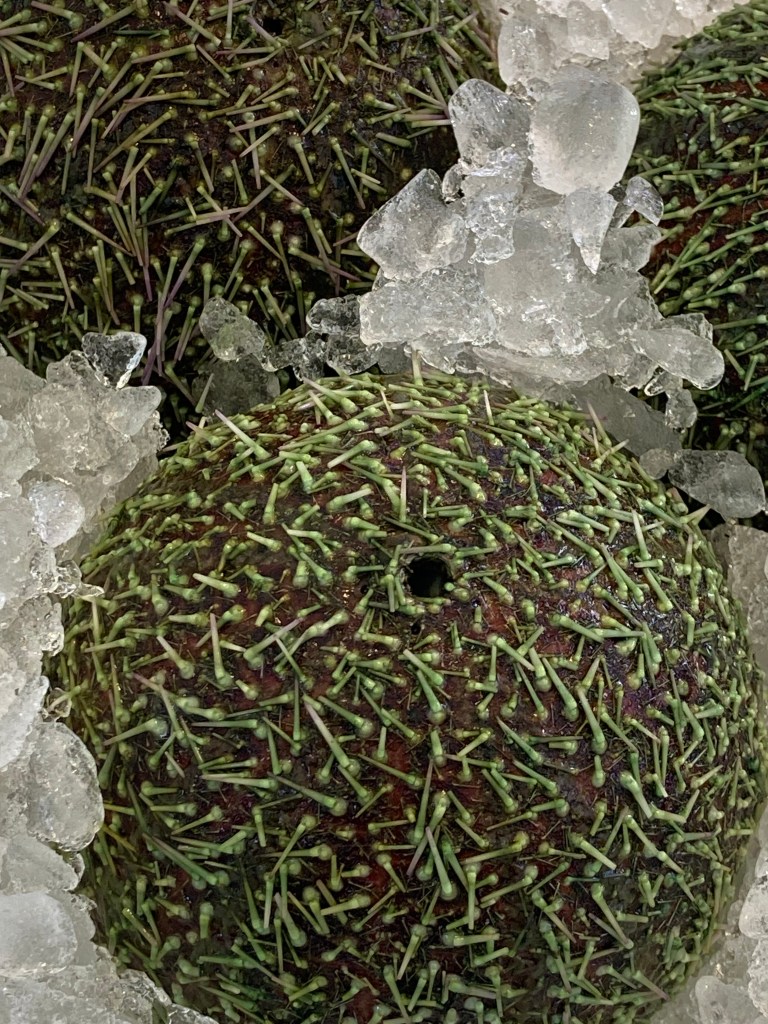
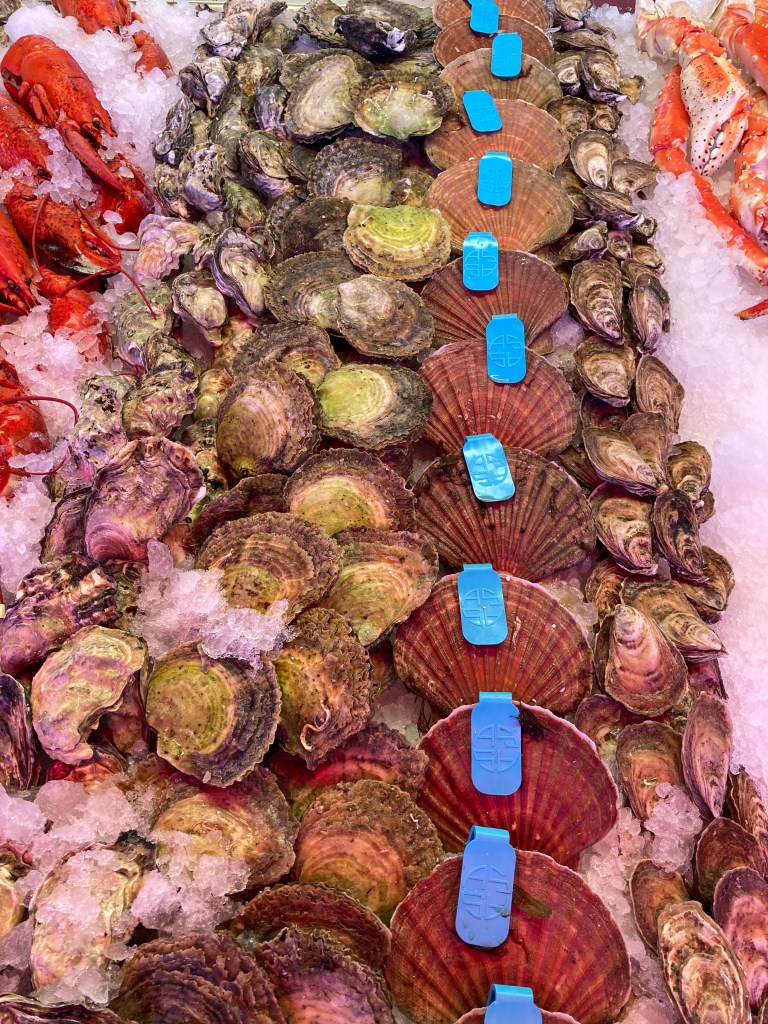
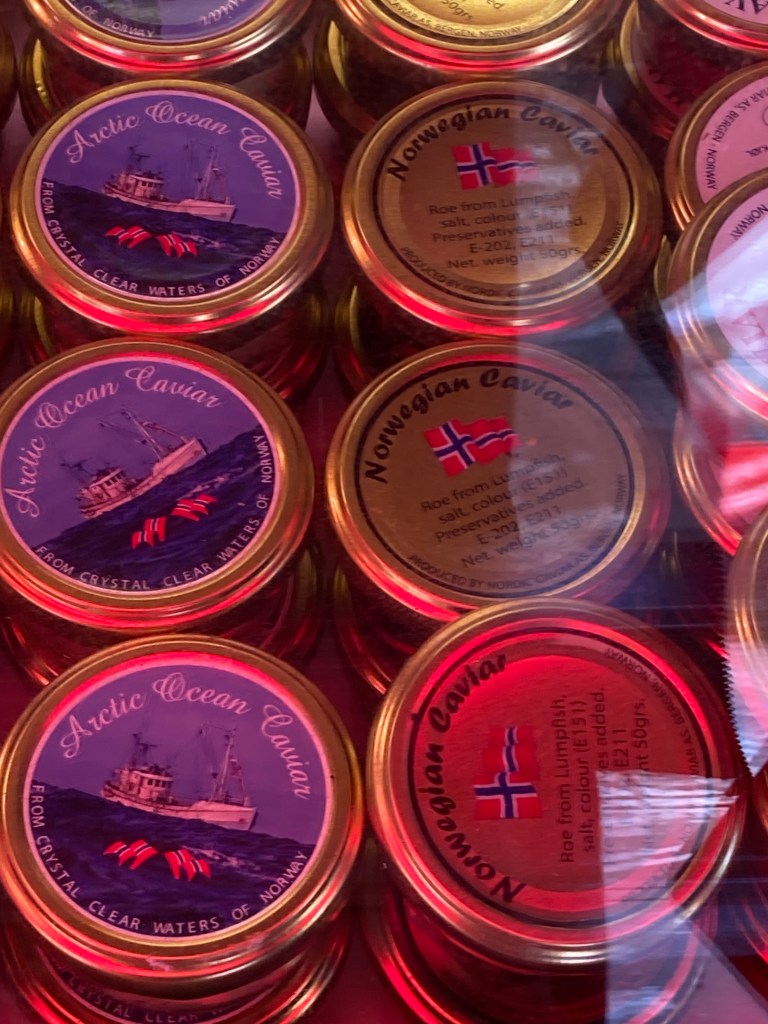
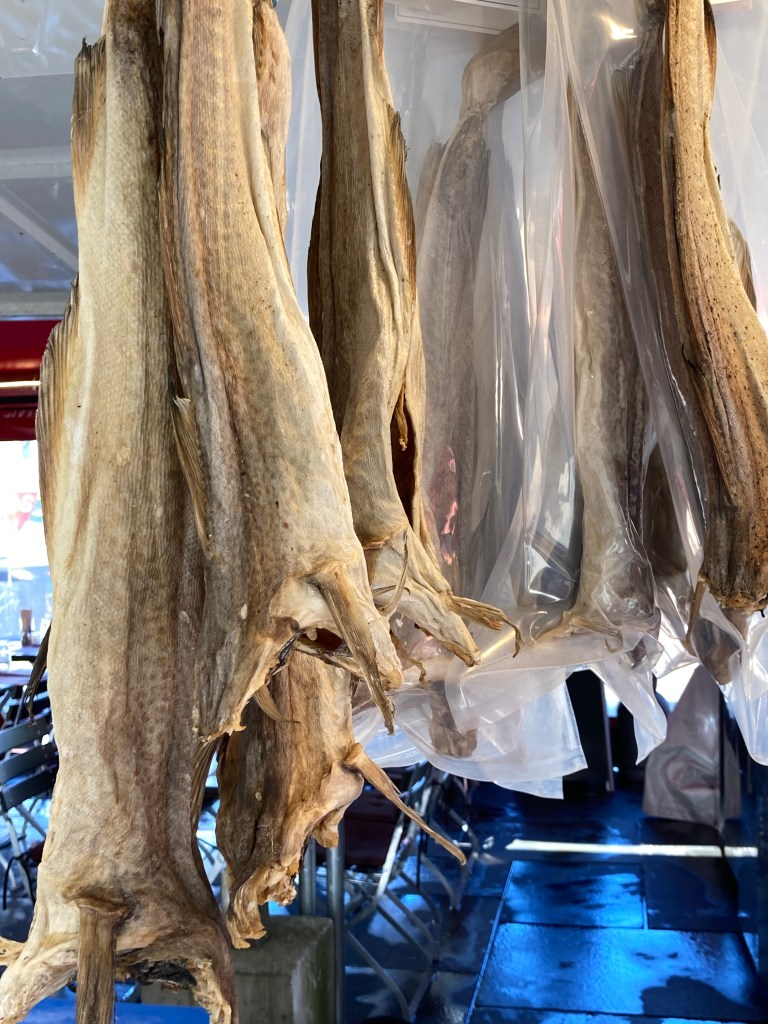
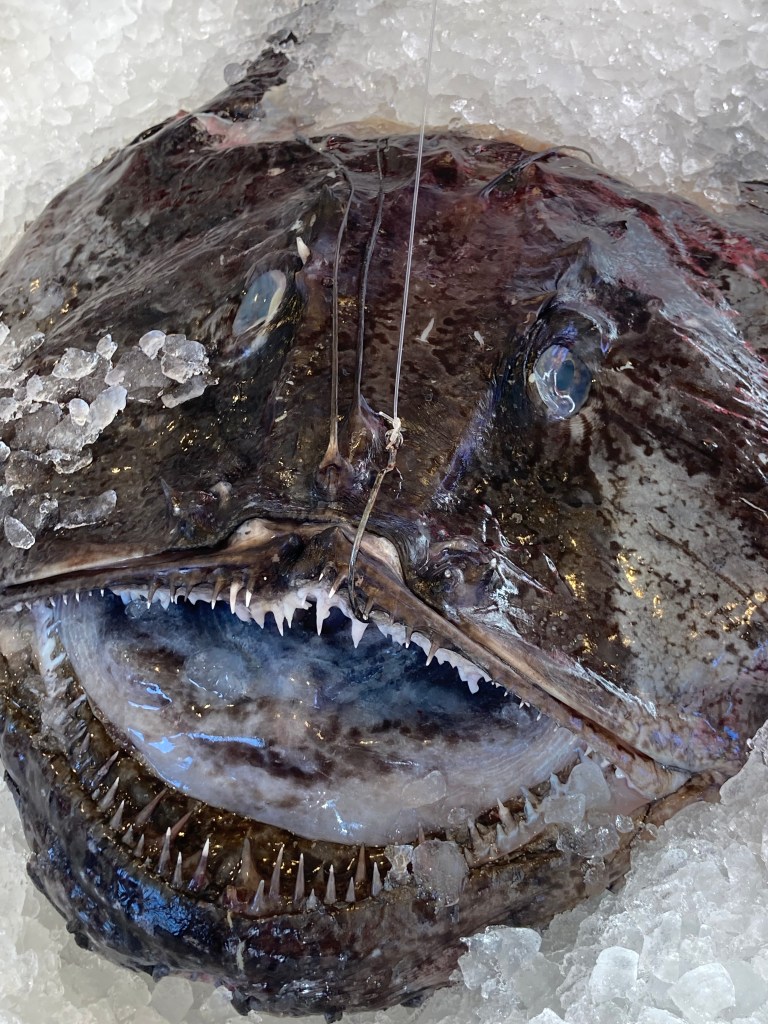
On the way, we took a stroll through the bustling fish market, which displayed an enormous variety of fish, seafood and delicacies.

We found the library that was housed in an old stone building not far from the Kode Art Museum.

At the front desk, we asked the librarian to direct us to the Grieg Archives. She seemed a bit surprised and called another colleague on the phone. After a few minutes, another librarian appeared and said that we needed to make an appointment and that it would not be possible to view the manuscripts. I am a person who does not take “no for an answer” easily. I politely stood my ground; she finally relented and asked if we would wait a few minutes while she collected folders of music. While we were waiting, I noticed a thick book of photographs detailing the history of Bergen. I found several compelling photos.

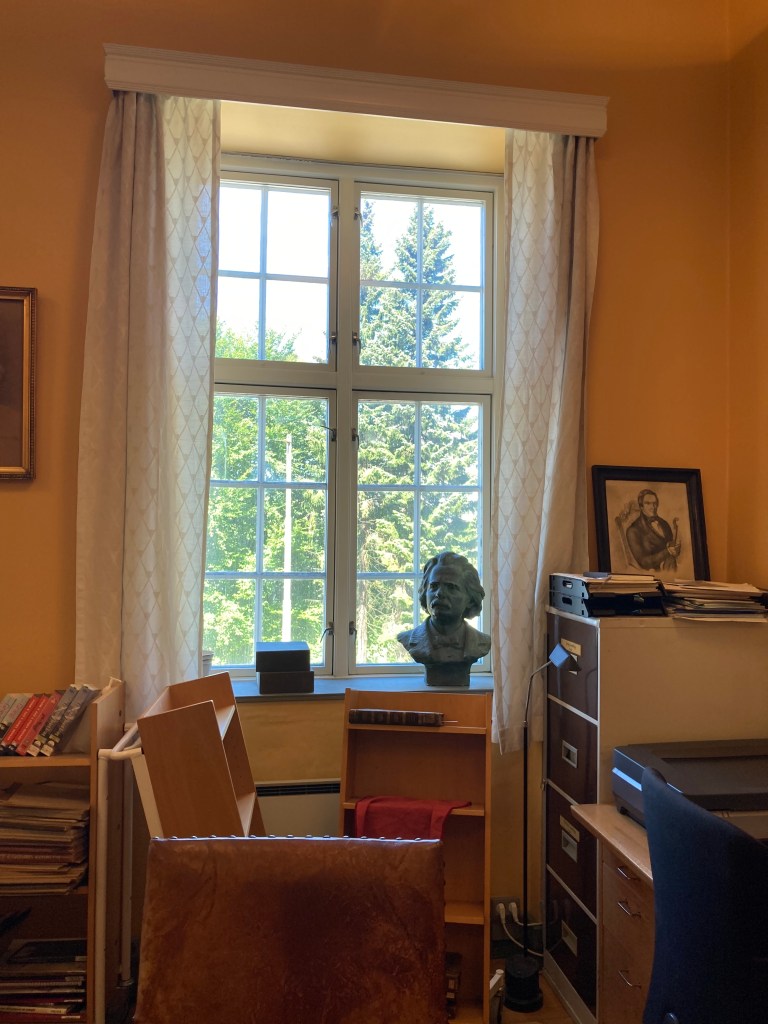
The librarian returned with several thick folders and asked us to follow her into a room that was decorated with Grieg memorabilia.

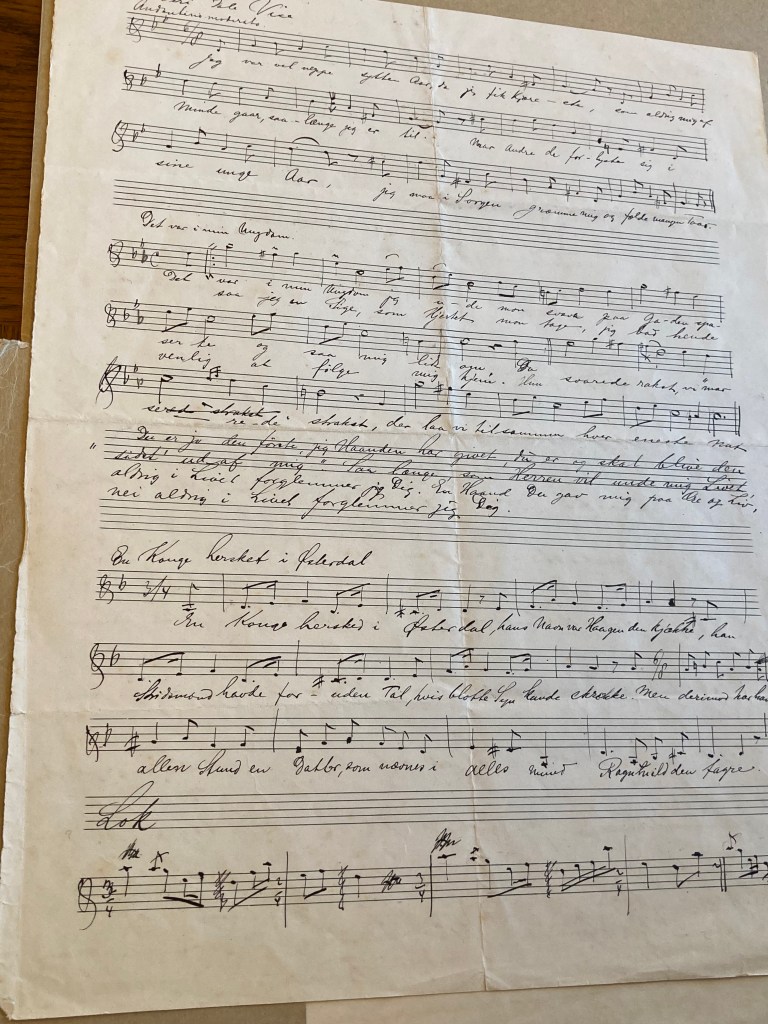
She locked the door and asked that we not touch the pages- pictures were fine! The librarian’s demeanor softened and with great pride, one by one, she slowly turned the pages of music.

She also showed us pages of Norwegian folk melodies that were collected by Frants Beyer, a close friend of Grieg’s. Beyer is well known for collecting the folk songs that were the inspiration for Grieg’s opus 66- Nineteen Norwegian Folk Tunes.

We ended our visit having a lovely conversation with the librarian and as we left, thanked her for an inspirational and thrilling morning!

Stay tuned for Norway: Part 2 with more sites, art and food from Bergen!

AND: Here is the “Tree of the Week”:

“I’ve seen a lot in my time!”

HAPPY SUMMER!

A Summer Stroll at The Bullitt Preservation and Cherry Tomato Galette

I have safely returned from an amazing trip to Norway; part research on the Norwegian composer Edvard Grieg and a thrilling expedition by car driving on narrow winding roads over mountains and through countless tunnels. There were views of extraordinary fjords and of course many memorable meals! I am happily sorting through pictures and am planning a few blog entries about the trip. In the meantime, here is a short entry from our Fourth of July hike at the Bullitt Preservation in Ashfield, Massachusetts and a recipe for a summer Cherry Tomato Galette!

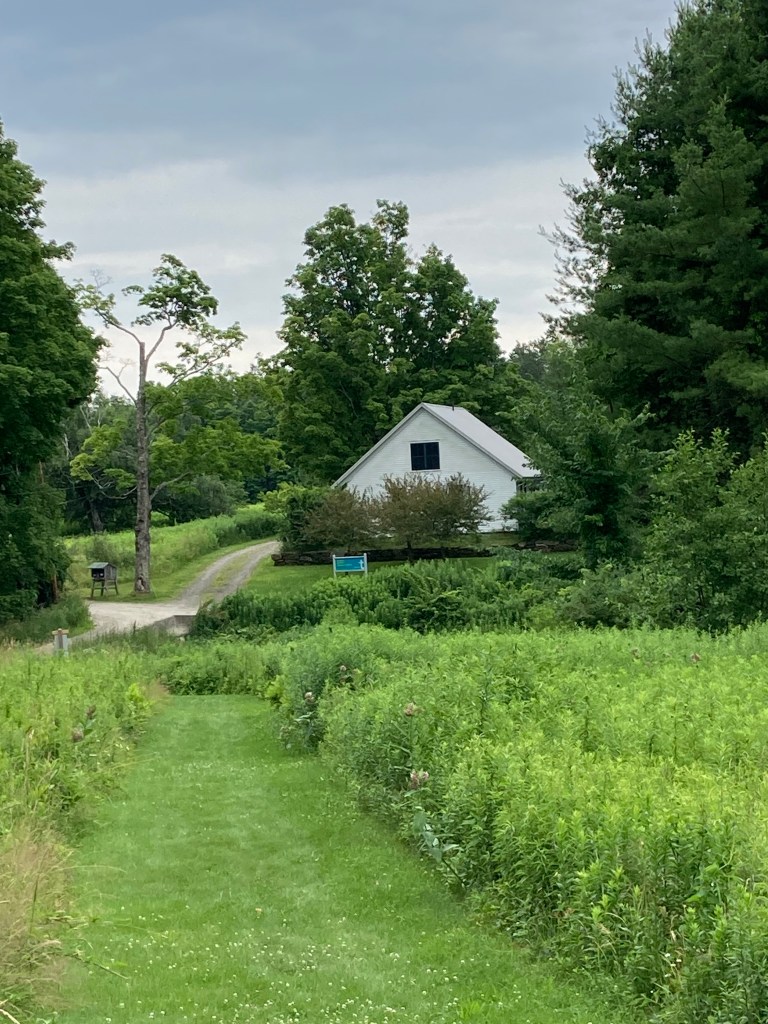
The Bullitt Preservation has a lovely system of trials that wind through meadows and woodlands.

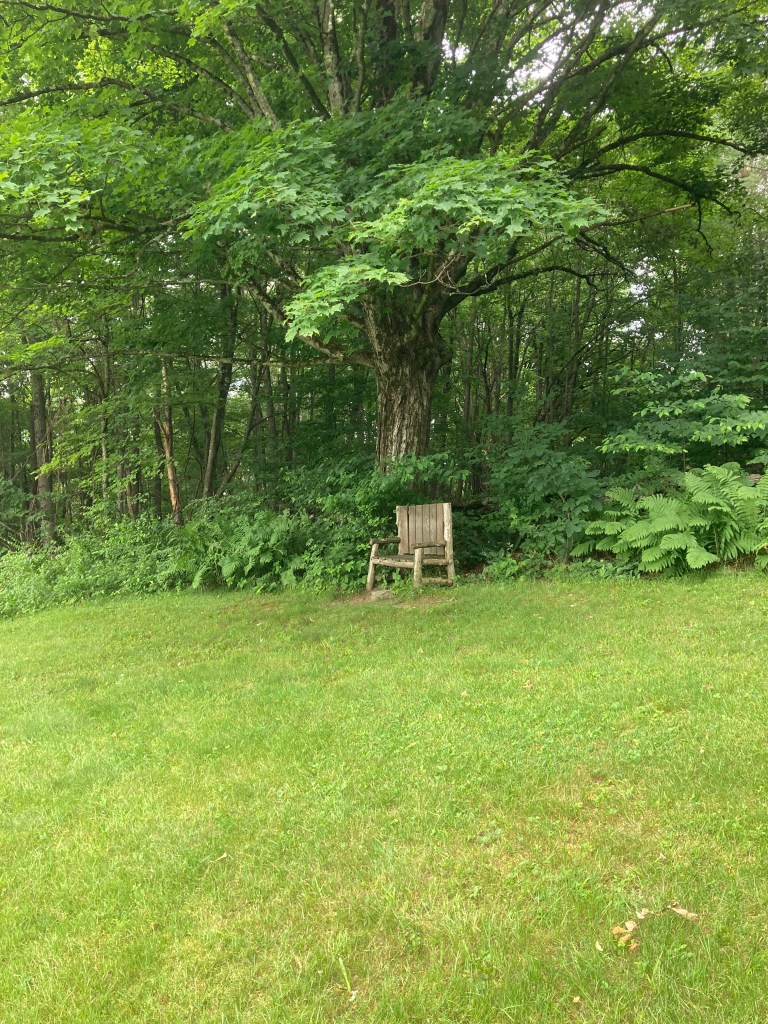
At the top of the hill, there is a welcoming bench!

We have walked here in all seasons. An earlier blog written in December 2021, featured the famous French Chef Andre Soltner’s roast chicken. We discovered that the Bullitt Preservation was donated by the late William Christian Bullitt, Jr., the first US ambassador to the Soviet Union.

William Christian Bullitt Jr. was a controversial figure. Bullitt was at the Paris Peace Conference in 1919, working for Woodrow Wilson and resigned after reading the resulting Treaty of Versaille. He was the first US ambassador to the Soviet Union in 1933 and then Ambassador to France until 1940. On June 14, 1940, Bullitt refused to leave in the evacuation and stayed in Paris as the Germans attacked. He escaped with his life to return to a very disappointed President Roosevelt, who had hoped he would continue working with the French temporary government in Bordeaux. Bullitt co-wrote a book about Wilson with Sigmund Freud: Thomas Woodrow Wilson: A Psychological Study.
The Ashfield property was a Poor Farm for 50 years until 1874. William Bullitt bought the property in 1920, which has since been sold privately. The Bullitt Foundation provided the funds to develop the preserve that the public can enjoy today.
New England towns borrowed the idea of Poor Farms from England, where the practice had been put into statute as part of the Elizabethan Poor Laws during the
1600’s”.

And, we could not resist inserting a bit of Roaring Twenties soap opera details!

The following is from the Wikipedia entry about Bullitt:

Bullitt married socialite Aimee Ernesta Drinker (1892-1981) in 1916. She gave birth to a son in 1917, who died two days later. They divorced in 1923. In 1924 he married Louise Bryant, journalist author of Six Red Months in Russia and widow of radical journalist John Reed. Bullitt divorced Bryant in 1930 and took custody of their daughter after he discovered Bryant’s affair with English sculptor Gwen Le Gallienne. The Bullitts’ daughter, Anne Moen Bullitt, was born in February 1924, eight weeks after their marriage. Anne Bullitt never had children. In 1967, she married her fourth husband, U.S. Senator Daniel Brewster
During that period, he was briefly engaged to Roosevelt’s personal secretary, Missy LeHand. However, she broke off the engagement after a trip to Moscow during which she reportedly discovered him to be having an affair with Olga Lepeshinskaya, a ballet dancer.
[21][22]

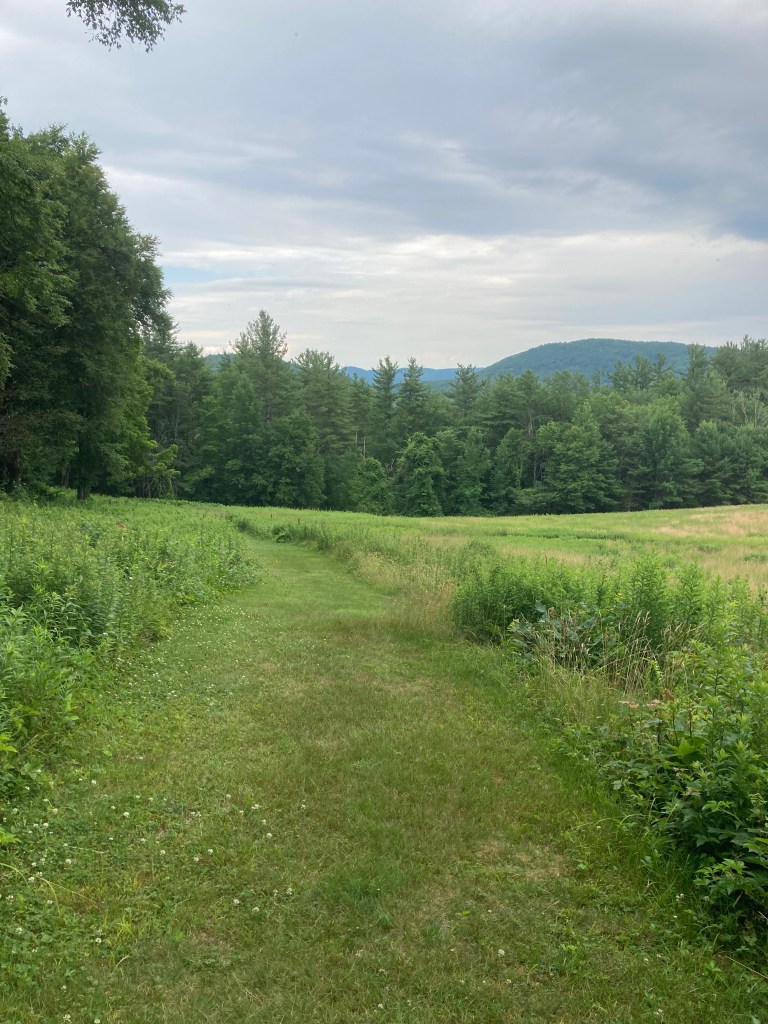
The day on which we recently walked was overcast and muggy; the path leading uphill through the meadow was lined with beautiful wildflowers.

One of our favorite series is PBS Kitchen Vignettes– a farm to table video blog by Aube Giroux, a passionate organic gardener and home cook. Recently we were enjoying the video for Cherry Tomato Galette, with a rich buttery crust and a filling of creamy ricotta and parmesan cheese. After all the rich food that I ate in Norway, I decided to create a lighter version.

For some time, I have been attempting to make an olive oil crust that is both flaky and tender. Most of my tries turned out to be flavorful but hard as a rock! I think that I may have found success with this version. I used olive oil and added a few tablespoons of Spectrum non-hydrogenated shortening, ice water and yogurt; the result was a delicious flaky crust that was a breeze to roll out!

I hope you enjoy this recipe!

Cherry Tomato Galette

Ingredients:

Olive Oil Crust:

3/4 cup whole grain spelt flour

3/4 cup whole wheat pastry flour

1 teaspoon salt

2 tablespoons non-hydrogenated vegetable shortening (I used Spectrum Organic-All Vegetable Shortening).

3 tablespoons extra virgin olive oil

2 tablespoons non-fat yogurt

3 tablespoons ice water (more if necessary)

1 egg-lightly beaten for egg wash

Topping:

1 container cherry tomatoes, cut in half and laid on paper towel to drain

2 ounces feta cheese crumbled

2 tablespoons grated parmesan cheese

8 or more pitted oil cured olives, cut in pieces

handful sweet basil folded and cut into slivers

1 or 2 tablespoons extra virgin olive oil

To Make Galette:

Line a baking sheet with parchment paper.

Make Pastry Crust:

Combine flours and salt in the bowl of a food processor.

Add olive oil, shortening, yogurt and ice water.

Process until the mixture forms a ball. You may need to add a bit more ice water, add 1 tablespoon at a time.

Wrap ball of dough in plastic wrap and refrigerate for at least 1 hour to let gluten in the dough relax.

Bring dough to room temperature and roll out into a large thin circle.

Place dough on baking sheet with the parchment paper.

Trim edges to make a round circle.

Place rack in the middle of the oven.

Pre heat oven to 375 degrees.

To Assemble Galette:

Place cherry tomatoes cut side down on crust and sprinkle with black olives.

Sprinkle with parmesan cheese and top with crumbled feta.

Sprinkle about 1 tablespoon olive oil over top of galette.

Brush edges of galette with egg wash- this will create a beautiful brown crust!

Bake aprox. 35 minutes until crust is browned and tomatoes start to release their juices.

Sprinkle basil over top and serve immediately!

ENJOY!!

AND: Here is the “Tree of the Week”!

“Oh my gosh!”

HAPPY SUMMER!

Walking over the Hudson and El Gran Toro Brasserie!

“Walkway Over the Hudson”- Poughkeepsie, New York

It all started with a Foodie Road trip to find El Gran Toro Brasserie, a Mexican Fusion restaurant in Newburgh, New York . The restaurant was featured in Chronogram Magazine, a Hudson Valley publication. We thought we would combine a walk over the Newburgh-Beacon Bridge. After a few wrong turns we came to a small parking area with a chain link fence that led to a slightly overgrown path to the bridge. The walkway on the bridge turned out to be narrow and rusty; very close to the deafening traffic crossing the bridge. It was a blazing hot day and as we stepped onto the pathway, it vibrated up and down. Feeling queasy, a quick decision was made to cut this walk short. We headed off to Newburgh.

We drove slowly down the main thoroughfare of Newburgh; clearly the small city of 28,00 had seen better days with more than a few boarded up businesses lining the street.

We located El Gran Toro Brasserie and alas it was closed, reopening in a few hours.

Our foodie trip was going so poorly, that our situation began to appear humorous to us- we decided to make the best of it; we would scout out the area and return for an early dinner at 5 PM. As we looked around more closely, we saw some old surviving businesses and glimmers of growth and rejuvenation.

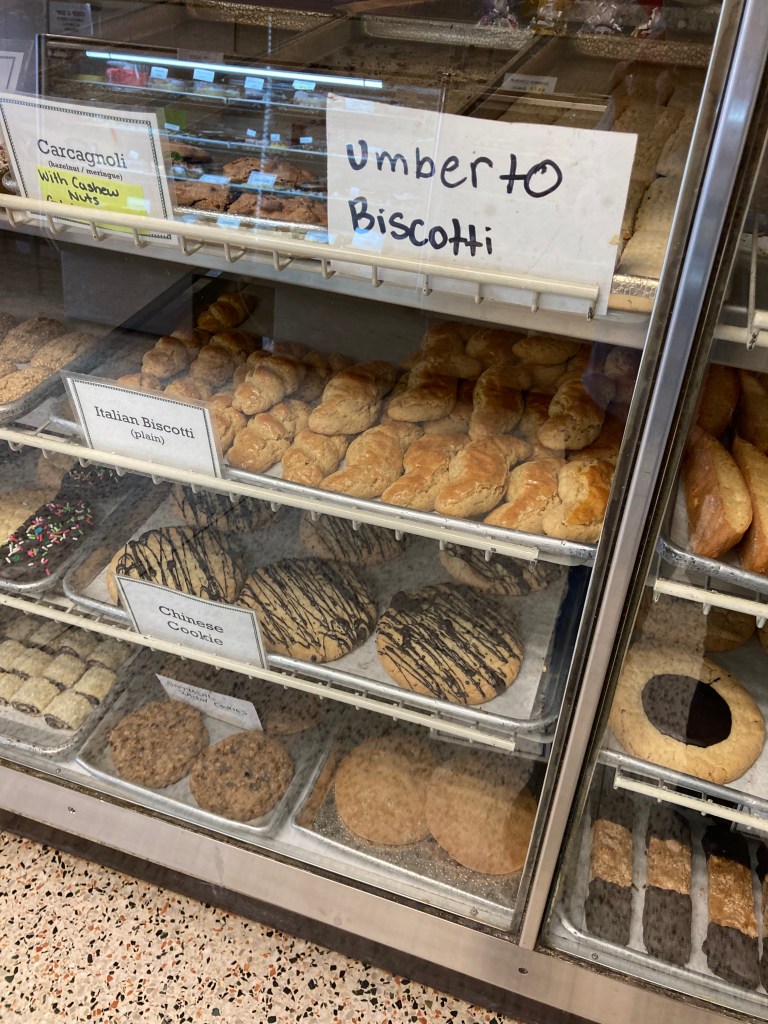
A careworn old Italian bakery seemed as if it had served the community for many years, selling countless Italian cookies, cannolis and Birthday cakes.

Likewise, Commodore Chocolatier- established in 1935 by the Courtsunis family; it was filled with mouth watering chocolates. The current owner John Courtsunis was very affable; it turned out that he was a music lover and a supporter of the arts. It was his opinion that every child should learn to play a musical instrument, much like the program El Sistema that originated in Venezuela.

Back outside, with our spirits lifted, we decided to explore some of the side streets. The architecture was beautiful with some buildings in a state of almost total disrepair.

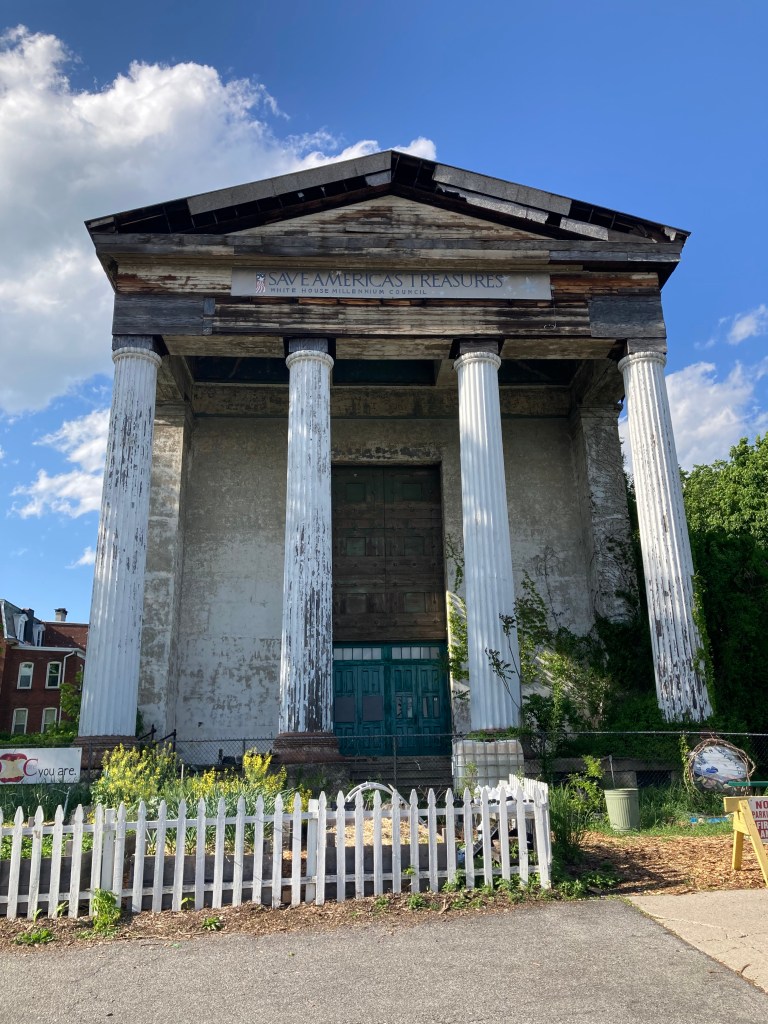
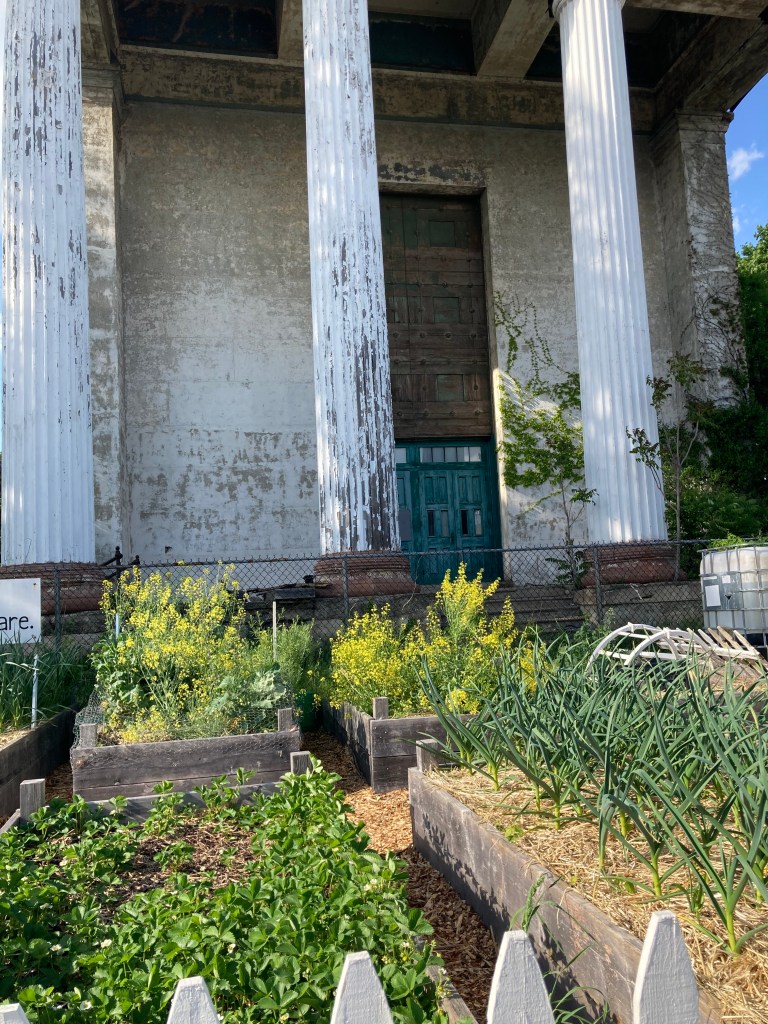
The Dutch Reformed Church built in 1835, was graced with a community garden in front of it! The church is on  Preservation League of New York State’s “Seven to Save” list.

A passerby walking his dog, noticed me looking intently at a church and said to me: “Are you interested in this church?” “The pastor is in the back working on the garden and he has a lot of stories to tell!”

As we continued on our walk, we observed other building that were in pristine condition; all it seemed with many stories to tell.

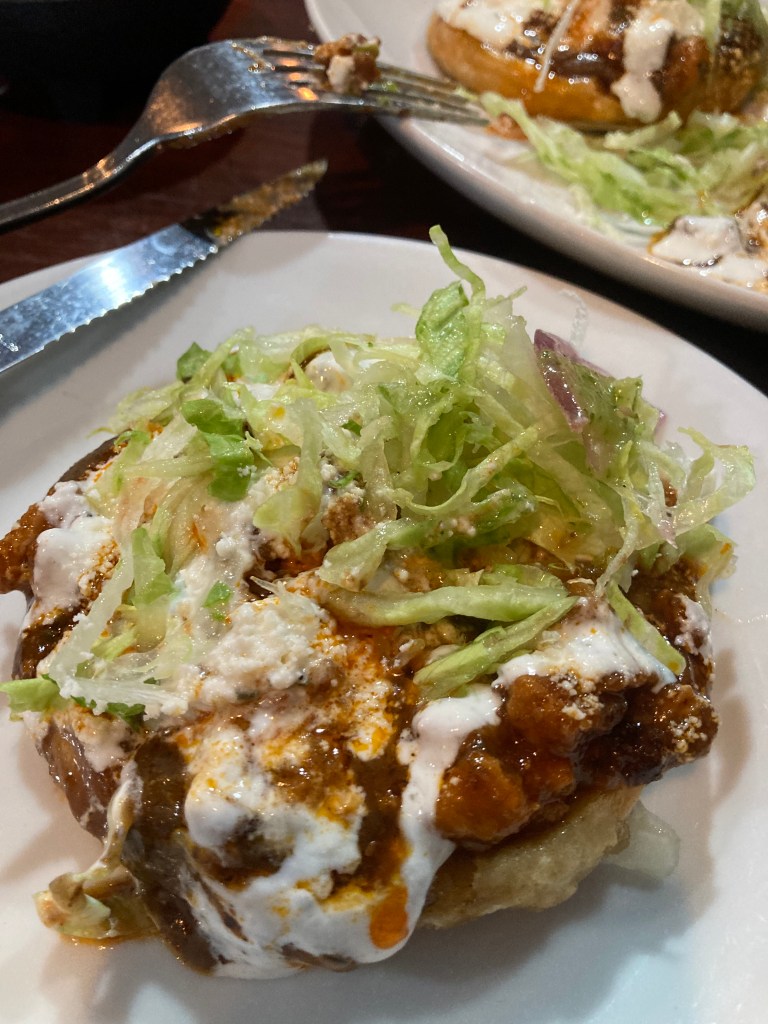
The time had flown by and El Gran Toro Brasserie was open. We entered a small unpretentious space and were warmly welcomed by our server. With the first bite of our appetizer, Sopesitos de Tlales, (crispy and flavorful carnitas, very spicy salsa roja, beans, lettuce and queso fresco), we were immediately glad that we had waited for this meal!

The chef and owner of the restaurant, Miguel Perez, is from Mexico and studied at the Culinary Institute in nearby Poughkeepsie, New York. Before opening his own restaurant, Perez was head chef at Le Bouchon in Cold Spring, New York. His delicious food is Mexican with French and Asian influences.

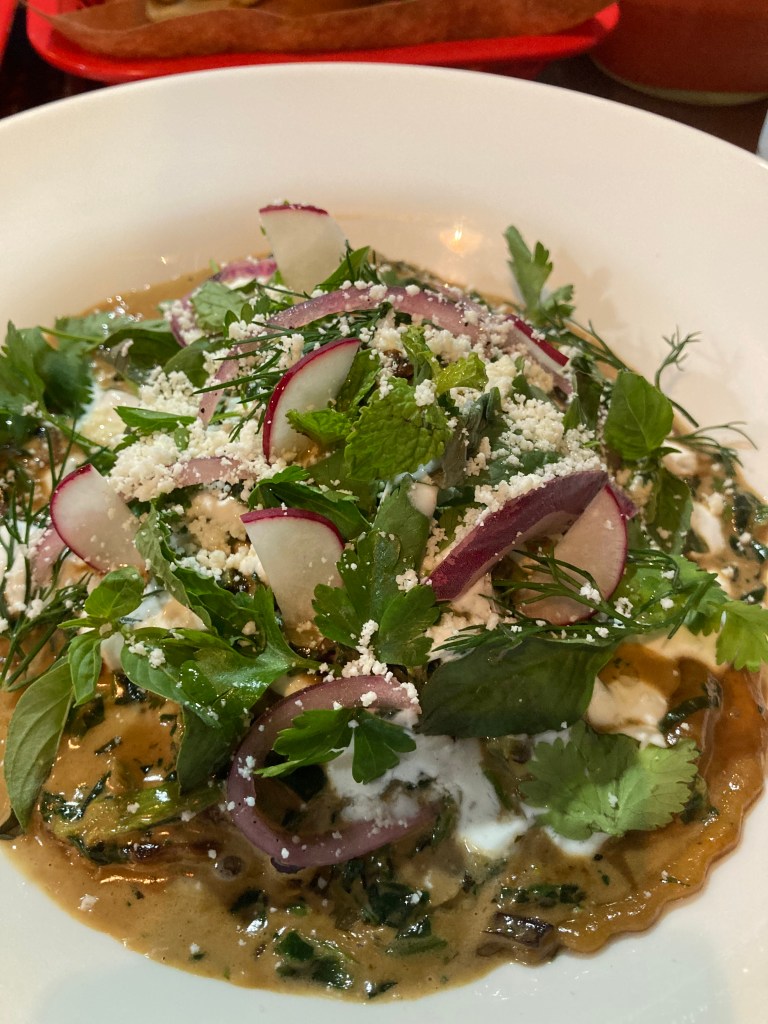
We ordered chicken and brisket tacos, very good, but my favorite was a rich French inspired dish of mushroom ravioli.

chicken and brisket tacos

mushroom ravioli

The ravioli was served with a rich cream sauce and topped with fresh greens, a touch of queso fresco and a slightly spicy mole sauce- irresistible!

Our foodie road trip was a roaring success!!

A few weeks later, we returned to the area and had a wonderful stroll on the Walkway over the Hudson in Poughkeepsie, New York.

The views are magnificent, but I had not realized how high we would be!

As long as we stayed in the middle of the wide walkway and did not look down over the sides of the bridge, all was fine!

Next week, I am excited to be traveling to Norway with my intrepid travel companion Carol. The trip is part research on the Norwegian composer Edvard Grieg along with, (no surprise) an emphasis on food and fjords- stay tuned!

AND: Here is the “Tree of the Week”.

“Heh Heh Heh”

Joffe Preserve- New Marlborough, MA

HAPPY SUMMER!!

Yellow Violets at Steepletop and Rigatoni all’Amatriciana!

Downy Yellow Violet (Viola pubescens)

It is always a thrill to discover the first illusive and secretive yellow violets of spring. The delicate plants with their characteristic heart shaped leaves thrive in sunny spots. We walked downhill towards the marsh at the Steepletop Preserve in New Marlborough, Massachusetts and magically there they were, cozily surrounded by leaf cover in the same place as last season! Their name, viola, is derived from the Greek name lo. According to a Greek myth, Jupiter protected his beloved by transforming her into a heifer surrounded by violets for her to feed upon.

We continued on the rest of our walk around the marsh area and it was as lovely as ever.

Reentering a wooded area, fiddlehead ferns newly opened, like graceful scrolls on a string instrument, lined the sides of the trail.

It was a warm day and at the end of the 2 mile loop, a stone bench with an inscription from Walt Whitman’s A Song of Joys beckoned to us: “sit, relax and enjoy the peaceful surroundings”!

Like any self respecting foodie, I currently subscribe to three different food magazines. The April 2024 issue of Food and Wine Magazine is titled: “The Italian Way”. On the cover, Rigatoni All’ Amatriciana was artfully photographed. The recipe called for a few high quality ingredients, including the Italian cured meat, guanciale (gwann-chaa-lay) and pecorino cheese. We decided that we deserved a rich treat! I found guanciale at Guidos Fresh Marketplace in Great Barrington, Massachusetts. I read in America Test Kitchens that guanciale is from the cheek or jowl and is cured with salt, pepper, garlic, rosemary and sage. Since it is from the cheek, it has a higher fat content (thus more flavor) than pancetta, which is from the pork belly.

Guanciale

I slowly sauteed lardons of guanciale to render the fat and crisp up the bits of meat. Our house was filled with a lovely peppery and enticing aroma.

The recipe uses all of the rendered fat in the tomato and pecorino sauce; I just used a small amount of the fat for flavor and this was fine! Made with sauteed onion, red pepper flakes and tomato paste that was browned with sauteed garlic and added to high quality pureed whole tomatoes with freshly grated pecorino; this was one of the best sauces I have ever tasted.

We purchased the best quality imported Italian Rigatoni that we could find and with the crispy bits of guanciale in the sauce, freshly ground pepper and more grated pecorino; the dish was simple perfection! Not necessary, we also served a side dish of steamed broccolini simply seasoned with fresh lemon, salt and extra virgin olive oil.

ENJOY!!

Rigatoni All’ Amatriciana- based on Food and Wine- April 2024 Issue

Ingredients

  • 1 medium-size (9-ounce) yellow onion, finely chopped (about 1 cup)
  • 5 ounces guanciale, cut into 1-1/4 inch batons
  • 1/4 teaspoon black pepper or more to taste
  • 2 teaspoons minced garlic
  • ¼ teaspoon crushed red pepper
  • 1 (28-ounce) can whole plum tomatoes
  • 2 tablespoons tomato paste
  • 1 teaspoon kosher salt, plus more to taste
  • 1 pound uncooked rigatoni pasta
  • 2 ounces pecorino Romano cheese, finely shredded (about 1 cup), plus more for serving

Directions

  1. Heat a large high sided skillet over low heat. I used a cast iron enamel pot. Add guanciale, cook, stirring often and guanciale is crisp and fat is rendered about 20-30 minutes. Transfer guanciale to a paper towel to drain. Remove almost all of the fat from the pot- you could add a small amount of extra virgin olive oil.
  2. Add onion, and cook, stirring often, until softened, about 4 minutes. Stir in crushed red pepper.
  3. Add garlic, stirring about 30 seconds. Add tomato paste and cook, stirring constantly until darkened to a rusty red color.
  4. Using your hands or a wooden spoon, crush tomatoes; add tomatoes and their juices to skillet. Bring to a boil over medium-high; reduce heat to medium-low, and simmer, stirring often, until flavors meld and mixture thickens, about 20 minutes. Remove from heat. Add cheese and half of guanciale to tomato mixture.
  5. While sauce cooks, bring a large pot of salted water to a boil over high. Add rigatoni, and cook according to package instructions for al dente, about 13 minutes. Drain, reserving 1/2 cup cooking liquid.
  6. Add rigatoni to sauce in pot. Cook over medium heat, stirring constantly, until sauce thickens and coats pasta, adding extra reserved liquid if necessary. Serve with additional pecorino cheese, freshly ground pepper and reserved bits of guanciale.

AND: Here’s the “Tree of the Week”!

“Well, beauty is in the eye of the beholder!!”

I end with a rare White Trillium that my husband Paul found while bushwhacking through the Great Mountain Forest in Norfolk, CT.

White Trillum: Great Mountain Forest- Norfolk, Connecticut

HAPPY SPRING!!

A Master Oboe Technician and a Dim Sum Feast!
Heidi Chisholm in her workshop

I arrive for my appointment with my favorite oboe repair person, Heidi Chisholm. She greets me warmly, we sit down at her cluttered workplace and my oboe is rapidly is disassembled by expert and experienced hands; her intelligent eyes sparkle as she fills me in on the latest news from the oboe world.

As Heidi works on my instrument, I look around her shop crowded with tools, supplies and a music stand with orchestral excerpts.

We chat about politics or our families; on this particular day, Heidi mentioned that she often works on the instruments of talented young oboists that face an extremely uncertain job market and a lack performance opportunities when they finish music school. So here’s the plug: Minnesota State College offers a nine month band instrument repair program with 97% of graduates finding work in their field! She also mentioned that Oberlin Conservatory of Music offers a Master of Fine Arts (MFA) in Piano Technology; a two-year program of study designed in association with Steinway & Sons. Food for thought; we do currently have a big shortage of skilled technicians.

At this point, my blog entry may become a bit nerdy, unless you are an oboist, but stay with me! I asked Heidi about using swabs to clean out the bore of oboes; knowing that I was baiting her. Her eyes started to flash and she said, ” Never pull a swab through all the way an oboe. ” “Let me show you this!” She pulled out an old oboe that had been cut in half and lined it up with a ruler. “See”, “look how narrow the bore is”! I remember at one point that Heidi displayed ruined instruments with stuck swabs on her wall.

I thoroughly enjoy my visits with Heidi. Not only is my instrument expertly repaired; it often feels like my instrument plays like velvet when I get home. I value our conversations peppered with her sharp wit and observations about all subjects. And then, I confess that I look forward to a culinary treat in nearby White Plains. A few years ago, I discovered an excellent Chinese restaurant, Aberdeen Seafood and Dim Sum, tucked away in the lobby of a Marriott hotel in the middle of downtown White Plains. They serve a wonderful assortment of dim sum, translated as “touch the heart”. This visit I made an order to go that included a delicious combination of shrimp and snow pea dumplings, pan fried chive dumplings and delicate vegetable dumplings covered in a casing of rice dough flavored with spinach.

Shrimp and Snow Pea Dumplings
Pan fried Chive Dumplings
Vegetable Dumplings

Placed on a towel on the seat next to me, I had a wonderful picnic on the ride home! I look forward to my next visit to Heidi’s. I do have to stop by this weekend to pick up an English Horn that she repaired for Hofstra University- with perhaps another side trip to Aberdeen Seafood and Dim Sum!

AND: Here is the “Tree of the Week”

“I am trying out my new pouty look”!”

Blunt-lobed Hepatica: Drury Preserve-Sheffield, MA

HAPPY SPRING!!

A Serendipitous Walk and Hearty Red Lentil Soup!

A few weeks ago, I put the address in the GPS for the Steepletop Preserve in New Marlborough, Massachusetts. I was looking forward to a peaceful contemplative walk on this beautiful set of trails. I drove for a few minutes, not paying close attention, enjoying the scenery around me and slowly realized that the surroundings did not look at all familiar. I had lost internet service a while back and I was basically lost!

I had ended up on a quiet dirt road that followed a small winding stream. I pulled the car over to the side and decided to walk and see where the stream and road led. I would retrace my steps later to return home.

This turned out to be a delightful serendipitous walk and I would love to return to this spot, but I am still not quite sure where I was! I did take a picture at a fork in the road and when I returned home, my husband and I looked up where we thought I was on a map! I believe it may be a small road in Mill River, Massachusetts. Any guesses??

???

Safely home, I decided to make a big pot of hearty Red Lentil Soup, a soup that I have made many times and wrote about in an earlier blog post. I based my current version on the delicious Moroccan Red Lentil soup that we enjoy at the Amanouz Cafe in Northampton, Massachusetts. I sauteed onion and garlic and stirred in tomato paste with cumin, smoked paprika and red pepper flakes and let the mixture lightly brown. I added green beans cut into small pieces, red potato, carrot , celery and plenty of chopped parley. Fragrant with thyme and bay leaf, the soup was thick and filling enough for dinner along with a small green salad and fresh peasant bread.

ENJOY!

Hearty Red Lentil Soup

Ingredients:

4 cups dried red lentils

1 medium onion finely chopped

2 garlic cloves minced

1 medium carrot peeled and cut into small pieces

1 celery stalk with leaves cut into small pieces

handful Italian parsley finely chopped

2 medium red potatoes cut into small chunks (no need to peel them)

handful fresh or frozen green beans cut into small pieces

2 teaspoons ground cumin

pinch of red pepper flakes (or more to taste)

1 teaspoon dried thyme

1 teaspoon smoked paprika

1 bay leaf

1/2 can tomato paste

salt and freshly ground pepper to taste

2 tablespoons extra virgin olive oil

water to cover

To Make Soup:

In a large soup pot or cast iron pot, heat olive oil

Saute onions until translucent, add garlic and stir. Add other spices and tomato paste. Cook mixture until tomato paste starts to lightly brown.

Add lentils, vegetables and cover with water about 2-3 inches above other ingredients.

Bring to a boil, reduce heat, cover and simmer until lentils and vegetables are very tender and soup thickens. If soup is too thick, add a bit more water. Adjust seasoning. ENJOY!

AND: Here is the “Tree of the Week”!

“Spring Really is Here”!!

Vernal Pool- Barnum Road Sheffield, MA

HAPPY SPRING!!

Mountain Meadow Preserve and Vegetarian Tamale Pie

Mountain Meadow Preserve- Williamstown, MA

At the beginning of February one of my teaching positions had a short winter break. We decided to treat ourselves to a “Cabin Fever” mini vacation and traveled further north to Williamstown, Massachusetts in the Northern Berkshires- with even colder temperatures!

Mohawk Trail- North Adams, MA

Williamstown is an idyllic small New England town that includes Williams College. We have often made day trips to visit the Clark Art Institute or to nearby North Adams to MASS MoCA, scene of my most recent blog post! We looked forward to having a leisurely dinner, going to see a film and not making the long trek back home in the dark!

Williamstown, MA

We checked into the upscale but cozy Williams Inn made all the more attractive with inexpensive off season rates.

We decided to first visit the Clark Art Institute and headed to a favorite gallery that includes many treasures- paintings by Cezanne, Renoir, Monet, Redon and sculptures by Rodin.

It was not crowded that day, the gallery was almost empty- we sat on a comfortable couch in the middle of the room. Surrounded by beauty, we pretended we were in our mansion in the drawing room; the troubles of the world drifted away.

Claude Monet- Tulip Fields at Sassenheim

Odilon Redon- Woman with a Vase of Flowers

In a nearby hallway we visited one of our favorite paintings, “Home at Montclair” by the American painter George Innes.

George Innes- “Home at Montclair” 1892

The painting expresses the stillness of twilight at the end of a cold snowy day. A wisp of smoke rising from a chimney and muted light from a window in the distance drew my thoughts inward; I imagined a warm hearth and a pot of soup simmering on a wood stove.

Afterwards, we treated ourselves to dinner at the Barn Kitchen and Bar at the Williams Inn. Although the setting was lovely with friendly servers, the food was bland and disappointing and so earns my new restaurant review- a simple, “Meh”. Some think that this word which means indifferent or expresses boredom, may be derived from Yiddish!

We still enjoyed ourselves and after dinner headed just down the street to a small independently owned movie theatre. We enjoyed the quirky movie “Poor Things” with excellent acting by Emma Stone and then returned to our inn and fell fast asleep in our cozy room.

The next day, we had a quick breakfast at a local diner and then had just enough time for a brisk walk before we needed to return home. We drove to nearby Mountain Meadow Preserve with views of snowcapped Mt. Greylock in the distance; we had last walked here on a steamy day in late summer.

Today is the first day of spring, but outside it is cold and blustery; still the kind of weather for making hearty casseroles in a hot oven! Vegetarian Tamale Pie from the NY Times Cooking section, is easy to make; with a crunchy irresistible cornmeal, cheddar and scallion topping!

Vegetarian Tamale Pie – based on NY Times Cooking: Recipe by Melissa Clark

Yield:6 to 8 servings

Ingredients:

  • 1large red or white onion, halved
  • 2jalapeños, halved lengthwise and seeded (I omitted the jalapenos in my version)
  • 1poblano or green bell pepper, sliced in half lengthwise, seeds removed
  • 2tablespoons extra-virgin olive oil, plus more for brushing
  • 1¾teaspoons kosher salt (such as Diamond Crystal), plus more as needed
  • 1(28-ounce) can whole plum or diced tomatoes
  • 3fat garlic cloves, finely grated or minced
  • 2tablespoons mild or hot chili powder, more as needed
  • 2teaspoons dried oregano
  • 1¾teaspoons ground cumin
  • 3(15-ounce) cans black or pinto beans, drained and rinsed
  • 1cup chopped fresh cilantro leaves and tender stems (optional)
  • ¾cup/135 grams fine cornmeal
  • 2tablespoons all-purpose flour (I used whole wheat pastry flour)
  • 1½teaspoons baking powder
  • ½teaspoon kosher salt
  • 1large egg, at room temperature
  • ⅓cup/80 grams sour cream or whole-milk yogurt, plus more for serving
  • ¼cup/57 grams unsalted butter, melted and cooled (I used extra virgin olive oil)
  • 2scallions, whites and greens thinly sliced, plus more for serving
  • 1/2 cup grated Cheddar

PREPARATION

  1. Prepare the chili: Move a rack as close to the heating element as possible and heat the broiler. Cover a baking sheet with foil. Finely dice half of the onion and set aside for later.
  2. Slice remaining onion half into ½-inch-thick half-moons and arrange on the prepared baking sheet. Place jalapeños and poblano next to onions, cut sides down. Lightly brush vegetables with oil and sprinkle with a pinch of salt. Broil 2 to 4 minutes, until vegetables are charred on one side. (If the chiles are small, they will be charred after 1 to 2 minutes.) Flip vegetables and broil until the other side is charred, 1 to 3 minutes.
  3. Transfer pan to a rack until cool enough to handle, then stem the peppers. Transfer charred vegetables and any accumulated juices to a blender (or use a bowl and immersion blender). Add canned tomato and ¼ teaspoon salt, and blend to a coarse purée. You can make this up to 4 days ahead, and store in the refrigerator until needed.)
  4. Heat oven to 425 degrees. In a large Dutch oven, heat the 2 tablespoons olive oil over medium-high. Add diced onion and sauté until lightly browned, 6 to 9 minutes. Add garlic and cook until fragrant, about 1 minute. Stir in chili powder, oregano, remaining 1½ teaspoons salt and cumin, and cook until spices darken, about 30 seconds.
  5. Add beans and the reserved tomato purée, and let mixture simmer until thick like a chili, 10 to 15 minutes. Stir in cilantro, if using. Taste and add more salt and chili powder, if needed.
  6. While the chili simmers, prepare the cornbread: In a medium bowl, whisk together cornmeal, flour, baking powder and salt.
  7. In a small bowl, whisk together egg, sour cream or yogurt. Whisk egg mixture into cornmeal mixture until combined. Fold in scallions.
  8. Spread cornbread topping over the chili, then top with grated cheese, if using. Bake, uncovered, until cornbread is golden brown, 20 to 25 minutes. Serve hot or warm, topped with sour cream and more scallions. I topped our version with Greek Yogurt. ENJOY!

AND: Here is the “Tree of the Week”!

“Almost Spring??”

North Beaver Dam Road- Salisbury, CT

Happy Spring!

A Winter’s Afternoon at MASS MoCA and Turmeric Chicken With Crispy Rice

A bitterly cold day with an icy wind chill- what better way to spend the day then safely inside, happily exploring MASS MoCA. Located in North Adams, Massachusetts and housed in an old factory, the quirky contemporary art museum has a seemingly never ending series of labyrinths and cavernous spaces. We viewed dynamic art work, some pushing the boundaries; other pieces stimulating and inspiring. We loved an exhibit of boldly colorful works by the visual artist, composer and musician Jason Moran titled “Black Stars-Writing in the Dark”. The curator’s text for the exhibition offers the following description: “Moran’s work registers the movement of the artist’s fingers across piano keys”.

Jason Moran- From “Black Stars: Writing in the Dark”

Jason Moran-From “Black Stars: Writing in the Dark”

We also got a small day’s worth of exercise. The buildings span over 26 acres and without trying walked over 2 miles!

MASS MoCA sits on ancient ancestral grounds of the Mohican people (“peoples of the waters that are never still”) and the Wabanaki people. After the tribes were displaced, the site housed the Arnold Print Works from 1860 to 1942 and the Sprague Electric Company from 1942 to 1985. MASS MoCA opened in 1986.

Spanning over many city blocks, we discovered hidden nooks and crannies. On this visit, the sun was shining brightly; rays of light streamed through the ancient windows creating reflections of precise lines over the floors, artwork and on the old brick factory walls.

We walked down a hallway with an indoor bridge connecting two buildings; lights were hung from the ceiling, creating pointillistic patterns on the walls and windows. As the light shifted, the images were fleeting and temporary.

We enjoyed an exhibit titled “Deep Water” that featured photographs of famous black jazz and blues musicians from the 1950’s and 60’s, including Miles Davis. Once again, the light from the windows created a collage like effect reflecting on the art work.

MASSMoCa-“Deep Water”

MASSMoCa-“Deep Water”

Looking out at North Adams

Back home, it was time to think about dinner-the cold weather encourages one to make recipes that call for a very hot oven. We have made Turmeric Chicken with Crispy Rice several times this winter; the oven is heated to 450 Degrees F. filling the house with enticing aromas; resulting in moist flavorful chicken and irresistibly crispy rice. Based on a recipe form NY Times Cooking, I used boneless and skinless chicken thighs and brown rice in my version; this worked beautifully! This dish would be perfect to serve to company along with a green salad, a hearty red wine and plenty of crusty peasant bread! Enjoy!!

Turmeric Chicken with Crispy Rice (based on a recipe from NY Times Cooking)

INGREDIENTS:

Yield:4 servings

  • ¼cup fresh lemon juice, plus more for serving
  • 6garlic cloves, finely grated or minced
  • 2tablespoons fresh ginger (from 1 2-inch piece), finely grated or minced
  • 3teaspoons kosher salt (such as Diamond Crystal or use 1 ½ teaspoons coarse kosher salt, such as Morton), more as needed
  • 2teaspoons ground turmeric
  • 2teaspoons ground coriander
  • 1teaspoon freshly ground black pepper
  • 2pounds boneless skinless chicken thighs
  • 5cups cooked short-grain brown rice
  • 1bunch scallions, thinly sliced, white and green parts separated
  • 5tablespoons extra-virgin olive oil, more as needed
  • ½cup chopped fresh cilantro leaves and tender stems

PREPARATION:

  1. Place sheet pan on middle rack in oven and heat oven to 450 degrees.
  2. While the oven is heating, marinate the chicken. In a large bowl, combine lemon juice, garlic, ginger, 1½ teaspoons of the salt, turmeric, coriander and pepper, and mix well. Transfer 1 tablespoon of the turmeric-ginger mixture to a small bowl and set aside for serving. To the large bowl, add chicken and toss until the pieces are well coated; let sit at room temperature for 20 minutes.
  3. While the chicken is marinating, toss the cooked rice with the remaining 1½ teaspoons salt, scallion whites and 3 tablespoons of extra-virgin olive oil (the best way to do this is with clean hands). Add a little more oil if needed to fully coat the rice so that it crisps up in the oven.
  4. Add the remaining 2 tablespoons oil to the chicken pieces, tossing well to coat.
  5. Use a large spoon to carefully spread the rice out on the hot sheet pan, then make divots in the rice for the chicken, making sure the sheet pan is exposed. Place chicken, skin side up, in the divots touching the pan. Drizzle the rice and chicken with a little more extra-virgin olive oil.
  6. Roast until the chicken is deeply browned on top, cooked through and the rice is crisp at the edges, 40 to 50 minutes.
  7. Stir a little more lemon juice and olive oil into the reserved turmeric-ginger mixture to thin it out. Use a spoon to dab or drizzle it onto the rice (not the chicken). Stir up the rice on the baking sheet, so the crisp parts get mixed into the soft part of the rice, and the turmeric mixture gets distributed. (Taste rice and add a little more oil, lemon juice and salt if necessary; rice can take a lot of seasoning.) Top everything with scallion greens and chopped fresh cilantro, and serve. ENJOY!!

AND: Here is the “Tree of the Week”!

It’s a little cold out here!”

STAY WARM AND SAFE!

Joffey Preserve- New Marlborough, MA