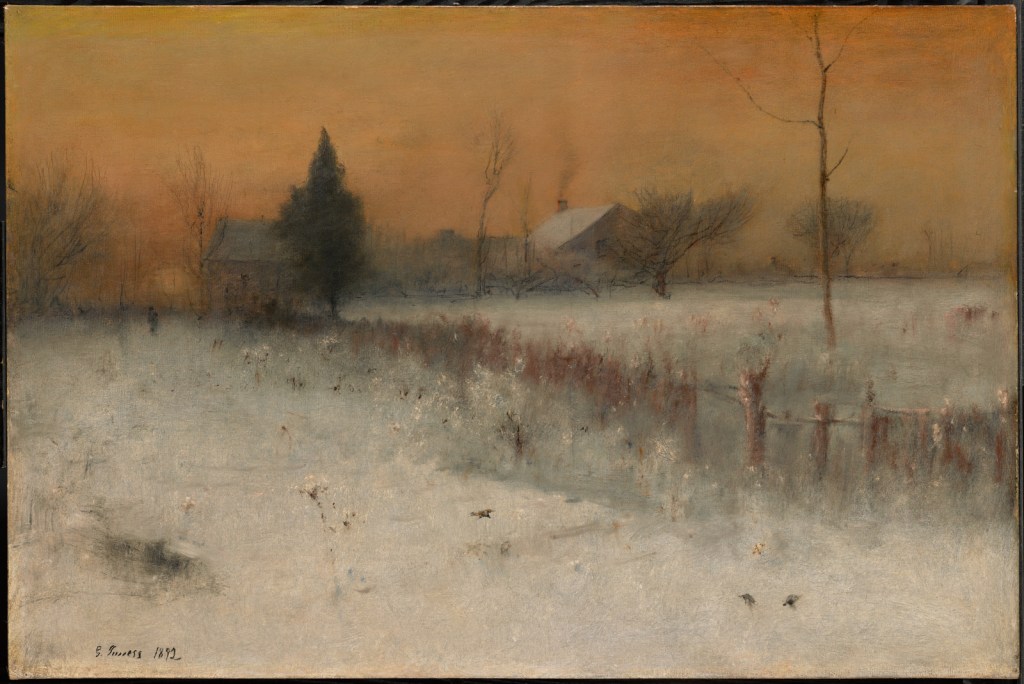
George Innes- “Home at Montclair”( Courtesy Clark Art institute)
With the shortest days of the year upon us, many people are affected negatively with SAD (seasonal affective disorder).
By a stroke of luck, I am not affected by the lack of day light. I seem to be invigorated by cold temperatures and snow.
Whenever we have to opportunity to visit the Clark Art Institute, one of my favorite works of art is by the American painter, George Innes. The painting, titled “Home at Montclair” depicts twilight on a cold wintry day; as I gaze at the picture, I am filled with a sense of coziness and warmth. A tiny wisp of smoke curls out of the chimney and light glows softly from one window. I imagine that inside the cozy old farmhouse, crackling logs in the fireplace create a welcoming warmth; a small table is set with late afternoon tea and freshly baked muffins. This phenomenon might be called, SCM or (seasonal cozy memories.)
Recently we spent an afternoon exploring the historic town of Deerfield, Massachusetts. A light snow fell as we walked down the main street; streetlights glowed softly as the end of day approached.
We came upon the quaint Deerfield Inn; light glowing from the window on the porch beckoned us inside.
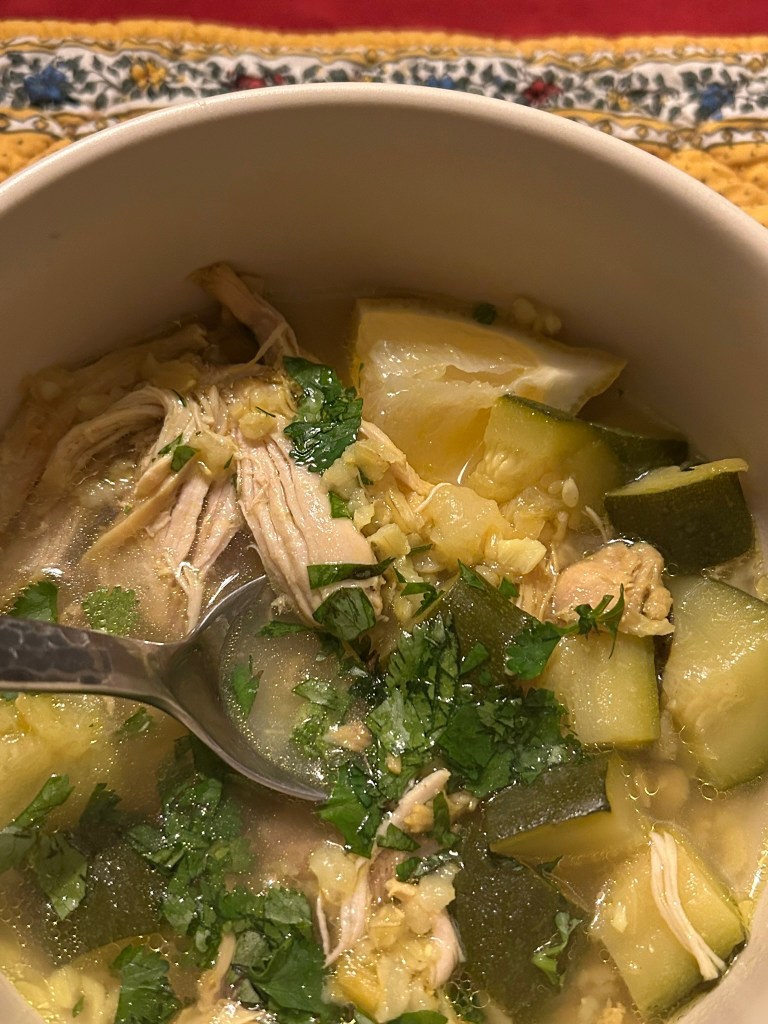
We were welcomed warmly by the hotel receptionist and thought about enjoying a light early dinner. After sitting by the cozy fireplace for a few minutes, we decided to brave the cold and return home for leftover bowls of Ginger and Chicken Rice Soup!
Ginger Chicken and Rice Soup with Zucchini (from NYT Cooking)
Yield: 6 to 8 servings
1 pound boneless, skinless chicken thighs
Salt and black pepper
2 tablespoons neutral oil (such as canola or vegetable)
2 tablespoons minced ginger (from a 2-inch piece)
3 garlic cloves, minced
2 teaspoons ground turmeric
½ cup brown rice
1 large zucchini, cut into 1-inch pieces
1 fresh or dried bay leaf
Chile crisp, lemon wedges or chopped cilantro (or a combination), for serving (optional)
Preparation
Pat the chicken thighs dry and season generously with salt and pepper.
Heat a medium Dutch oven or other heavy-bottomed pot over medium. Add the oil, ginger, garlic and turmeric and let the mixture sizzle and soften for about 30 seconds, stirring constantly.
Add 6 cups water to the pot, along with the chicken, rice, zucchini, bay leaf and a big pinch of salt. Bring to a simmer then turn the heat down to low and cook, stirring occasionally, until the rice is tender and the chicken is cooked through, about 30 minutes.
When ready to serve, remove the chicken and place it on a cutting board. Use two forks to shred the thighs, then return the meat with all of its juices to the pot. Taste and season the soup with salt and pepper.
To serve, divide the soup among bowls and top with any combination of chile crisp, lemon and cilantro.
I hope you enjoy this warming soup and for those that suffer from light deprivation at this time of year, find some comfort! The days are starting to get longer!!
It’s always a great joy to collaborate with singer and historical harpist, Marcia Young, singer and Baroque Dancer, Zahra Brown and lutenist Christopher Morrongiello.
On the day of the concert, we meet early at the church to have a small dress rehearsal. Beforehand, we enjoy a lunch treat from the nearby White Hart Inn Provisions, kindly provided by our wonderful sponsors, The Salisbury Association. Sitting around a table in the church Parish Hall, we catch up on events in our lives, along with gossip from the music world.
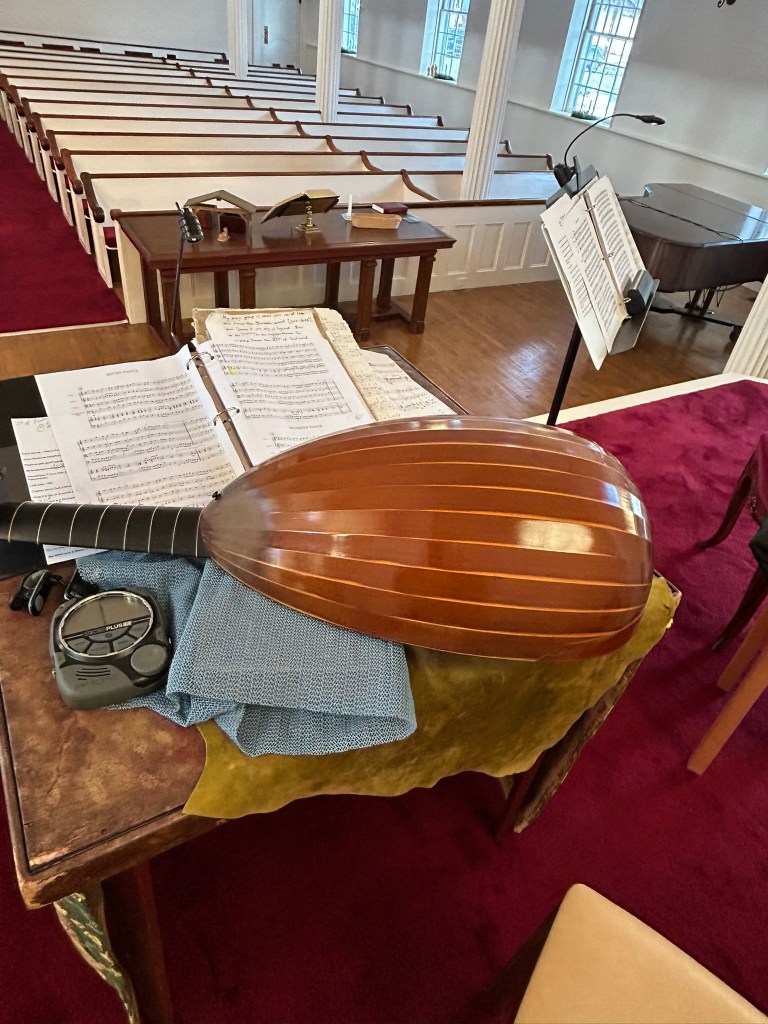
Late afternoon light streams into the historic Meeting Room of the church and as I warmup with the group on my recorders, I look out into the room; I feel my breath calming and a sense of peace comes over me.
After the concert, I drive Marcia and Zahra back to the train in Wassaic, New York and then my husband and I head out for a dinner treat at the nearby restaurant, Thai Baan. Housed in a huge old dairy barn, the stunningly renovated space boasts both an excellent Thai restaurant and a state of the art whiskey distillery.
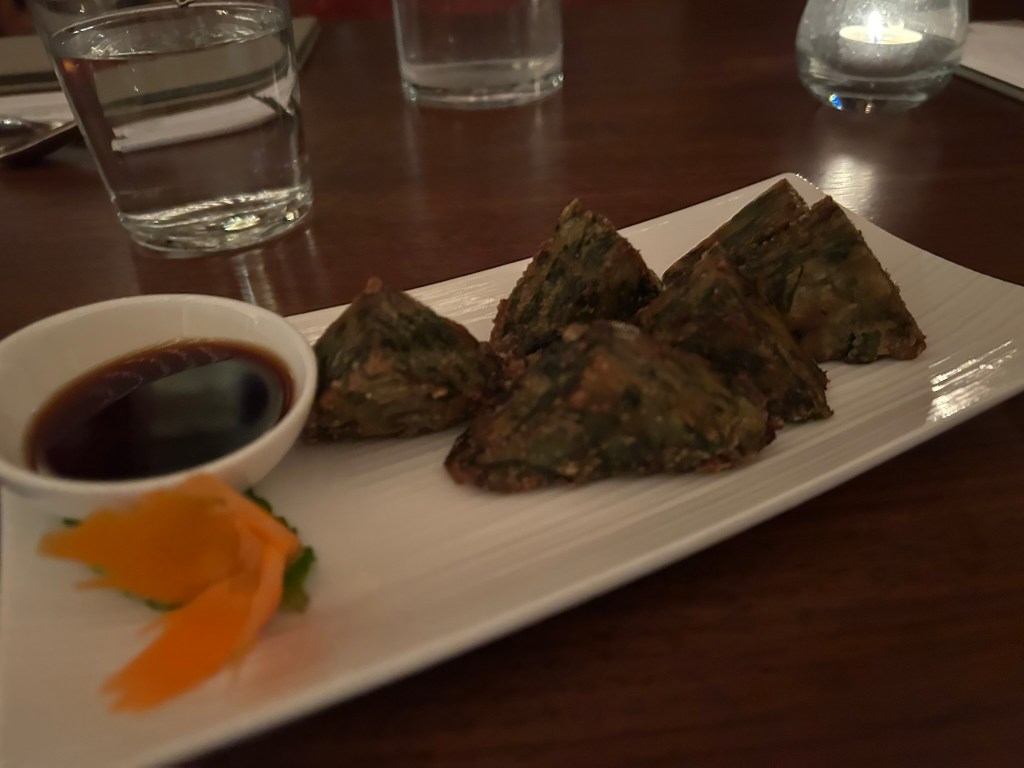
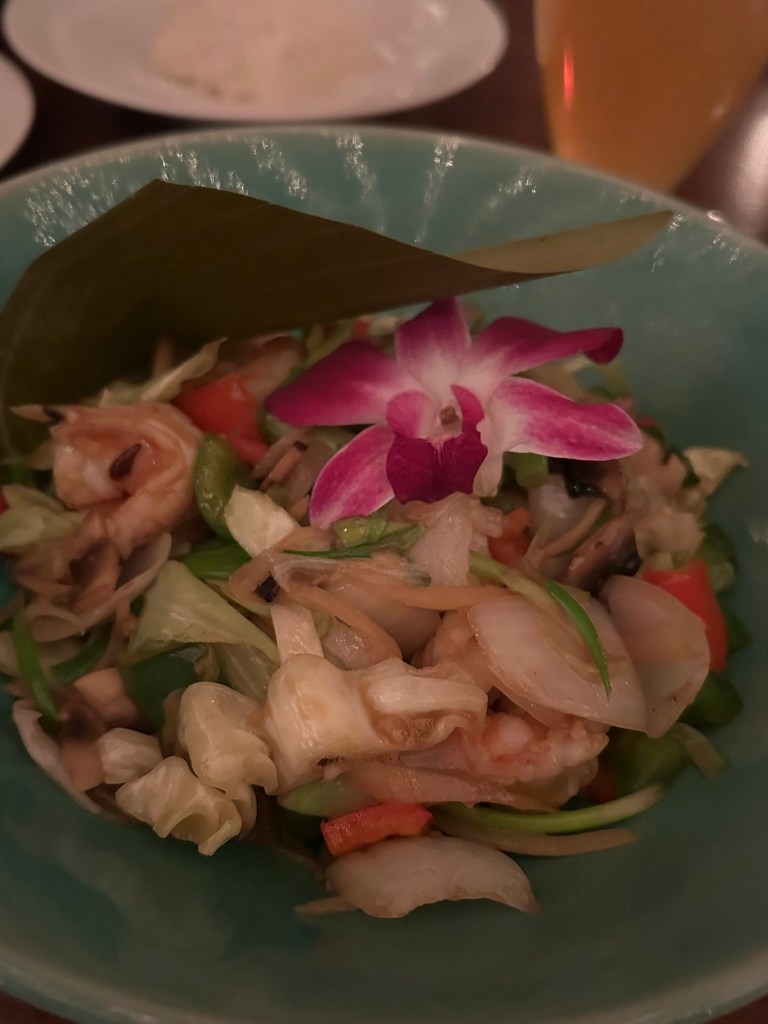
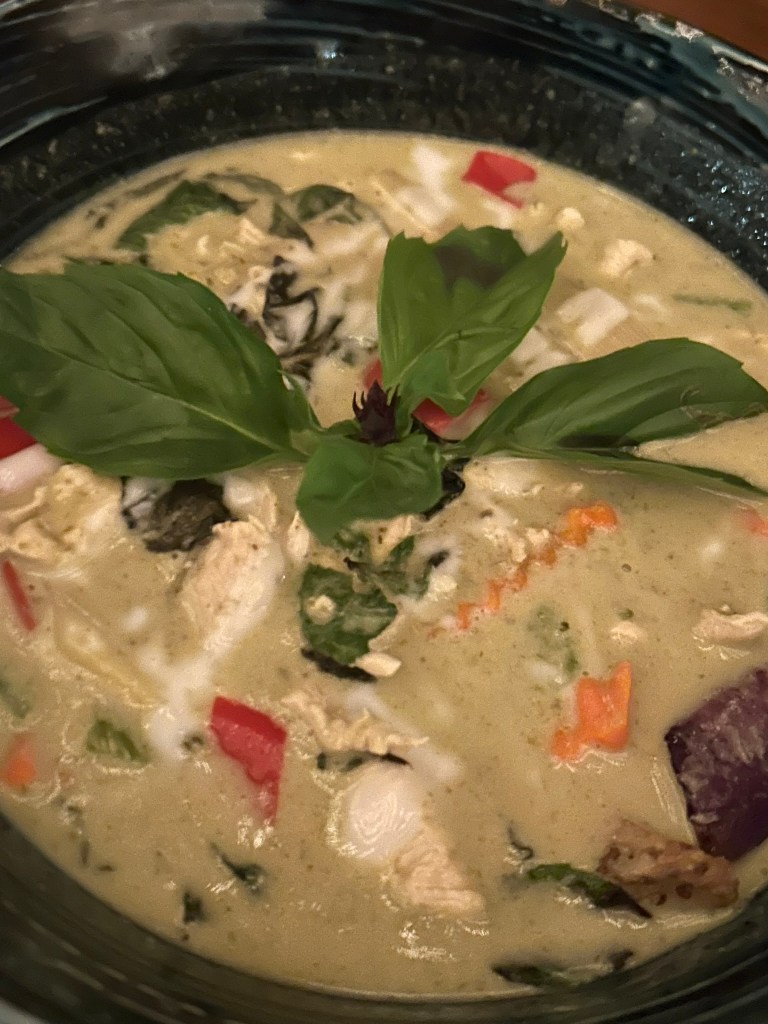
We enjoy crispy Scallion Pancakes, Shrimp Pad Thai and Eggplant with Green Curry Sauce, accompanied by a tall glass of frosty beer; a perfect ending to long but rewarding day!
Scallion PancakesPad Thai with ShrimpEggplant with Green Curry
AND: Here’s the last “Tree of the Week” for 2025!1
“I wonder what’s coming next?”
All Best Wishes for a Happy Holiday and a Happy and Healthy New Year! I look forward to writing more posts in 2026 with music, art, travel, “Trees of the Week” and always recipes!
It’s been a busy fall with exciting new musical projects coming together- I am delighted to share news about a long planned Early Music group- meet Ensemble Zephyrus!
After many years of playing the oboe professionally with orchestras, chamber music groups and with the Hevreh Ensemble, I have decided to continue to teach oboe and play small gigs, but will concentrate my efforts on performing recorder and fulfilling my love of Early Music.
Ensemble Zephyrus is truly like a breath of fresh air to me; with this group, I have the wonderful opportunity to collaborate with excellent musicians who play harpsichord, viol, baroque violin and theorbo. Together we will perform exquisite music from the Renaissance and Baroque periods.
GERMANY – JUNE 24: Made by Carl Friedrich Voight. A theorbo is a type of lute, a stringed musical instrument. (Photo by SSPL/Getty Images)
Our first concert is in NYC this week-website and pictures coming soon!
In the meantime, here are glorious autumn pictures, a food excursion, recipes and as always, the “Tree of the Week”.
The Fall foliage has been lovely this year; we have traipsed happily through our land in Massachusetts on the winding maze of trails that Paul has cut through the woods. As we walk, our minds quiet.
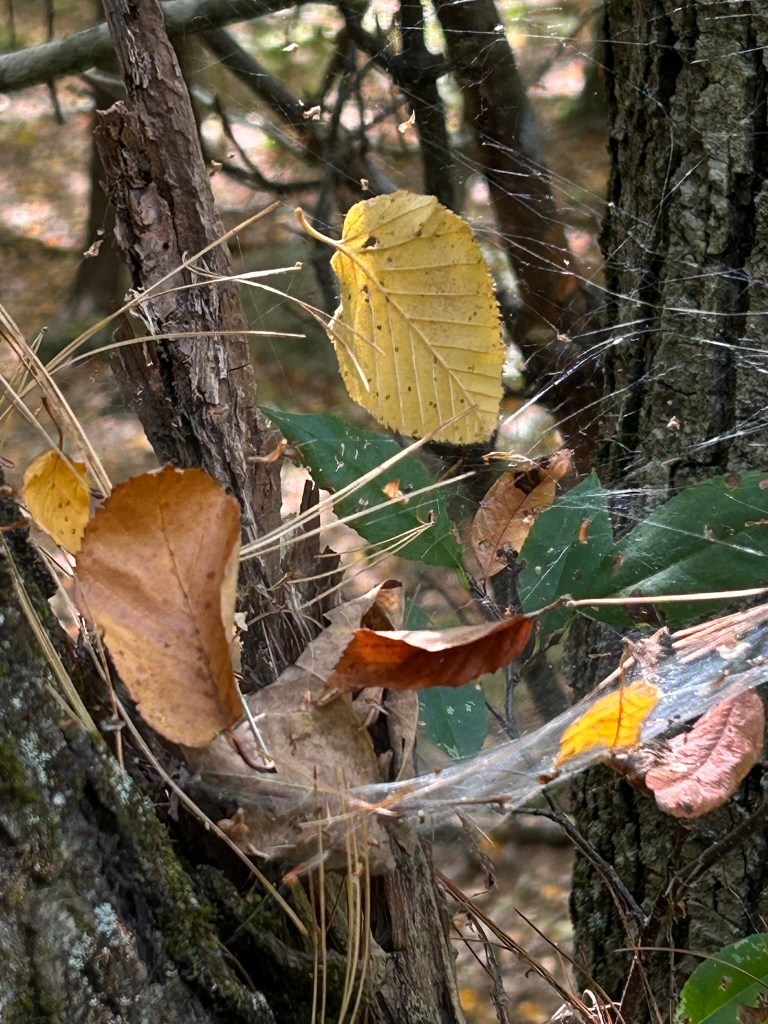
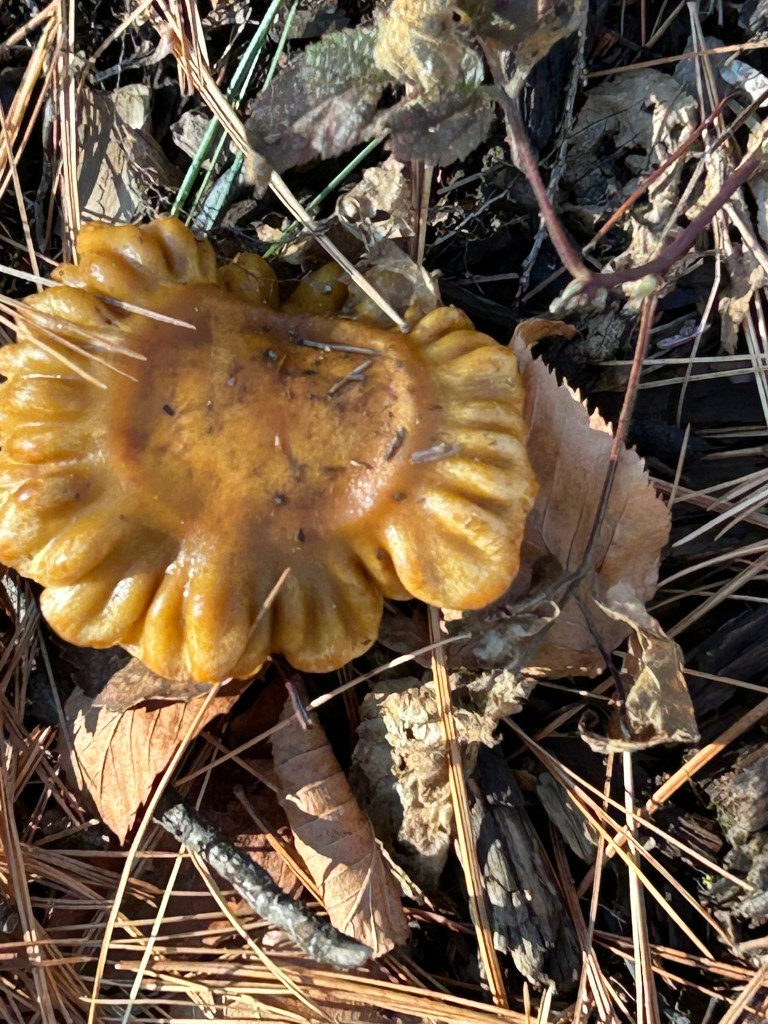
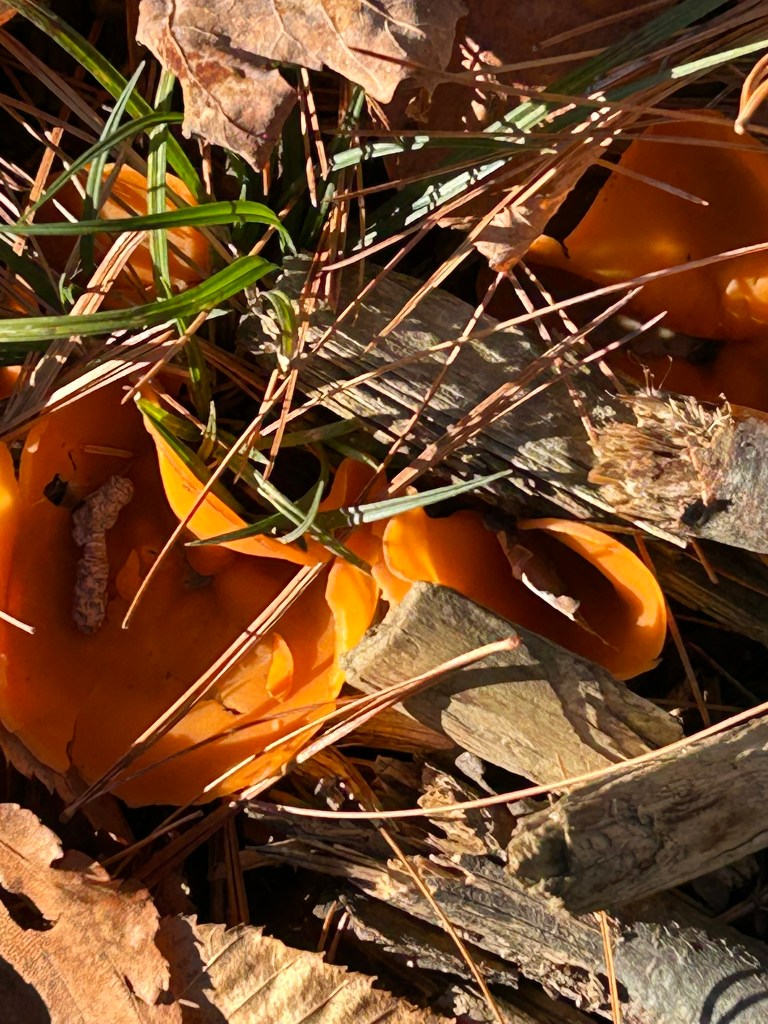
The patterns and designs we discover in fallen leaves, pine needles and fungus are captivating. The light is beautiful and illuminates leaves that are suspended in delicate webs.
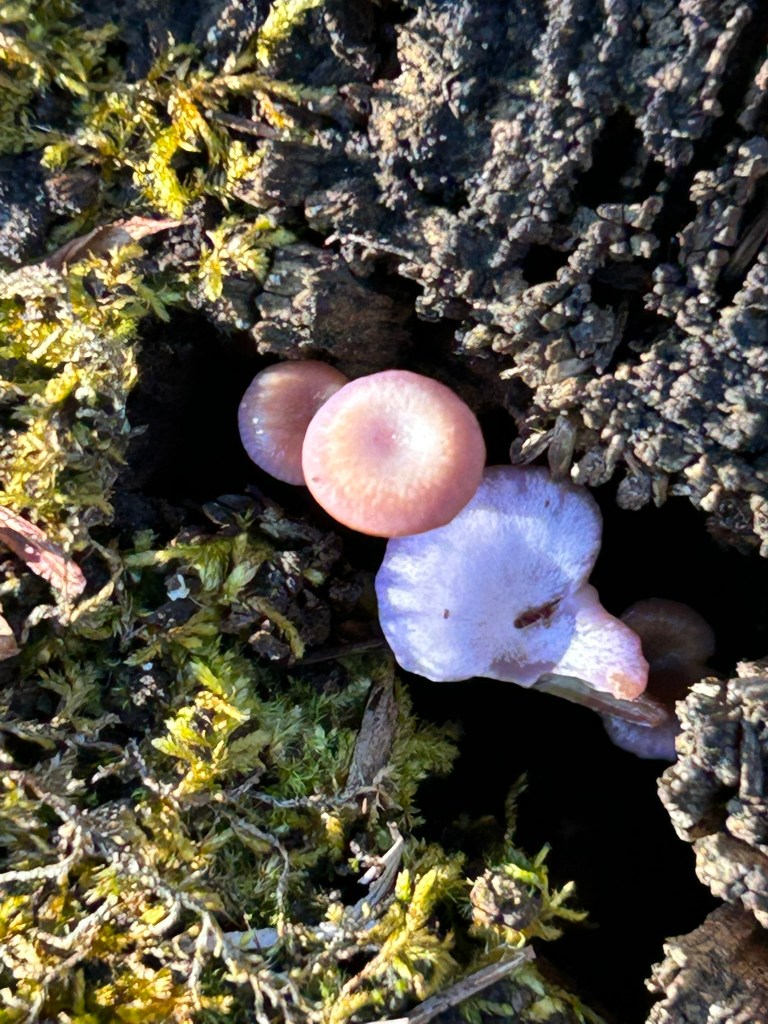
Tiny fungi nestled in a mossy tree trunk, look like seashells on the ocean floor!
What was once a dream during COVID, is finally becoming a reality-our new cozy little house peeks through the woods!
*****************************************
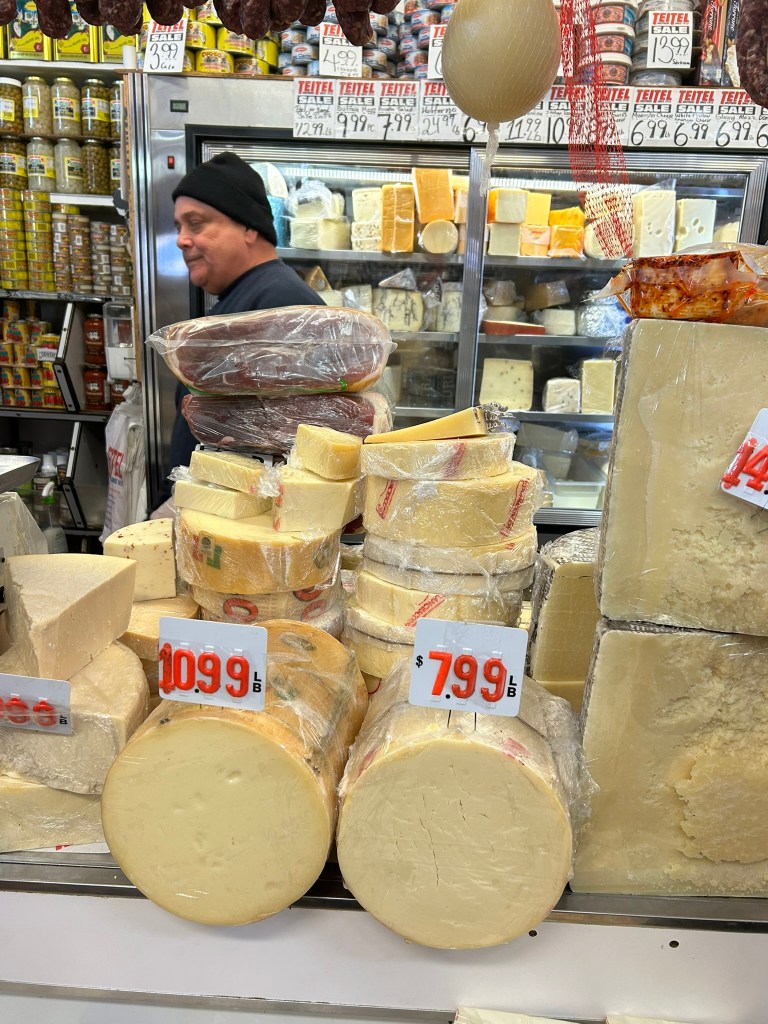
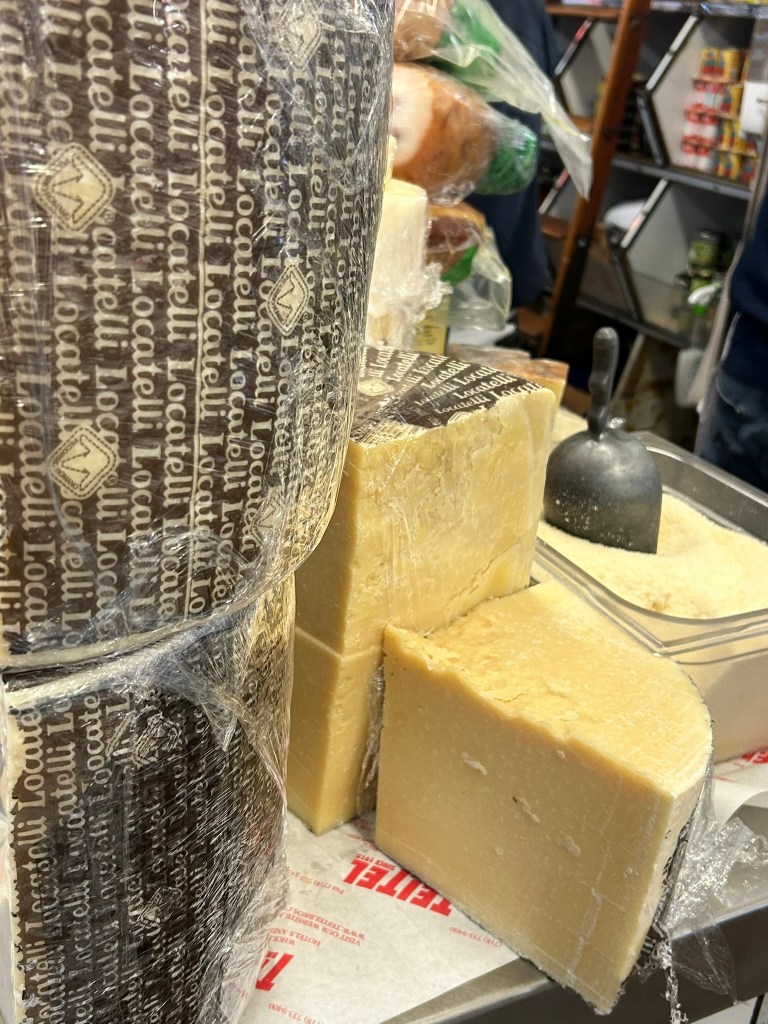
Every few months, our supply of Parmesan and Pecorino cheese dwindles and then it’s time to make a pilgrimage to Arthur Avenue, the Italian neighborhood in the Bronx.
There is also a sizable Albanian population in the neighborhood and on a recent trip, I treated myself to lunch at an excellent small Albanian restaurant that I discovered called Cka ka Qellu. Located on Hughes Avenue,it’s just a few blocks from busy Arthur Avenue.
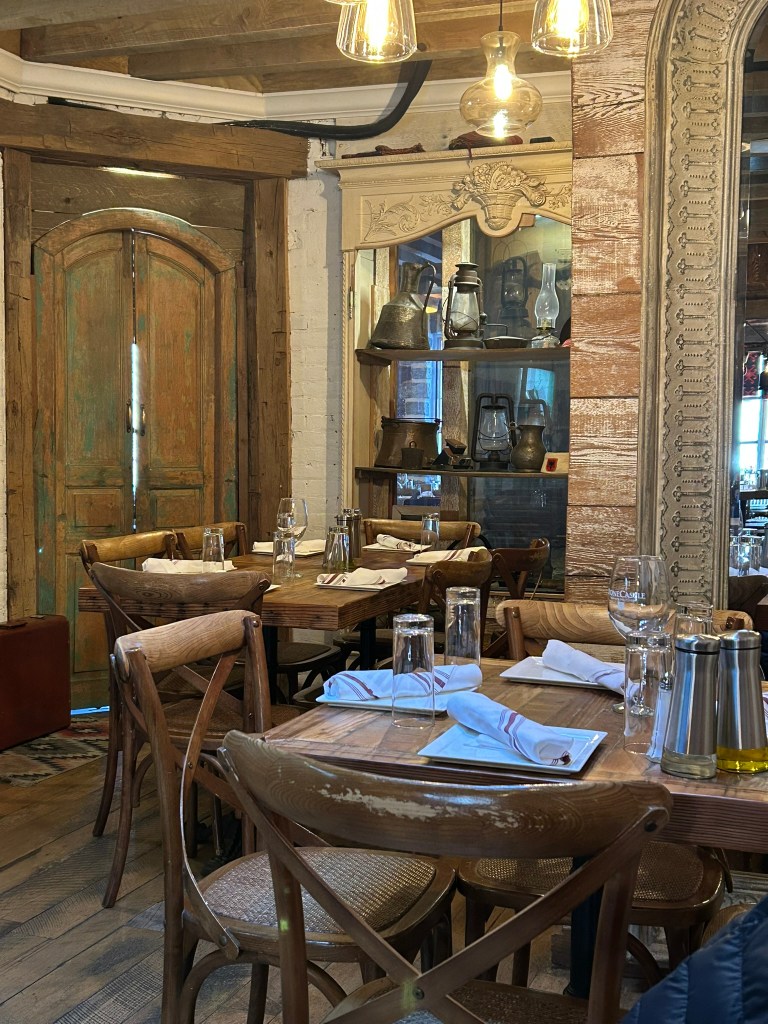
The inside of the welcoming restaurant was small and cozy. People around me were chatting softly in Albanian. It felt as if I was transported to the Balkans in Southeast Europe!
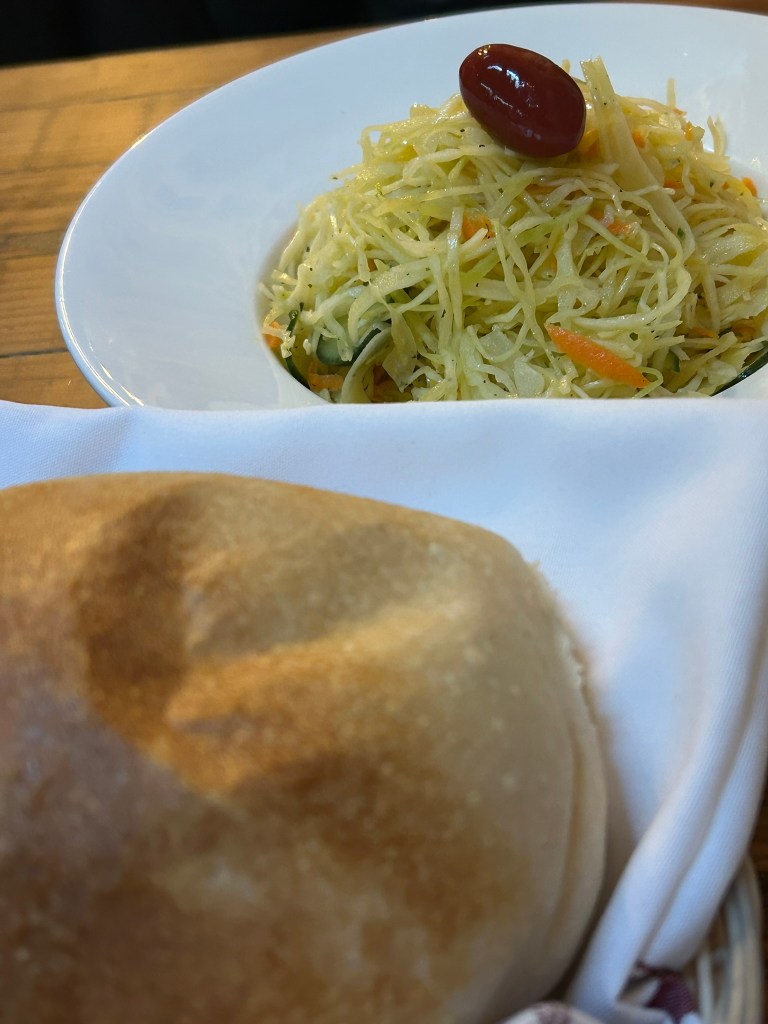
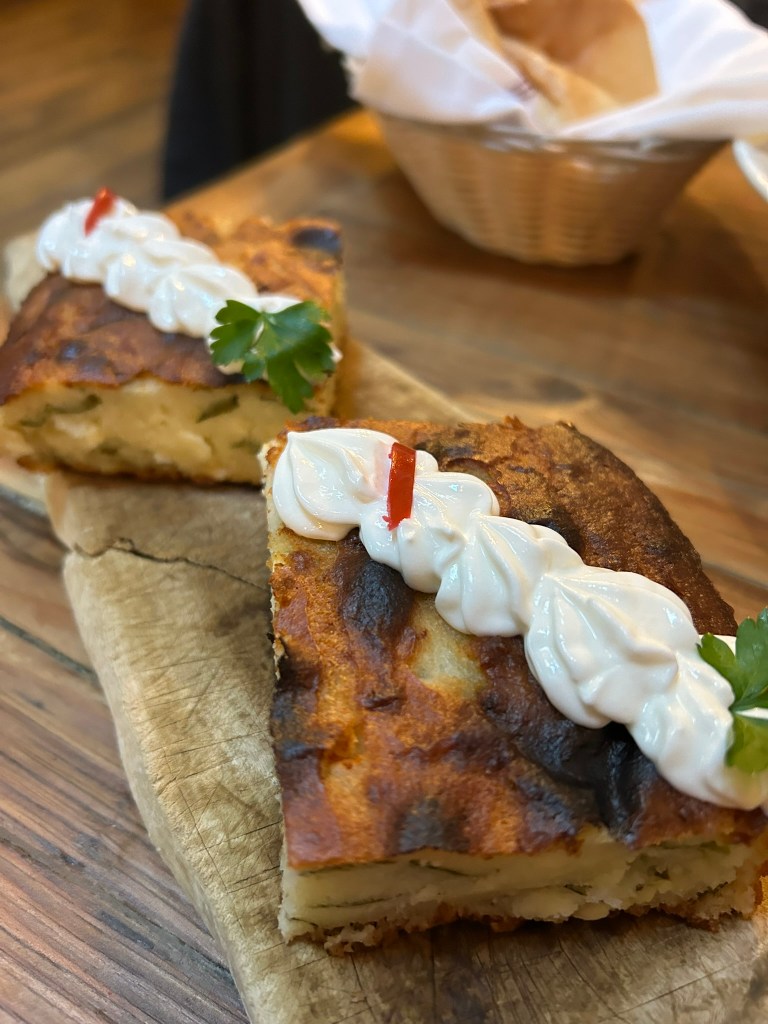
I enjoyed a few appetizers- lightly pickled cabbage salad served with hot crusty bread, Tatator- a yogurt dip with cucumber and garlic and Lecenik- cornbread stuffed with spinach and cheese. This made a lovely lunch feast!
After my lunch, I walked a few blocks to Teitel Brothers, a third generation family business opened in 1915, by a Jewish immigrant family from Austria. Today, brothers Michael and Eddie stand at the counter in white aprons. I could have stayed for hours listening to their heavy New York accents as they bantered happily with their customers.
The store is small and crowded with imported Italian goods and huge blocks of cheese. Everything is top quality with incredibly low prices.
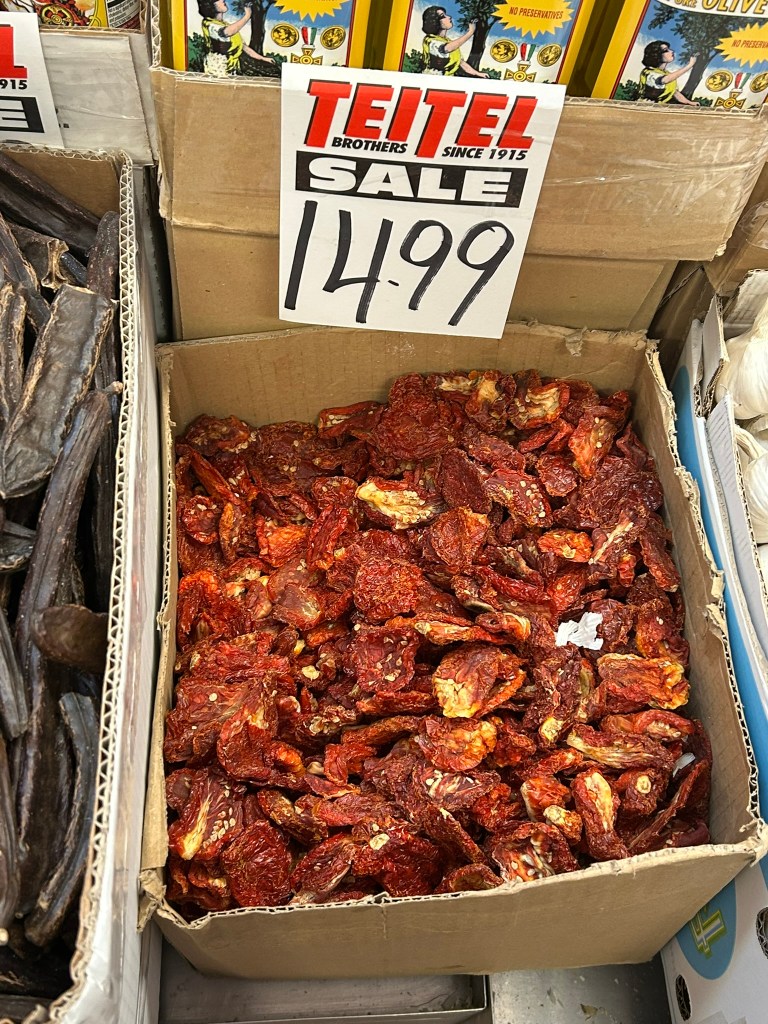
Dried salt cod stacked next to bottles olive oil and a box of sun dried tomatoes filled the air with a fishy smell.
On one visit, a huge bag of leftover scraps from procuitto sat on the counter. One of the owners asked if I would like to have it- a gift that one cannot turn down! I imagined crispy bits of procuitto with roasted brussel sprouts and in rich black bean soup! I lugged the heavy bag back to my car and planned to share it with a friend.
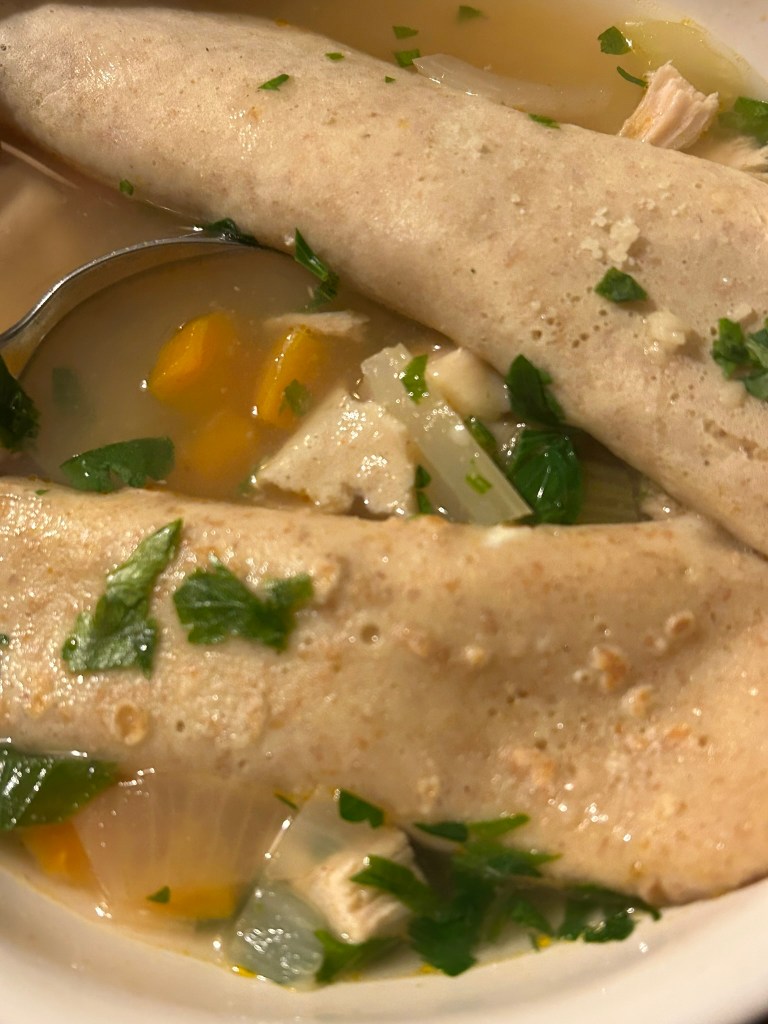
Instead of using pastina, I remembered a recipe for whole wheat crepes that I had made rolled and filled with freshly grated parmesan. I used the NY Times recipe for the broth; it was quick and had as much flavor as a stock that I usually simmer for hours. The crepes are easy to make and they were delicious with the fresh parmesan!
2tablespoons kosher salt (Diamond Crystal), or to taste
½teaspoon garlic powder
¼teaspoon black pepper
3large carrots, peeled and sliced into ¼-inch half moons
3large celery ribs, sliced into ¼-inch half moons
3garlic cloves, finely chopped
2teaspoons tomato paste
½cup finely chopped parsley
Preparation
Step 1Place the chicken and 10 cups of water in a large pot. Partly cover and bring to a boil over high heat, keeping a close eye so that it doesn’t overflow and skimming off any foam that rises to the top.
Step 2Add the onion, olive oil, salt, garlic powder and pepper; stir and allow to come back up to a gentle boil. Cover completely, reduce heat to medium-low and simmer for 10 minutes. Add the carrots, celery, garlic and tomato paste, stirring to incorporate the tomato paste. Increase the heat to high and allow to come back up to a gentle boil. Cover, reduce the heat to medium-low and simmer for 30 minutes, stirring occasionally. Taste and season with more salt and pepper as desired.
Step 3Remove the cooked chicken and place in a large bowl.
For the Crepes:
3 eggs
1 cup whole wheat pastry flour
1 cup cold water
About ¼ cup grapeseed or sunflower oil
1/4 tsp salt
About 3 to 4 cups freshly grated Parmigiano Reggiano or Pecorino Romano cheese
Fresh chopped parsley for garnish
In a large mixing bowl, whisk the salt and flour. Make a well into the center of the flour and crack all 3 eggs. Whisk together well and gradually add the milk, a little at a time, whisking well to avoid lumps. After all the milk has been added, if the batter is lumpy, you can run it through a fine-meshed sieve to get rid of any lumps.
Grease up a heavy skillet or a small crepe pan, using about 1 tsp oil per crepe. Make the crepes using about 1/4 cup of batter per crepe. Swirl the batter around, cook for about 30 to 60 seconds on each side or until golden and bubbly. If the batter is too thick, add a little more water, a couple tablespoonfuls at a time. Stack the crepes on a large plate. They will miraculousy not stick together.
Sprinkle a generous handful of grated cheese on each crepe and roll it up into a cigar shape. (Divide the cheese evenly among the crepes but save some for garnish). Place the rolled crepes seam down into a large serving bowl. Serve two to three crepes per person and ladle a generous scoop or two of broth on top of the crepes. I also added some of the reserved chicken breast chopped, to the soup. Garnish with a little cheese and chopped parsley. ENJOY!
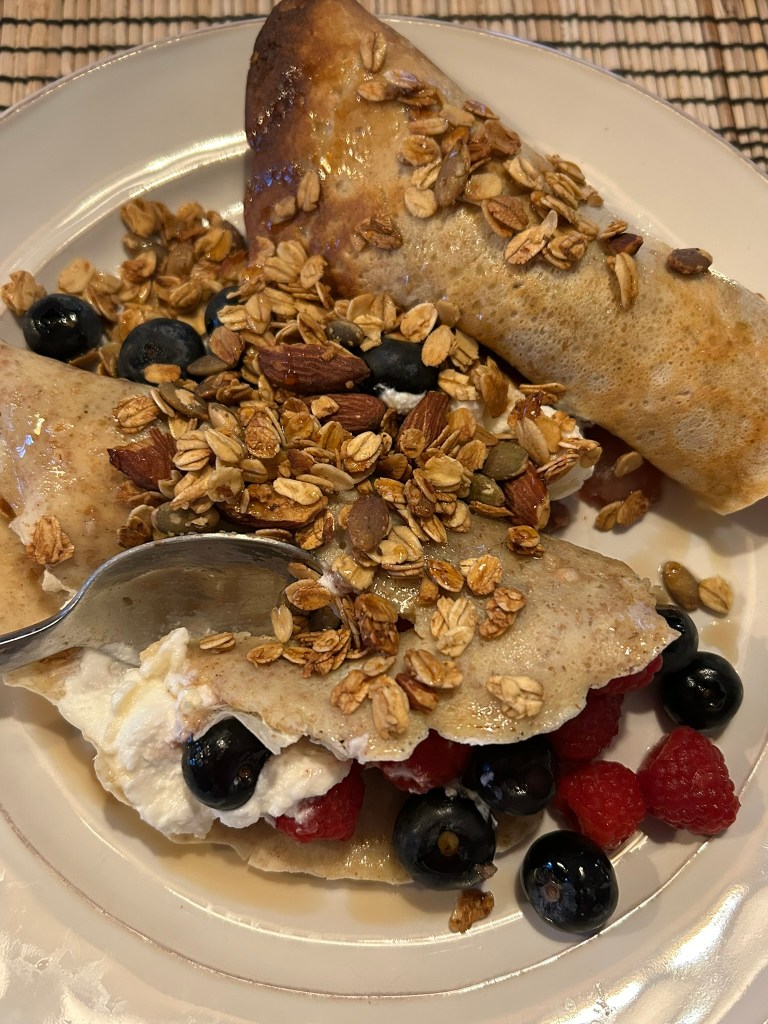
There were a few leftover crepes; the next morning we enjoyed the crepes filled with fresh fruit (whatever you have on hand is good) and plain yogurt. Topped with plenty of crunchy granola and a drizzle of maple syrup, this was an excellent quick breakfast treat!
A tricky back has kept me from the trails this past week; perusing through my notes and pictures, I discovered that I had never written about a glorious fall walk last year at Hollow Fields in Richmond, Massachusetts; a trail system operated and supported by the Berkshire Natural Resources Council.
According to BNRC:
“This land, and all of the present-day Berkshires, are the ancestral homeland of the Mohican people, who were forcibly displaced to Wisconsin by European colonization. These lands continue to be of great significance to the Stockbridge-Munsee Mohican Nation today. To learn more, visit mohican.com.”
We walked down a small hill along side the woods and then up a mowed path through the meadow, where there was a chair to enjoy the stunning views!
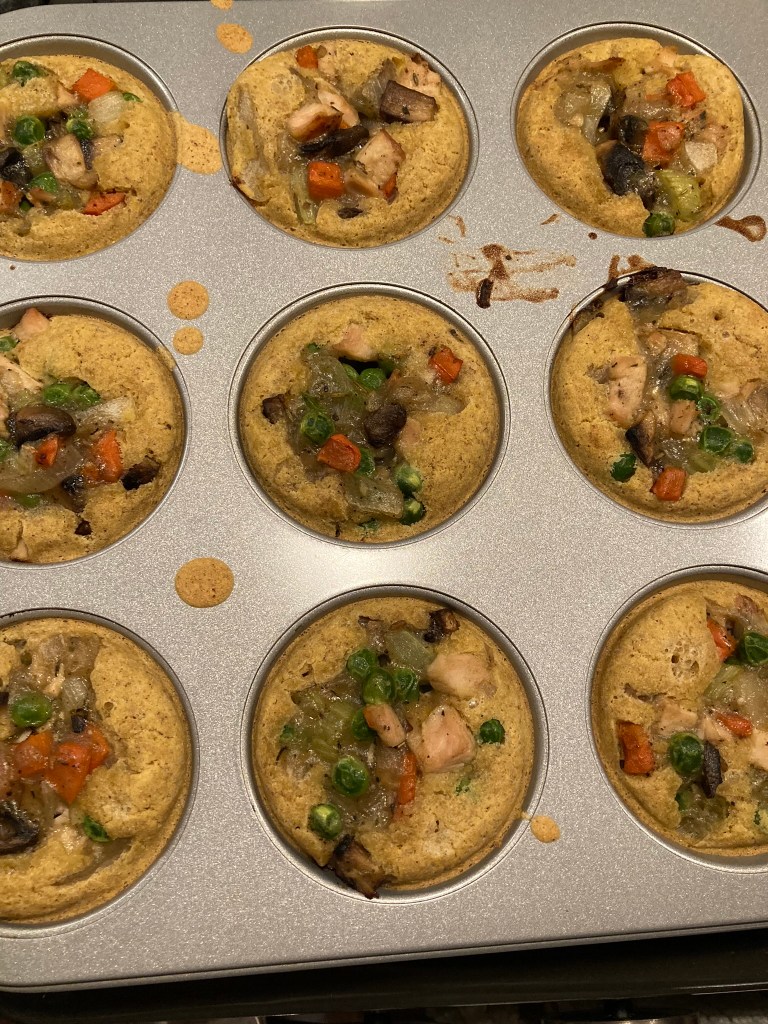
Leftover lemon roast chicken got me thinking about favorite recipes from old blogs. I remembered tasty chicken potpie cornbread muffins from the entry “Mozart’s Starling”- January 2022.
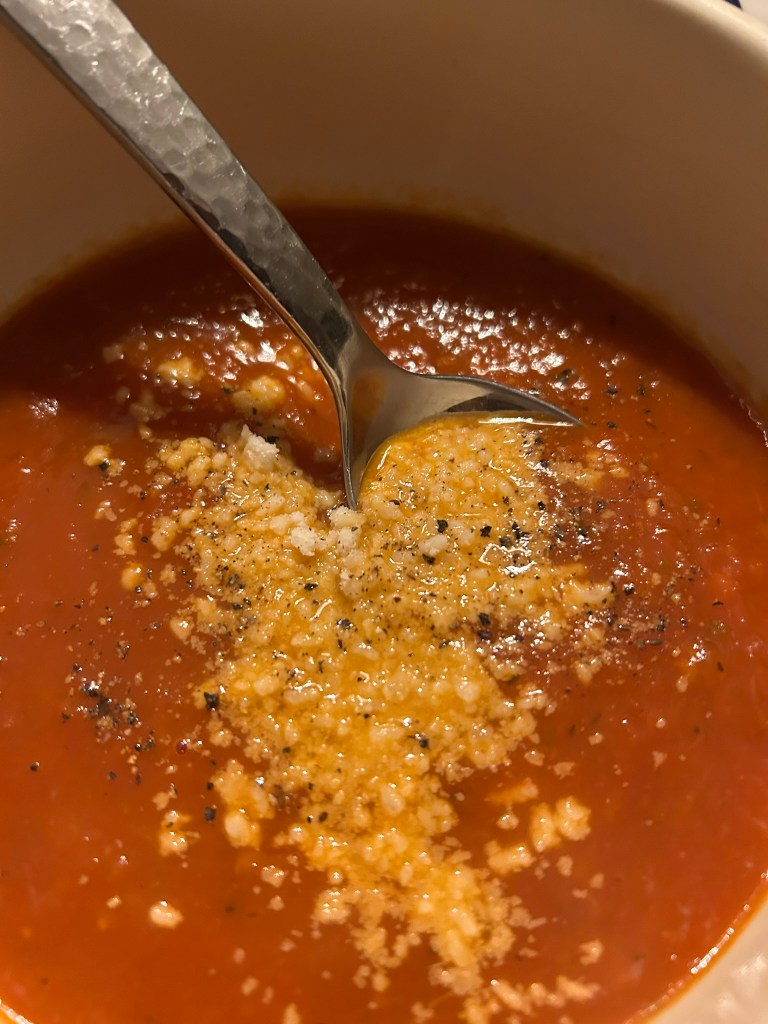
When I made the soup this time, I added carrot and celery to the recipe. This added even more flavor and a chunky texture to the soup. You could also add fennel! We served the soup sprinkled with grated pecorino cheese and freshly ground pepper.
Together, these recipes made a wonderful fall dinner. With the cornbread and chicken potpies baking in the oven and a big pot of soup bubbling on the stove, the house was filled with enticing aromas.
Chicken Potpie Cornbread Muffins
Adapted From Food and Wine Magazine-Published on January 12, 2016
Ingredients:
Cornbread:
1 1/2 cups cornmeal
1/2 cup whole wheat pastry flour
Kosher salt
1/2 teaspoon baking powder
1/2 teaspoon baking soda
1 large egg
1 1/2 cups well-shaken buttermilk
Filling:
2 tablespoons extra-virgin olive oil
1 large shallot, chopped
1/2 onion finely chopped
1/4 cup frozen peas (defrosted)
4 button mushrooms cut into small pieces
1 medium carrot, cut into small pieces
1 teaspoon dried thyme
1/2 teaspoons dried sage
1/4 teaspoon salt or to taste
Freshly ground black pepper
1 tablespoons all-purpose flour
3/4 cup chicken stock or low-sodium broth
1/2 cup cooked chicken cut into small pieces
Directions
Make the cornbread:
In a bowl, stir together the cornmeal, flour, 3/4 teaspoon salt, baking powder and baking soda. Whisk the egg and buttermilk into the cornmeal mixture. Fill 12 (1/2-cup) well greased muffin tins about 2/3 full with the cornbread batter. Preheat the oven to 350°F.
Make the filling
In a large cast-iron or heavy skillet, heat the oil over medium high heat until hot, then stir in the onion and shallots- cook until slightly softened and then add carrots and mushrooms, 1/4 teaspoon salt, dried thyme and sage. Cook, stirring occasionally, until golden, 8 to 10 minutes. Stir in the flour and cook, until incorporated, about 2 minutes. Pour in the stock and bring to a boil, then stir in the chicken and the defrosted peas. Season the filling with salt and pepper to taste. Place 2 to 3 tablespoons of the filling over each batter-filled muffin tin.
Bake the muffins until golden around the edges, about 25 minutes.
Let cook about 10 minutes before removing from muffin tin. This will keep them from sticking to the pan.
If using fresh tomatoes: bring a large pot of water to boil. Add tomatoes and boil for a few minutes. Remove from water and slip off the skins. Cut tomatoes in half and squeeze to remove seeds and excess water. Chop roughly and proceed with the recipe.
Heat olive oil in a large soup pot and add onions.
Saute onions until slightly softened. Add carrots and celery. A bit of chopped fennel might also be good! Cook a few minutes.
Add tomatoes and rest of ingredients.
Bring to a boil, reduce heat to a simmer. Cover and cook about 1 hour. Add more water if soup is too thick.
Remove Bay leaf and puree with an immersion blender. Remaining chunks of vegetables are fine.
ENJOY!
The deep flavor of the ripe late summer tomatoes was sweet and delicious, the last for a while. Pablo Neruda’s “Ode to Tomatoes” will help us remember!
The street filled with tomatoes midday, summer, light is halved like a tomato, its juice runs through the streets. In December, unabated, the tomato invades the kitchen, it enters at lunchtime, takes its ease on countertops, among glasses, butter dishes, blue saltcellars. It sheds its own light, benign majesty. Unfortunately, we must murder it: the knife sinks into living flesh, red viscera, a cool sun, profound, inexhausible, populates the salads of Chile, happily, it is wed to the clear onion, and to celebrate the union we pour oil, essential child of the olive, onto its halved hemispheres, pepper adds its fragrance, salt, its magnetism; it is the wedding of the day, parsley hoists its flag, potatoes bubble vigorously, the aroma of the roast knocks at the door, it’s time! come on! and, on the table, at the midpoint of summer, the tomato, star of earth, recurrent and fertile star, displays its convolutions, its canals, its remarkable amplitude and abundance, no pit, no husk, no leaves or thorns, the tomato offers its gift of fiery color and cool completeness.
It’s been a busy fall; I have been meaning to complete an entry about summer travels, but time flies! Here finally, is the belated second part of the Knodels and Papardella blog!
After my travel buddy Carol and I choose our destination, one of my favorite parts of the planning process is researching the local food and restaurants; I make reservations and the rest of the itinerary easily falls into place!
The ambitious plan for our most recent trip was to visit Munich, Salzburg, Ljubliana in Slovenia, Trieste and Bolzano. We flew into Munich on Condor (a smaller German airline). We entered an upgrade lottery and lucked out-we were moved up to Business Class and the seats to us in the middle were also empty!
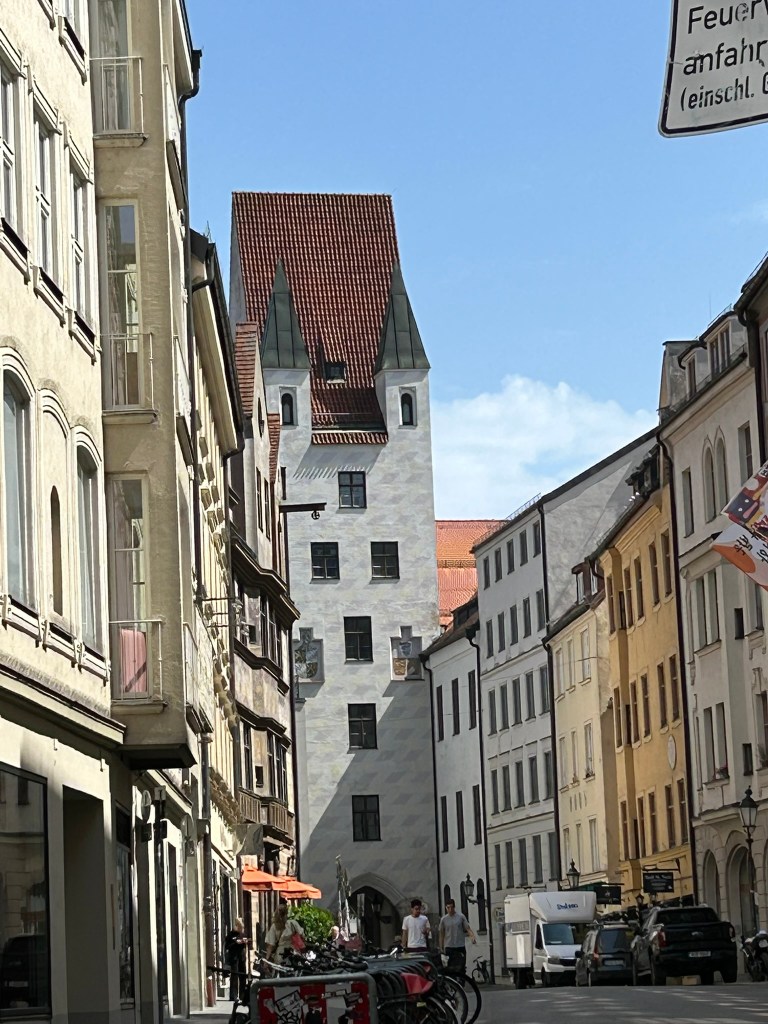
We arrived early morning in Munich on a hot sunny June day; being too early to check into the Hotel Torbrau, we left our bags and spent the day walking slowly around the city, enjoying our surroundings while trying to ignore our growing jetlag.
That evening, our first dinner reservation on the trip was at Wirthaus in der Au, famous for a popular German dumpling specialty called Knodel.
The restaurant is located in the neighborhood Au, an artsy and leafy residential area that was once a working class quarter. It is outside the heart of the old town of Munich and next to the Isar River.
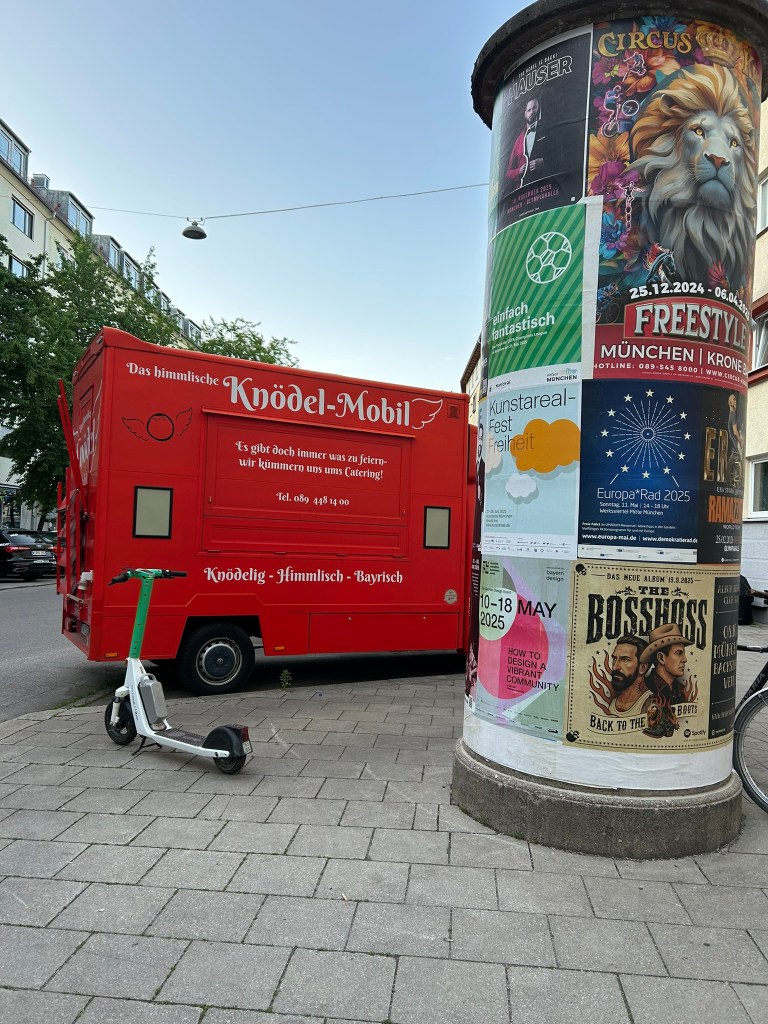
We were delighted to see a Knodel food truck painted with the title, “The Heavenly Knodel- Mobil” parked outside the restaurant!
We sat outdoors on a leafy patio and the food was wonderful; a creative modern take on traditional German food.
We started with a colorful appetizer plate that included bread, local cheeses and assorted dips.
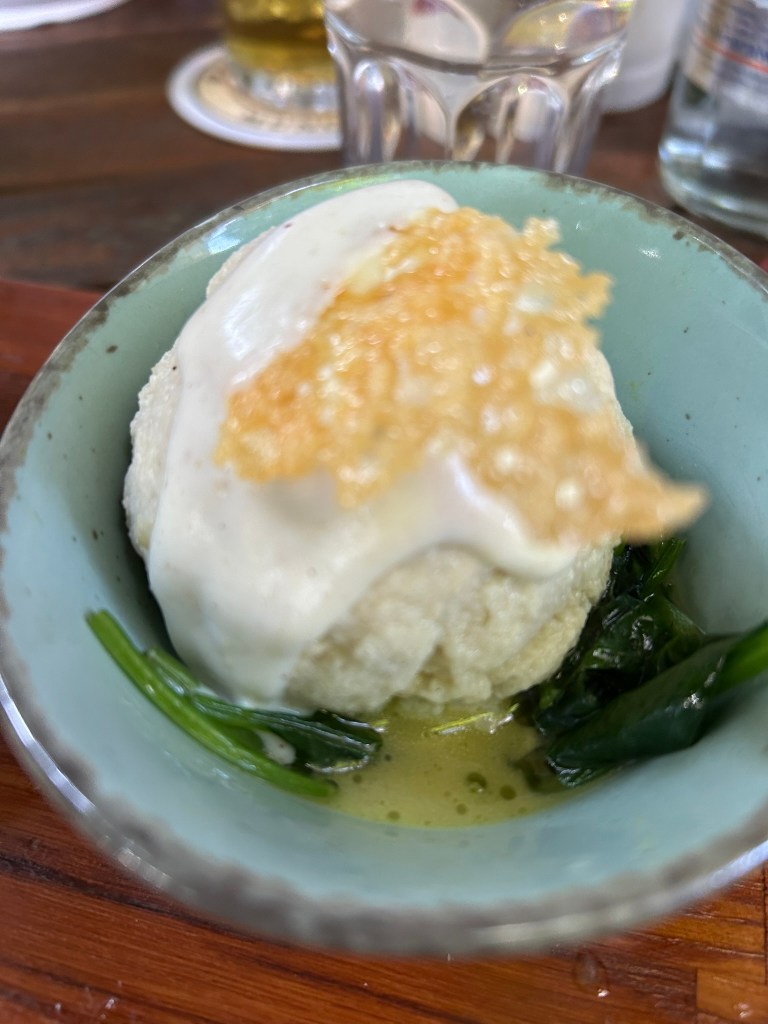
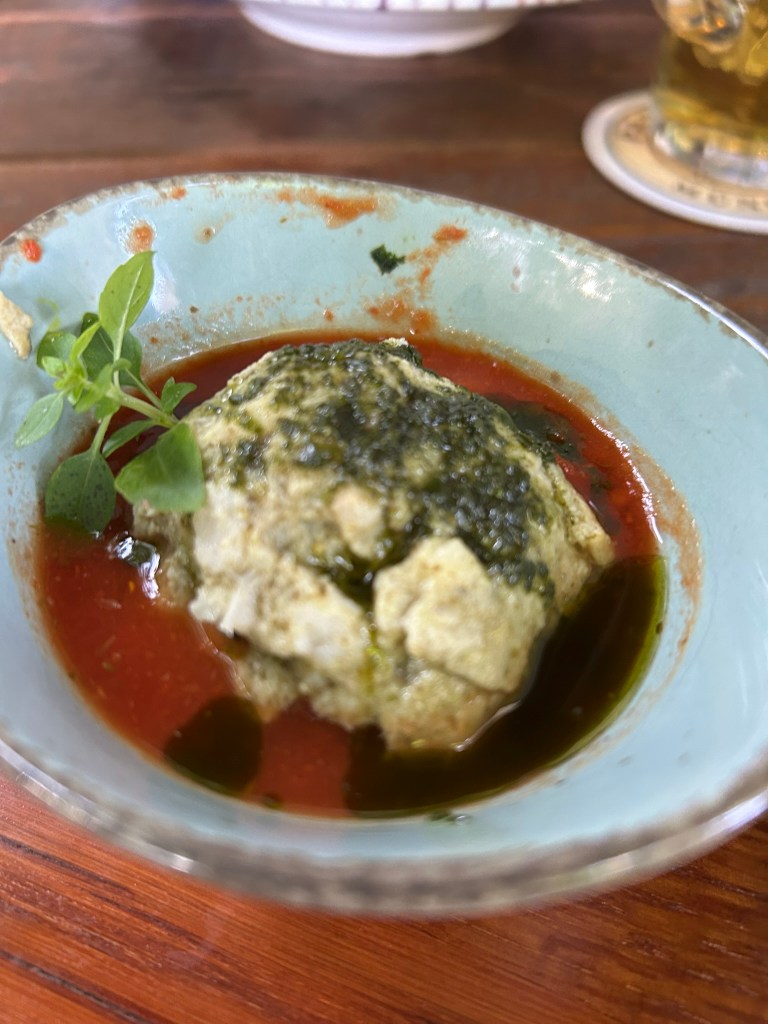
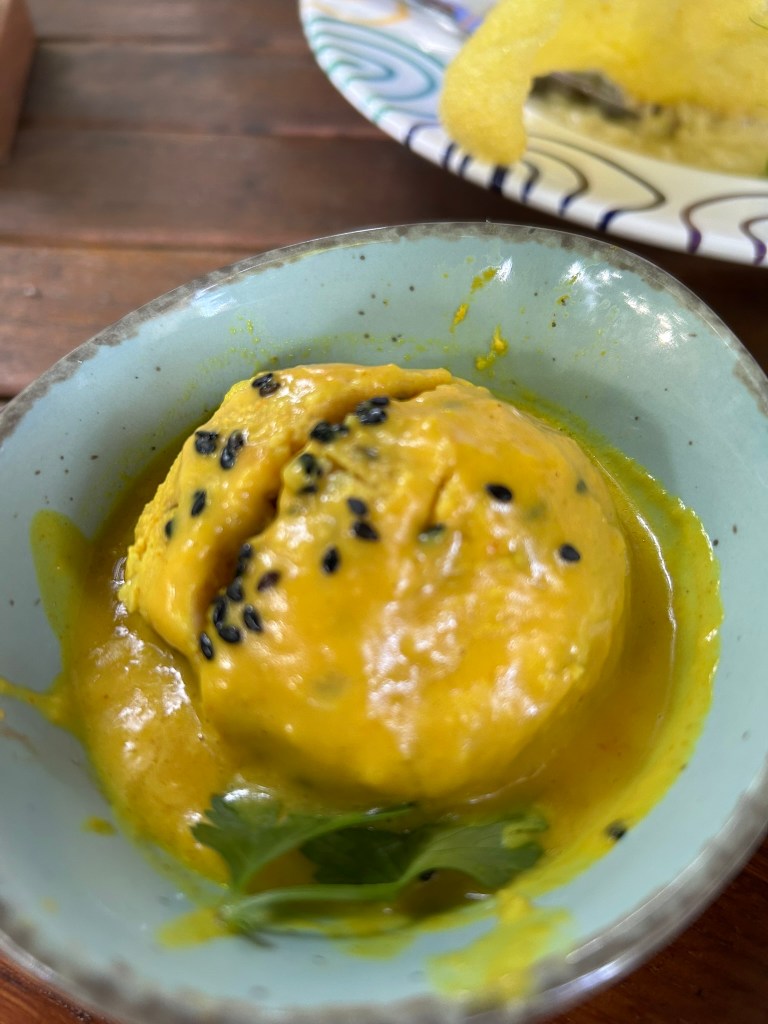
We ordered a trio of Knodels and they were just as advertised on the food truck; heavenly- hearty, flavorful and at the same time light and not at all doughy.
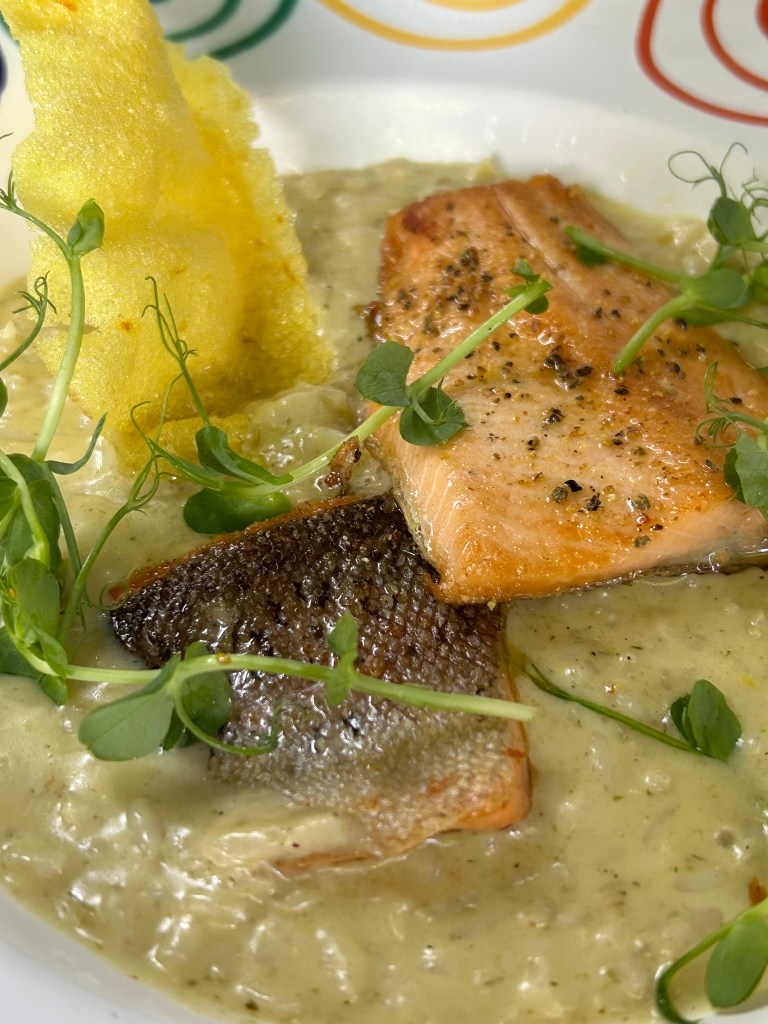
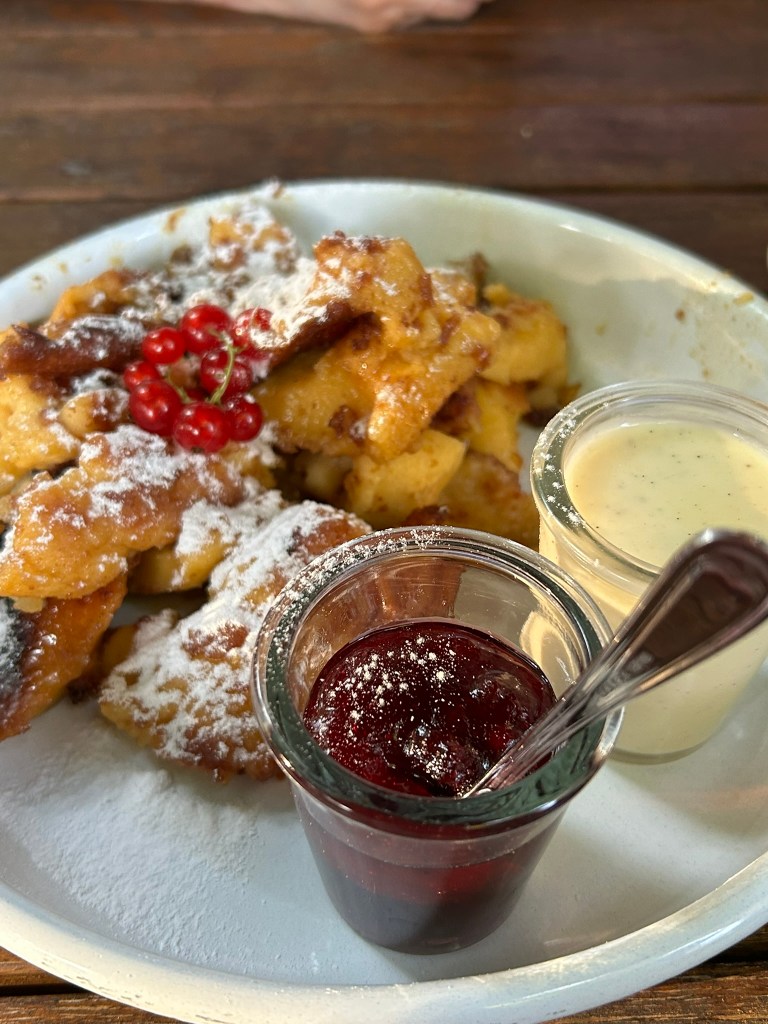
We shared a delicious dish of pan seared brook trout and somehow managed to find room for dessert; a traditional German apple pancake with a berry compote and creme anglaise.
Pan Seared SalmonApple Pancake
After this wonderful feast we returned to our hotel and fell into a blissful sleep!
***********************************
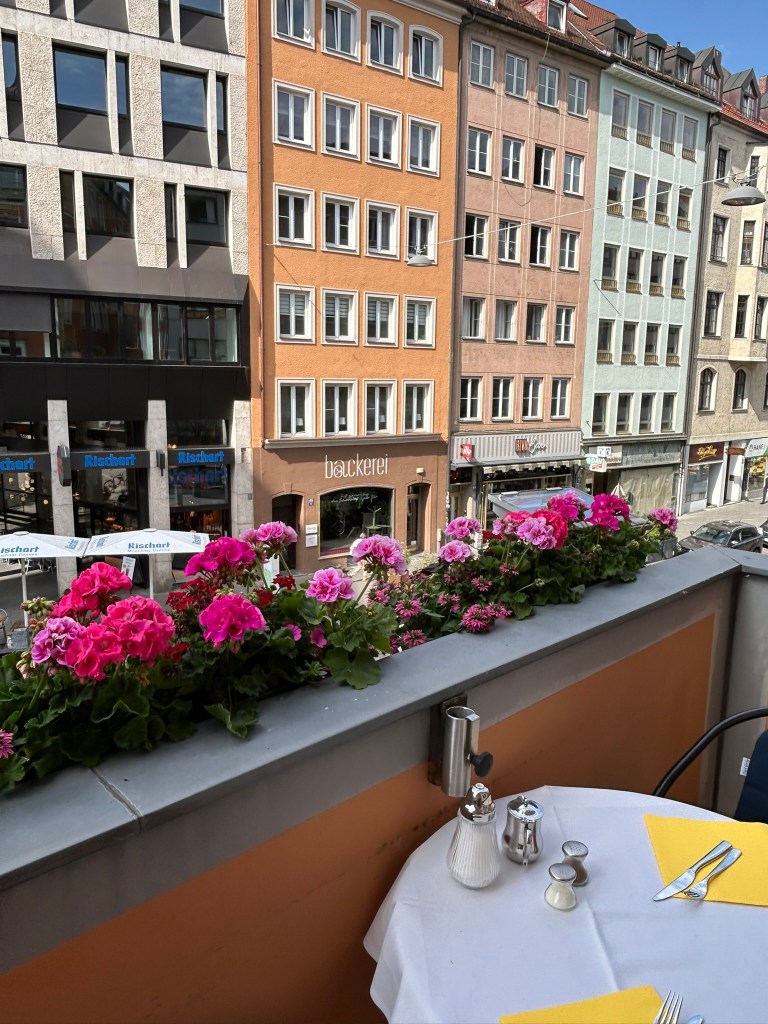
The next day, we enjoyed breakfast on the balcony of our hotel and then spent the day visiting art museums. We walked through the bustling town to the beautiful Alte Pinakothek that was built in 1868.
Here is a description of the museum from their website:
A world-class gallery: the Alte Pinakothek (Old Pinakothek) in Munich is home to an outstanding collection of European paintings, stretching from the 14th to the 18th century.
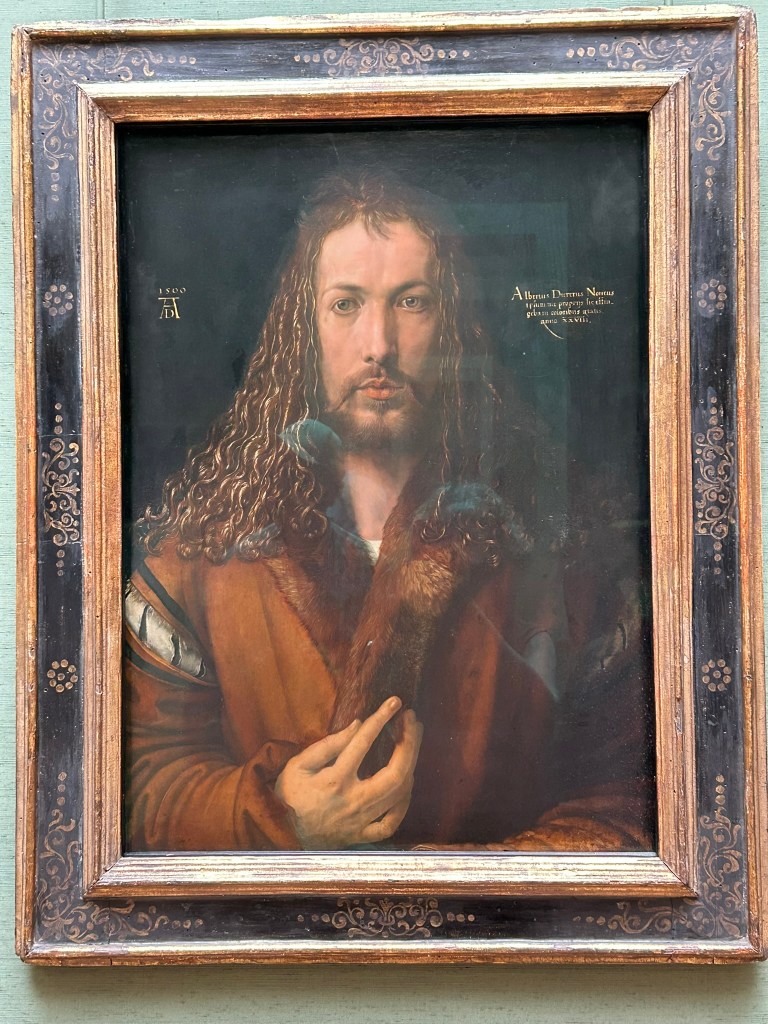
Many of the 700 pieces on display represent high points in the history of art, including Albrecht Dürer’s epochal “Self-Portrait at Twenty-Eight Years Old Wearing a Coat with Fur Collar” from 1500. As the owner of the painting “Madonna of the Carnation” (which was painted in around 1473), the Alte Pinakothek is the only German museum to have its very own Leonardo da Vinci.
Visitors can also see pieces by Raphael, Titian, El Greco, Rubens, Rembrandt and Boucher. Albert Altdorfer’s painting “The Battle of Alexander at Issus”, which is on show in the Pinakothek, is one of the first paintings to come from the Wittelsbach family’s original collection.
My friend Carol is an amazingly talented visual artist, so it was a special treat to visit the Alte Pinakothek with her- she became my personal art guide! We decided to concentrate on a few paintings and I asked Carol to tell me anything that came to mind as we enjoyed the artwork. We first chose Albert Durer’s famous self portrait, “Self-Portrait at Twenty-Eight Years Old Wearing a Coat with a Fur Collar”.
Albrecht Durer- “Self Portrait at 28 Years Old”
Carol mentioned that this painting could be considered a breakthrough in the way Durer depicted emotional realism and psychological depth. We were transfixed by the expressiveness of the eyes.
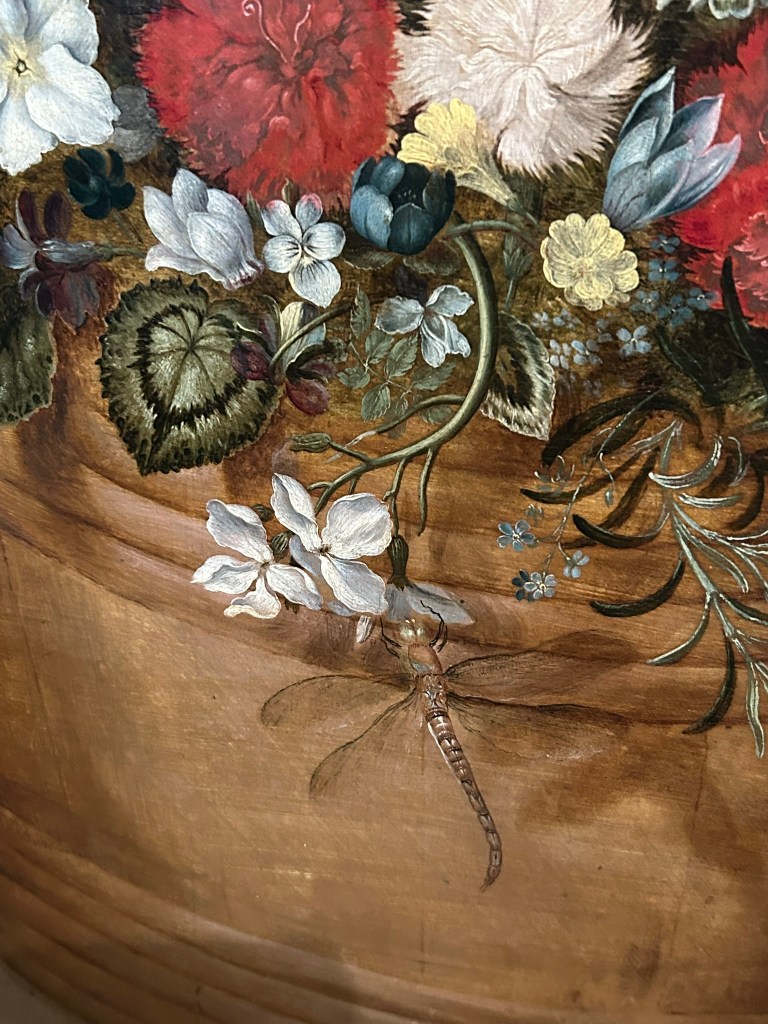
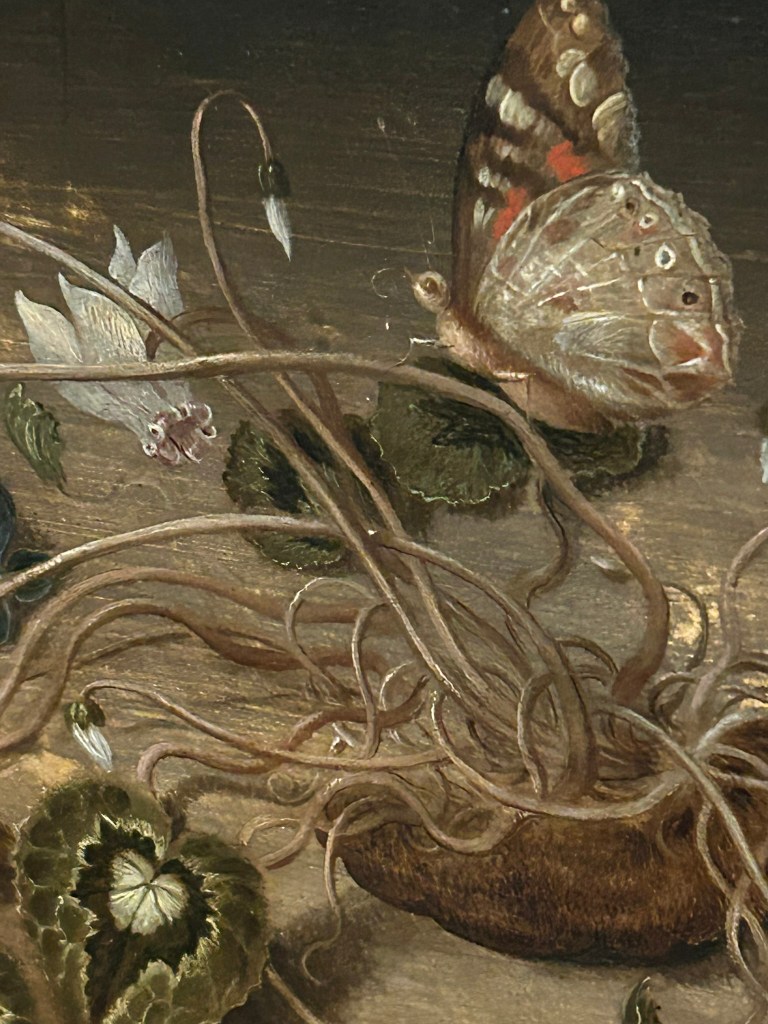
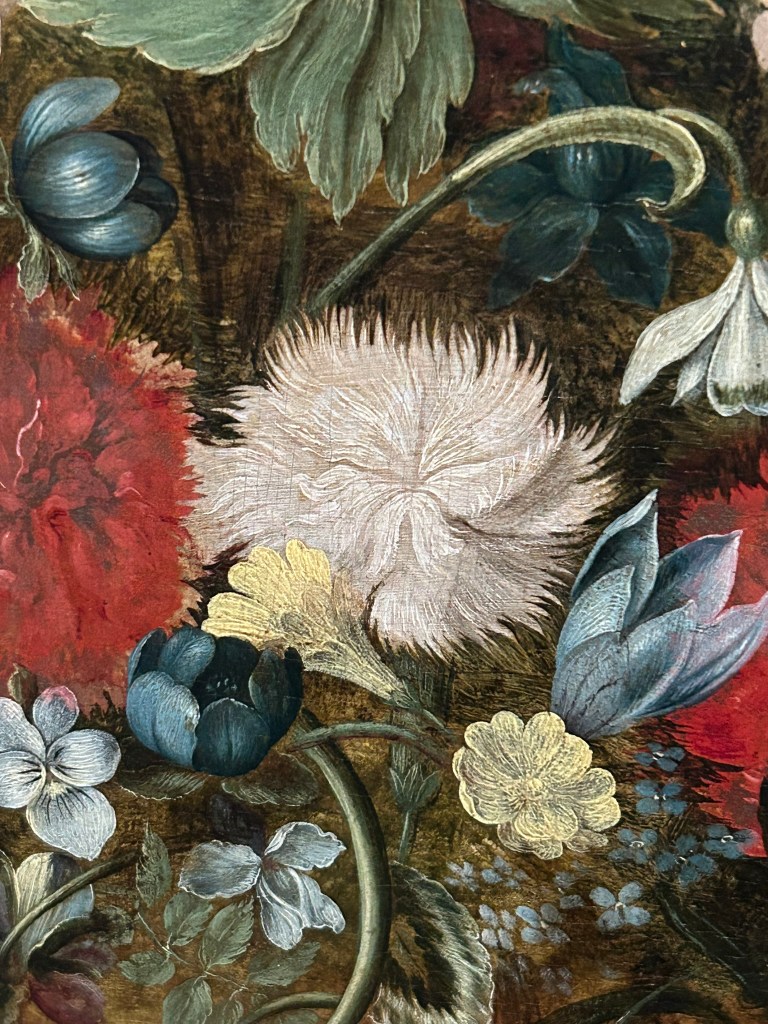
We were also mesmerized by the exquisite detail in Jan Bruegel’s painting “Large Bouquet of Flowers”.
Jan Bruegel-“Large Bouquet of Flowers”
We arrived in Salzburg on an atmospheric day; cool and cloudy.
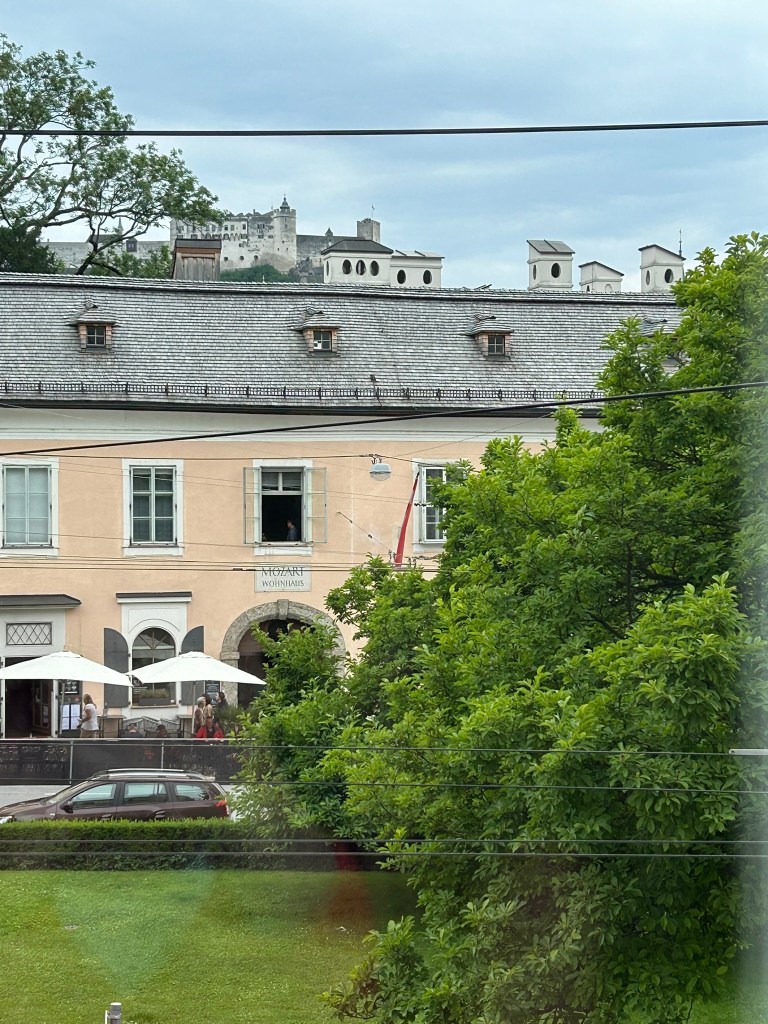
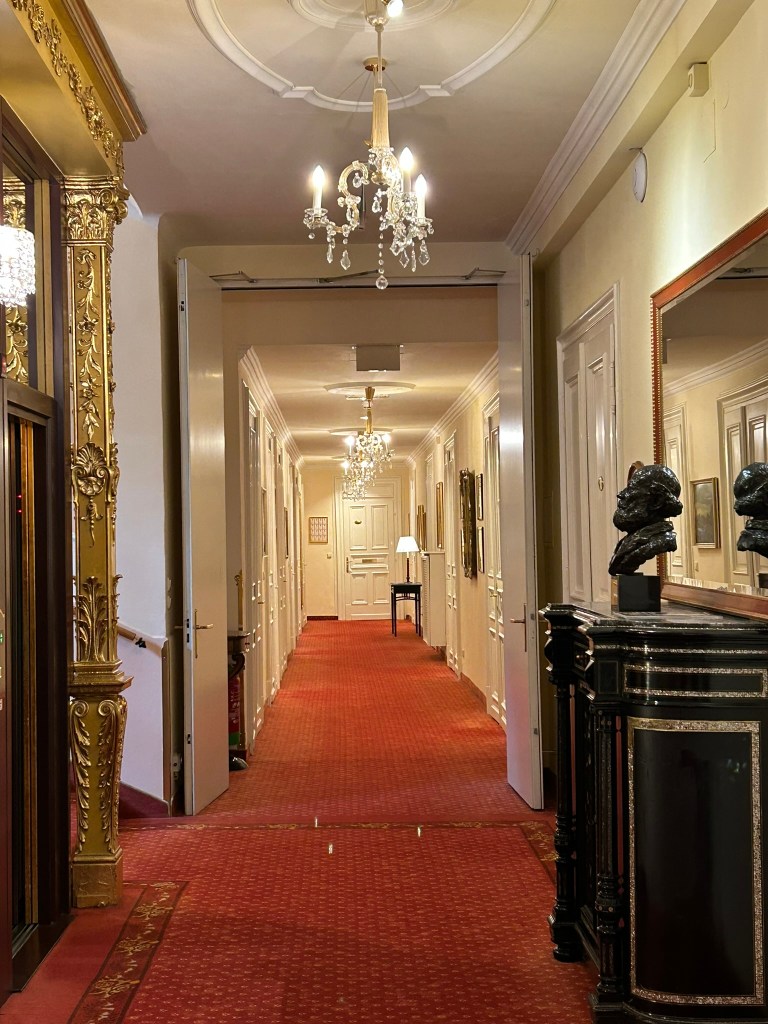
We checked into our beautiful and elegant five star Bristol Hotel across the street from the Mozart Wohnhaus (family residence)! We had decided to give ourselves one special hotel treat!
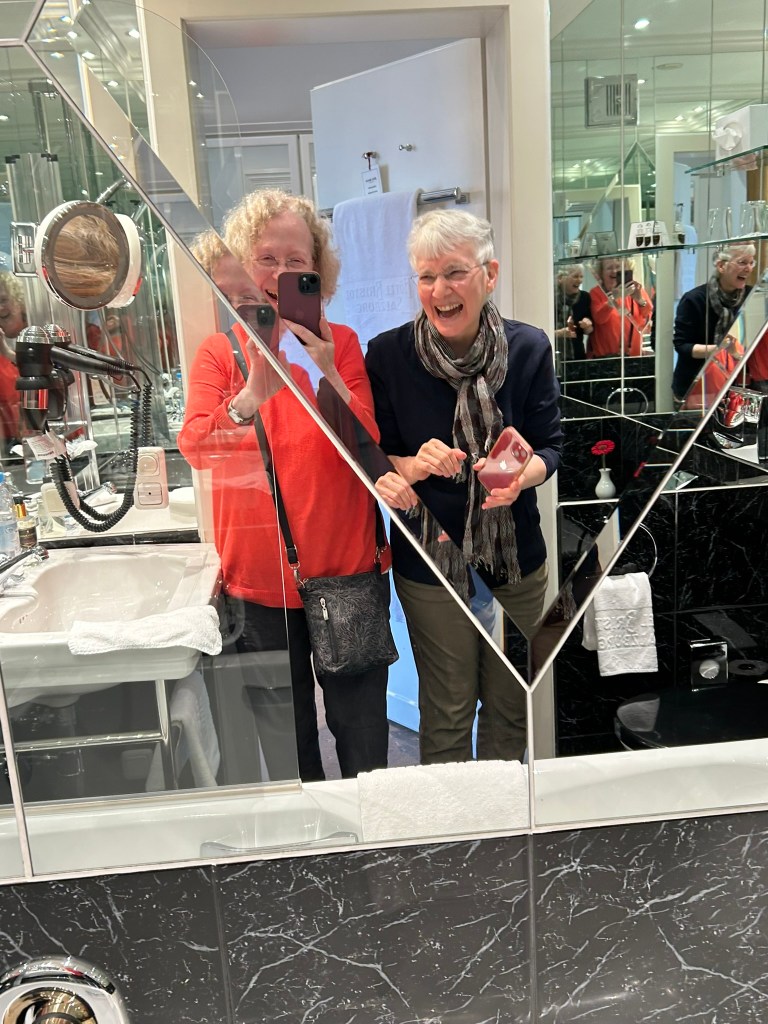
Before we headed out to see explore the town, we could not resist a few minutes of hilarity in the elegantly mirrored bathroom!
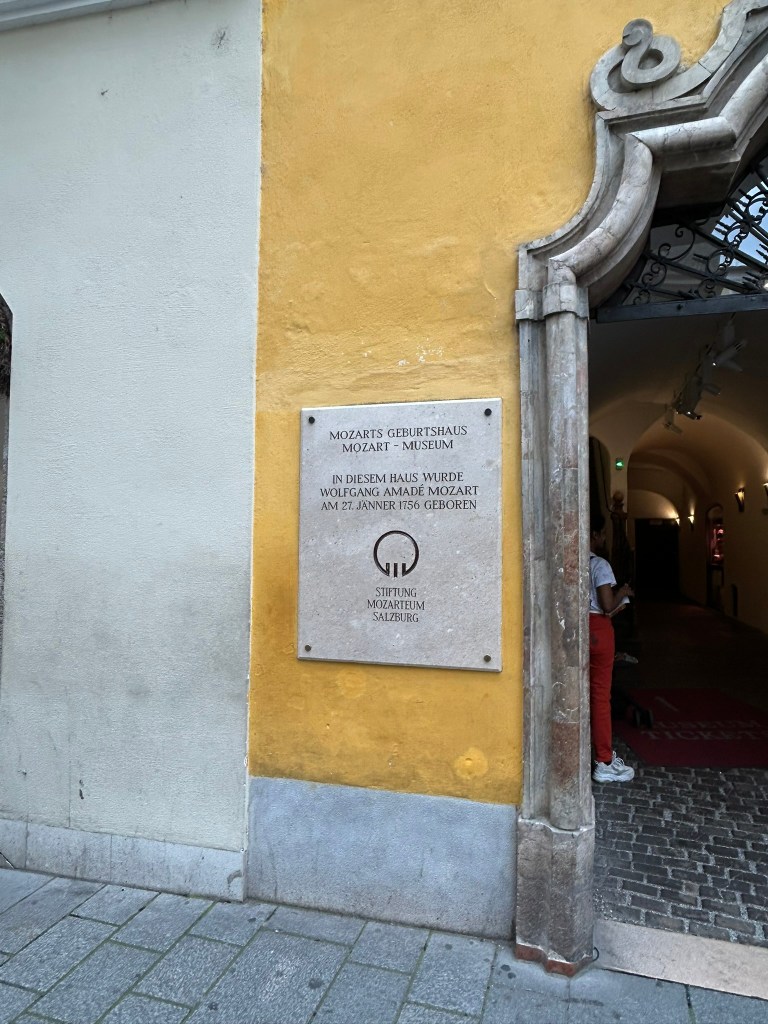
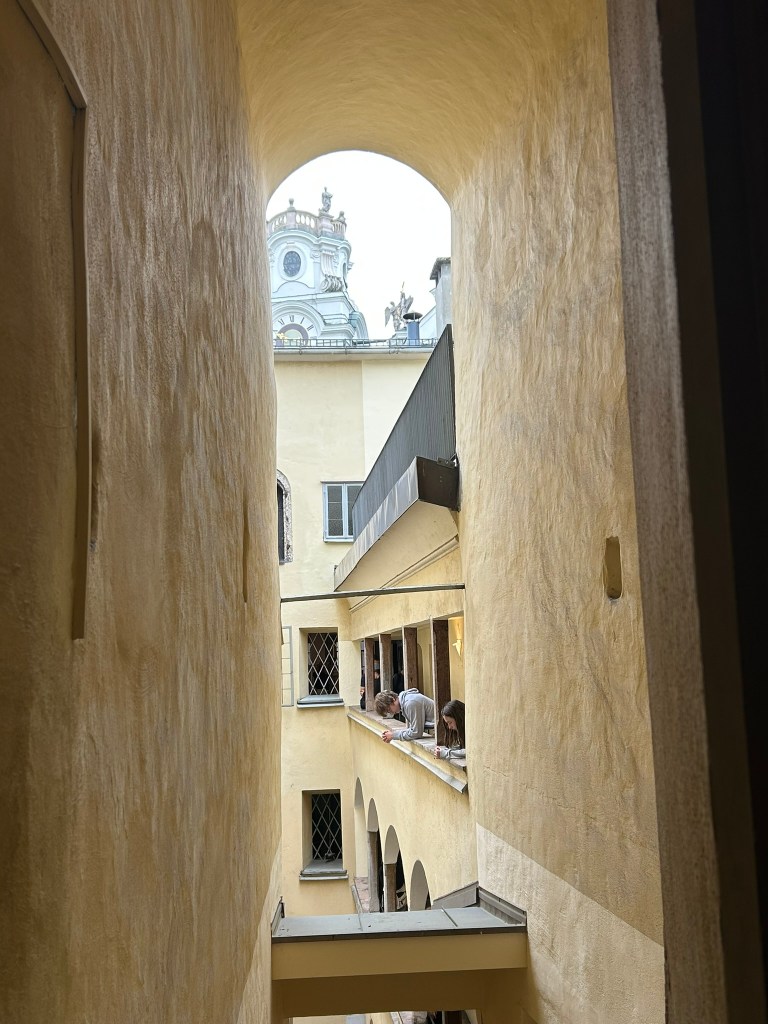
We were thrilled to walk in the small ancient musty rooms decorated with manuscripts, instruments and paintings; a display case held the tiny violin that Mozart played as a young child!
Kitchen- Mozart Geburtshaus
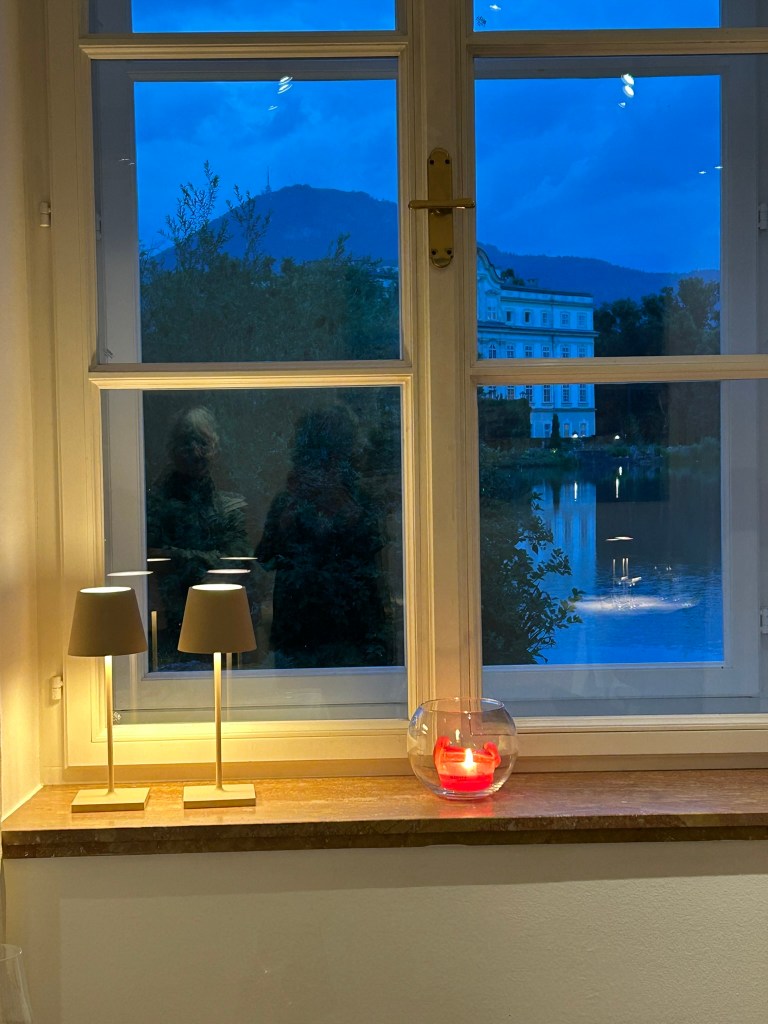
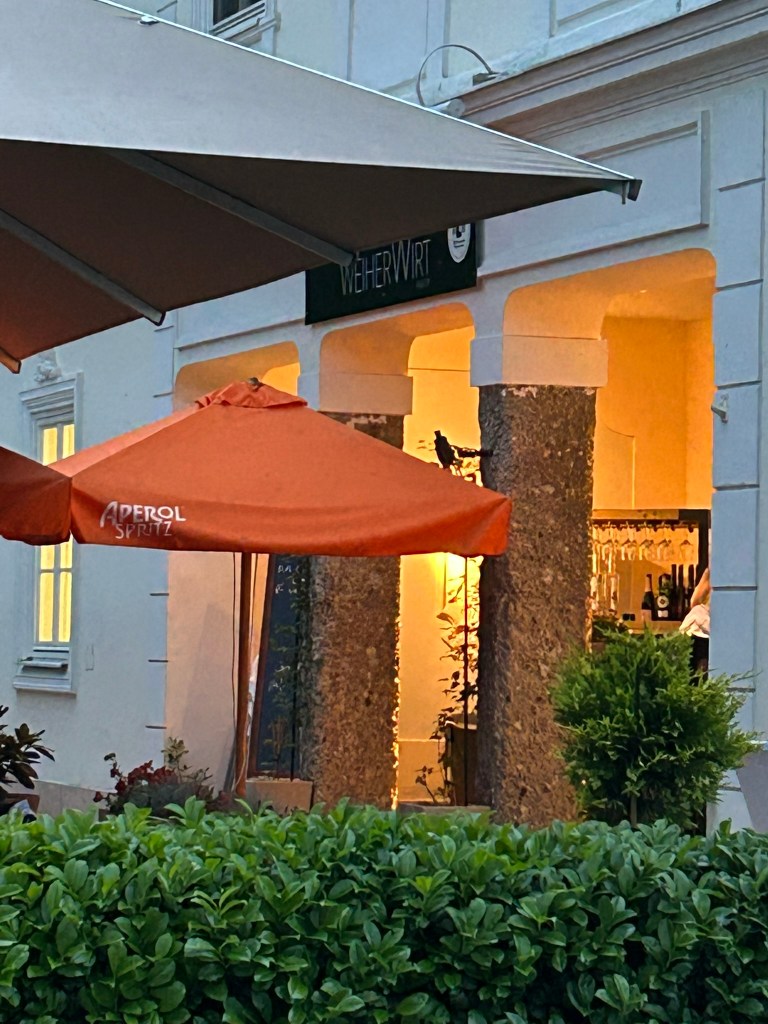
That evening, our dinner reservation was at Maxim im Weiherwirt, a beautiful upscale restaurant with creative and lighter Austrian cuisine. It was located in a town about 15 minutes from Salzburg, across from the Leopoldskroner Weiher lake. Distant mountains and the Leopold Castle are perched on a nearby hillside.
We started our dinner with a simple salad made with delicate local lettuces and tomatoes dressed with a light vinaigrette.
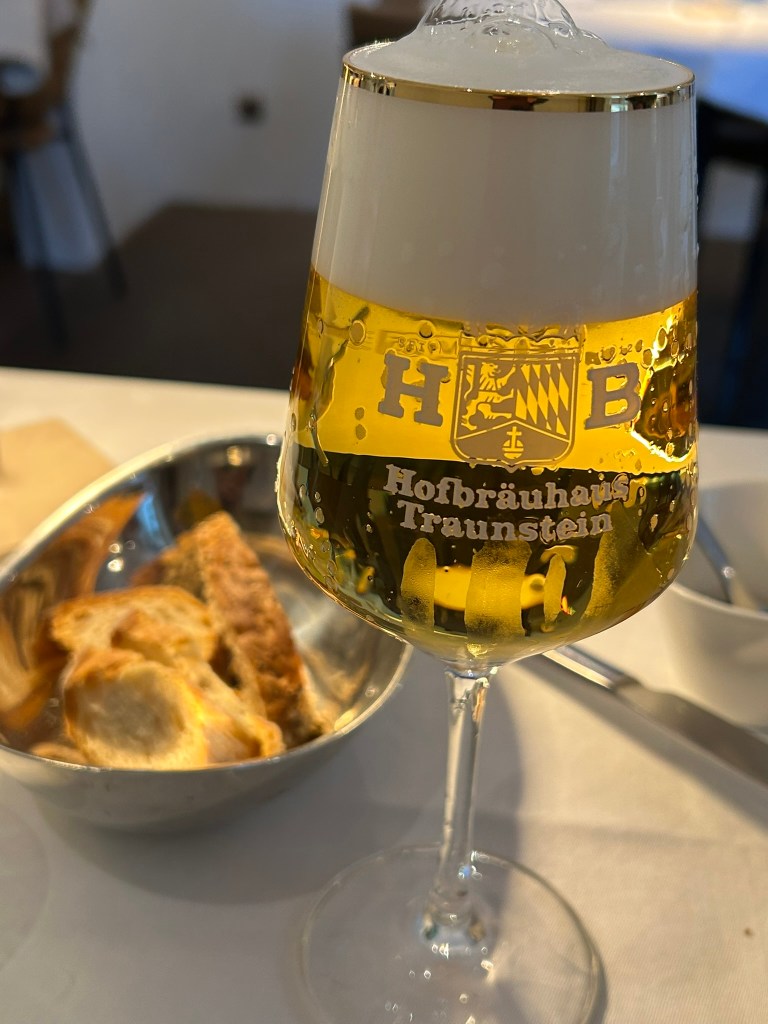
We enjoyed the salads with frosty classes of Austrian beer and freshly baked bread.
I ordered spring pea soup that was a rich treat; creamy and garnished with chives and crispy bits of guanciale topped with an egg that I stirred into the piping hot soup- delicious!
Carol enjoyed grilled pork loin with mixed grains and glazed carrots in a light wine sauce.
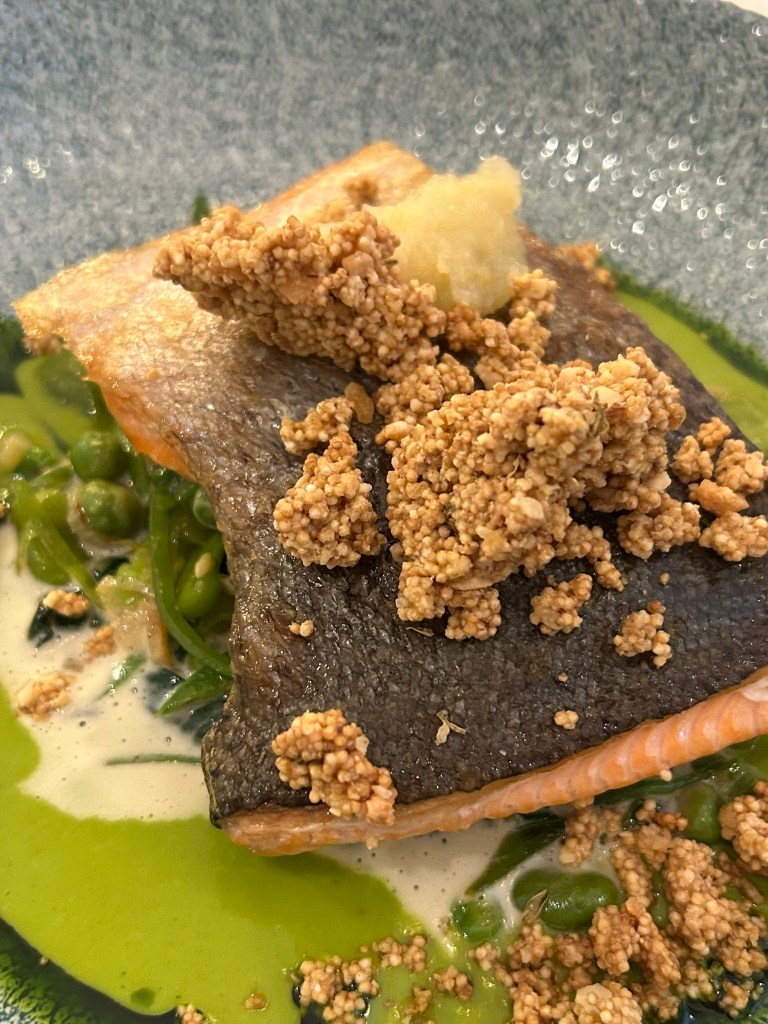
Sauteed trout served over peas and greens and topped with toasted couscous was light and delicious.
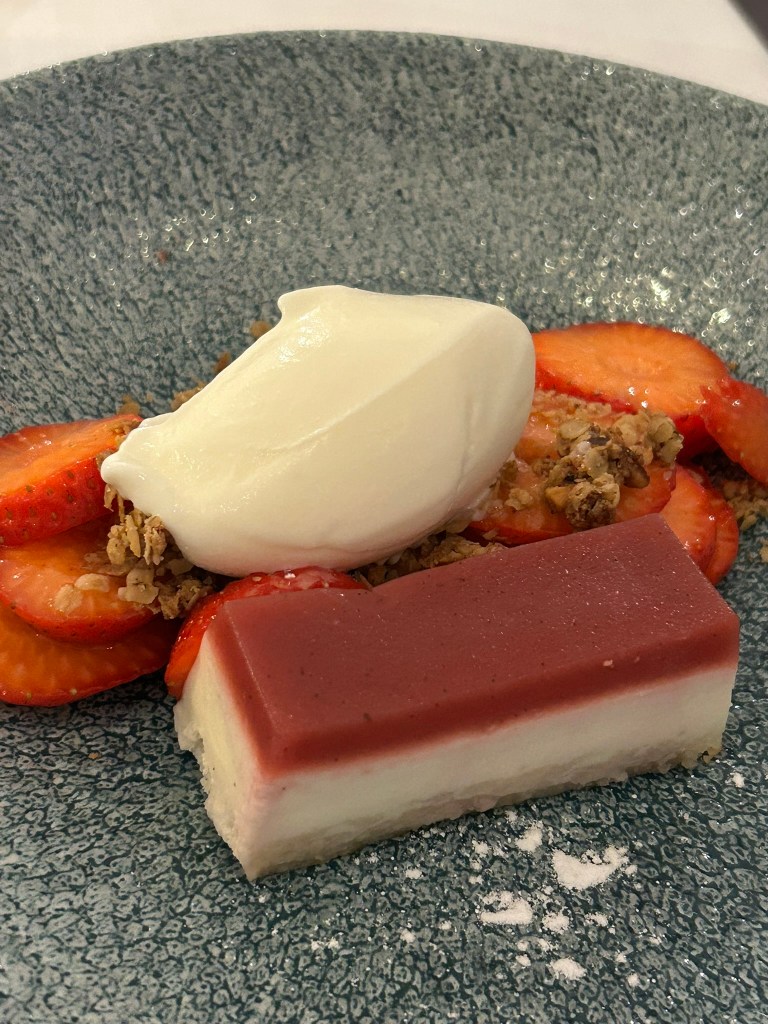
We had a bit of room left to share light and airy Rhubarb Pana Cotta with fresh strawberries and creme fraiche.
We lingered over dessert as the sun started to set over the lake.
A warm light glowed from the restaurant window as we took a leisurely after dinner stroll around the lake.
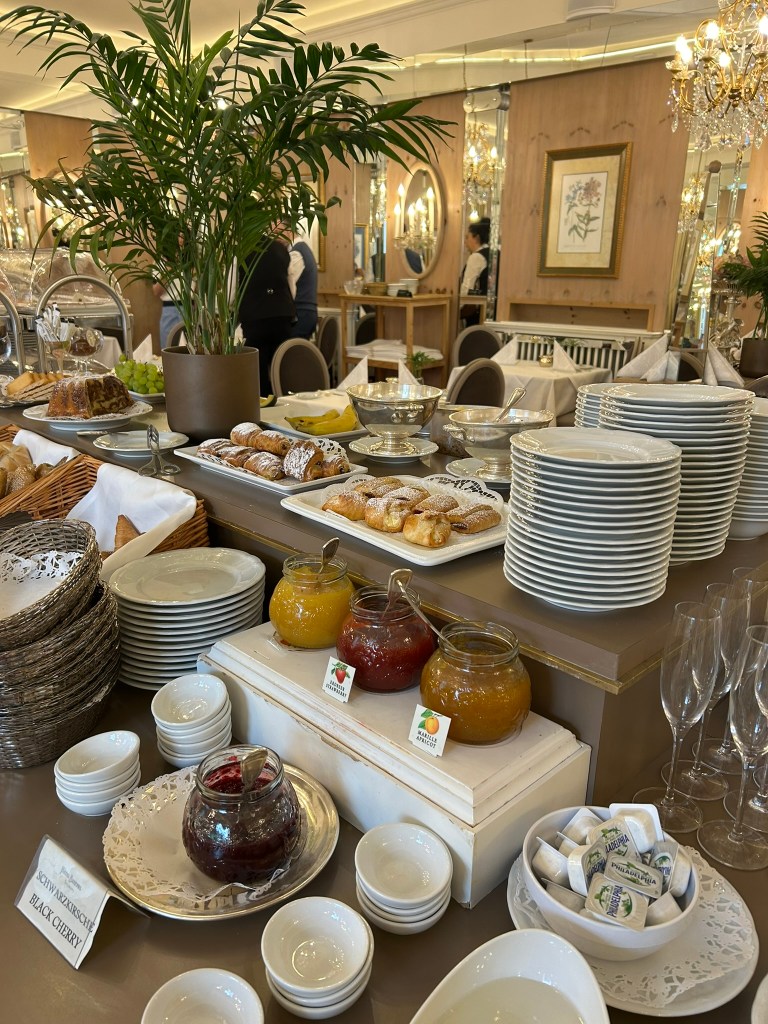
The next morning we awoke to a beautiful sunny day and enjoyed the opulent breakfast buffet at our hotel.
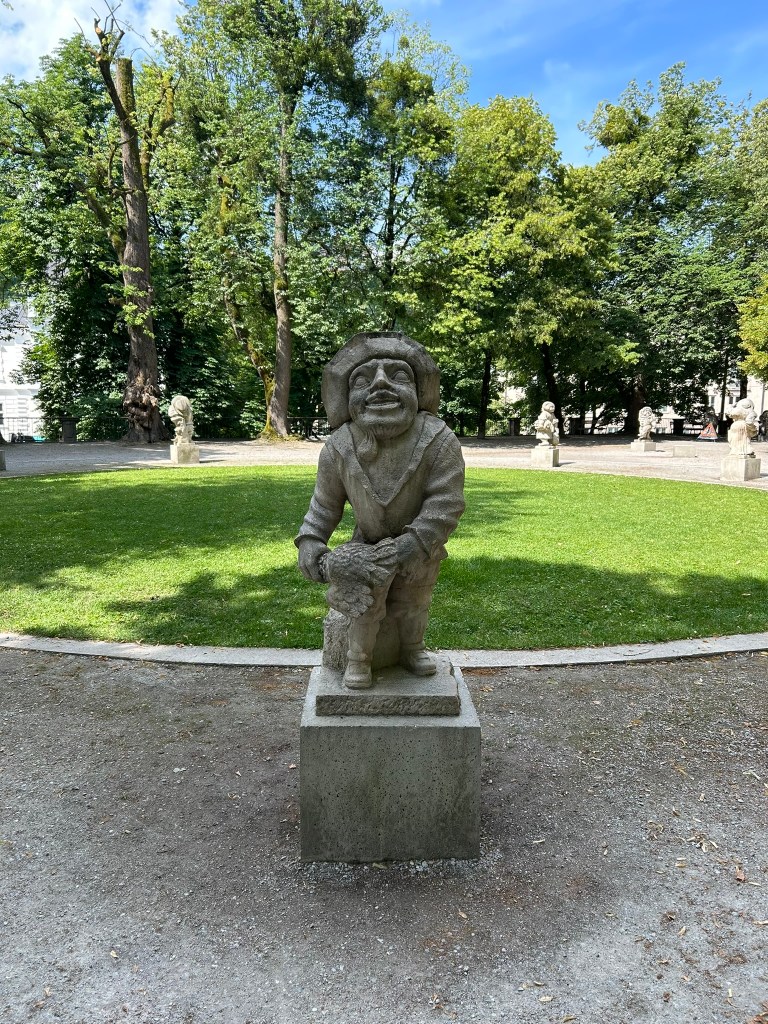
We took one last walk around town and discovered the Mirabellgarten that includes the Troll Garten with adorable and captivating tiny statues that date from the Renaissance.
As we walked around admiring the small statues, I noticed several ancient stalwart trees standing guard with troll like features begging to be included as “Trees of the Week“!
“TREES OF THE WEEK FROM SALZBURG”!
“We’ve been in the Troll Garden for a Very Long Time!“
Then we were off to our next destination to Lbjuliana in Slovenia.
Part Three of the blog- Trieste and Bolzano will come soon!
I hope this blog is an antidote to our crazy world and that it brings you pleasure and a bit of a respite for you!
The plan was to write blog entries in the order of my recent trip to Europe: Munich, Salzburg, Ljublijana, Trieste and Bolzano.
Last week, on a overcast and stormy day I was inspired to try to recreate a healthy version of a rich Slovenian dessert, Pretmurska Gibanica that we enjoyed in Ljublijana. It is layered with fillings of apple, poppy seed, farmers cheese and walnuts. The rainy afternoon flew by as I researched recipes and then assembled and baked the delicacy. I’m happy to report there was success and am excited to share the recipe for the resulting dessert.
We were fortunate to discover the non-touristy, small beautiful Central European city of Ljublijana (pronounced “Loobliana”).
Ljublijana, Slovenia
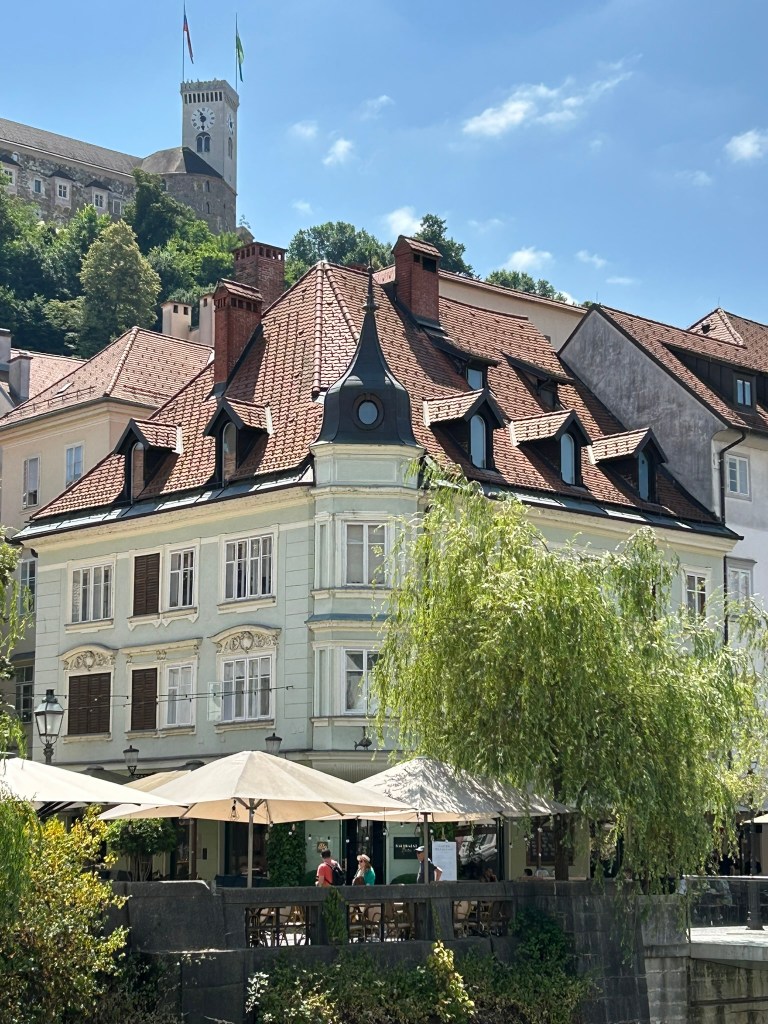
We drove from Salzburg to Slovenia; as we entered Ljublijana, we were met by stark Soviet era high rises devoid of any charm. Heading towards the center of the city, the architecture changed dramatically; the old narrow streets were charming with many streets for pedestrians only.
Ljublijana
Our hotel, The Grand Hotel Union was just a few blocks from the center of the old city with lovely views of the town. Best of all, our room was upgraded to a huge suite with high windows at no extra cost!
Ljublijana
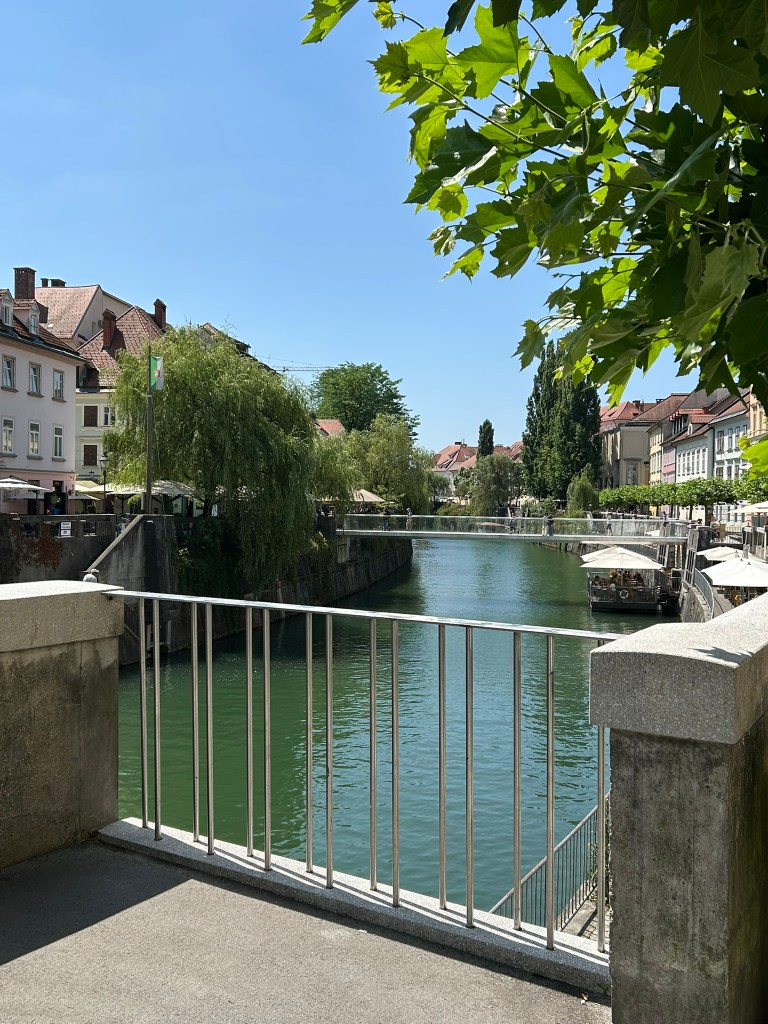
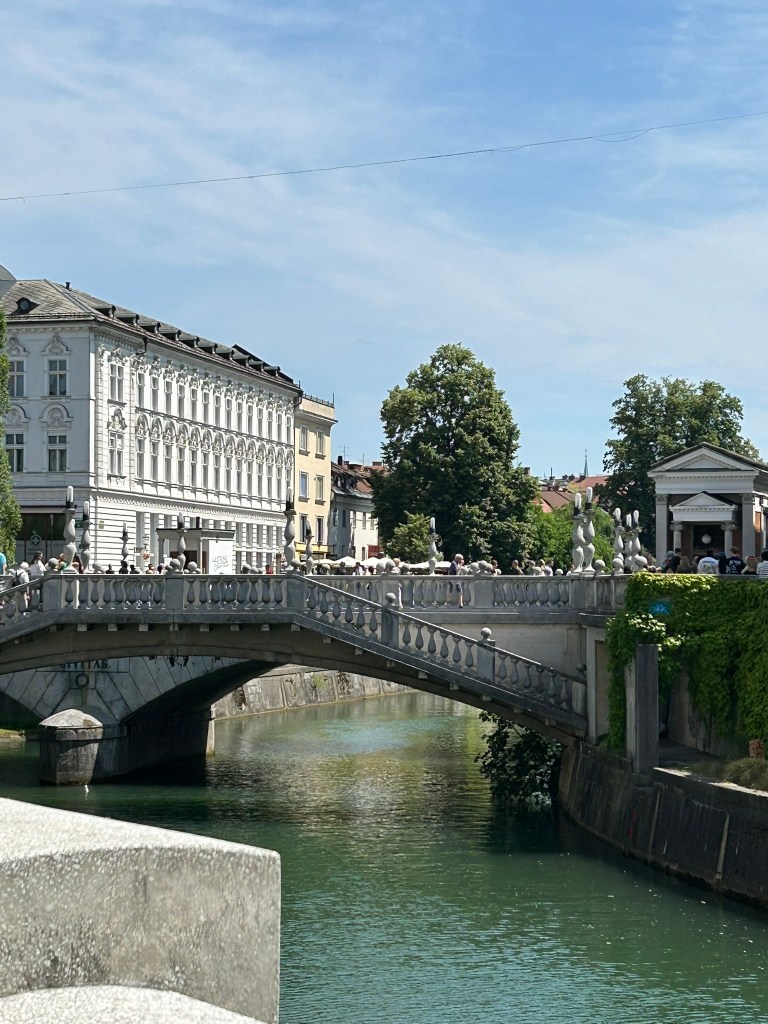
The Ljublijana River flows through center of the old city with many small bridges.
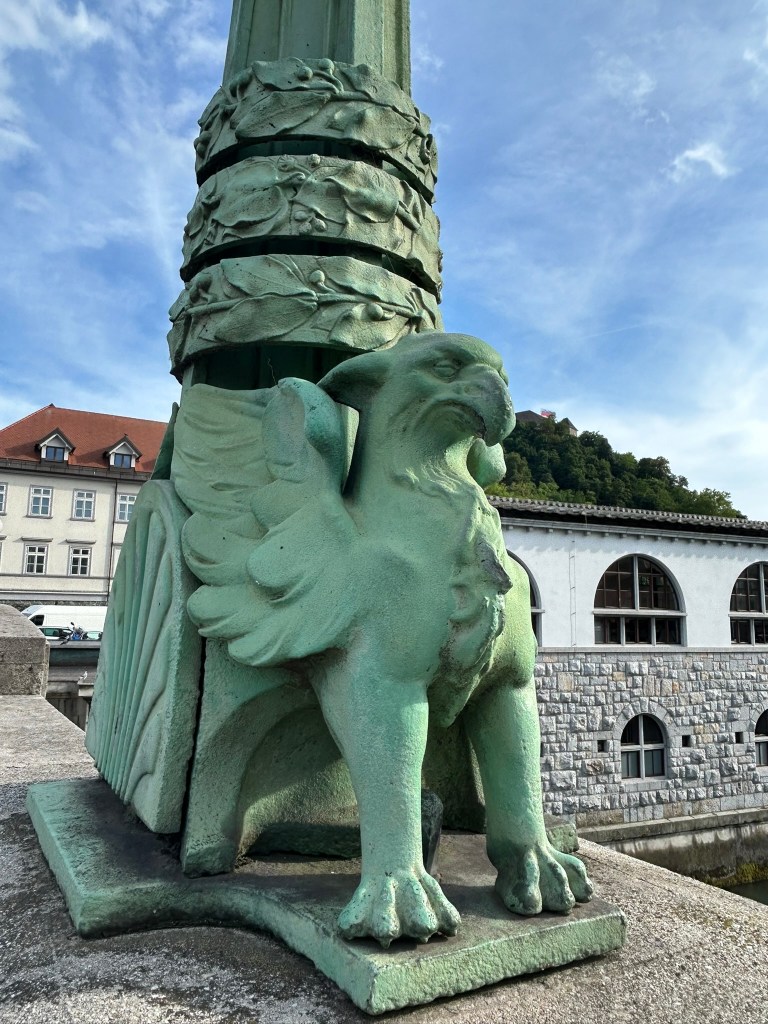
One of most famous bridges is the Dragon Bridge, protected by fierce looking dragons on all sides.
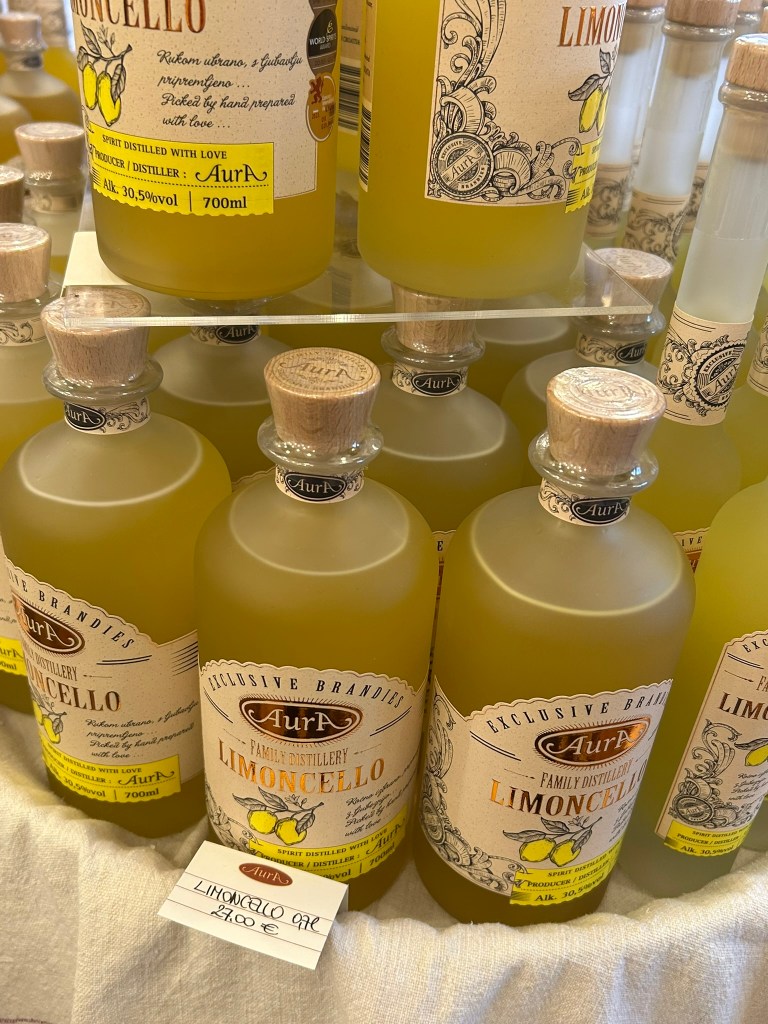
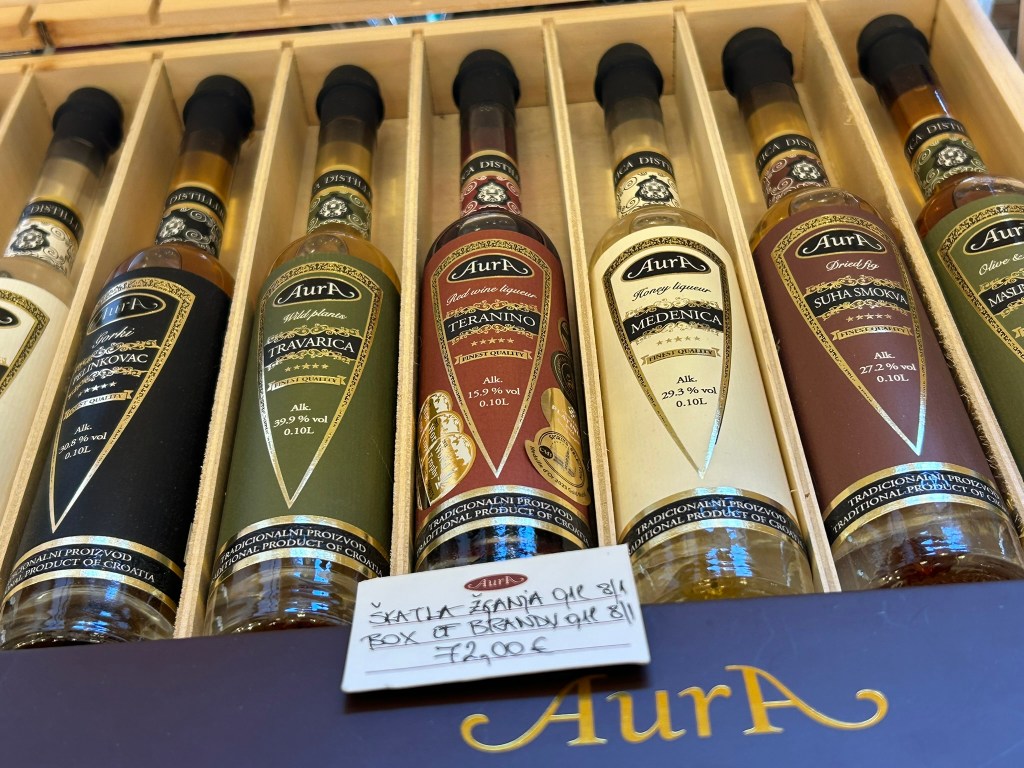
The quaint streets were lined with cafes, restaurants, wine shops, bakeries and unusual specialty shops. One lovely shop sold liquors and brandies that were distilled in Croatia; the owner proudly showed us on a map the location of their family’s distillery.
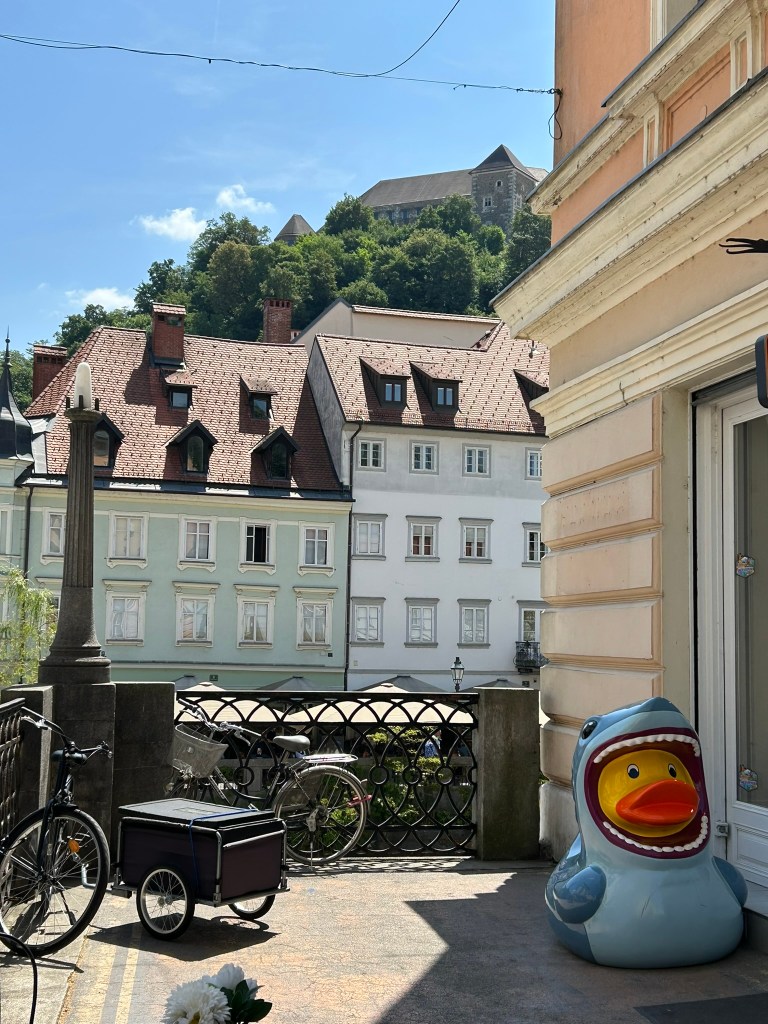
Although there were not as many tourists as in Salzburg, there were still shops that specialized in “tchotchkes”- like this shop that sold only rubber ducks!
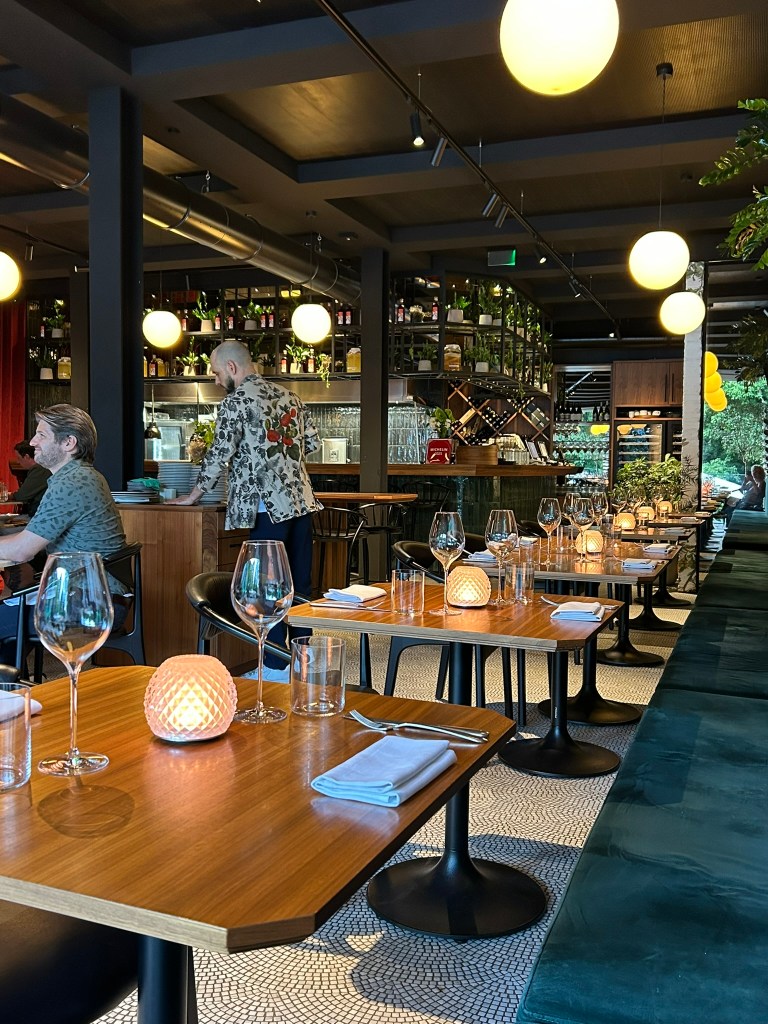
We had dinner at an excellent restaurant called JAZ that was recently opened by the three star Michelin chef Ana Roz. Tucked away on a hard to find side street, the restaurant was excellent- warm, welcoming and creative; a blend of Italian food with Slovenian and Central European influences.
JAZ
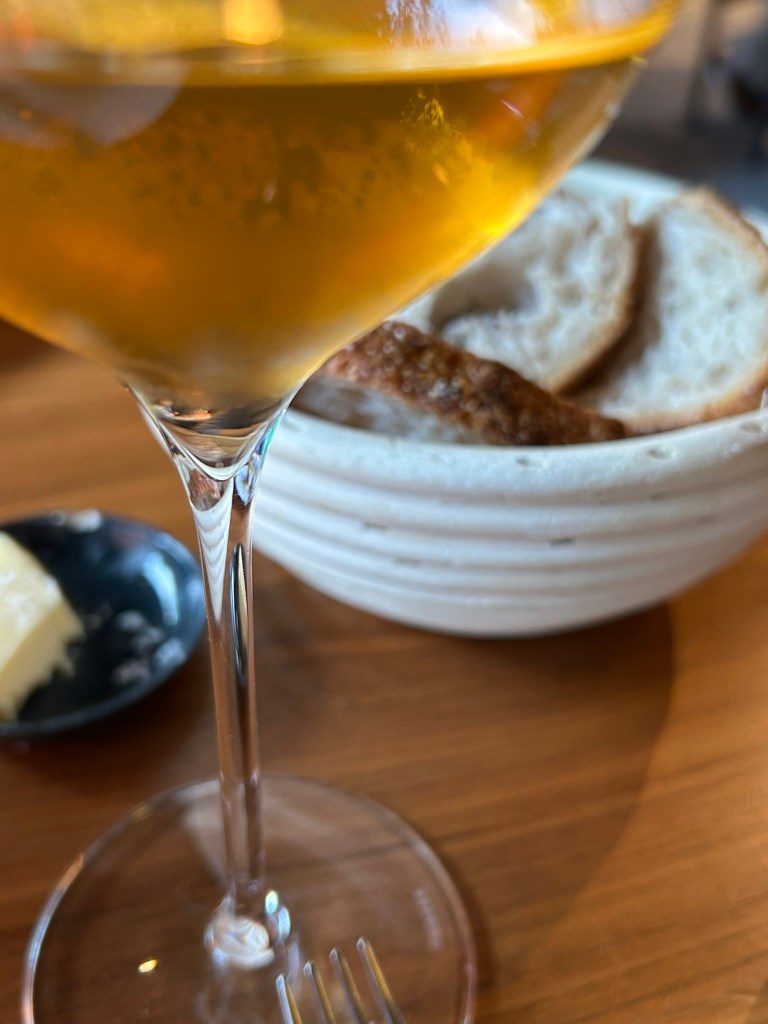
We started with a glass of chilled Slovenian orange wine (white wine where the grape skins are not removed immediately) and a basket of crusty bread with herbed salted butter.
We shared several entrees, the first a dish of bread pasta (the server explained that the pasta is made from semolina and leftover breadcrumbs.)
The beautifully presented dish was constructed with a tarragon puree, red pepper sauce, poppy seed puree and fresh ricotta cheese. The server suggested stirring everything together before we dug in.
If you will excuse the musical metaphor, this was truly a contrapuntal texture of flavors; an intricate fugue of flavors perfectly intertwined!
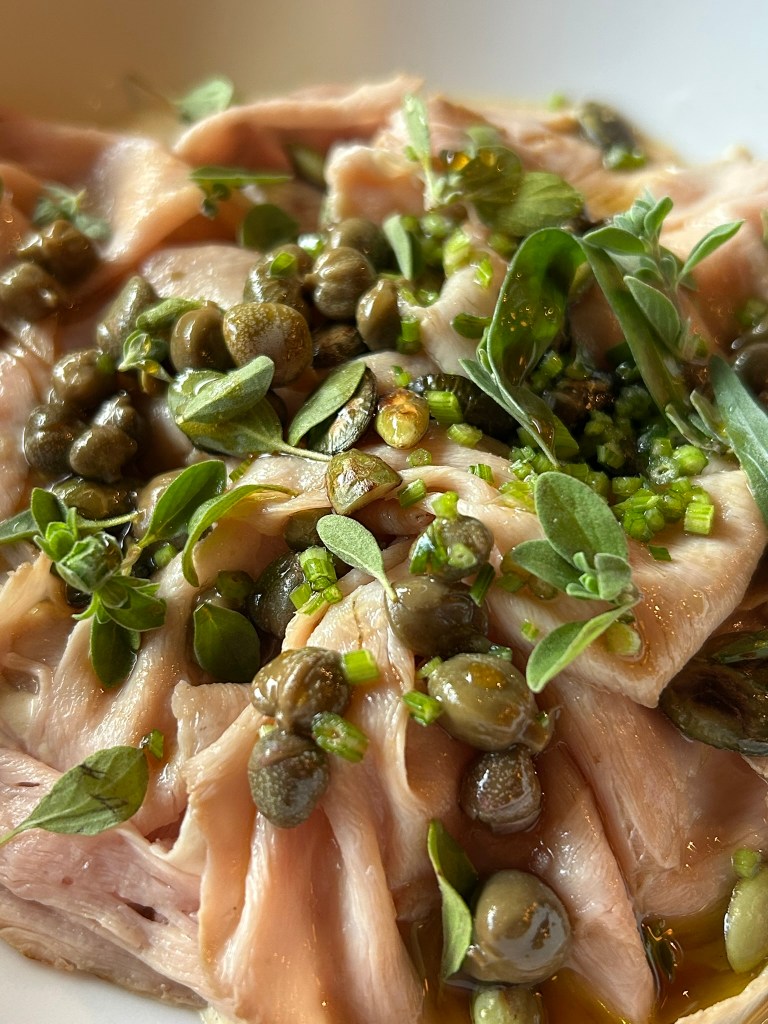
The next course was a light and delicious dish of Vitello Tonnato, (tender thin slices of boiled veal with a tuna and anchovy sauce). The dish was adorned by olive oil, fresh oregano, herbs and fat flavorful capers.
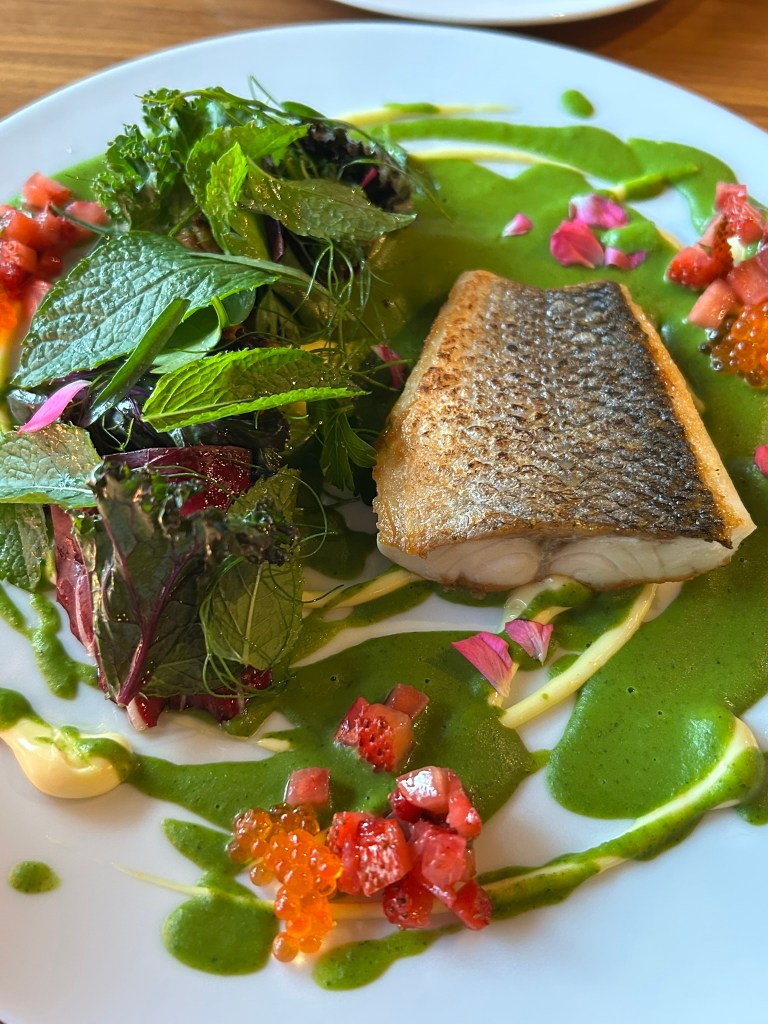
Our last course was grilled fish nestled on a pea puree with local organic greens, fish roe and tiny pieces of sweet strawberry; beautiful as a still life painting.
Thankfully we had left a tiny bit of room for a show stopping Slovenian dessert; Kobarid Struklji, a traditional dumpling filled with ground walnuts, raisins and breadcrumbs, served with a buttery caramel sauce!
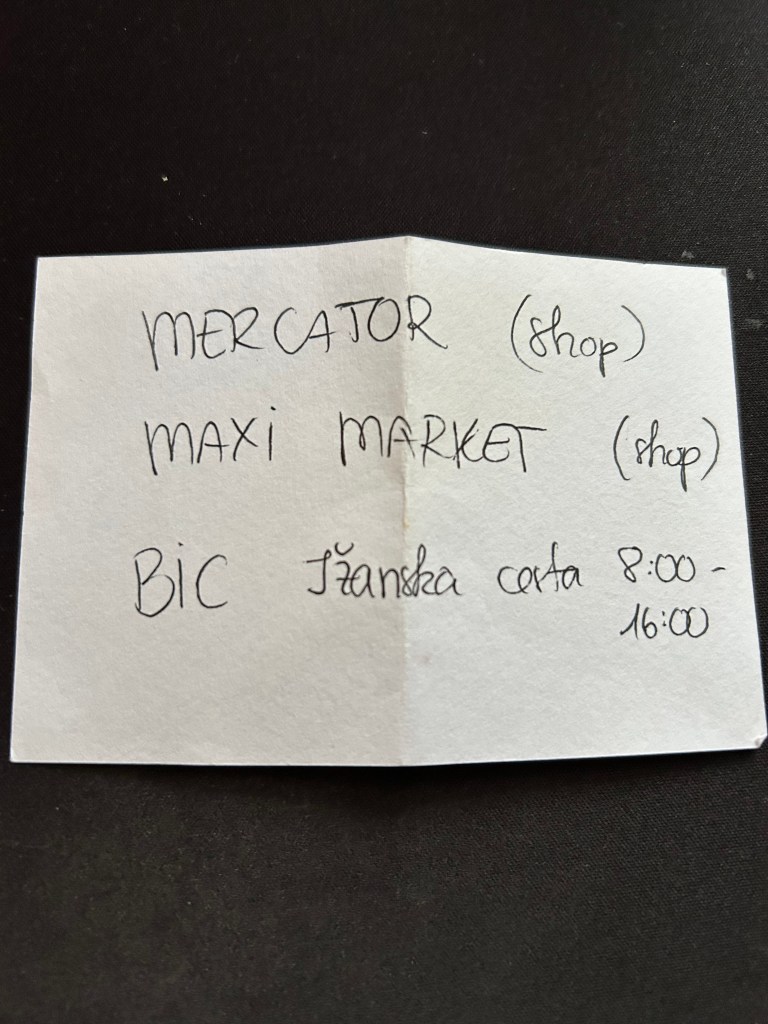
Before the trip, I had read about another traditional Slovenian dessert, a layered cake with poppy seed, apple, walnut and cheese. I asked our server about it and she told us we great pride that one must be certified to sell Prekmurska in stores. She kindly looked up a few places that sold it and wrote the names down for us on a slip of paper.
The next morning, we thought it would be fun to search out one of the bakeries that sold Prekmurska. We asked the clerk at the hotel desk for directions and he told us excitedly that they served the cake at the hotel and would we like to have a piece? We purchased a fat slice for a late morning picnic and set off for one more walk around the town before we headed off on our next destination to Trieste in Italy.
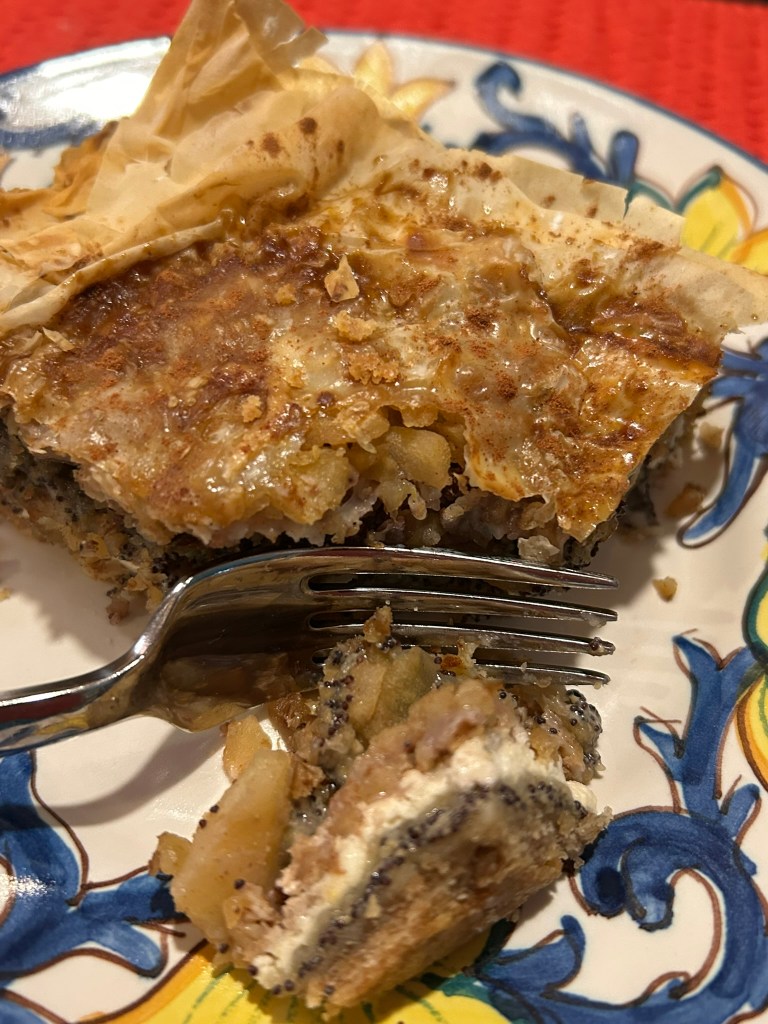
Prekmurska Gibanica
It was a hot day and we soon searched out a shady spot. We sat at the foot of a small fountain and took out our treat to share. It was cool and not too sweet- almost a second breakfast.
A group of tourists from Italy soon gathered next to the fountain and we listened to an Italian tour guide talk about the fountain. Although we did not understand a word, the happy sounds of the people in the group chattering in Italian made us excited for the next part of our trip in Italy!
Here is my recipe for Prekmurska Gibanica. I based it on a recipe that I found online from the Slovenian Kitchen blog. Their blog has the following description of the cake:
“Prekmurska gibanica originates from Prekmurje, which literally means ‘across the Mura river (region)’, and is the most renowned traditional Slovenian pastry. The name comes from güba, which in the dialect means a fold – implying that it is a type of cake that is folded.“
I wanted to make a cake that used only small amounts of coconut sugar, no cream and whole wheat flour in the pastry crust. I also added chopped golden raisons in the walnut layer. This is a project cake, but not too difficult. It makes a large cake, but it can be easily divided and frozen.
Prekmurska gibanica– Traditional Slovenian Layer Cake
1 package phyllo dough (completely defrosted)
Pastry Crust:
1 cup whole wheat pastry flour
1 cup whole grain spelt four
2 tablespoons coconut sugar
1 teaspoon vanilla
1 teaspoon salt
1 stick unsalted butter
3 tablespoons non-hydrogenated shortening (I like the organic Spectrum brand)
3 or more tablespoons ice water
Make the pastry crust:
In the bowl of a food processor combine flours, salt, coconut sugar, butter and shortening until just combined.
Add the ice water and vanilla and process until a ball shape forms. You may need to add more water a tablespoon at a time.
Form into a ball, cover with plastic wrap and refrigerate at least one hour. When you want to make the cake, bring the dough back to room temperature.
Poppy Seed Layer
8 ounces poppy seeds
2 cups milk(you can also use almond milk)
1 tsp vanilla extract
4 tablespoons butter– I used Country Crock Plant Butter with Avocado Oil
1/4 cup coconut sugar– you can use more, for a sweeter flavor).
3 teaspoons cornstarch mixed with 1/4 cup water
Walnut Layer
450 g ground walnuts
1 teaspoon ground cinnamon
1/2 cup golden raisons (cut into small pieces if large)
1/4 cup coconut sugar
Farmer’s Cheese Layer
16 ounces farmer’s cheese (can be replaced by ricotta– if you use ricotta, make sure it is well drained).
1 egg
1/4 cup maple syrup
1 tsp vanilla extract
zest of 1 lemon
Apple Layer
4 apples
1 tsp cinnamon
zest of 1 lemon
8 ounces low fat sour cream– I added 1/4 cup maple syrup and the zest from 1/2 lemon
Poppy Seed Layer
For the filling, place poppy seeds, sugar, milk and butter in a sauce pan and bring to a simmer. Cook at medium heat, stirring occasionally until the poppy seeds are cooked and the mixture thickens slightly- this will take about 15 minutes. Add cornstarch slurry and cook until mixture thickens. It will thicken more as it cools.
Add vanilla extract.
Cover and place in fridge.
Walnut Layer
Grind walnuts in food processor- add cinnamon, coconut sugar and golden raisons.
Farmer’s Cheese Layer
Mix all the ingredients for the farmer’s cheese layer together.
Apple Layer
Core the apples, peel them, and grate them. I placed my apples in the food processor and pulsed them for a few seconds- very quick!! Mix the grated apples with cinnamon, and the zest of 1 lemon.
Make Prekmurska gibanica:
Once all the fillings, base dough and phyllo dough are ready, you can start building the gibanica.
First, butter a large rectangular baking pan.
On a floured surface, roll out the pastry crust into a rectangular shape. Place the dough on the bottom of the baking pan.
On the top of the base dough, put one layer of phyllo pastry, spread sour cream over it, and another layer of phyllo dough.
Put half of the poppy seed filling on top of that.
The poppy seeds are then covered with another layer of phyllo dough, sour cream, and phyllo dough.
Over that spread half the farmer’s cheese filling.
The third filling is then walnuts, followed by apples. Each filling is covered with phyllo dough, sour cream, and another phyllo dough layer.
Repeat the procedure with the fillings in the same order and complete with a layer of phyllo dough, sour cream, and one final phyllo dough layer.
On top of the final phyllo dough layer, spread sour cream generously. Sprinkle top with ground cinnamon.
Bake in a preheated oven at (355 Fahrenheit) for 1 hour. If top starts to brown too quickly, cover loosely with foil until done. Let cool for 1 hour before serving.
ENJOY!!
AND: Here is the “Tree of the Week”!
“I Feel Like I have a Hole in My Head!”Buttercup Preserve-Stanfordville, NY
I am back from an amazing eight day whirlwind trip with my travel buddy Carol to Munich, Salzburg, Ljubjiana in Slovenia, Trieste and Bolzano! With many wonderful art and food adventures, I am just starting to sort through pictures; a few blog entries are soon to come.
In the meantime, here is a short blog from closer to home with a cooling recipe for a no-bake blueberry and strawberry tart to beat the heat!
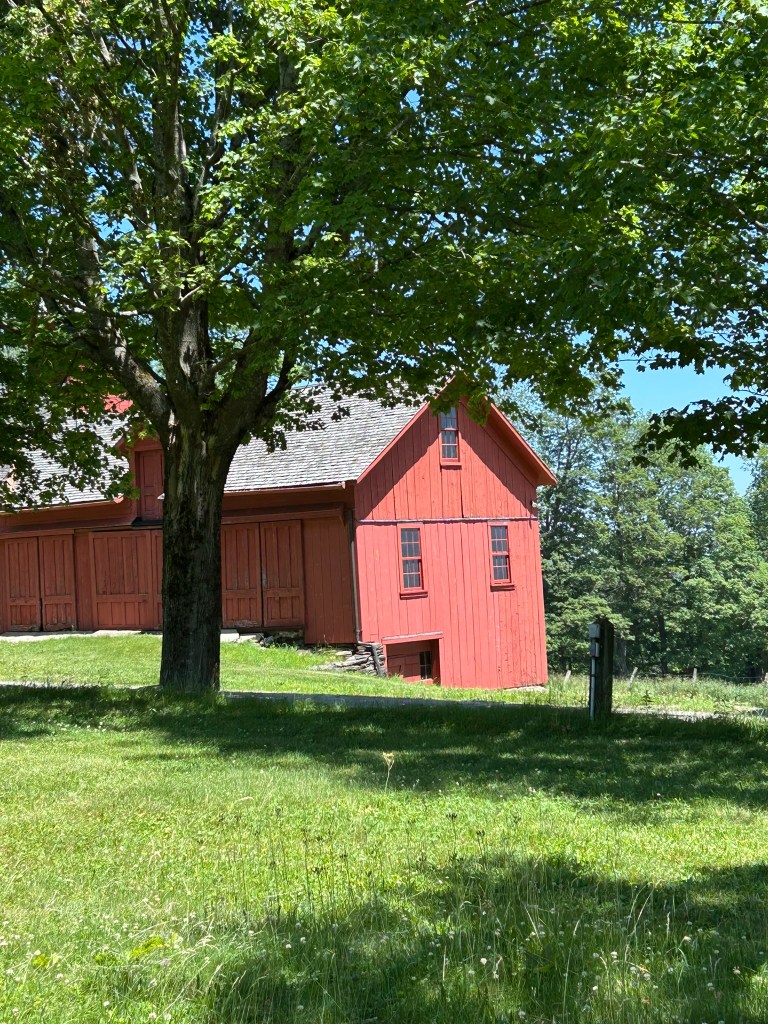
On one of the hottest days last week, we found a cool shady picnic spot with a heavenly breeze at the Bryant Homestead in Cummington, Massachusetts.
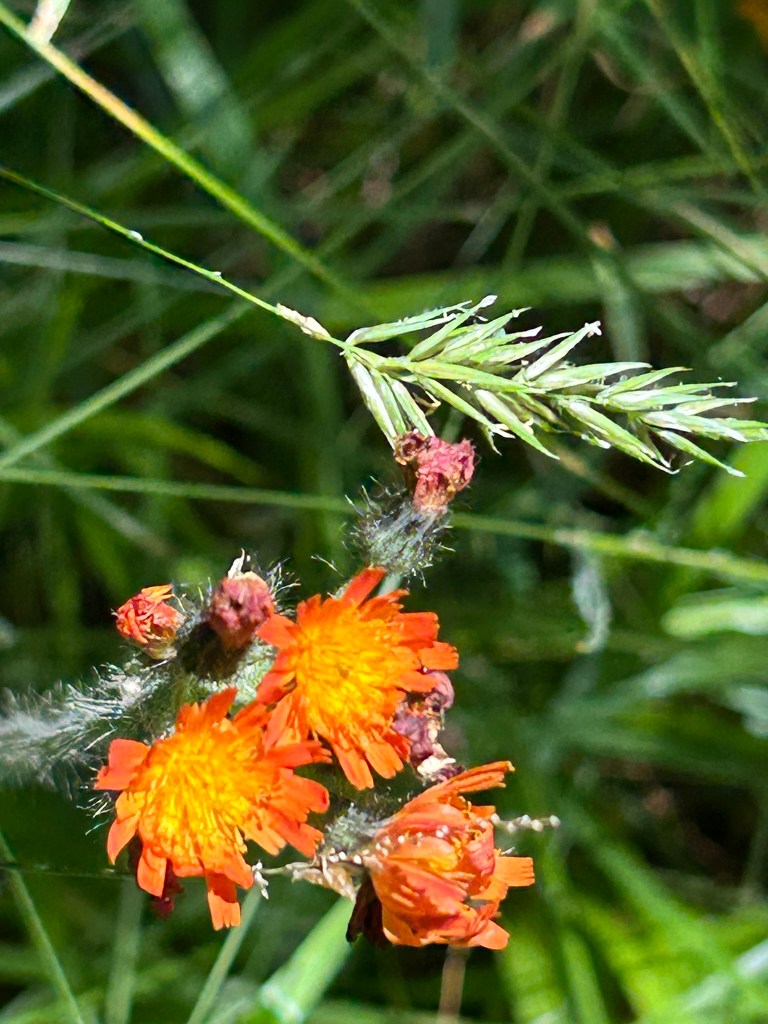
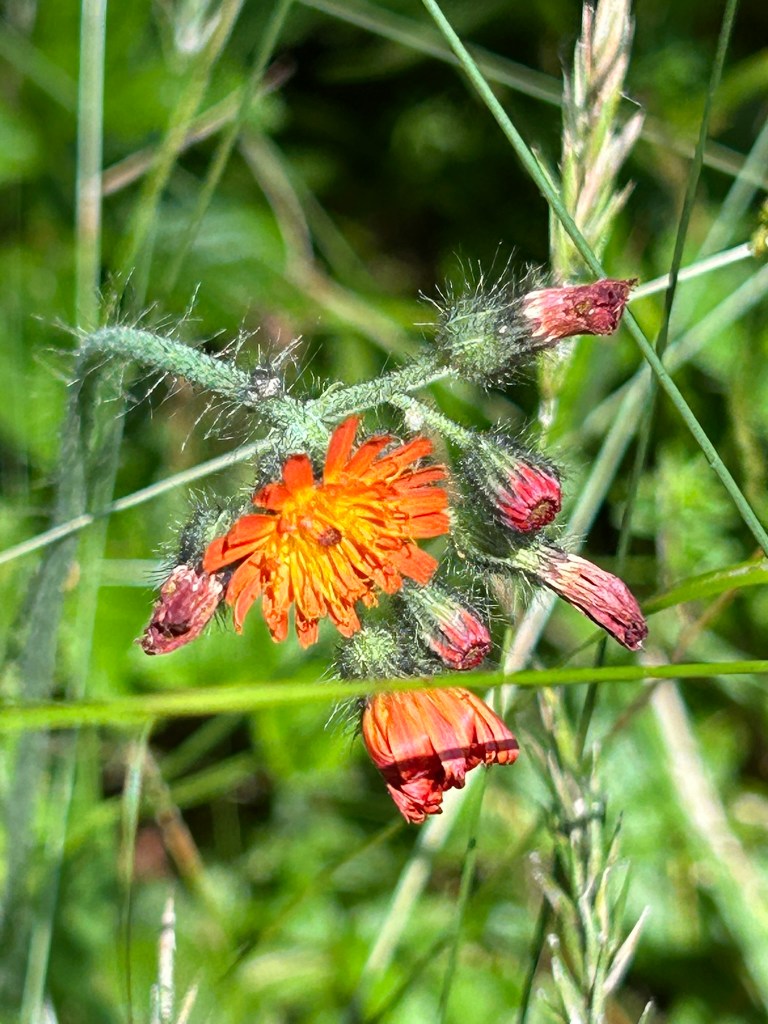
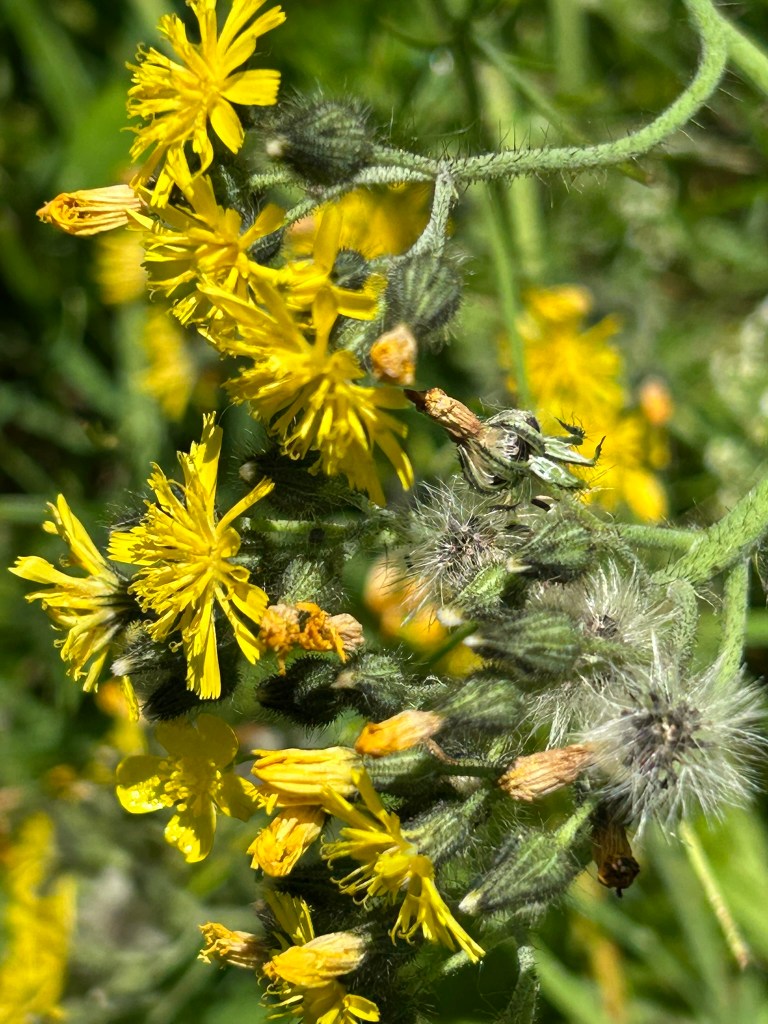
In the distance was a sunny field dotted with wildflowers. I ventured briefly into the hot sunny meadow and discovered that it was filled with beautiful “Devil’s Paintbrush” wildflowers.
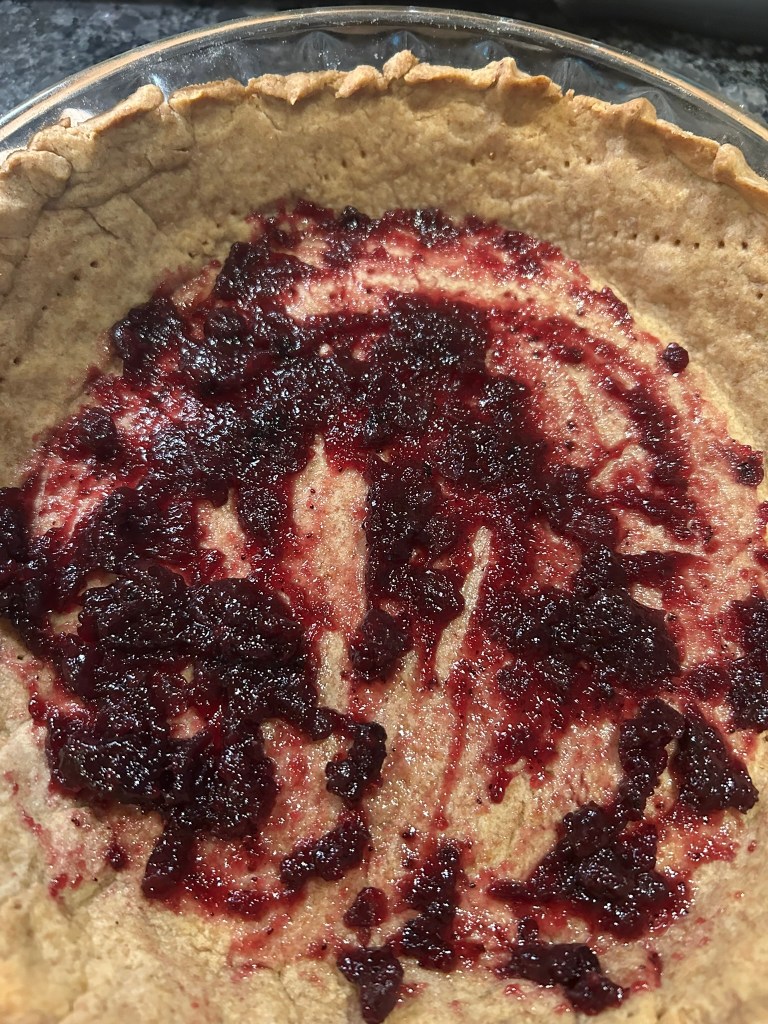
On the way home, we stopped off at The Old Creamery Coop for cold drinks; jars of organic blueberry spread with no added sugar were for sale. I imagined that this would be good for a fruit tart with the jam spread on the bottom of the crust.
Usually at this time of the year, I look forward to picking sweet succulent organic strawberries at the Thompson Finch Farm in Ancramdale, New York. It was much to hot to think about venturing out into the sun. Luckily, the kind people at Thompson Finch offered to head out very early in the morning to beat the heat to pick berries, with a very generous price of one dollar more a pound. I quickly accepted their offer and drove out to the farm in the early evening to pick up my order. Almost back home with a heaping 10 pound box of berries that perfumed our car with their sweet fragrance, a family of red foxes was crossing the main road. Cars stopped in both directions and we were treated to the fox parents, one in front and the other in the back slowly shepherding three furry adorable fox pups safely across. It was a lovely end to a hot summer day in the country!
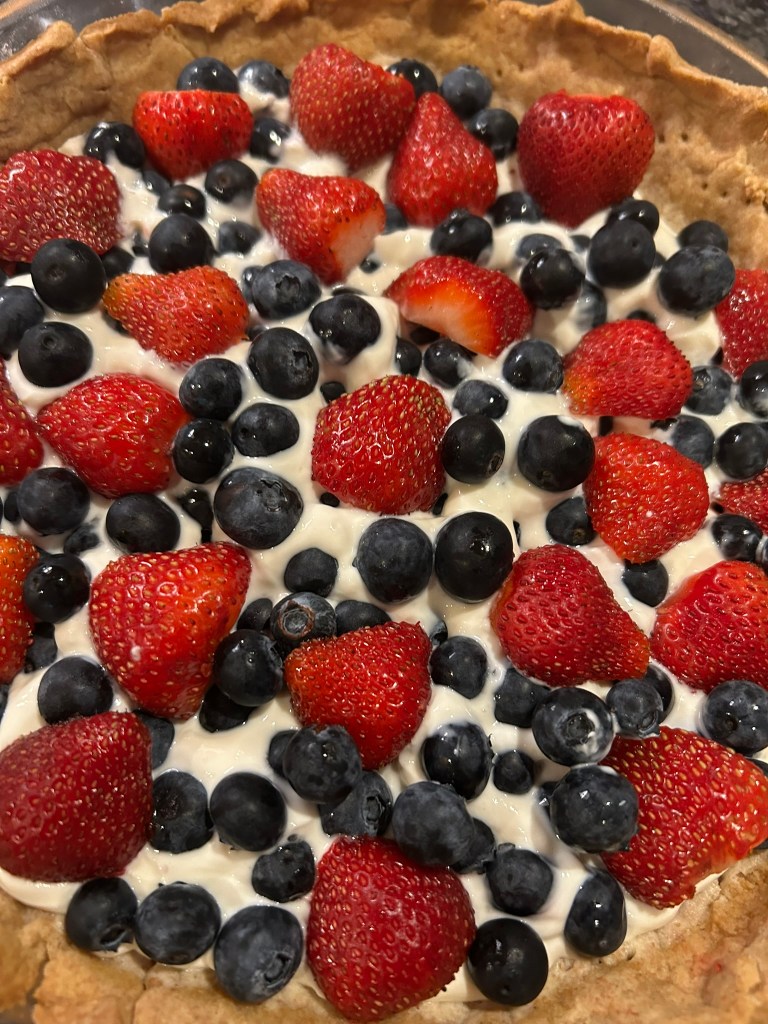
Now, with strawberries in hand, my tart idea was complete. I pre -baked an olive oil crust; you could also use a purchased graham cracker crust. I made a filling with whole milk Greek yogurt, vanilla and maple syrup. I heaped this into the crust spread with the blueberry jam and topped it with fresh blueberries and the sweetest strawberries imaginable; very easy to make, cooling and rich tasting!
ENJOY!
No-Bake Blueberry and Strawberry Tart
Filling:
1 1/2 cups whole milk Greek yoogurt
1 teaspoon vanilla
1/4 cup maple syrup (or to taste)
Whisk together ingredients and place in refrigerator while preparing crust
Topping:
2 cups fresh blueberries, washed and patted dry on paper towel
1 cup or more fresh strawberries, washed and patted dry on paper towel
Cut strawberries in half if small or slice if larger
For Bottom of Pie Crust:
Organic Blueberry Jam to- best if just sweetened with fruit juice
Olive Oil Crust:
3/4 cup whole grain spelt flour
3/4 cup whole wheat pastry flour
1 teaspoon salt
2 tablespoons non-hydrogenated vegetable shortening (I used Spectrum Organic-All Vegetable Shortening).
3 tablespoons extra virgin olive oil
2 tablespoons non-fat yogurt
3 tablespoons ice water (more if necessary)
Make Pastry Crust:
Combine flours and salt in the bowl of a food processor.
Add olive oil, shortening, yogurt and ice water.
Process until the mixture forms a ball. You may need to add a bit more ice water, add 1 tablespoon at a time.
Wrap ball of dough in plastic wrap and refrigerate for at least 1 hour to let gluten in the dough relax.
Pre-heat oven to 350 degrees Farenheit.
Bring dough to room temperature and roll out into a large thin circle.
Place dough in a pie tin and line the pie tin with a sheet of parchment paper.
Prick dough on bottoms and sides with a fork.
Place coffee beans or pie weights over the paper and bake in the oven about 10 minutes. This is called “baking blind” and helps to prevent the crust from shrinking away from the sides.
After 10 minutes, carefully remove the paper and weights and continue baking the crust about 15-20 minutes more until it is lightly brown. Remove from the oven and let cool completely before filling.
To Assemble Pie:
Spread pie crust with about 2-3 tablespoons blueberry jam.
Spoon in yogurt filling.
Heap berries on top- can be eaten immediately or refrigerated for a few hours before serving.
April 21st- The last few weeks have been rainy, raw and windy; a slow start to spring. So, when the sun finally peeked tentatively out, I made room in my schedule to head out for a hike at the Drury Preserve in Sheffield, Massachusetts.
This time, I remembered to pay attention to my surroundings! As I entered the woods, I breathed in the rich piney air and happily headed off on the familiar sun dappled trails. It felt as if I had come home.
As I continued on my walk, my thoughts turned to music and to upcoming changes in my musical career. Thursday, April 24th at the FDR Presidential Library and Museum, will be my last performance with The Hevreh Ensemble; a group that I started over 20 years ago! I thought of our many trips to Europe and having the chance to travel to Iceland- wonderful memories. No regrets here, but bittersweet thoughts of leaving the group. I have decided to devote more of my musical energy to Early Music and performance on the Recorder.
And, I look forward to writing future blogs about some of the trips that Hevreh Ensemble took to Prague, Vienna, Krakow , Berlin, Amsterdam and Warsaw!
I walked past a beautiful meadow and was quickly brought out of my reverie; on the small hillside next to me, I noticed one of the first woodland flowers of spring, Blunt Lobed Hepatica.
As I looked my closely, I saw small bunches of the flowers clustered all over the surrounding area.
Tiny speckled leaves of Trout Lilies peaked shyly out of the ground.
As I was finishing my walk, my thoughts had turned to making Matzoh Ball Soup for our upcoming Passover Seder. I did pay attention to where I was going and I am happy to report that this time, I did not get lost. I retraced my steps to my car without any mishap!
Each year, we look forward to sharing Passover with dear friends; cooking a large traditional meal that always includes Matzoh Ball Soup. Over the years, I have come up with a recipe for matzoh balls that are light and also flavorful. I make a rich chicken stock with diced carrots and a touch of dill- together this soup shared with friends is truly an antidote for our crazy world!
ENJOY!!
Matzoh Balls (Adapted from Bon Appetit Magazine- August 20, 2004 issue)
Ingredients:
4 large eggs, separated
1 teaspoon salt
Dash cayenne pepper
2 teaspoons white onion, grated
2 tablespoons unsalted butter, melted ( I use Extra Virgin Olive Oil and it works just as well)
3/4 cup matzoh meal
Preparation:
In a medium bowl, beat the egg whites until they hold stiff peaks; set aside. In a large bowl, whisk together the egg yolks, salt, cayenne pepper, onion, and olive oil. Fold the egg whites into the egg yolk mixture until just combined. Gently fold in the matzoh meal in several additions. Cover bowl with plastic wrap and refrigerate one hour. In a large pot, bring water to a boil. Moisten hands with cold water and roll the matzoh mixture into 3/4 inch balls. After all the balls are formed, drop them into the boiling water. Return to a boil, then reduce heat. Cover and simmer for 30 minutes. Remove with a slotted spoon. These freeze beautifully- let cool completely and then place in a large plastic container. To use, defrost slowly at room temperature and then place in chicken stock and heat. I like to add diced carrot and fresh dill to the soup.
RICH CHICKEN STOCK
Ingredients:
1 whole chicken (about 3-4 pounds)
1 large onion peeled and cut into 4 pieces
1 large stalk celery- cut into 3-4 pieces
1 large carrot- peeled and cut into 3-4 pieces
1 bay leaf
1 teaspoon dried thyme
15 whole peppercorns
1 teaspoon dried dill
1 tablespoon salt
TO MAKE CHICKEN STOCK:
Place all ingredients into a large stock pot
Cover with cold water
Bring to a boil- remove any scum that may rise to the top, reduce to a simmer. Cover pot and simmer about 3 hours.
Let cool completely- pour into a large bowl and refrigerate overnight. The next day remove fat from top. The stock can now be used or frozen.
It’s the end of winter; last week the roads and paths on our walks were still icy and the wind had a bitter bite.
We are hearing more birds, the light is bright and the air smells sweet- spring feels like it is just around the corner.
I love cookbooks and have way too many. The shelves in the pantry are lined with dog eared and batter smudged cookbooks and the bookshelves in our living room are lined with cookbooks that were once eagerly read and and since have become ignored.
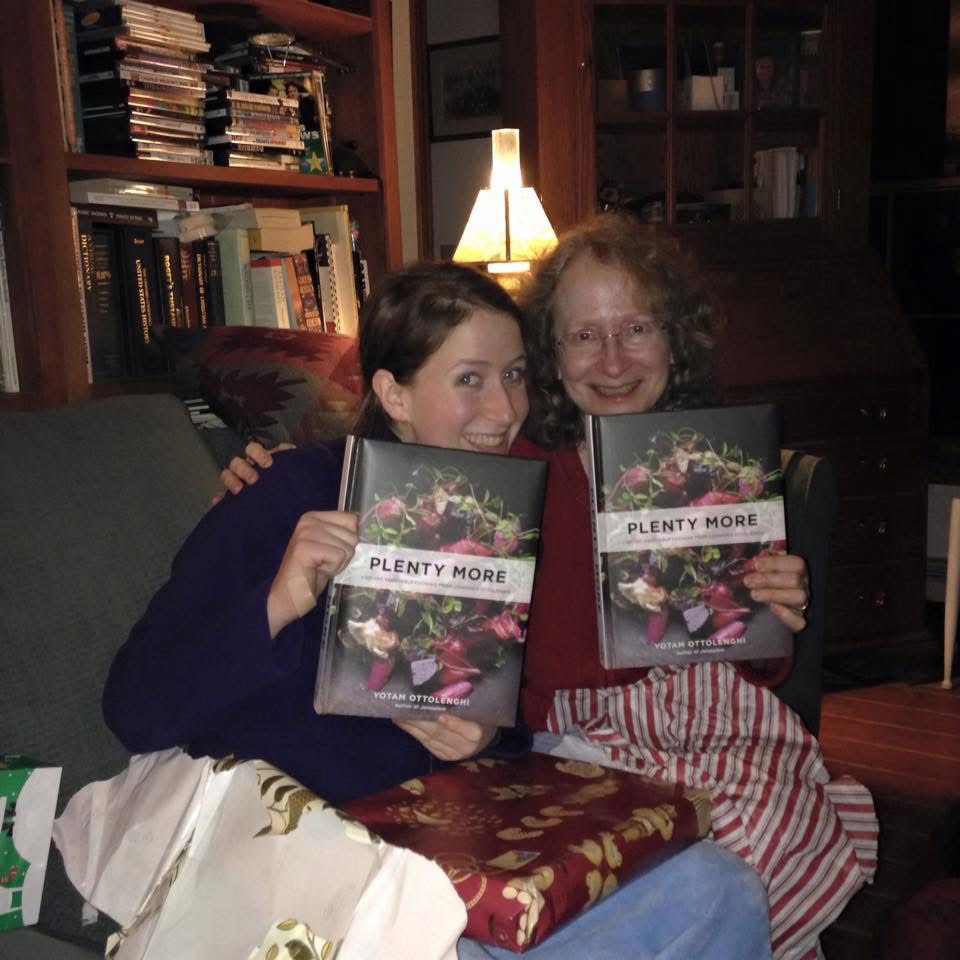
One of my favorite food writers is Yotam Ottolenghi, an Israeli born British chef. His recipes are deeply flavorful and creative. A few years ago for the holidays, my daughter and I surprised each other with the same Ottolenghi book!
Lately, when I come downstairs in the morning, I have discovered several volumes of cookbooks opened up to enticing looking recipes- little suggestions from someone??
One of the books was opened up to page from Ottolenghi’s book, Flavor. The recipe for Eggplant Ricotta Dumplings looked delicious and even though the recipe included ricotta and parmesan cheese, it did not look too rich.
The recipe had several steps, but was not difficult and the resulting dish was well worth any extra effort.
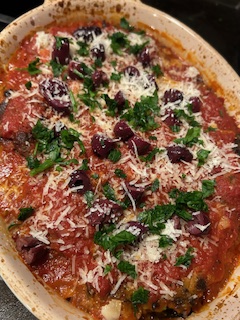
Roasted eggplant was combined with ricotta, eggs, parsley, fresh breadcrumbs, garlic and basil, formed into oval shaped dumplings and baked in a light paprika inflected tomato sauce topped with kalamata olives and basil. It tasted like a combination of eggplant parmigiana and baba ganoush. A few portions were leftover; the flavors melded overnight and were delicious the next day!
Eggplant Ricotta Dumplings ala Parmigiana (from Yotam Ottolenghi’s book, Flavor
1 1/2 cups/90g fresh breadcrumbs, ideally sourdough 4 eggplants, cut into roughly 2½cm cubes (1kg net weight) 1/2 cup plus 2 tablespoons/150ml olive oil Salt and black pepper 6 tablespoons/100g ricotta 2/1/12 ounces/75g parmesan, finely grated, plus extra to serve 2½ tbsp parsley leaves, finely chopped 1 whole egg, plus 1 yolk extra 1½ tbsp plain flour 6 garlic cloves, peeled and crushed 4 tbsp basil leaves, roughly chopped- I did not have basil on hand- chopped parsley worked well! large can peeled plum tomatoes , blitzed smooth 1½ tsp tomato paste 1½ tsp sugar– I omitted sugar in my version ¼ tsp chili flakes ¾ tsp paprika 2 tsp fresh oregano leaves, finely chopped
1 1/2 cups/ 400 ml water 1/3 cup/45g pitted kalamata olives, torn in half
Heat the oven to 350F/160C. Spread out the breadcrumbs on an oven tray and bake for 12 minutes, until lightly browned and dried out. Remove, leave to cool and turn up the oven to 450F/220C.
On a large oven tray lined with baking paper, toss the eggplants with 5 tbsp/ 75ml oil, half a teaspoon of salt and a good grind of pepper. Spread out on the tray, bake for 30 minutes, tossing once halfway, until golden brown, then chop into a chunky mash and put in a large bowl. Mix in the ricotta, parmesan, parsley, egg, extra yolk, flour, breadcrumbs, a third of the garlic, two and a half tablespoons of basil, a quarter-teaspoon of salt and a good grind of pepper. With lightly oiled hands, shape the mix into 16 golf-ball-sized dumplings, each weighing about 2 oz/ 55g each, and compress so they hold together.
Heat two tablespoons of oil in a large, nonstick frying pan on a medium-high flame, and fry half the dumplings for three to four minutes, turning them until golden brown all over (adjust the heat if they’re browning too much), then transfer to a plate and repeat with the rest of the dumplings.
Heat the remaining two tablespoons of oil in the same pan, fry the remaining garlic for a minute, until fragrant, then stir in the tomatoes, tomato paste, sugar, chilli, paprika, oregano, a teaspoon of salt and a good grind of pepper, and cook, stirring occasionally, for eight minutes, or until thickened slightly. Pour in 400ml water, bring to a simmer, then lower the heat to medium and simmer for 10 minutes. Add the dumplings and cook for 15 minutes, or until cooked through.
Remove from the heat, scatter over the olives, the last of the basil and a grating of parmesan, and serve straight from the pan.
Outside the Clark Art Institute in Williamstown, Massachusetts, the hills in the distance were gray and foreboding and the wind chill was sharp and bitingly cold; what better time to be inside!
We were delighted to discover a special exhibition at the Clark: Wall Power! Modern French Tapestry from the Mobilier national, Paris. The exhibit displayed a wide range of tapestries created by contemporary artists from the 1920’s to today. Artists, weavers and dyers revived ancient techniques and created bold and daring new works of art. The room was full of brilliant colors and patterns; warming to the soul.
The beautifully curated exhibit included the following insightful commentary:
“Since the middle of the 20th century, the art of tapestry has continued to offer a vast field of expression to major artists, to the most varied trends and plastic research: Picasso, Matisse, Miró, Delaunay, but also to abstract artists (Hartung, Vasarely) non-figurative (Nemours, Bazaine), part of Minimal Art, new realism (Hains), narrative figuration (Erro, Aillaud) or the Supports-Surfaces group (Buraglio, Rouan, Pincemin). More recently, Louise Bourgeois, Bertrand Lavier, Sheila Hicks or Orlan have distinguished themselves with their woven creations. In perpetual evolution, the works created by the Manufactures nationales reflect the most diverse trends in contemporary art”.
“A Thousand Wildflowers” by Dom Robert, a Benedictine Monk, recalled wildflower fields that were popular in the Middle Ages.
“A Thousand Wildflowers”- Dom Roberts (1907-1997)
Several of the tapestries were designed from existing works of art and then woven. Designing a work and then weaving it with a team of weavers, can take up to 2 or 3 years.
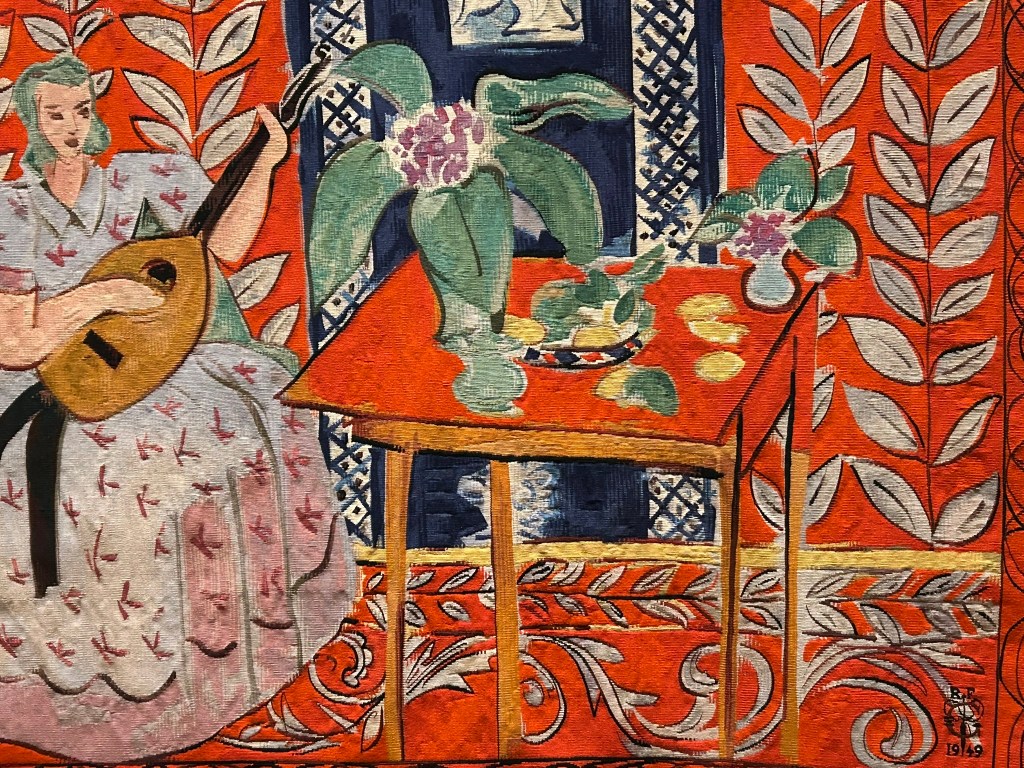
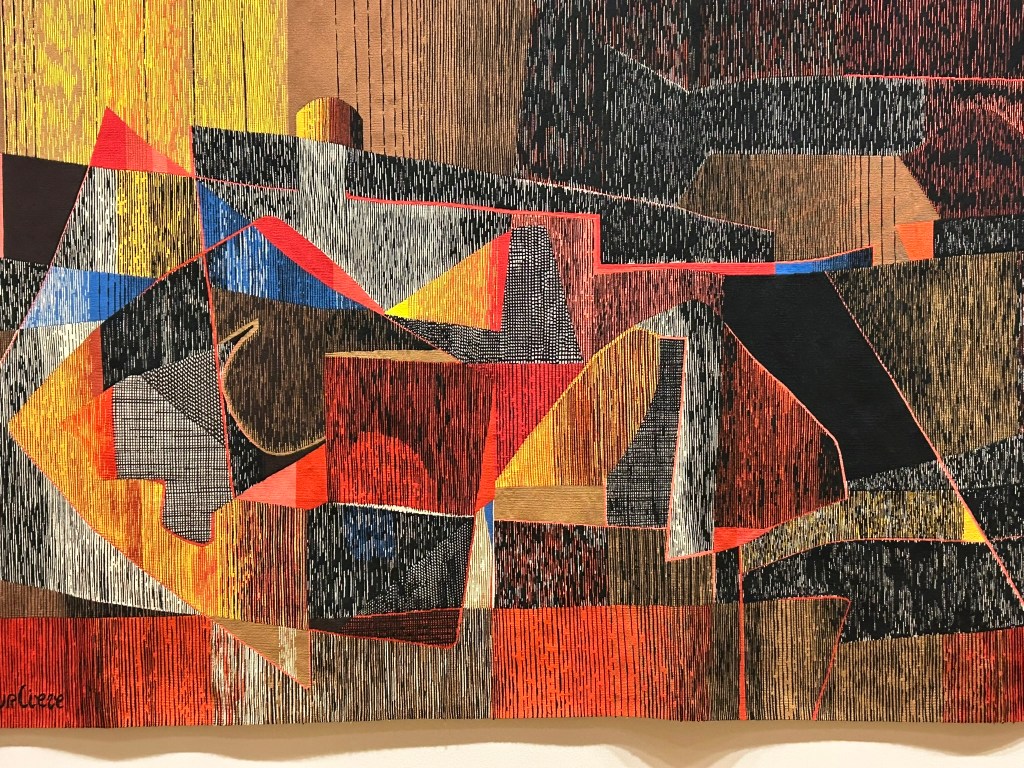
“Swallow Love”- Joan Miro (1893-1983)“Evening Music“-Pauline Peugniez-1890-1987“The Woman with the Lute”- Henri Matisse (1869-1954)“The Vines of Volnay”- Michel Tourliere (1925-2004)
The French artist Michel Tourliere who lived from 1925-2004, came from wine country in Burgundy and specialized in designing woven tapestries. His works often depict landscapes from Burgundy.
We also viewed stunning contemporary works by the American artist Kiki Smith and the French artist Jean Messagier.
“Seven Seas”- Kiki Smith (American-born Germany 1954)“Red Flames”- Jean Messagier (1920-1999)
At the end of the exhibit, it was fascinating to see the back of “Red Flames”; a work of art in itself!
And then, back home for some hearty soup!
I had roasted a chicken with basil pesto slipped under the skin and was looking for a use for the leftover chicken. I decided to make a quick stock with the remaining chicken carcass. I threw the chicken bones along with a carrot, onion, celery, thyme, peppercorns, salt and bay leaf into a big pot, covered it with water and let it simmer on the stove for a few hours and then strained the stock and discarded the solids. The result was a delicate basil scented stock, just right for beans and kale! I defatted the stock and added chopped, onion and carrot, a can of white beans and a small bunch of chopped lacinato kale. Along with bay leaf, dried thyme, dried sage and dill, I simmered the soup until all of the vegetables were tender. I added leftover chopped chicken and a small package of cooked tortellini. Sprinkled with freshly ground pepper and grated pecorino cheese, this was truly a heartwarming winter soup! ENJOY!!
Pesto Chicken, Kale, White Bean and Tortellini Soup
Ingredients for Pesto Chicken Stock
Leftover chicken bones
3 quarts water
one onion cut in half
1 large carrot roughly chopped
1 stalk celery with leaves roughly chopped
1 clove garlic peeled and smashed
2 teaspoons salt
10-12 whole peppercorns
2 teaspoons dried thyme
2 bay leaves
Ingredients for soup:
3 quarts defatted pesto chicken Stock (home made is best, but you can use store bought and add a tablespoon of pesto)
1 tablespoon extra virgin olive oil
1 medium carrot chopped
1 onion chopped
1 stalk celery chopped
leftover chicken cut into small pieces
8-10 lacinato kale leaves
1 can cannellini or great northern beans, drained and rinsed
1 teaspoon dried thyme
1 teaspoon dried sage
1 teaspoon dried dill
1 bay leaf
1 small package tortellini (I used Kite Hill tortellini with almond milk ricotta)
To Make Soup:
In a large pot, heat olive oil and add chopped onion. Saute a few minutes until onion softens. Add chicken stock and all other ingredients, except tortellini and cut up chicken.
Bring to a boil and then reduce to a simmer. Cook covered about an hour until vegetables are very tender. Cook tortellini according to directions on package and add to soup along with the leftover cut up chicken.
Serve with freshly ground pepper and sprinkle with grated pecorino cheese!